
Interview with Isaiah Hoban Halvorsen, Writer, Director, and Star of ‘Don’t Mind Me’
There is a certain misapprehension among young writers – myself included, at times – that the best way to do it is to do it alone. It’s a tempting idea, surely: we’ve all got an inner auteur, and the promise of a vision uncompromised is shiny enough to keep us writing in circles for years. Our greatest ideas, we believe, spring into life like Athena and should live on untouched.
And for every young writer, there comes a point – whether conscious or otherwise – where they must decide to let go of that notion. It’s comfortable, but creatively, it keeps you stagnant and sick – it means that your ideas don’t meet the eyes of another. Whatever your philosophy, art isn’t art if it never leaves a file on your laptop. This juncture is often a crucial point of maturation – it separates the doers from the dreamers.
For Isaiah Hoban Halvorsen, that moment unfolded over the five-year process of producing his first feature film, Don’t Mind Me. “I don’t know if I should admit this, but it was my first time doing real revisions”, he confesses – and as the rest of the story unfolds, I realize that he probably had to leave a lot of his old notions on the cutting-room floor. As an alum of both Ballard High School, a Seattle-area public school nationally recognized for its filmmaking program, and NYU’s Tisch School of the Arts, Hoban Halverson had years of studying the craft under his belt already. He had the vision of a well-trained, talented writer – and in order to bring it to life, he had to let a lot of people in. At other times, he had to take the film’s destiny into his own hands: in a pinch, he learned to do all his own post-production, sourced song selections, and even stepped into a supporting role on-screen. Doing revisions was just the start.
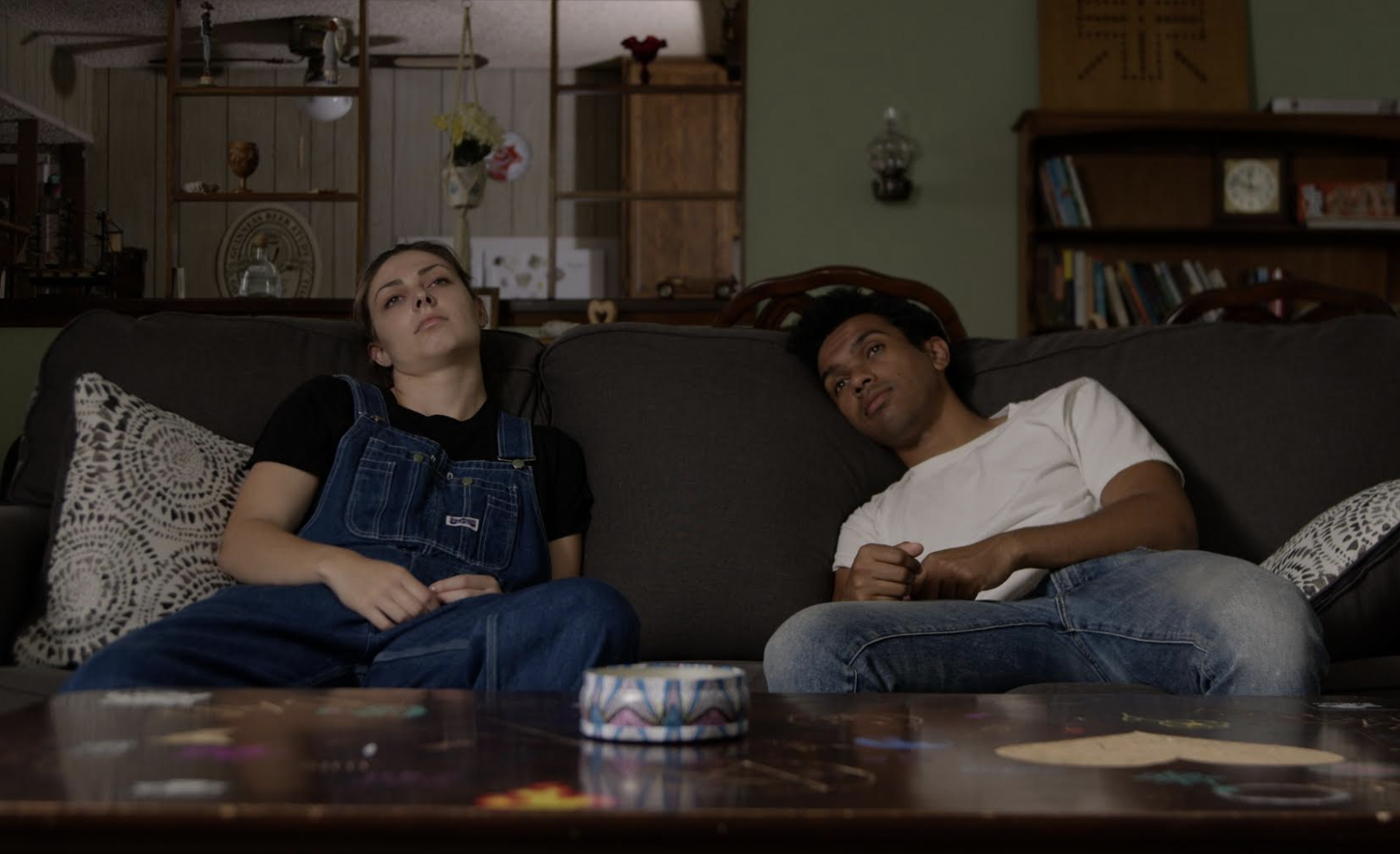
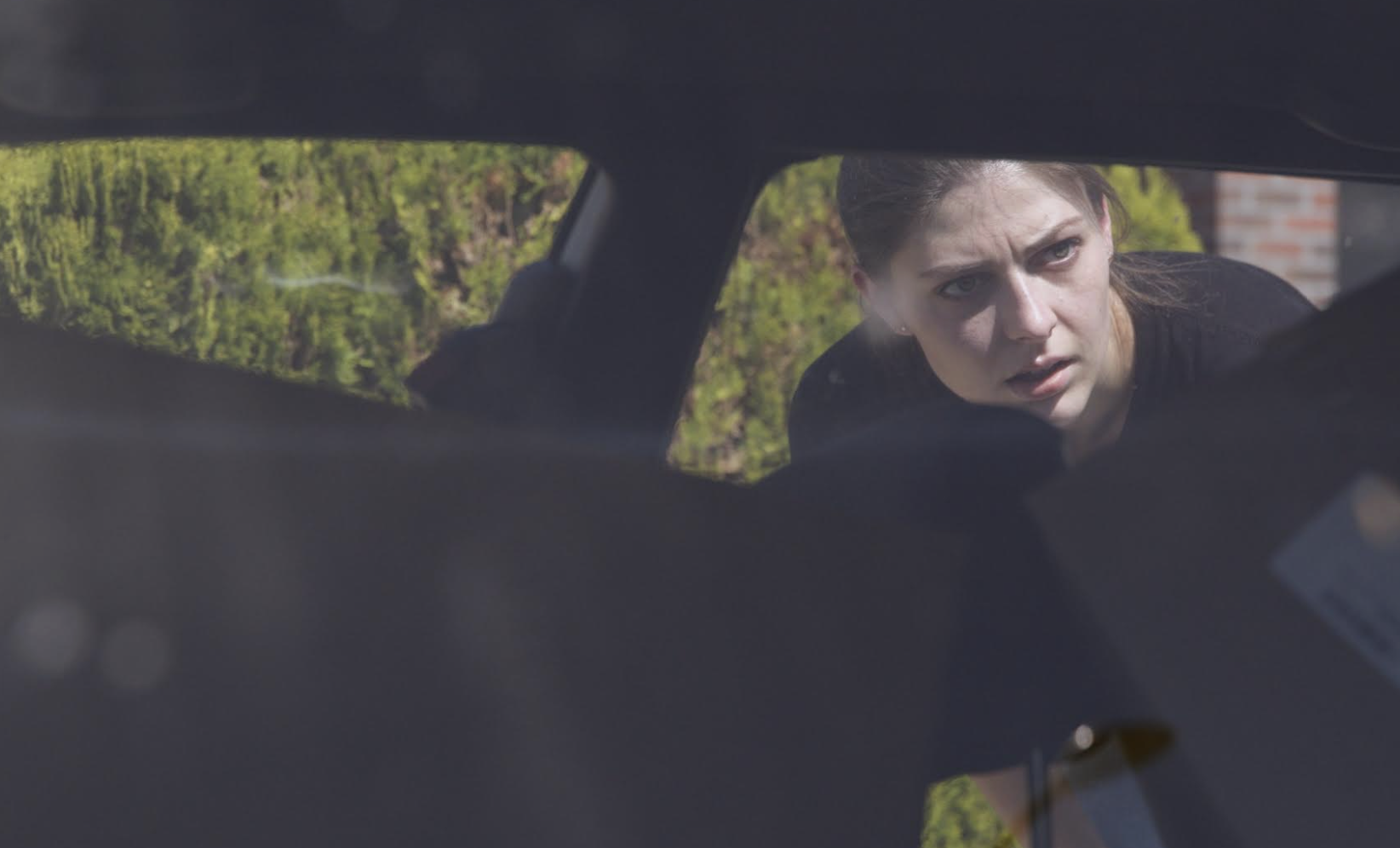
The film, as Hoban Halvorsen readily admits, presents a kind of crisis of connection itself: Don’t Mind Me presents two semi-estranged siblings struggling to communicate in the wake of their father’s death. The stoic George, struggling to single-handedly mobilize his life, insists on selling the family home; Vanessa, the more immature of the two, is dedicated to staying put. In a certain light, it poses a uniquely American story: that of two people who took drastically different paths and ended up at the same impasse, stuck in relative poverty with little but pipe dreams. In order to keep themselves afloat, the siblings must deflate their own – and sometimes, each others’ – egos.
In Don’t Mind Me, Hoban Halvorsen proves an aptitude for writing and directing intimate narratives; he is able to maneuver complicated interpersonal dynamics without bludgeoning his characters with cliches. His emotional reach proved itself at the 2025 Poppy Jasper International Film Festival, where it took home two awards, including an audience selection.
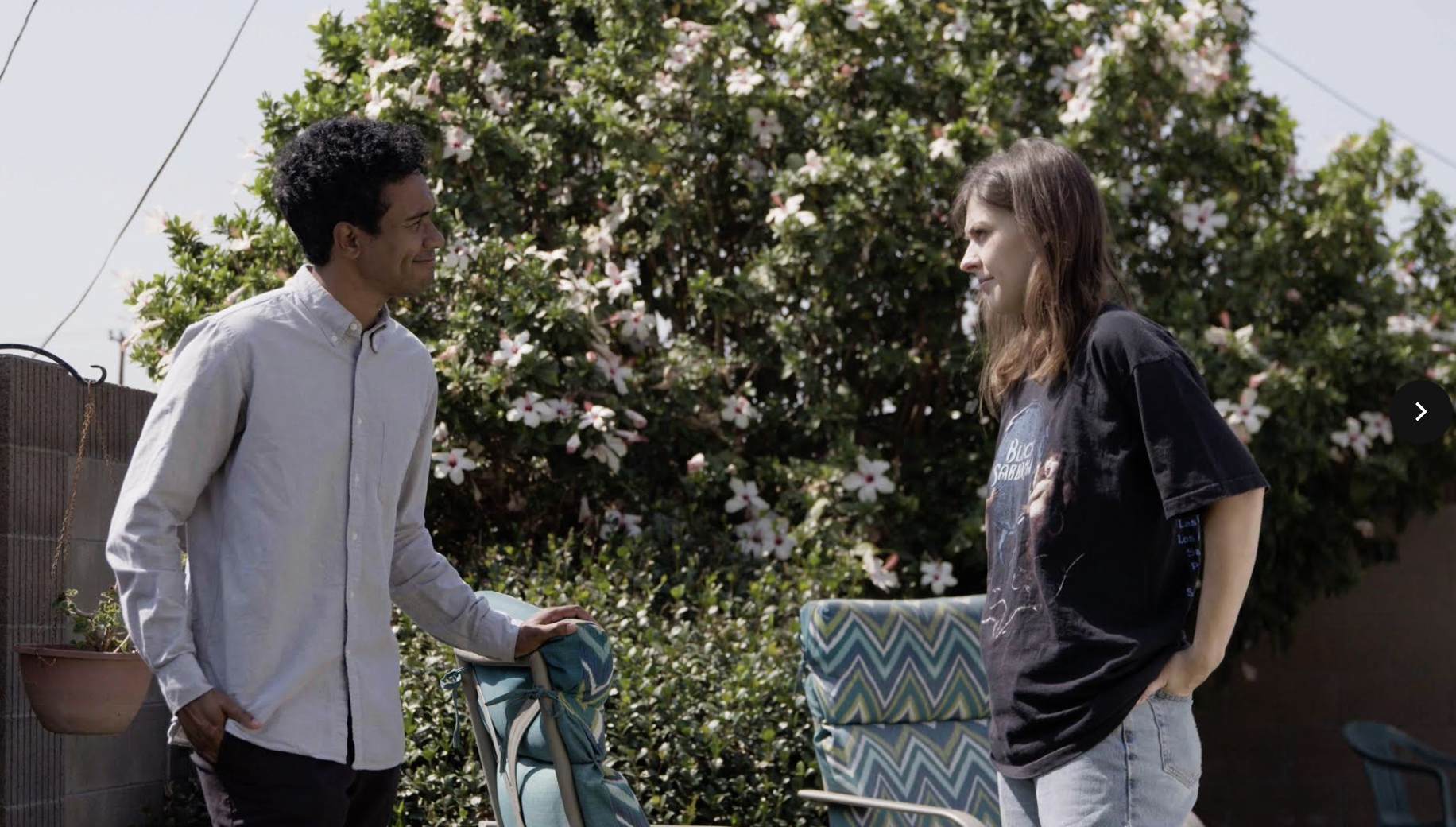
The following conversation has been edited for clarity and brevity. Don’t Mind Me is available for free on the film’s website on Dec. 12, 2025.
One of the first things I took note of about Don’t Mind Me was your ability to create an environment – that home feels so lived in, and by the end of the film, I had the same emotional attachment to it that the characters do. It brought up a lot of memories about selling my family home and dealing with the loss of that…I’m curious to hear more about your experience building a set in general.
Well, I have to give a lot of credit to the location itself – it started with…going on AirBnB and looking at houses all around LA, and finding that none of the houses in LA proper really fit the vibe I was going for…they didn’t have that down-home feel, especially AirBnBs…they felt very polished, fitting a niche other than a modest family home. So I started looking around the suburbs, and found this house in Lakewood…I wanted to be super upfront about it, I told the host I wanted to film there, and he was very cool about it…me and Vann [Fulfs], co-producer and [Director of Photography], we slept there for the three weeks we filmed there. A lot of what you see in the film actually is part of the house…we brought in the rug, we brought in Vanessa’s illustrations. Most of it was making it messy, which proved a lot harder than I thought it would…we had a very detailed spreadsheet with photos – this beer bottle goes here, this little pile of tobacco is on this spot on the table – we kept very meticulous track of all the shit we threw in the house.
That is so interesting – remember when Game of Thrones had a continuity error a few months ago, and it was a huge deal? Major studio productions don’t pay attention to what shows up in their shots sometimes, but you did.
Oh, for sure. I will say, we have continuity errors – I hope no one notices but me.
I didn’t notice, and I’m a total asshole about that stuff.
Yeah! It takes you out of it!
You mentioned your DP, Vann Fulfs – what was it like collaborating with somebody else behind the camera?
He’s incredible. We met in high school, Ballard High School in Seattle. It actually has a really great film program, kind of like film school before film school. This teacher Matt Lawrence basically designed the whole thing and totally mentored a bunch of teenagers, lifted them up…[Vann and I] hadn’t talked for a while, we went to different schools, we didn’t live in the same city, but we started talking a lot while I was writing the film during lockdown. We would do Netflix parties, watching “Tiger King” and stuff together, and we got to talking a lot. He has a lot of experience doing a lot of commercially-oriented work…he’s used to being a one-man band. We basically had multiple hats rotating on set, and it was basically Vann and whoever was helping doing all of the lighting and operating his camera. I think he did a really good job with it.
I want to talk more about this high school experience of yours – it seems that for a young kid interested in film, you were born in the perfect place to learn this craft. How do you, as a kid, start to think that this is something you can do with your life – and how did you actually start doing it?
I was one of those annoying kids who always knew I’d be a filmmaker. I was ten years old with a 3MP camera, running around with friends with fake swords, doing LEGO claymation and stuff like that. I actually transferred to this school in my junior year because I had heard about this program. Everyone was so serious about it, and our teacher was so generous, and I truly felt like I got a really strong film foundation as a teenager. But I felt like I had more to say – I had the tools, but I didn’t have a point of view yet.
Yeah! And the hard thing about that is being patient…I remember being eighteen, nineteen, and feeling like I hadn’t developed my point of view yet as a young artist. It’s interesting – having read your director’s statement and knowing what you went through while writing the film, it seems like you really did have to learn some lessons in order to develop this point of view for Don’t Mind Me.
I like to say that the film is more about my feelings than my experiences, yeah. I did go through some shit and come out the other side of it, but it wasn’t the exact same shit that my characters go through.
Well, that’s what makes a good narrative writer – they can interpolate their feelings into a life separate from theirs. I’m not interested in a 1-to-1 representation, I want the fiction part of it, too.
I agree – first of all, my writing is, I hope, more interesting than my real life…and secondly, it gives you an objectivity that is, at least for me, impossible if I’m describing the actual events of my life.
You mention that you started writing this film during the early pandemic, so it’s been quite a long road to release.
Very long, much longer than I expected and frankly hoped…it was step-by-step. When I started writing it, I thought, “What would it look like if I made a movie?” And just pretended that I was making a movie until the movie had wrapped. It was too scary to…say “we’re doing this”, but eventually you look back and it’s done. To get into the specifics, it was about a year of writing…I don’t know if I should admit this, but it was my first time doing real revisions. Where things really started slowing down was post-production…this was not my choice, but I ended up doing the post-production myself.
Oh, wow.
Yeah. Yeah. It took extra long because I was sort of learning as I was going – I knew basically how to edit, I had edited all my own shorts, but a feature is definitely a bigger undertaking. That took me about a year. It was another year for doing the sound design and the color grading. For better or worse, at every step of the process, it was like – okay, I have to do this now. There are different philosophies for applying to film festivals…I decided to apply for the main festivals the first year, because they care a lot more about the premiere status. I did one round of applying to the bigger festivals and one year of applying to the smaller festivals.
And it paid off! You won two awards at Poppy Jasper!
It was such an amazing experience. It was so gratifying…it was an eight-day festival, and I was there for ten days. I met as many people as I could, and I met some really awesome people. Being in that celebratory environment after so long…it just felt so good.
I bet, because I can’t imagine sitting on a film as good as yours for so long and not feeling immensely frustrated. How did you feel after that first round of rejections?
It really devastated me. I knew that I liked the material and I knew that I did my best…they say it’s not a reflection of your film and not to take it personally, but it’s extremely hard not to. So getting into that festival and hearing people’s reactions really restored some confidence in the film and in myself as an artist. During this two-year period, I’ve been focusing on writing the next film…and for that first year, I was coming up with ideas and scrapping them, and after going to the festival, I was finally able to settle on an idea. Like, this can work, I know what I’m doing, let’s get back to it.
And you won an audience award specifically, too, right?
Yeah. That felt really good. People responded to it, people showed up, and the audience was mostly other filmmakers I had met at a party before. That was another really cool thing about the festival – seeing other peoples’ films and being so impressed with them, and seeing so many people on a similar journey to me.
Again, going back to your director’s statement – it makes me think of your writing about how the lack of community impacted you and pushed you to make something in the spirit of collaboration, and you mention how it’s paradoxical given the content of your story. I imagine it must have felt so good to have praise from your creative community. So what does that community look like for you today?
It’s a combination of things…most people I worked with on the film were friends already, but some were people I met through friends or online, and they’ve become a part of my community. My producer Ruby [Zatz], I met her on a Facebook page, and she turned out to be the best producer ever. Since I’m now free to release the film, I hosted my own screening, and that was a really cool mix of people – some film school friends, a couple festival friends, friends from an improv class, a ton of my coworkers from different bars and even a good amount of regulars.
I’m curious to know – what were your influences while you were writing the film, and what’s been inspiring you lately? And I want to know about everything – books, shows, albums, any form of art.
During that lockdown period, it was a great time to watch a lot of movies – I had my Criterion subscription. A lot of my influences for this movie are kind of highfalutin given how approachable and down-to-earth I think the movie is…I was watching a lot of Cassavetes, and the great thing about him is that there’s so much writing about the actual productions [of his films]. He was making amazing movies, but he was making them in a house with his friends, and they’re shot beautifully. So I was paying attention to that…it’s the same for [Rainer Werner] Fassbinder, he was a big influence while writing the shot list. Again, his material is more highfalutin than what I was going for, but the way it’s shot…dude was cranking out a movie or two a year. The other two I’ll mention are the Duplass Brothers and Lynn Shelton…specifically, the Lynn Shelton film Your Sister’s Sister.
My influences now…like we talked about, it’s been five years since I wrote this last script. Right now, I’m working on a thriller…I’m hoping it still has relatable characters and is still funny and dramatic. But I burned through [David] Cronenberg’s filmography, John Carpenter, classic horror stuff. In terms of music, my number one on Spotify this year was Run the Jewels.
Wait, it’s Spotify Wrapped time. I’m dying to ask this question, and everyone loves talking about it, so who were your top five artists?
Oh, let me pull it up…number one, Run the Jewels, Fontaines D.C. – I’ve been listening to a lot of nu rock this year – number three, Killer Mike…four, Andrew Hewitt, the composer for the film Submarine…and number five, Steely Dan.
Oh, hell yeah, man. That’s better than most top fives I’ve seen. Well, as long as we’re talking about music, I loved the scoring in your film. I found myself bopping along to some of the tunes while I was watching – how did you get the music done?
Again, the philosophy of making the movie was working with friends as much as possible. My roommate at the time, who I also went to college with, Dalton Corr, did the score and a lot of songs from the soundtrack. He was someone who signed on really early, before I even shot it, and he wrote the music while I was still working on the rough cut. He is a serious musician and he took it very seriously…he happens to also be a really good indie rock musician, and he wrote two of Vanessa’s songs – her cooking song and the song she listens to while she gets high – were songs he offered up from his catalogue. The rap songs – the two that keep George up at night – are from my friend Reggie [Jones, who performs as 1rst Kiss], who I worked with pre-pandemic. It felt like a good way of keeping in touch with him…he was so excited and brought such good energy to the premiere. The song that’s playing while they’re eating pizza is by this super talented musician, Sam Blehar – I met him when I was working at a music venue.
It all goes back to that idea of community – that’s how you got this film made. In the sense of casting, were you working with your friends in that regard, too?
Absolutely – almost entirely. The exception was Robyn [Cruze], who played Carla, who is my friend now. I think we just used Backstage, and as soon as I met her, I knew, “Oh, this is totally Carla.” I’m actually writing a role for her in the next thing. I think the first person I knew I wanted to put in the movie was Brandon [Autry]...he is mostly a screenwriter, but he’s been acting since he was a teenager. I knew the character of George was…uhh…not necessarily the most readily likable character. He’s cold, and very insecure with himself, and very career- focused.
He’s on his grindset.
Totally. And this is a long way of saying that what I liked about Brandon was how charming he is – he brought a warmth to the character that it really needed. Jana [Miley] just ended up being perfect for the role…she was an acting student at Tisch, we were abroad in London when we were twenty…we hung out and partied all the time, but never worked together. She’s also a recovering alcoholic – I think she had been sober a year when we shot it – and she brought insight and realness to that aspect of the character. Once I had her signed on, I did a dialogue rewrite to…really write it in a version of her voice.
Well, it’s so interesting to hear that she’s a recovering alcoholic, because I am too. I actually have a big gripe with the usual “hot mess” archetype character – I think the most successful and well-rounded version of it is the Judd Apatow show Love. In a lot of other cases, that character shows up and I roll my eyes at how prescriptive it all seems – but I wasn’t rolling my eyes at Vanessa. Speaking from personal experience, I found that character so realistic and so relatable, so I want to commend you for pulling that character off so well. You did such a good job of representing the alcoholic’s temperament, which again, I know quite well – that “my way or the highway” attitude, never taking advice from anybody, never letting your guard down.
Thank you – I wanted it to be as ambiguous as possible at first. Her behavior felt reflective of a lot of people I know – well, one of the downsides of being in the service industry is that there are a lot of alcoholics in denial, and it often looks like that. It’s not people who are hitting rock bottom every night, it’s people justifying opportunities to constantly drink.