
Like most movie nerds, I fell in love with movies as a young kid. And before I was reading Letterboxd reviews or listening to The Big Picture, it was a lot simpler. It revolved around whatever DVDs and VHSs were available at my local library, whether my unruly sisters and I could agree on what to borrow, and whether we could convince our parents to check out our picks (a decision that often hinged on how kid-appropriate the movie poster looked, and nothing else). And in rural Canadian prairies in the early 2000s, the options available were a little limited — a lot of Hollywood Westerns and classic Christmas movies, which in retrospect, are slightly silly choices for a brown, Muslim family. These are the movies I grew up on, and I loved these films before I fully understood the world they showed me, or often, the world they left out.
As a person of colour, it is strange to reflect on your favourite genres and realize the things you love were never quite made with you in mind. You begin to recognize the distance between the people who get to be the heroes and the people who exist at the edges of their stories, if present at all. I don’t think loving a film or genre means loving everything it represents, just as recognizing its limitations doesn't mean you have to fully abandon it. And when creating, is there a way to remain in conversation with these films, to take the images and stories that shaped you and make something new out of them?
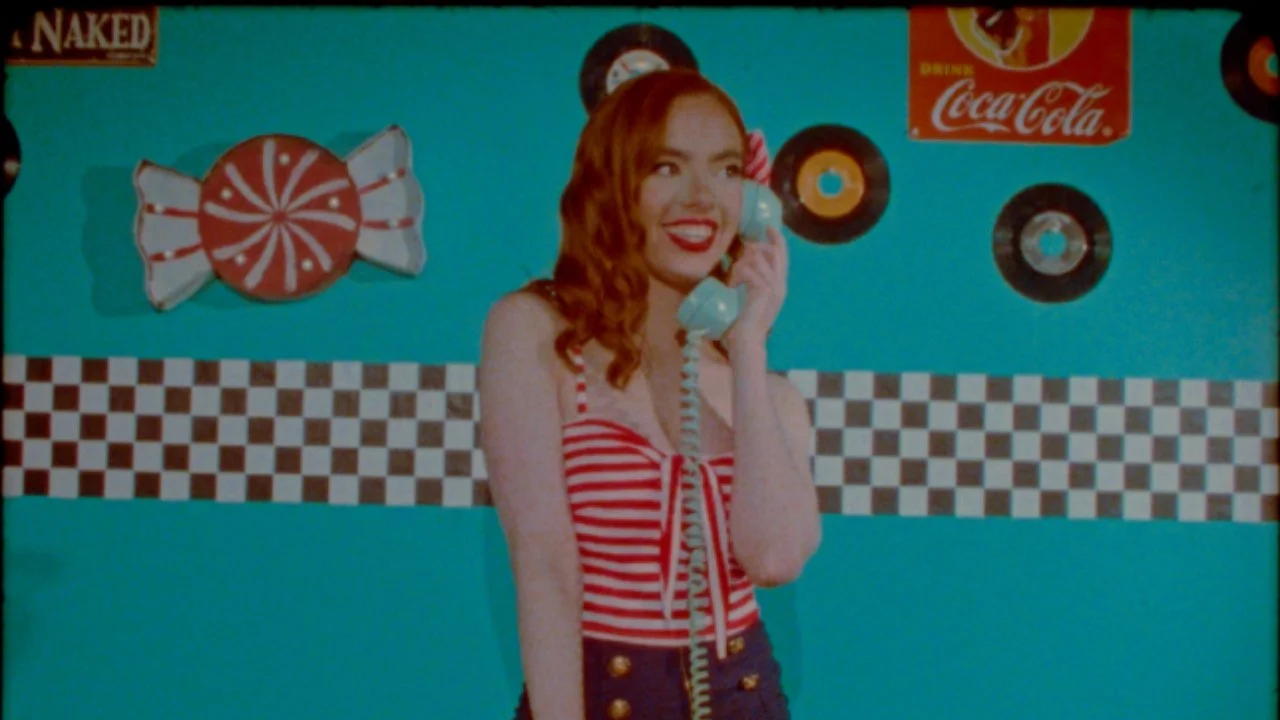
This is part of what drew me to Kylie Mungenast’s short film Peppermint Pixie Dream Girl. Set against the candy-coloured iconography of 1950s America, the film takes the pinup girl, the diner, and the looming spectre of atomic annihilation and reimagines them through a queer, feminine gaze. Mungenast returns to a familiar cinematic past, but she does not approach it with reverence alone. Beneath the vintage glamour and stylized absurdity lies a story about cultural misogyny and the policing of trans women. The film’s vintage world is at once artificial and nostalgic, its carefully constructed fantasies threatened by the very real cruelties they attempt to conceal.
What I find especially compelling about Mungenast’s approach is that the visual conventions of classical genre cinema become material to play with and distort. In our conversation, Mungenast describes how Peppermint Pixie Dream Girl emerged from a deeply personal place, how its handmade production design and experimental visual language came together, and why she sees genre as a powerful way to respond to the world around her.
This interview has been edited for length and clarity.
Areeha Mahal: I know this is a broad question, so feel free to take it in any direction you like. But I just wanted you to start off by telling me a bit about yourself. That can be about your creative journey, your journey as an artist, or where you are now in your career. You can go into personal details, whatever you feel comfortable with. But I'm just curious — if people are interested in getting to know a bit about you, and they're starting to introduce themselves to you as a filmmaker, what would you like them to know?
Kylie Mungenast: I knew I was going to be a filmmaker since I was three years old. The first movie I ever saw in a theater was Star Wars: Attack of the Clones in 2002. I don't think I fully knew what a filmmaker was at three years old, but I knew [I wanted] to do that. Throughout the rest of my life, I always took on creative challenges, and I went to undergrad in Tampa, Florida, where I met a lot of very important people to me, but two that are relevant to Peppermint are Liz Davis and Destiny Greer. They’re very frequent collaborators of mine. Liz is a fantastic producer I trust with my life on so many projects, and she's also a great filmmaker I've produced for. So we like to kind of take turns with that. And Destiny is also a producer, but she's also one of my favourite actors that I've worked with. So I met the two of them, and we kind of knew that we were going to stick together. Then other people from our circle of creatives we met in Florida kept reappearing on each other's projects in some way, shape or form. I felt like I'd really gotten a good grasp of the language and form of cinema and what that looks like on an intellectual level, but I really wanted to figure out what that meant on a personal level. I went to San Francisco for my Master's at the California College for the Arts. It was two other filmmakers and me in a very intimate cohort of three people, and we practiced under Allison O'Daniel. She's the filmmaker behind The Tuba Thieves. We practiced under her mentorship for a year, and it was everything I needed to bloom into finding my voice and my perspective in this art form, and that's what brought me to Peppermint Pixie Dream Girl.
AM: I wanted to ask about the start of Peppermint Pixie Dream Girl. Is this a film that you've been thinking about for a long period of time? In the early script development stages, what did that look like, and kind of how did you go about starting this film?
KM: It was very sudden. I'd been interested in the 1950s for a while, and I was particularly interested in the pinup girl. Yeah, just expressing because I feel like we hear that the pinup girl is like a male fantasy, right? And well, I am a woman. I find pinup girls hot, you know? So I'm like, how do I express that creatively? I feel like they're always framed for this male-centric vision. So, I had been sitting with that for a while, and I'd kind of had the idea loosely of the Peppermint Pixie Dream Girl character as almost this absurdist exaggeration of the pinup girl for a lesbian gaze. But, the process of sitting down and writing Peppermint Pixie Dream Girl was very impulsive. I had a tough week, and I may or may not have gotten stood up on a date, and I was out going crazy with some friends at bars, and I came home one night feeling so existential, and I sat down and wrote the whole thing. I didn't know what it would turn into, which is why there's a big tonal shift in the film. It came from a very vulnerable place. When I finished it, I sent the draft to Liz Davis, my producing partner, and to another friend of mine. And I said, "This is either the best thing I've written to date or the worst thing I've written to date. If it's the former, tell me, and we're gonna film it.” And she said, "It's my favourite thing of yours I've read." And we were like, all right, we're gonna make it.
AM: You mentioned that Peppermint Pixie Dream Girl, to some degree, has personal elements to it. Has that been exciting? I suspect there's also a sense of vulnerability when you share that with other people. Can you tell me a little bit about what that experience has been like for you as a filmmaker?
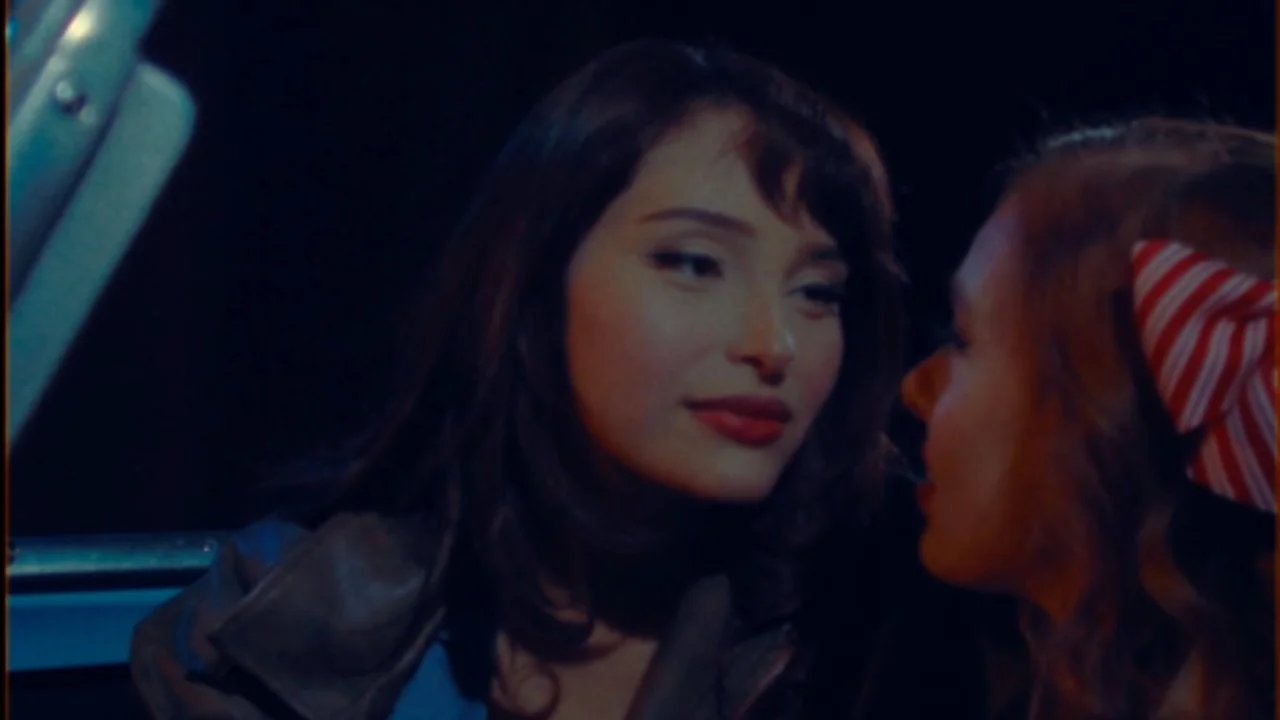
KM: It's definitely a mix of exciting and a little scary to put it out there. But I think something that makes it a little less scary is how some of those personal elements transformed. In the original draft of the script, Shirley's character was very self-inserting. I mean, she and I have the same food allergies, right? Same favourite candy, Almond Joys. So, there are a lot of little self-insertions there that definitely gave me a window into her world. But as I explored that character further, and as I started the rehearsal process with Zoey Luna, who plays Shirley, Shirley transformed into her own voice. Part of me is still in that character, but she's also become a lot different. She's become her own thing. And that's when it gets exciting and a little easier to breach personal topics with people. But it's still scary. Obviously, I get a little anxious before every screening that I'm at, because there's a room full of people who have never seen this film before. And it's always a little scary because you never know what they're gonna think. But I feel a little more comfortable after our premiere with Femme Filth. Talking with Abby Wright, who runs that festival, she's very much in the mindset that it's okay to have a movie people are going to walk away from either loving or hating. And it's honestly more special to have that than it is to have a movie where people walk away, and they're like, "Yeah, it was good, but they don't think about it ever again. You know, I think if Peppermint Pixie Dream Girl pisses some people off, it's kind of a good thing."
AM: When I was watching the screener that you sent over, I was really drawn to the production and wardrobe design. Can you tell me a little bit about what that was like, especially sourcing vintage or vintage-inspired things?
KM: When I first started breaking down the script with Liz and Destiny, and we were looking at locations, we looked at drive-in theaters and diners that had that 1950s feel and aesthetic here in San Francisco. Anything we found within our budget, the caveat was that we wouldn't have had much time, because drive-in theaters and diners are usually open very late, and a lot of them are 24-hour places. If we had to shoot at a real location, they would have given us only about six hours of filming time. I'm very much an actor's director, and I like to take my time rehearsing and doing multiple takes and working with actors on their characters. I just knew I would be too rushed. So I sat down with Destiny and brainstormed how we could pivot. We talked about building, and it became a critical part of the film's vision. My partner, Shaelan Walker, was the set decorator. She and I spent many weekends in the studio just making that whole diner by hand, painting it and sourcing. She and I drove out to the middle of nowhere, like an hour and a half north of Sacramento, just to get the diner stools, which we now have in our kitchen. So it was fun. It brought in this handcrafted element that added a new layer to the world of Peppermint Pixie Dream Girl. Because when you think of the 1950s and nuclear testing sites, they would build these doom towns that look very manufactured, fake homes that are almost like cheesecakey and just kind of strange-looking, and they almost look manufactured, right? And that works with the favour of what the story is about. I mean, it could very much be a doomtown that we're in, right? Just kind of waiting for that nuclear bomb to fall. It represents that atomic dread of the 50s. Same with the drive-in movie theater. A friend of mine painted a canvas of a drive-in movie screen, and someone else we had met at a bar had a car that they said we could use for the movie. And we just set up the canvas in front of the car, and we had our drive-in movie theater. Yeah, so it became a very important part of the language of Peppermint Pixie Dream Girl. And I love working like that, because you get to bring in other artists and other crafts.
AM: Another thing I really loved about the film is the way it's shot. It has a very distinctive, almost vintage feel. Can you tell me about any choices you and your camera department made to give the film that very specific look and feel?
KM: Our intention was to shoot it all on 16mm. The night before day one of set, which I always call it day zero — for some reason, day zero always happens to be the most stressful day on a set for me. The camera blew a fuse, and no one local could get us another 16mm camera that could hold our 400-foot magazines. So we had to pivot to digital, which I was a little anxious about because all the lighting setups Abraham [Montes] had planned were for 16mm film. But when we used those lighting setups and shot digitally, it gave me a lot of room in the colour grading to add that celluloid texture. We also had a few 100-foot rolls of 16mm film and a Bolex camera to shoot with. So, a lot of the more experimental scenes, like the "sexplosion" scene, as I call it, in the middle of the film, were all shot on a Bolex. And we put in different color filters and really experimented with that to give it that unique look that it has.
AM: I love the way it looked. It looks so incredible. Earlier in our conversation, you described yourself as very much an actor's director. Can you tell me about what the on-set experience was like for you, working with your actors? I know you've directed before, but were you going into this film with a lot of experience?
KM: Besides Destiny Greer, who appears in the diner, it was all actors who I hadn't worked with before. That was a unique challenge, because I typically work with returning collaborators. For me, all of my planning and prep work goes into directing the actors. Both Zoey Luna and Abby Langh are based in Los Angeles, and I am based in San Francisco at the moment. So I flew down to L.A. and did an in-person rehearsal with them where we spent hours in a stage space rehearsing the script together, and having that time to really get to know these characters at a much deeper and visceral level, and work through different exercises as those characters, and get a feel for what their tics and mannerisms are, and really embody what makes these characters speak.
I think for a film that rides the line of absurdity and intensity, those grounded performances were really helpful. When a lot of the dialog was very stylized, right, I wanted everything to feel intentional and helpful. And yeah, I think one of the moments that stands out to me the most is there's a scene of violence towards the end of the film, and Abby Langh, who plays Dorothy, the Peppermint Pixie Dream Girl, her reaction shot to that violence was one continuous, 16-minute-long rolling tape of different breathing exercises that she and I were able to do together, and different intentions. It was one of those moments where she and I really landed in a flow state, and we transcended. I think we ended up using only four to eight seconds of that 16-minute take in the final cut because we just needed that one reaction path. But it was a beautiful process to get there.
AM: This sounds like such a labour of love. From the production design and wardrobe design to working with the actors and all the camera choices. Now that you're at the stage where you're showing the film to other people, you're kind of starting that festival run. How do you feel? It must be exciting, but also rewarding to have this chapter culminate, and you get to celebrate it with your cast, crew, and audience members. How do you feel about that?
KM: It's felt very rewarding so far. FemmeFilth was a phenomenal screening event. They really made us feel at home with the kind of film we had, and they treated us so well. Abby Wright does incredible work with that festival, and it was one of the happiest nights of my life. I've wanted to do this since I was three years old, and I got to do the thing. I got to world premiere this film, and a lot of the people who got to see it are also artists who I look up to, and other filmmakers who I admire, and having those people who inspire me come up to me and tell me how much they enjoyed the film was a really special thing. I'm sure not many people get to experience that. So I'm really blessed and grateful that I did, and that I got to celebrate that with people on the cast and crew, and that we're still celebrating it. Liz wasn't able to make it to the premiere, but I'm gonna see her at Chicago Underground, and we'll get to reunite for the first time in person since we made the film, which is gonna be so exciting. It's always a blessing to work with people who are very close to your heart, but it's especially a blessing to celebrate your work with them.
AM: I'm sure a lot of your attention right now is focused on the film festival season, but when you’re thinking about the next two to five years, what are your goals as a filmmaker? Or are you focusing on this specific stage, and once this kind of wraps up, then you'll think about those upcoming years?
KM: It's definitely been a developing thing. Destiny and Liz, who produced this film, are producing a feature film I wrote and will direct. It's a western, very much in the style of 60s spaghetti westerns, for a more queer lens. So that's been taking up so much of our time. Yeah, it's called In Bloom, and we received a physical sponsorship through Film Independent, which has been a huge milestone for us in developing this feature film. We also recently got a great attachment, and things are looking really promising. And so that's like one project that's on my mind right now. Abby Langh, who plays Dorothy, is also a figure skater. So once this wrapped, she and I started getting to work on a figure skater, roller skater, polyamorous lesbian sex comedy. We shot a proof of concept of that with the film stock that was left over from Peppermint Pixie Dream Girl. Now we've been developing that as a feature. In terms of, like, the next two to five years, a lot of projects are on my mind. I'm also very much excited to just get Peppermint out there too. Yeah, it's something I feel so proud of. It feels like me and my voice, and it's special to have that, right? So I'm also really focused on our festival release as well as some regional screenings.
AM: That’s all I had in mind to touch on, but I wanted to ask if there's anything you wanted to chat about about the film, about you as an artist, anything like that that you think might just supplement what we've already chatted about, or something new that you think might be interesting or important for readers to know?
KM: One of the like big throughlines in Peppermint Pixie Dream Girl is that it's very much a film about cultural misogyny and violence against women in a way that is currently transphobia and how it's affecting all women. That was a huge part of why I wanted to make this film because it felt like I was kind of screaming out into the universe, and no one was listening. One of the throughlines of the film that only got more relevant the more we worked on it, just with everything that was happening, was the parallel to transvestigation and McCarthyism, like the idea of someone accusing a woman of being trans, and how that can put a target on their back, right? Drawing a parallel between that and McCarthyism in the movies was exactly what I needed to scream out into the universe with Peppermint Pixie Dream Girl.
AM: I also found it interesting that you brought this classical film genre and the classical idea of the pinup girl into the film, and examined what the gaze looks like there, thinking about trans women in this context.
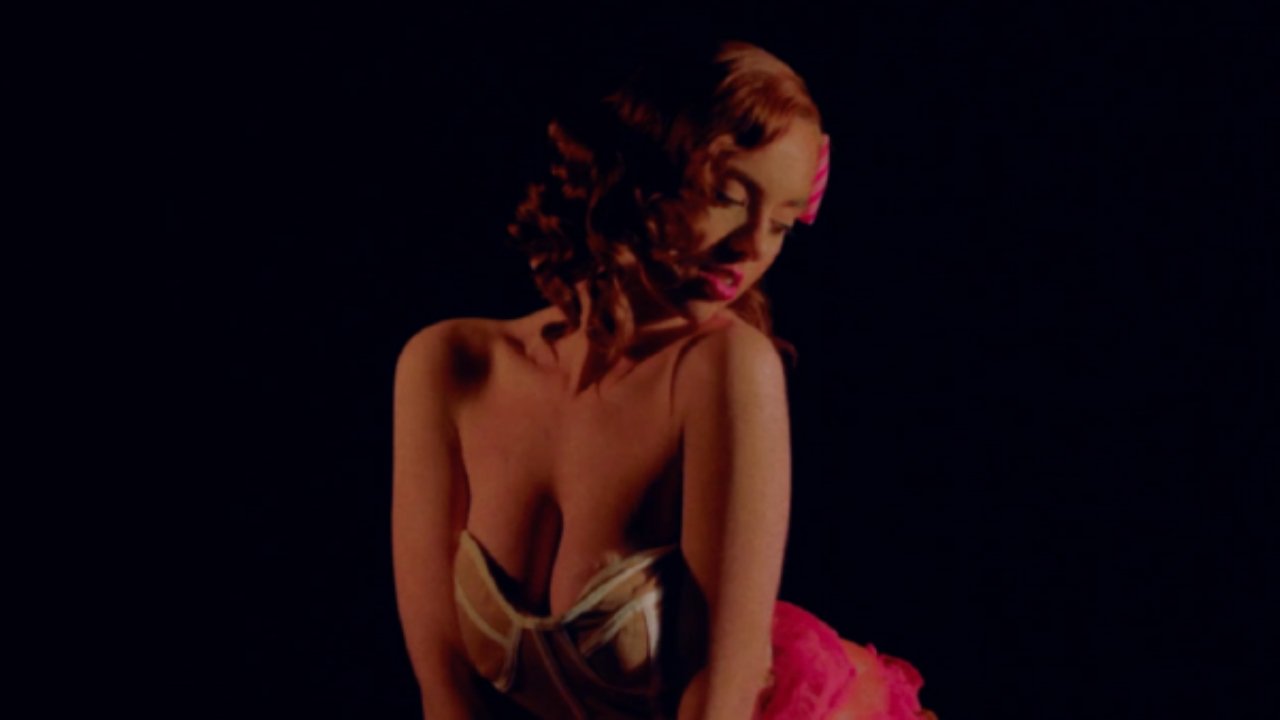
KM: Pinup culture is such a fascinating idea to me. One of the most difficult parts of the film was casting Dorothy, originally. So when we found Abby, it was a blessing because she was literally featured in a Napa Valley pinup girl calendar, right? And she's also a queer artist who's very passionate about making lesbian films. It was kind of like a match made in heaven for her in this character. The two of us met, and I think her character is almost the sole beacon of hope in the film. She has opportunities throughout the narrative to recede and choose to preserve herself. There's also a lot of pressure on her to perform in certain cases, and what the experience might be of noticing that someone is drawn to you and they're a woman as opposed to a man. I think when working with Abby as an actor, we approached it as probably the character's first time flirting with women. And I think those experiences of internalized homophobia became a big part of our conversation, where the way she engages with Shirley is so flirtatious. Also, she always leaves herself room to back out and go back into the safe world of performing for the male gaze, which is dangerous as she learns and as she knows deep down. I think when Dorothy first notices Shirley's eye on her, it almost feels like a blanket of safety that she's never experienced before. The male gaze, especially in cinema, can often be rooted in power and control. I think when a gaze is rooted in the intention to control or dominate, it's scary. We've all experienced that as women in some way, shape, or form. I'm kind of talking about it very broadly right now, but those were certainly aspects of creating Peppermint Pixie Dream Girl.
AM: You did mention that it can be a polarizing film, in a way where some people will love it, some people will hate it, or maybe just feel strongly about it. When you're thinking about that in terms of it being a form of queer media, where you have queer characters in it as well, is that maybe a slightly scary thing?
KM: I really like that question. We've certainly gotten some rejections. We've shown it to some people who don't like it because of the film's violence. So much of Peppermint Pixie Dream Girl is this absurdist, almost stylized piece — except for those moments that are not stylized. It was a big responsibility to take that on because that type of violence, and the way we end up portraying it in the film, is unfortunately not fantasy. It's a very real thing, [which informed the decision to] remove the veil of the candy-coloured world that was set up. That's one of the things, along with sexuality, that's been difficult about sharing the piece, but for me, it comes from a place of authenticity. I needed to let that out. People talk about wanting to see queer films with joy and happiness, and I think there are pockets of joy if you know where to look. Just because the world's ending doesn't mean we don't have someone to hold us at the end of the world. It's one of the things that I hope people walk away from this and sit with.
I just remember in the process of, you know, like originally when I was getting my master's, I wanted to show this, and at our school, they were like, "Oh, we don't know if we can show that one." There was some tension around that, just because of the material, and it's interesting. There's certainly a movement happening in queer cinema right now, where a lot of underground filmmakers are just unleashing these very raw feelings in their work, especially in the underground trans movement that's happening right now, and it's comforting to know that even if we're making really dark, fucked up films, there's a community out there that you get to make these films with, and that you get to show them to and almost process that communal pain and grief together. Like, that is a very joyful experience, in my opinion. Even if it revolves around watching something that may not be inherently joyful in the most obvious ways. That's been a really special part of the experience for sure.
AM: When you're thinking about future projects, like you mentioned the feature you're starting to work on, which will also be a queer film — is all of this something that you feel like the process of Peppermint Pixie Dream Girl has informed decisions that you're making now?
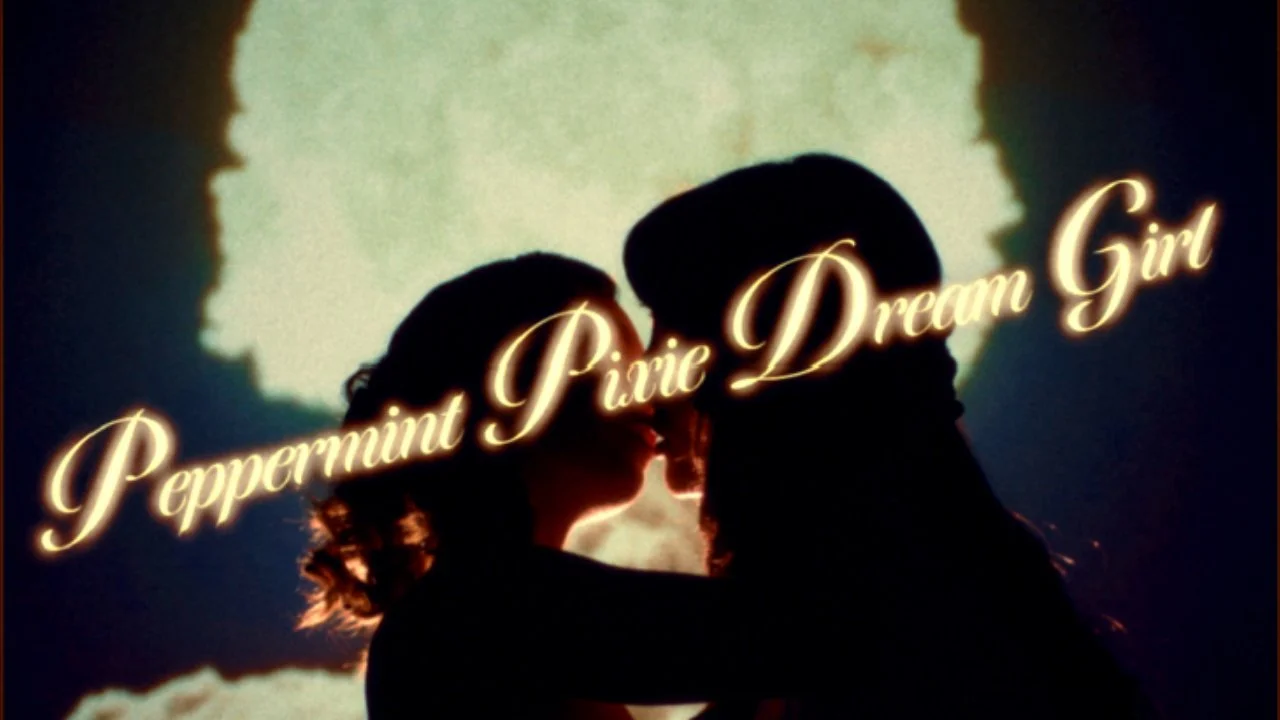
KM: I feel like Peppermint Pixie Dream Girl encapsulates something I love to do, which is taking different decades whose iconography we often associate with heteronormativity — and things that have been very glamorized in old Hollywood through a very male-centric lens — taking that and making them more feminine. I think back on a lot of the films I grew up on; I loved spaghetti westerns. Those spoke to me so much. There's something about what a spaghetti western looks like to me. So many of those films have male-dominated storylines. It's fascinating to revisit that with a more feminine perspective. Genre is a very powerful tool to comment on what is happening right now, whether it's in my personal life — like I said, a lot of Peppermint Pixie Dream Girl was a response to my dating life at the time — and also culturally in the world, right? That's where the shift happens in Peppermint Pixie Dream Girl. Behind Shirley's dating life, there's the fear of atomic annihilation. And behind the fear of atomic annihilation, you have another force fighting trans people for it. Those elements of using genre as a tool or a weapon to take these very relevant things to me, and that are in my heart, and to put them into this stylized, glamorous [world]. Because we know what to expect when we go to watch a western, when we go to watch a 1950s diner movie. And it's not two girls kissing in front of an atomic bomb. So it's really exciting to take that iconography and do the unexpected with it and do the thing that speaks to me and how I see the world.
As someone who grew up watching classic movies, it's the language I speak best. It's the language I'm most fluent in cinema. So being able to — in a creative consciousness with other artists working in the underground scene right now — form our own dialect is a really powerful creative consciousness to share. [And this is] with other filmmakers — both people who've collaborated on my films and also people who've made other films in the queer underground scene right now. It's really a special moment. It kinda sucks in the film industry right now, but a really powerful community is also forming around this very transgressive queer art. And that's fucking exciting.