
Interview with Taratoa Stappard, Director of ‘Marama’
Taratoa Stappard carries a photograph of his great grandmother on his business card. Rangiriri was born in 1880 to a Māori mother and a British father, and on another card is a photo of Stappard’s mother at age nine. He pulls them out during our conversation; these images have travelled with him through seven years of making Mārama, a Māori gothic horror film about a young Māori woman summoned to Victorian England, where she discovers her own horrific colonial heritage.
"I didn't even really know that I was going to be writing and directing what I would call a horror film," Stappard tells me. He thought he'd be making a ‘heavy drama’. But as he wrote, something else emerged. "The horror is inherent in the themes of colonization. What colonization has done to indigenous peoples." What began as something inspired by his great grandmother's story became his own journey into a past he'd spent most of his life separated from. "I am discovering myself through this film."
The horror in Mārama isn't metaphorical. In the 1820s and 1830s, during the Musket Wars, in order to survive, some Māori tribes enslaved captives, tattooed them, executed them, preserved their heads, and traded those heads for guns. "A horrific exchange rate evolved: one head for one musket," Stappard says. British army officer and ethnologist H. R. Robley, known for collecting and sketching preserved Māori heads, proudly posed for a now infamous photograph in front of 36 Māori heads mounted up on the wall of his parlour. "That was just such a horrific, obscene image. It seared itself into my mind."
His great grandmother's story threads through all of this. "By the time she was sixteen, her and her identical twin, Te Rauoriwa, had both been expelled from their third boarding school, and their English fatherdisowned them." The twins responded by getting moko kauae, traditional chin tattoos, when the Māori were being written off as ‘a dying race’. "I think at that time for sixteen-year-olds, that would have been perceived as a powerfully defiant cultural statement."
Rangiriri became a tour guide, then formed a concert party called ‘Princess Rangiriri and Her Nine Māori Maidens’. They travelled from New Zealand through Australia, America, and all the way to England, performing for audiences. "What must it have been like for my great grandmother, a proud Māori woman with a moko kauae, a distinctive facial tattoo, to have travelled all the way to the other side of the world to sing and dance for those people who had colonized her people within her own lifetime."
That reverse haerenga or journey, of a colonized woman traveling to the land of her colonizers, became the spine of Mārama. But these weren't stories for Stappard. Born in Aotearoa New Zealand, he only spent his first three years there, and two years aged thirteen and fourteen. His English father moved the family constantly. "I spent most of my adolescent life living in Europe and then later, in London." He grew up "passing white, or passing Spanish or Italian" while his mother "definitely suffered racism."
The distance from his culture weighed on him. In 2019, he brought a short film to the Māoriland Film Festival in Ōtaki, the same area where his mother grew up. Meeting people who knew his tūpuna (his ancestors) including his great grandmother, looking at photographs, "It just started coming to me. Ideas started coming to me." He began to outline a story that would become Mārama, but the question of his own position in this story never left him. “I can't say I've suffered any form of colonization personally. And I have no significant lived experience of contemporary Māori culture.” So who was he to attempt to tell this story?
He surrounded himself with Māori women throughout development, seeking advice from screenwriters, story editors, authors and a matakite, a Māori seer. The work became about earning the right to speak and to direct his story. In pre-production and during the shoot, Stappard worked closely with a Māori cultural and language consultant. He adds, "I needed to be confident in all my direction to the actors and crew, because many of them are Māori.” Every script consultation, every conversation with cultural advisors, was about building trust. About proving he wouldn't appropriate or misrepresent. About learning deeply enough that the story could be true.
Through that process, he found something he hadn't expected. "I feel very lucky to have been able to have this opportunity to find out about my past and write a story and then deliver that story." The work gave him permission to discover himself.
There's a Māori proverb that runs through Mārama and through Stappard's entire journey: kia whakatōmuri te haere whakamua, walking backwards into the future. "You need to understand your past to move forward into the future. Simple as that. I was constantly looking to my past to understand a little bit more about what it is to be Māori." It wasn't just the film's theme. It was how he wrote and directed Mārama.
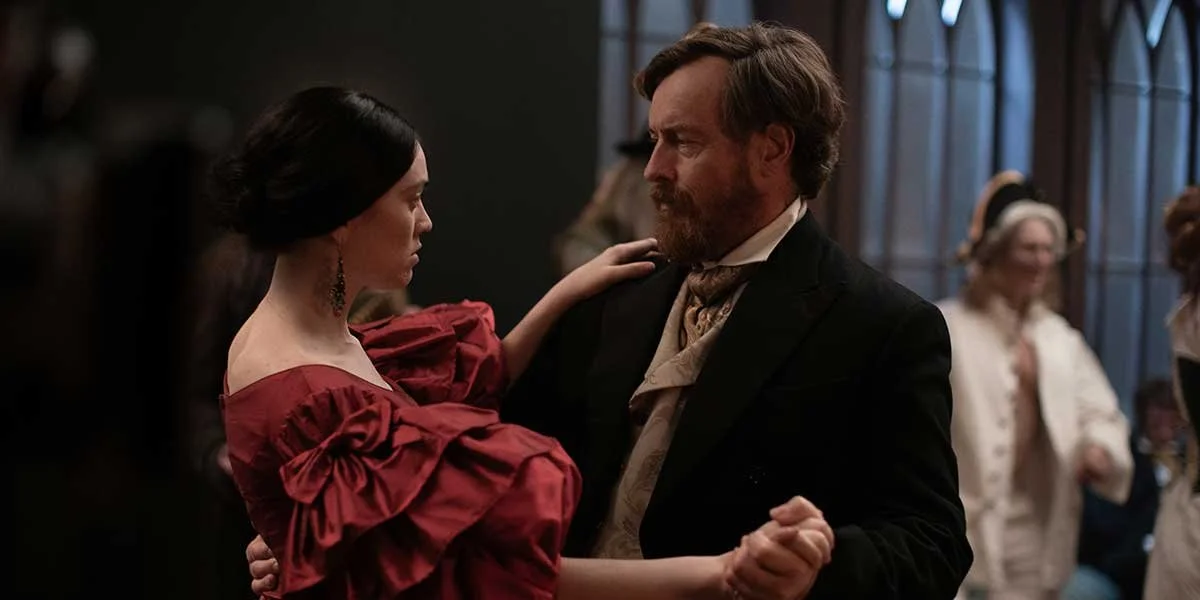
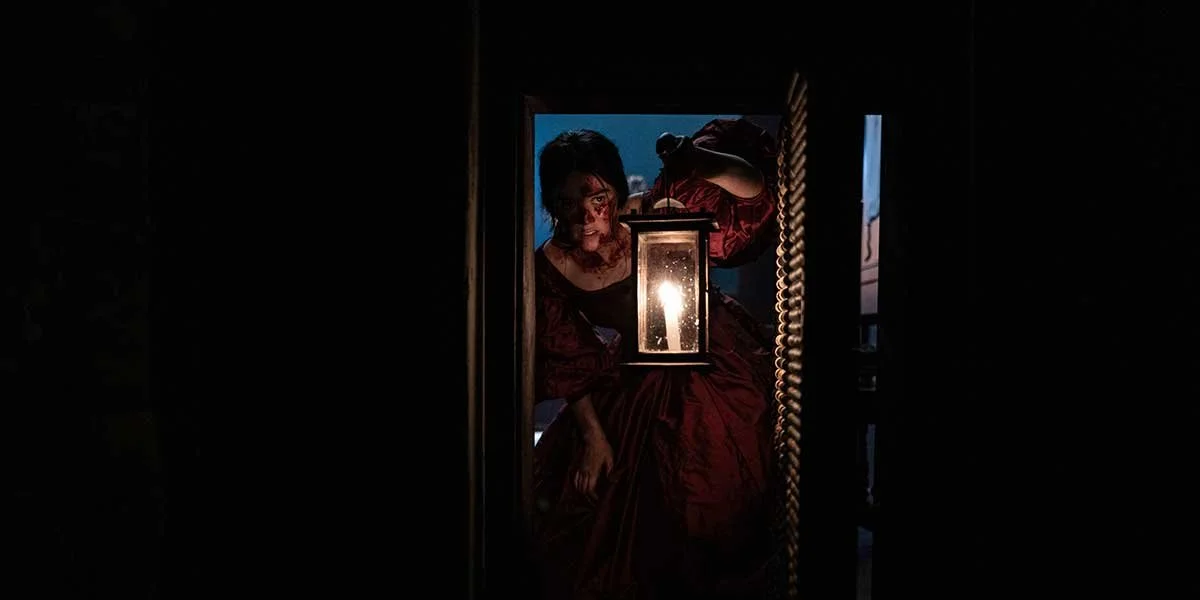
When funding came from New Zealand instead of England, everything shifted to Auckland. But there aren’t any old gothic country manors in New Zealand.” So, they built sets in a studio. Standing there, doubt crept in. "There were times at the very beginning when I was looking around the studio thinking, oh my god, is this going to work? But that was just my own inexperience and fear, because the production designer, Nick Williams, worked his magic – and of course, the moment you shroud the set in beautiful, dark shadows and you put a luminous presence like Ariāna Osborne in the middle of it, wearing an exquisite ballgown, by costume designer, Sarah Voon and gorgeously lit by the DoP, Gin Loane…everything pops and comes alive.”
It took Stappard eleven months to complete his first draft, by October 2020. And many drafts later, the five week shoot wrapped in October 2024. Five years of learning about Māori culture, his own connection to it, and the history of colonization in Aotearoa. "I'm told that the average is seven years from first draft to shoot wrap. But it just takes its time, especially when you're doing something that you're kind of learning about."
Now, his debut feature has premiered at TIFF and is screening at festivals around the world. "Persistence and just being dogged are large parts of filmmaking. I would definitely say that to anyone. It can be an extremely long process and then it can suddenly kick off. Three years ago I took part in the brilliant ‘Academy’ programme at the Zurich Film Festival - for so-called ‘emerging’ filmmakers. And here I am now with my debut feature going gangbusters at festivals." But the work feels urgent beyond personal achievement. The themes of Mārama, the brutal realities of colonization, aren't historical curiosities. They're happening now.
"The obvious example staring everyone in the face is the genocide happening right now in Palestine. I'm not trying to draw comparisons between the Māori experience of being colonized and what's happening in Palestine, but it's a horrific contemporary example of colonisation."
Making the film hasn't just been about understanding the past. It's been about building a future. He's spent the last year and a half in New Zealand, "connecting again, or not even again, just finding and making connections with Aotearoa New Zealand that are meaningful to me, mostly that involve family. Getting to know more people from more Māori relatives has been amazing – and having the opportunity to work closely with Māori cast and Māori crew."
Walking backwards into the future meant walking far enough into his past that he could finally see where he's going. The lived experience he never had as a child, he's building now. The connections that were severed, he's remaking. "It's been a good process. Honestly, I feel incredibly fortunate to have undertaken this seven-year ride – and to have shared the journey with so many inspirational people." And with Mārama, Stappard’s personal reclamation has become a film that turns his own act of rediscovery into a shared one.