
Inside Watermelon Pictures: Badie Ali on Decolonizing the Film Industry
Badie Ali was at DePaul University as a co-founder of Students for Justice in Palestine during the Second Intifada, when he really learned what it means to amplify Palestinian voices in America. Badie and his friends printed images on posters — an IDF soldier putting a gun to a hijabi's face, a child throwing a rock at a tank (Faris Odeh) or Jamal al-Durrah shielding his son, Muhammad from IDF fire — and walked around campus holding them at protests. This was in 2004, before social media became a tool for activism, and using tangible imagery was the only way to get anyone to see what was happening. They had to physically carry the images through the streets because there was no other infrastructure to make people look.
Twenty years later, Badie reflects on how the world has changed. "We've come a long way with media and the advent of social media to be able to open up this space," he tells me over Zoom. "What we realized is how much the space is controlled by certain gatekeepers. Whether it is social media now, legacy media, news outlets, or Hollywood itself."
In the wake of October 7th, Badie Ali and his brother Hamza Ali launched Watermelon Pictures in April 2024 to champion Palestinian films that other companies were afraid to distribute. Watermelon is a subsidiary of MPI Media Group, the distribution company that Ali’s father Malik and uncle Waleed started in 1976 after the 1967 Naksa forced them back to America. Malik and Waleed began by bicycling films to nursing homes and schools, rode the VHS boom into home video distribution, and over the decades expanded into DVD, television, foreign licensing, and theatrical. MPI has been operating for almost fifty years, and Badie and Hamza grew up inside the business. When they realized they were the only Arab-led distributor in North America and only distributor willing to release Palestinian films, they also realized they were the only ones positioned to create the right label.
"We came to the realization that we are the only Arab-led North American distribution company. We should use our platform to do this for ourselves. We can't wait for somebody else." Badie and Hamza named the label after the fruit that shares the colors of the Palestinian flag, a symbol of resistance born in 1979, when artists in Ramallah were told by occupation forces that even paintings of watermelons would be confiscated.
For Badie, the launch was more about recognizing their own leverage rather than asking the industry for favors. Their first launch video got 8 million views. Someone called them "the Palestinian Avengers." Badie laughs when he repeats this. "That's not what you think it is. That's a lot of pressure."
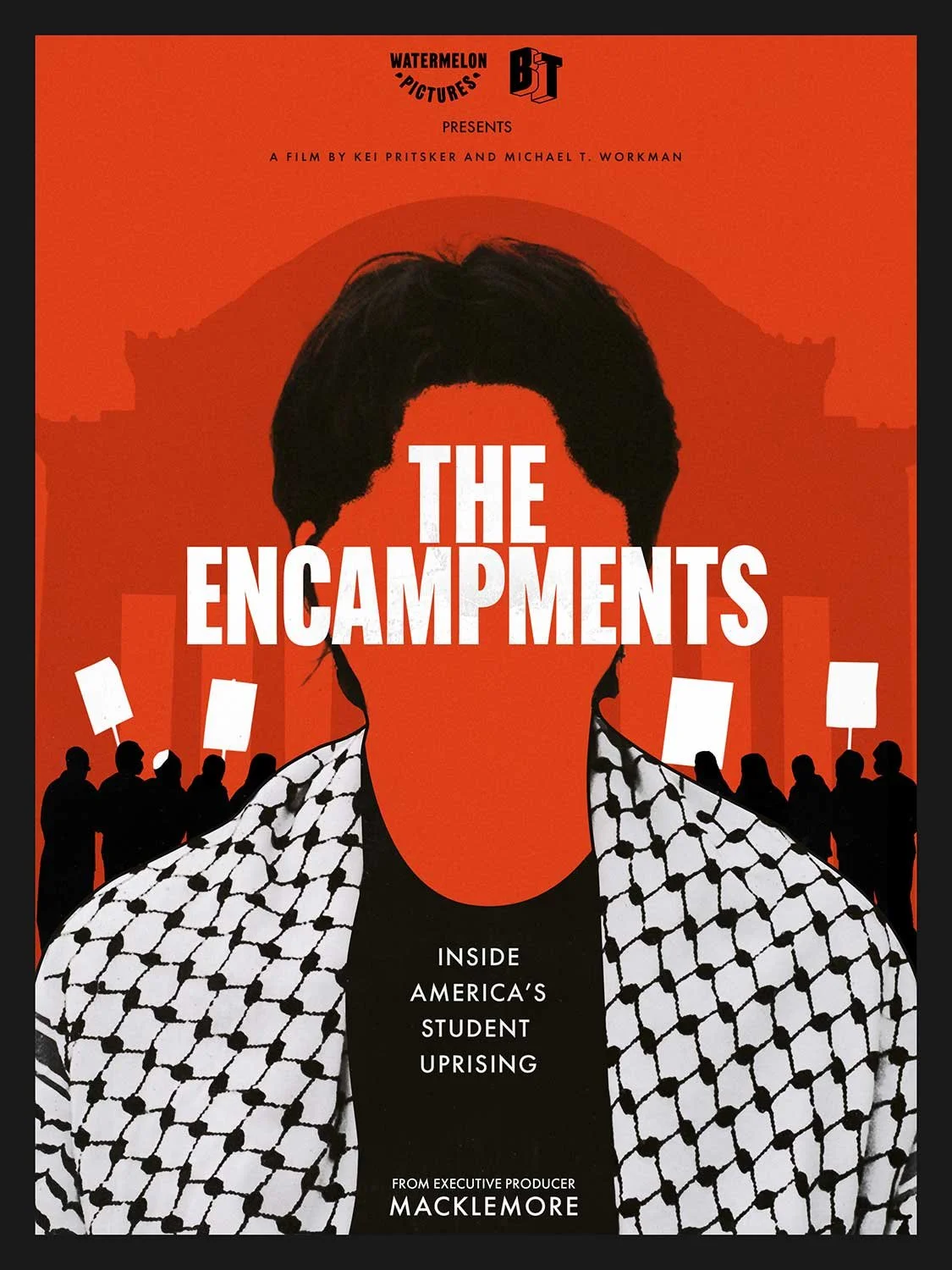
Watermelon has released From Ground Zero, The Encampments, Walled Off, and Life Is Beautiful. These are films that other distributors were too afraid to adopt because they felt “too risky, too controversial, too dangerous.” The distributors weren’t entirely wrong. When From Ground Zero played theaters, a group wrote a letter to every single venue screening it saying they were only showing one side. Some theaters called to say they were getting pressure to shut down its release. But Badie found this flattering: "If you're not making a splash and getting some of this resistance, then you're not doing anything." When they released The Encampments, Meta and Google refused to take their ads, calling the content “discriminatory.” LinkedIn deactivated their company page after they posted the trailer. So they did what Badie has been doing since he learned about activism at DePaul. They went around the gatekeepers through grassroots networks and community screenings and word of mouth. "All these obstacles being said, we still did tremendous numbers. It gave us more motivation."
Some buyers at major streamers have told Badie directly that anything related to the Palestine-Israel conflict gets routed to a sensitive buyers group, and some of the bigger theatrical chains have told him the same thing in a different language. Badie grew up in the distribution business and has watched how these decisions get made his whole life. But even within that system, he's finding allies, executives and people at publications who have been eagerly waiting for someone to build what Watermelon is building. "The fact that we're connecting all these people together, I feel very optimistic that change is there."
As an Arab-American, born and raised in the diaspora, I’ve always struggled with the guilt of distance. I ask Badie about that guilt. He is distributing films that document ongoing violence and erasure while living comfortably in America, far from where any of it is happening. Does the distance give him clarity, or does it feel like he's making art about suffering he's not actually living through? He answers this by telling me a story about his experience doing the Hajj (a pilgrimage to Mecca that Muslims attempt to do at least once in their life if they are able). He met a lot of people on the pilgrimage, and when they found out he was Palestinian, they wanted to kiss his hand out of respect.
"I felt so guilty. Let me stop you. I'm living in America. I'm complicit to what's happening to my people. Do not treat me the same way you treat a Palestinian because they're suffering. I am the opposite of suffering. I am probably one of the most privileged people on earth."
He thinks about that moment every day since, and it shapes his entire attitude towards Watermelon, which he describes neither as courageous nor revolutionary but as the bare minimum. He believes his activism is the least he can do given what he has. "What can we do? In our positions, we're blessed with certain things, and nothing happens by chance. I truly believe we're put in certain situations for certain reasons." And then a line I keep coming back to: "You don't do the work expecting the results to come from you. The results aren't from us. We have to do the work. The results are truly ultimately from a bigger being at play. But you have to do your work."
In the two years since launching Watermelon, he and Hamza have never worked harder in their lives. "5X, you know. And it's because the responsibility is kind of building up more and more of what we think that we can do if we could just work a little bit harder. We might be able to open this door or that door. If we work harder, we can do this. But there's a path we feel toward true impact." He's careful about where he puts the credit. "I don't want people to think Watermelon Pictures is this independent company changing the world. It's really the movement that's changing the world. And we just happen to be part of this movement."
Their plan has stages, and as he brings up the later ones, Badie gets more animated. Watermelon started with urgent films about Gaza and occupation. They've broadened to Sudan Remembers Us and Pakistan's Oscar submission The Glassworker. Now the ambition has become commercial. "It could be a superhero film where Ali is the main superhero, or Ahmed happens to be. But it's a film that works for everybody. This is what we call humanization through entertainment. I truly believe this is where we're gonna have the biggest impact." He knows the ceiling on even the best documentary about Palestine. "When this country wants to bomb a people and they just look at numbers, oh, it's 60,000 people, who cares? They don't know what the 60,000 people look like and who they are, and that these are humans."
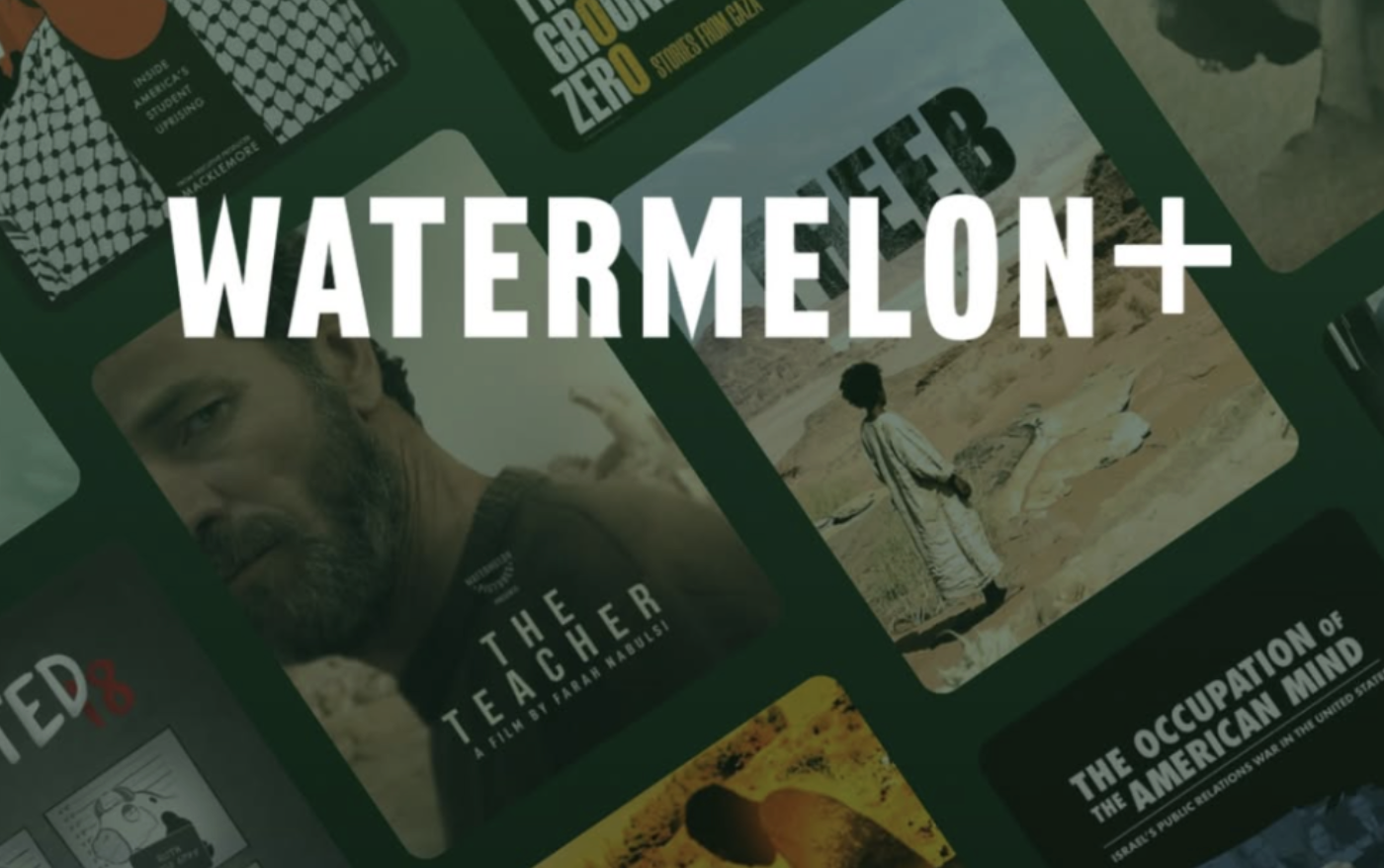
Recently, they launched Watermelon+ as a streaming platform and a cultural archive for Palestinian cinema. If Netflix wanted one of their films, Badie would embrace it because its audience is so much bigger, but he can't build a company on the hope that a larger entity says yes. Watermelon is not yet entirely self-sustaining, with MPI's other labels keeping the operation running and Badie and Hamza putting in their own money. "We do need to make sure the lights are on or this is not going to keep going."
Badie knows he’s playing the long game. "The Muslim population in the world is 2 billion people” he says, confident that their reach will grow. “There's no bigger market than the Muslim market if you look at it as a whole. Why don't we have our own anything?"
When I ask him about the personal toll, Badie says it's been virtually nothing. The grassroots support has easily eclipsed the institutional pushback. "I would say I'm flabbergasted at the love and support that we've got. When we went into it, we thought we're just gonna be running into people who want to kill us and shut us down. But the opposite — I can't tell you how many people we've met, how many people we've been talking to." What actually keeps him up is the fear that he's not doing enough. "My biggest concern, my biggest fear is that we're not doing enough. Some days on the weekend where you're not really on, you're like, I could have made 10, 15 calls and it could have been impactful. What am I doing?"
Nobody on his team is doing this for a paycheck. He regularly fields offers from people willing to leave major companies for a fraction of their salaries to join. He lives in an area with so many Palestinians it's called Little Palestine, the diaspora putting down roots in the middle of Midwest America. He's lost a few friendships over the past two years but doesn't dwell on it. "You can't compare the two or three people we don't talk to anymore to the tens of thousands of people that we've connected with."
"When you're in contact with people all over the world, but specifically in Palestine, when you see what they're going through with their resilience — how can we not? What kind of suffering is it for us? These people are risking their lives and going up in tents, going up against the most powerful army and the most powerful weapons in the world from this country, and they're resisting, and they keep resisting. I don't want to compare what we're doing to that. But that's why it's like a wake-up call for us. They're dying and putting their lives on the line and their children on the line and their whole livelihood on the line. The least we could do is this."
Badie's father and uncle came back to America after the Naksa in 1967 and spent the next fifty years building a film distribution company. Badie graduated from DePaul in 2004, the same year he was carrying those posters around campus trying to get anyone to look. Now he has his father's company, a label named after a fruit that got Palestinian artists arrested, and the same question he's been asking himself since Hajj in 2005, about what his privilege and his American comfort actually require of him. Watermelon Pictures is his answer, or the beginning of one.
"The saying that I like to say is we've been begging for so long for scraps at the table," he says. "It's time we build our own table."