
Loss, Grief, and Healing in ‘I Like Movies’
The following is a review of the film ‘I Like Movies.’ For our interview with the director please click here.
I met Bill (Name has been changed for the sake privacy) in my junior year of college. I was his RA and he was my resident. We connected immediately through late-night talks and shared adventures. He saw me as a mentor for school, relationships, and career choices. I saw him as a friend I cared about deeply. Bill had magnetic charm, quick wit, and found trouble everywhere. During one troubled moment, I helped guide him through depression and vulnerability.
A month later, he killed himself while under the influence.
His death broke me. For several years, I was consumed by guilt. I felt like I should have done more. I told myself that I should have been there. I withdrew from everyone and everything I loved. My friends reached out, but I pushed them away. I became a shadow drowning in self-loathing, questioning if I deserved love or acceptance. Nothing could change my course of self-destruction. I kept digging deeper into isolation.
I still haven't fully accepted that I can't keep punishing myself. But I'm getting better. With each passing day I get closer to completely forgiving myself.

In I Like Movies, we are introduced to Lawrence Kweller. Played by Isaiah Lehtinen with awkward and abrasive charm, Lawrence is a seventeen-year-old in suburban Ontario circa 2002 who has built his whole life around film. He wants to be one of the great directors, talks like he already is, but refuses to put in the work to earn any of it. Movies are the thing he loves most in the world and also the thing he uses to keep everyone at a distance. He's self-absorbed, inconsiderate, socially brutal. His father died by suicide and Lawrence carries that everywhere, weaponizing it as a shield and an excuse to treat the people around him like they owe him something for his pain.
Lawrence gets a job at a video store to save for film school and becomes fixated on his manager Alana, played by Romina D'Ugo, who becomes mentor and crush and emotional dumping ground all at once. Alana is patient with him, genuinely invested in his growth, and Lawrence can't see any of that because his narcissism has flattened her into a function. She exists in his life to reflect him back to himself. His best friend Matt, played by Percy Hynes White, gets the same treatment. Matt has been there through everything and Lawrence repays that loyalty by discarding him the second Matt develops a life that doesn't center Lawrence. You watch Lawrence hollow out every relationship he has, not because he's cruel exactly, because he's in so much pain that he can't conceive of other people having inner lives that aren't about him.

Chandler Levack, who wrote and directed the film from her own teenage years working at a Blockbuster, shows you all of this without holding anything back. She doesn't soften Lawrence and she doesn't punish him in the way movies usually punish difficult protagonists, with a big dramatic reckoning that earns them forgiveness. Lawrence's reckonings are small and embarrassing and they accumulate. He says something awful to Alana. He abandons Matt at the worst possible moment. He lies about his dead father to manipulate someone. Each time the film just sits there with what he's done and lets you feel the weight of it. Lehtinen's performance is remarkable because he never lets you forget the kid underneath the armor, the one who is terrified and grieving and has no idea how to ask for help so he just keeps taking from the people who offer it until they can't offer anymore.
I recognize a lot of Lawrence's worst habits. He uses his father's suicide to avoid confronting his own fears and shortcomings, he treats the people closest to him like they're there to serve a function, he fills every room with his own need and wonders why people leave. I had been doing the exact same thing with Bill's death for years. It was my shield, my excuse to regress, my reason to treat people like they existed to manage my feelings. The friends who tried to help me after Bill died, I burned through them. I took their patience and their love and I gave them my worst self and told myself it was fine because I was grieving. Maybe there was a part of me that was grieving, but truthfully a larger part of me was hiding behind grief so I didn't have to be accountable for who I was becoming.
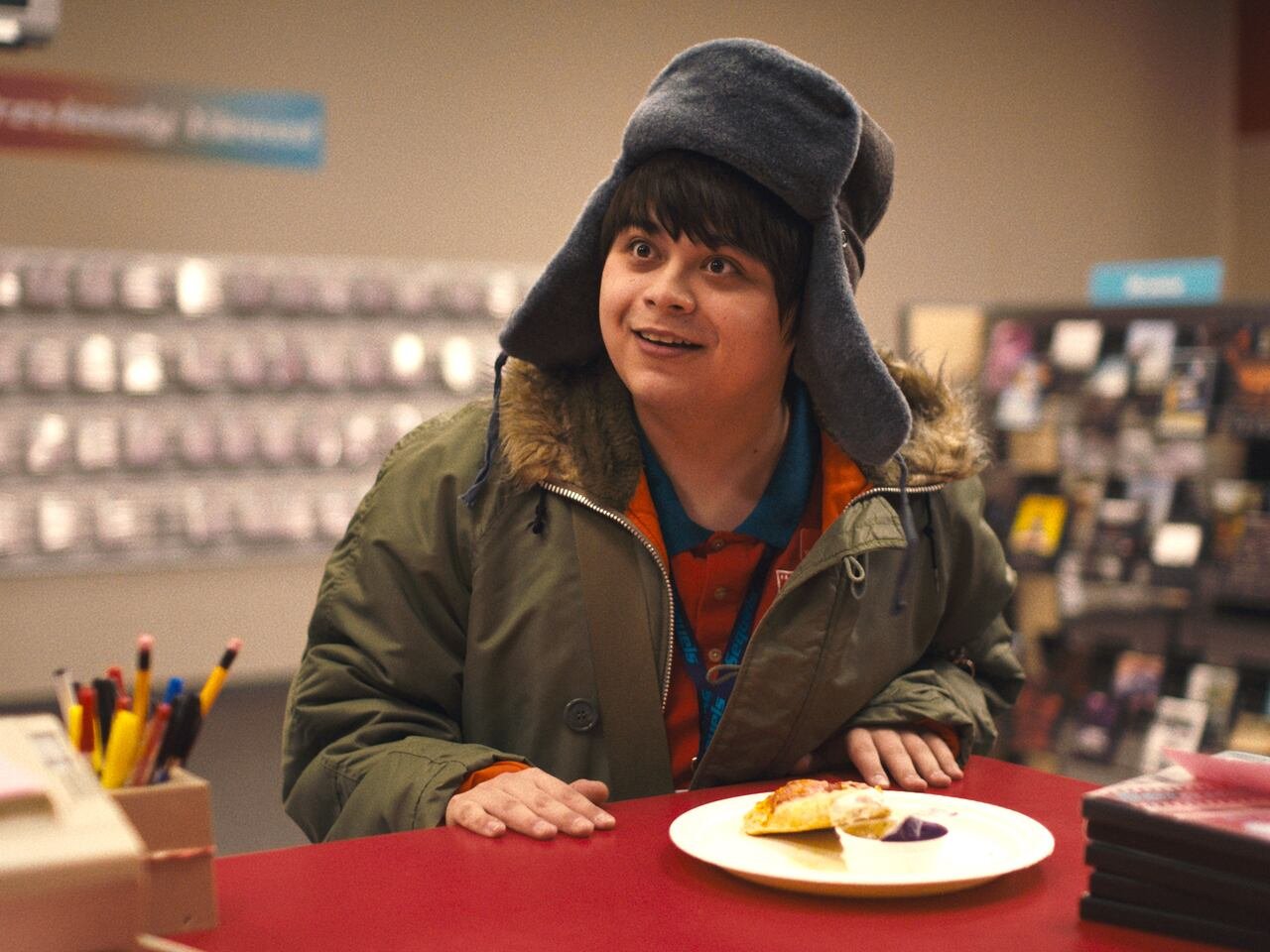
Lawrence gets there eventually. Not all the way, Levack is too honest a filmmaker to give you a clean redemption, but far enough that you can see him starting to understand what he's done and who he's hurt. By the end of the film, Lawrence is able to see his flaws clearly. He’s not “fixed” but he’s ready to work on himself.
I Like Movies will always hold a special place in my heart. Lawrence called me out on my worst habits and forced me to grow up. I started writing more seriously after this movie and I started FilmSlop because I wanted to build something where people could use film to talk about themselves honestly the way this movie forced me to, where criticism wasn't about a score but about finding where you exist within a story. Every essay on this site traces back to a fictional seventeen-year-old at a video store in Ontario who showed me exactly who I had been and made me want to be someone different.
That's why I like movies.