
‘Your Mother Your Mother Your Mother,’ and the Fallacy of Perfect Islam
From the moment I watched the trailer for Your Mother Your Mother Your Mother on YouTube, I knew I wouldn’t have the chance to see it in theatres. It is a movie about imperfect Muslims. Where I live, imperfection is meant to be concealed.
Your Mother Your Mother Your Mother follows Mahershala Ali’s Latif, a hitman struggling to balance his faith and familial obligations in the wake of his wife’s passing. The idea of a “perfect Islam” is deconstructed throughout the narrative—a notion that predates modern discourse but gained popularity with the rise of the phrase: “Muslims aren’t perfect; Islam is.” It is a hard concept to dispute, in part because it can serve as a reminder that Islam shouldn’t be held accountable for the missteps of those who misuse it. Still, this phrase can and does allow the perpetrators of harm to shirk responsibility. I grew up in a community that placed Islam on an untouchable pedestal while refusing to examine how people interpret, teach, and even enforce it; Bassam Tariq’s Your Mother Your Mother Your Mother brings that complexity to the forefront of the screen.
I want to be unmistakably clear: what I will next describe, particularly within my own childhood, is a bigoted society that hid behind Islam. My critique is of that culture—not the faith, which I deeply love, and not of every Muslim community, of which there are many.
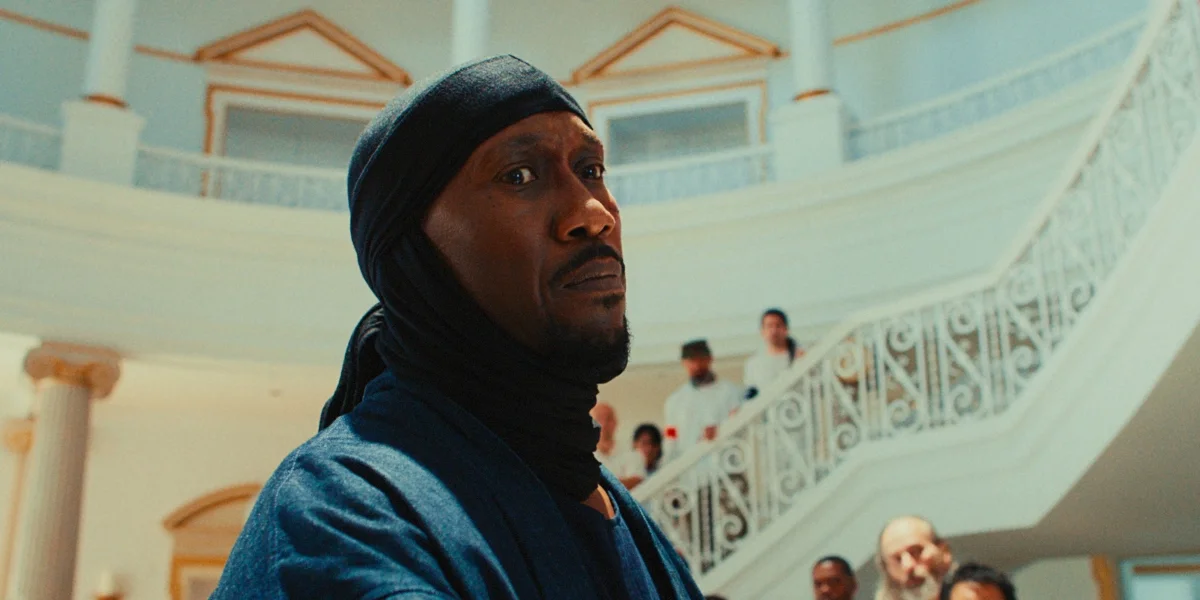
For any non-Muslims here, this movie takes place during the month of Ramadan, the holiest month of the Islamic year. Muslims spend this month praying, fasting, and seeking Allah’s guidance and forgiveness–carrying both spiritual beauty and social demands. Large Ramadan gatherings are common in Arab societies and burden women with the responsibilities of cooking, hosting, and managing household duties. It is meant to be a time of spiritual connection, but what if the burden of labour tires me out? What if I’m struggling to pray? What if society has deemed me unworthy of forgiveness? Latif’s first attempt to pray in the movie fails; while everyone in the congregation presses their head to the ground, he sits upright, hugging his newborn to his chest. This internal struggle follows him throughout the movie’s runtime.
My formative years unfolded during a staunch rise in local “Islamic” conservatism. Expectations were clear: this society is Muslim. It will appear Muslim. It will be governed Islamically. It is culturally Muslim. Islam is perfect, and this society is Muslim—ergo, this society is above criticism. Appearance was emphasised over substance, and I grew up unable to tell the difference between what was truly Islamic, and what was imposed in its name. Growing up in a post-9/11 world meant that some of what appeared Islamic, even here, was actually just an adverse reaction to Islamophobic rhetoric perpetuated by the West. Perfecting the performance of Islam mattered more than understanding it, and censorship only worsened my religious literacy; I truly thought that diversity of thought was antithetical to spirituality. My fondest childhood memories are of travelling, because it promised cinema access I rarely had. Honest conversation about our environment was discouraged. Religious interpretation was a luxury I could not afford.
Recently, a non-Muslim friend of mine saw me pray Fajr, and later she confessed that she couldn’t comprehend Islamic prayers. Her exact words were: you literally press your forehead into the ground. I don’t know how you can be so vulnerable. Of course, she was unaware of my lifelong struggles with prayer, and in many ways she was right; praying is vulnerable. It can be hard to maintain. My childhood was spent hiding in my room for three-minute intervals, five times a day, in hopes of convincing my parents that I’ve fulfilled my religious duties.
I brought that very tension into my viewing experience, and at every turn I was reminded of my own journey with faith. Throughout the movie, you can hear the saying, “La ilaha illa Allah,” which means, "There is no God but Allah.” Language can be complicated; Arabic is my first language, but I associated this religious saying with my mother’s frustration, a common thing to say when she ran out of patience. I had no real awareness of the power or importance that sentence held. There was a theological distance between my mother’s words and what I understood from them.
This culture-sanctioned Islamic lifestyle bled into the walls of my childhood home—neither I nor my parents were aware of it until much later. Adia’s performance as Latif’s daughter Fatiha resonated deeply; in her relationship with her father I saw my own relationship with my parents. Her use of the internet mirrored my own—not exactly furry porn, I’ll admit, but the general idea of engaging in subcultures parents don’t understand or approve of. I was lucky to grow up with the internet, but it also fuelled my rebellion against certain norms my parents couldn’t see past. I dated. I smoked. In art class, I wasn’t prudish about nudity. I hated sitting idle and I liked to talk back. I questioned the way I grew up and the bigotry that surrounded me. Fatiha is the same: she pretends to fast, watches furry porn, talks back to her father, crushes on boys, and questions her faith and her place in her community. This difference in practice is a source of constant tension between her and Latif. I understood who Fatiha was because she was me. My parents’ desires for me to grow up Muslim, but not differently to them, reflected what they interpreted as “perfect Islam.” But the reality is faith cannot be imposed or inherited in a complete, unquestioning form.
This movie wouldn’t be what it is without the load-bearing wall of a performance Mahershala Ali gives. He’s delivered this kind of quiet strength before. In 2017 Mahershala Ali won his first Oscar for his role in Moonlight—another movie I couldn’t see in theatre. I remember being struck dumb by his acceptance speech for a number of reasons: that he was Muslim, that he was in one of the most pivotal queer movies in history, and that both things could be true at the same time. At the time I knew very few Muslims that weren’t staunchly anti-queer, and the ones I did know also struggled with their faith. In his acceptance speech, he’d said that his teachers told him, “It’s not about you. It’s about the performance.” But to me, it was about him—or more aptly, who had been performing. Until then, it felt as though a hallmark of “real” religiousness was homophobia, that queerness was simply incompatible with Islam, and as someone struggling with her own sexuality, I thought I’d never be allowed to reconcile the two. He made room for me to see differently.
Latif is a Black Muslim man in Houston—this film understands the crossroads he sits at with real nuance. It maps where systems of oppression overlap. Racial prejudice runs rampant in the Arab community, where people casually assume he can’t speak Arabic. Hatty’s “halal porn” enterprise—alongside his exploitation of women—exposes the limits of self-serving religious interpretation; who defines what is “halal” here? Latif’s brother and his family don’t understand or attempt to understand Islam for his benefit. And the greeting “As-salamu alaykum”—“peace be upon you”—is spoken in the same scene where Mike injects fear and violence into Latif’s life.
It should be noted that this film is being released amid rising Islamophobia, and I suspect that the obsession with Muslim perfection can be a reaction to that pressure—that the religion must be performed flawlessly to dissuade hatred, as if we could fix bigotry by simply behaving better. Tariq weaves references to ISIS multiple times as a reminder of how readily Muslims are reduced to that association, even from within our own community. Even as I’m writing this, I’m terrified that naming these failures in Arab Muslim culture risks feeding into Islamophobic narratives, but I hope that the act of honest critique—from within and for each other—shows us that faith can survive scrutiny.
So the question is: if Muslims aren’t perfect, but Islam is, why did it feel like I was following someone else’s interpretation of Islam, instead of Islam itself?
In an attempt to answer this question, or to reclaim Islam as a faith and not a cultural obligation, I started trying to understand the Quran. My Arabic was weaker than it had been growing up, and Quranic Arabic requires both fluency and an understanding of Hadith (a historical record of the Prophet Muhammad’s (ﷺ) teachings and actions) that I lacked. The Quran and Hadith hold incredible significance in this movie; Latif was a Quran teacher, and the title comes from a pivotal Hadith that emphasises kindness towards mothers. Understanding the Quran was important to me, and I wanted to be able to ask questions without being seen as rebellious or lacking faith. My mom saw that struggle firsthand. She and I spent a lot of my childhood at odds with one another because of the way I questioned our culture. None of her answers were ever satisfactory, and in hindsight I think my relentless scrutiny had frustrated her because her answers weren’t explanations—just culture, regurgitated. In an attempt to connect with me, she suggested we take a Quran class together.
I should emphasise that what made this class special was its teacher, largely due to her clear-eyed grasp of how systems of oppression get rationalised through faith. My ability to understand the Quran compounded, but this transformation extended beyond me to my mother. It only occurred to me in these classes that she and I were raised in the same culture. We inherited identical teachings—neither one of us was given space to interpret or challenge. We had long conversations that unravelled what we were raised with: mistaking culture for doctrine, pervasive misogyny, racial bias in the Arab Muslim community. Together we started to understand what we mean when we say, “La ilaha illa Allah.”
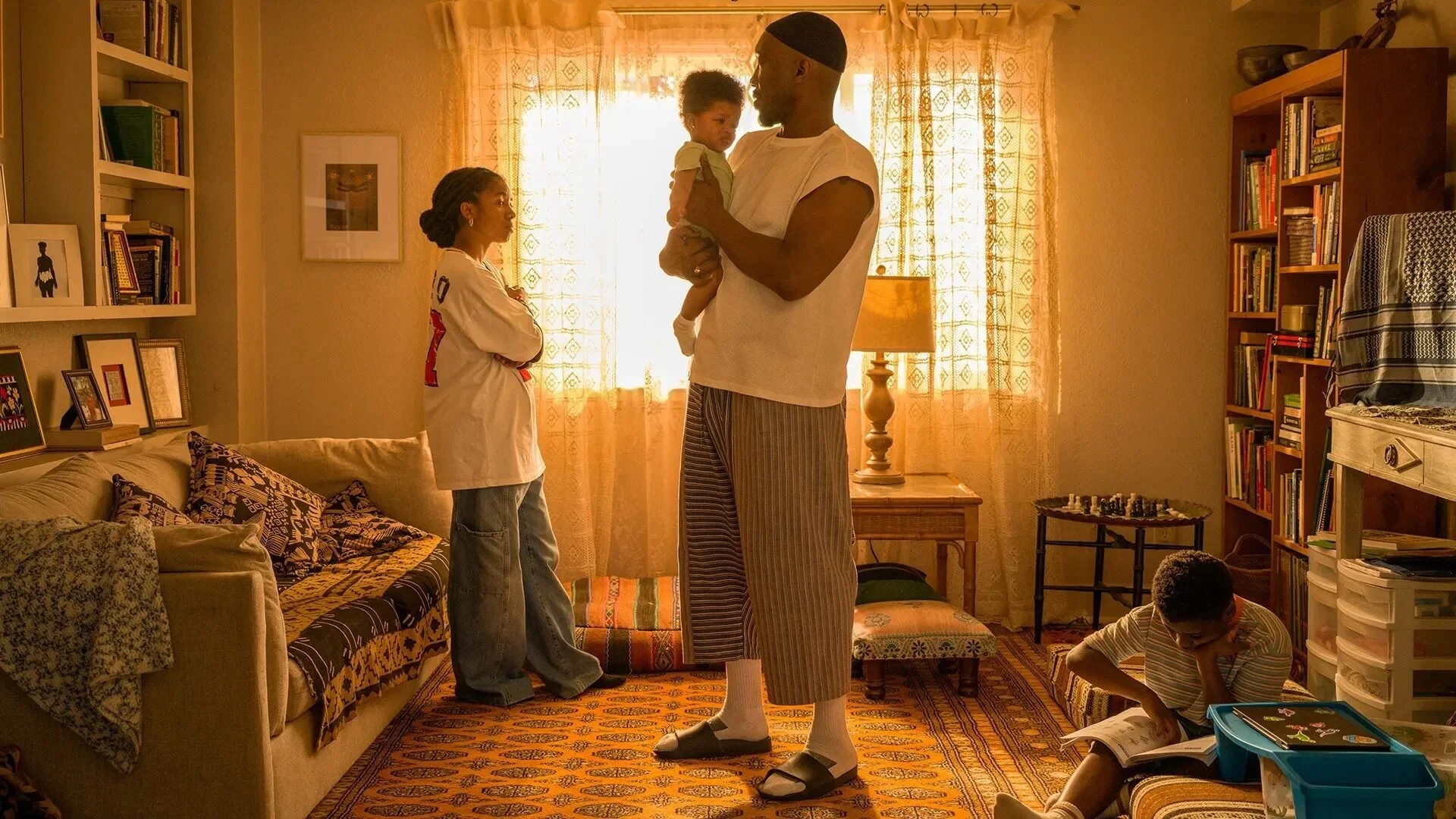
In the movie we don’t end up knowing much about Fatiha’s mother, but I’d like to tell you a little bit about mine: her name makes you think of bird songs. She is a middle-school science teacher. She hates cooking. She carries cans of tuna to feed street cats. She is my biggest fan and most steadfast supporter. She brightened my childhood with art, self-defence classes, music lessons, dance recitals, sports clubs. She smuggled books from abroad that she knew I wouldn’t find here. She apologises when she’s wrong. When she saw me struggling with my faith, she signed us both up for Quran classes, because she wanted to be able to answer my questions, too. Who deserves the best of me? My mother, my mother, my mother.
Tariq spends the film’s runtime showing us that a strong community is built on our ability to forgive, to understand the circumstances of others, to be there in times of need, and to allow people’s faith to fluctuate. I noticed that once my mother started to break out of that culturally-Islamic mindset, she surrendered major parts of the support system around her. It was a hard transition. It helped me understand that the way I grew up was a means of protecting me, in the only way she knew how. But she also gained a lot in return: confidence in her faith, an understanding of my life, and iron-clad community ties that could withstand criticism. She carries a village and is a pillar of her community. I saw a lot of her kindness and patience in Sheikh Abdul Malik—he, too, was a pillar in his community.
And now, two years after beginning this journey, I can say with certainty what is Islam and what is culture. I understand the Quran more. I pray as often and as diligently as I can. When I struggle with faith I know that’s just part of the deal—not a failure on my part or a reason to be alienated.
What saddens me is that I only earned this peace after years of silent struggle. I mourn what could’ve been if we’d just allowed people to be “bad” Muslims—as in, Muslims who questioned the culture we were in, which isn’t bad at all. And still, this culture persists. It’s what is expected and what must be performed, and only my privilege allowed me to see outside of it. This is a world full of Fatihas and Latifs. They may never find themselves in this movie simply because they can’t—because the movie isn’t available here, due to the pervasive need for perfection.
I hope I’m wrong. I hope Your Mother Your Mother Your Mother gets a local theatrical release. There is a beautiful, vibrant, passionate community of Muslims here who want to know Islam without a biased interpreter coming between them. Let faith be imperfect—let people find religion using a different path. Islam doesn’t need bigoted guardians. It does not have to be protected through censorship or enforced uniformity; it is perfect. La ilaha illa Allah.