
For someone who, as the co-founder of FilmSlop, allegedly loves exploring his deepest vulnerabilities through film, I think I’ve been talking a big game. Recently, at the Mill Valley Film Festival, I saw two movies that made push really come to shove: La Gradiva and Love of Your Life). I texted my friend Max: "I think the Mill Valley Film Festival is trying to kill me."
These were films that struck a personal chord with me, tangentially excavating one of the most traumatic things I’ve ever gone through. Of course, this was right before I saw the third movie in the Triple Feature of Emotional Destruction and Complete Mental Obliteration, (Everytime), which directly recreated the aforementioned traumatic experience for me. Needless to say, on October 5, 2026, I was not feeling great about movies and their power.
(Note: The following article contains light spoilers for Love of Your Life (2026), La Gradiva (2026), Everytime (2026), and Mouse (2026). The following review also discusses suicide and drug use. Names in this piece have been changed for anonymity.)
I do not know how to start this piece. But I also know that I need to write this piece, or else I will go insane. I guess chronological makes the most sense.
La Gradiva: Do You Want to Return to the Physical Sensation of the Most Traumatic Moment in Your Life? No? Too Bad!

I saw La Gradiva with my friend Max. Max is one of my closest friends in the world, and he's seen me through many phases of my life. He’s someone who I talk to about anything and everything (and also truly everything), but he's also never seen me at my most vulnerable. No one has. That's a piece of myself that I don't think anyone has fully seen, and because of my classic male conditioning , I try to keep that all to myself. The last ten minutes of La Gradiva, however, forcefully took me there.
The film follows a group of students who go on a trip, including a lone, tortured student named Toni (Colas Quignard) who ends up killing himself. The film closes on his friend, the suave and popular James (Mitia Capellier-Audat), who completely breaks down upon learning what happened. The closing narration then tells us that James essentially disappears, his life completely derailed by the death of his friend. As the credits close in on us, we abruptly see his entire future reduced to one singular moment.
When I found out that Jack had killed himself, I reacted in the exact same physical way that James did. It was uncanny how exactly it recreated my own body movements in 2019. When I heard the news, I let out an exclamation and sank to a seated position, holding myself, completely stunned into silence. I was a second-year RA, and Jack was my resident. Jack was my friend, but I also felt a sense of responsibility for him. He was a first-year, younger than me by two years, came to me for advice on his love life and classes, and would jokingly refer to me as his dad.
When I saw James sink to the ground, I went to the exact same place. Everything was spinning, and I felt a way I hadn't felt in six years. Everything felt wrong, and I had no words. Max had never seen me in this place, and I could tell. I'm glad he was there, and I'm glad he tried to pat me on the back to comfort me when I went nonverbal. I could tell he didn’t know what to do, and honestly, I didn’t know what I needed. The entire reality of the moment felt fundamentally broken, and on the drive back, once I found myself again, I was in a headspace I can't even remember. James lost himself after losing his friend; he felt the guilt and let it take him into nothingness. I almost went to that place, and I am very familiar with the path into the dark.
Love of Your Life: You Actually Can Run Away From Your Life. It’s Awesome
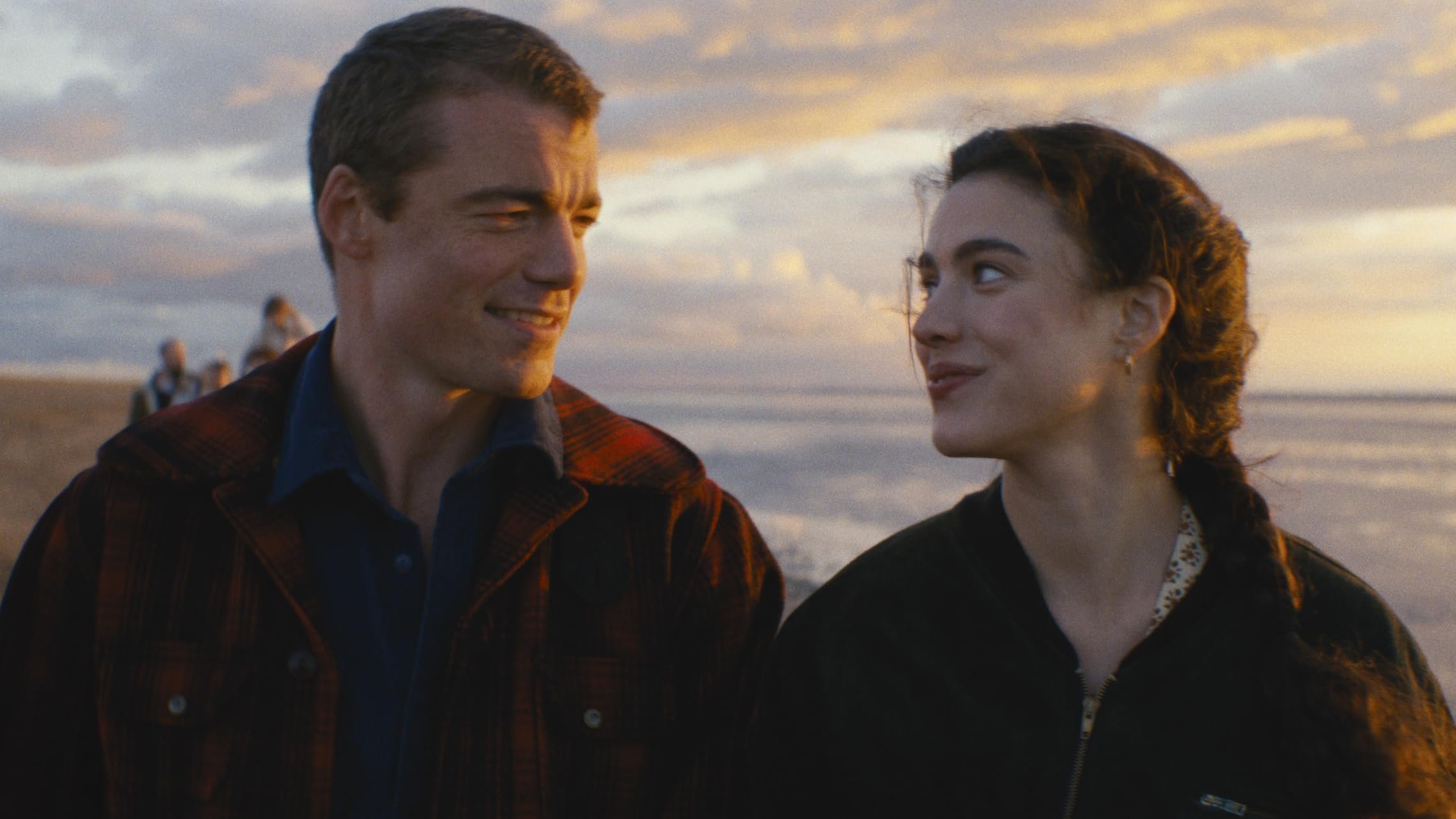
“They say you can’t run away from your own life. You can. It just turns you into a monster.”
I went into Love of Your Life blind, my decision to watch the film guided by the stars (influenced by the stars in the cast & the Letterboxd stars I saw a friend give it). Of course, if I had looked at a synopsis, I would have learned the film is about a woman who loses her husband (Gabriel Basso), blames herself, and runs away from her life into nothingness (See James re: La Gradiva). I know this path relatively well. To use my favorite internet word, I had previously “microdosed” it in my own way. Following Jack's death, I pushed my friends away, and tried to run away from the version of myself that I had spent 19 years building. I let go of a lot of my old routines, rabidly met new people, tried to replace the old ones, and ran as fast as I could. I recognized myself in Maya’s patterns as she completely uprooted her life, moving away from Boston to Portugal.
When Maya’s husband dies, she aggressively severs ties with every piece of her life. She changes her number, leaves her house, and skips her husband’s funeral, overwhelmed with grief and afraid to confront that loss. When Jack passed away, I didn’t go to his funeral either. I was too scared to confront that loss, too scared to see his family, too afraid to make it real. In a way, I had also blamed myself, feeling (illogically) responsible in some capacity. As his RA, I felt like I could and should have guided him away from that decision. Perhaps, because I had talked a few people out of suicide in high school, I felt as if I had control over death, which gave me a misguided sense of responsibility. I never really entirely understood why I skipped his funeral (maybe it was my guilt or maybe I didn't want it to feel real) but I recognized a piece of my behavior in Maya.
Maya runs away to Lisbon and tries to fade into obscurity and hedonism until she meets the delightfully charismatic Felix (Aaron Pierre) who is also reeling from his own kind of grief. Felix pulls her into his orbit, trying to bring her into a life that isn't hers. Even though in another life they could have been right for each other, she’s not able to accept it without having the previous pieces of herself. I won’t elaborate too much, but I am extremely familiar with this. In my journey with grief, I tried to run away into multiple lives that didn't belong to me, but none of them ever felt right until I learned to come back to my own self. I have always been blessed with amazing friends and family, and I'm so grateful that they pulled me back to the fundamentals of who I am before I could completely let myself fade into something that wasn’t mine.
Maya eventually finds the strength to return to her own life. She finds herself brave enough to go back and meet her late partner’s mother, who, in a touching close, tells her: “Grief is never finished, but neither is love.” It’s triumphant, enveloping, and supposedly calming. But in my case, it left me in a weird place. I wouldn't necessarily call what I had for Jack love. He was someone I felt responsible for, someone I cared for, and a friend. But if he was still alive today, I’m not sure how close we would have been. The grief is certainly still there, but it wasn’t grounded in love. It was something a lot more self-punishing (more on that later).
Everytime: Hahahahahahahahahahahahahahah
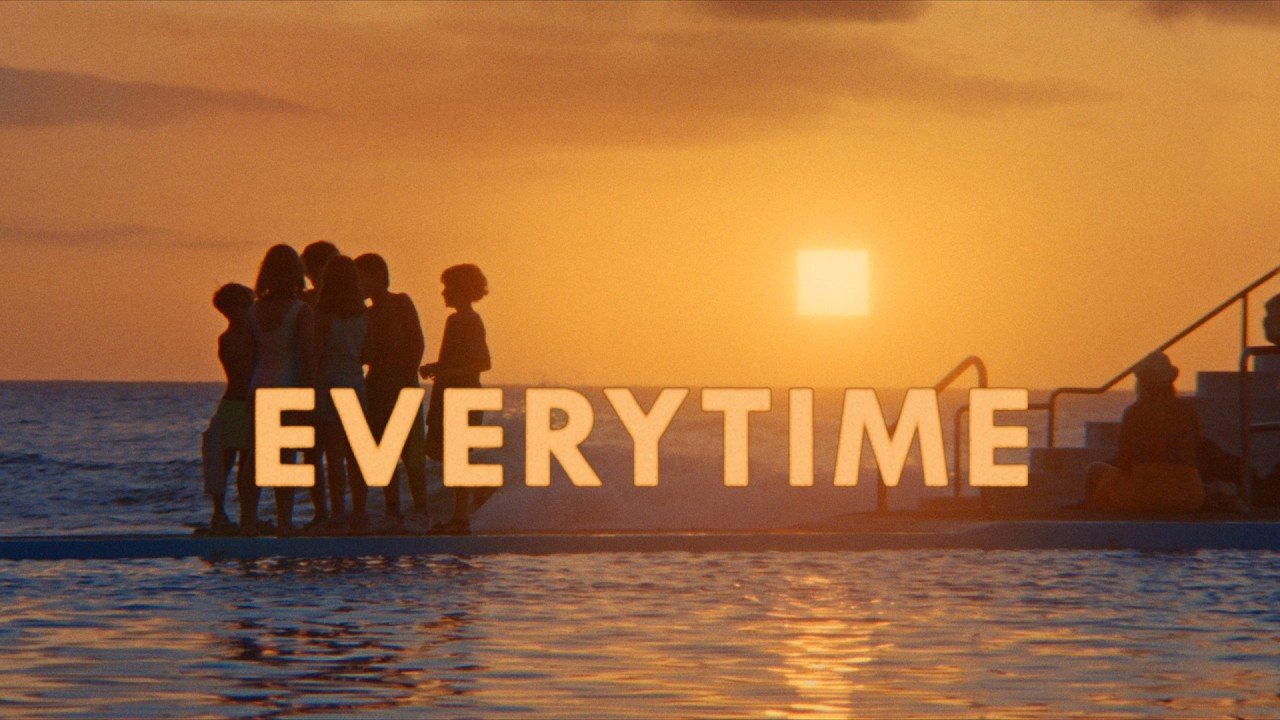
I went into Everytime mostly blind too (at a certain point, I think it’s my fault for doing this to myself) and I don’t know what I expected, but certainly not the degree of torture that I was put through.
Everytime recreates the exact way that Jack passed away. Or at least how I visualized it when I was first told that he took drugs and jumped off a building. That is exactly what gets depicted in Everytime via some genuinely remarkable camera movement. But in that moment, I really couldn’t bring myself to care about camera movement. What are the odds that a highly recommended film festival darling would recreate the worst news I’ve ever received?
The remainder of the film is about understanding those feelings of loss, tracking a mother, a younger sister, and a boyfriend navigating the wreckage. But I was not a parent, we were both straight, and there was no love there. That catharsis was not for me. It was just an empty shell to awesomely remind me that despite what I claim, I am holding onto some amounts of guilt. To add salt to the wound, the film uses the surrealism and beauty of a sunset as an emotional anchor. Recently, the sunset has been something that makes me smile, something that connects me to the people I care about. Everytime colonized my sunset and turned it into something soul crushing.
I am certain there’s some beautiful revelation of catharsis I could have gained through it, and I am certain I will need to rewatch it and get there one way or another. But in this moment, sitting in the dark, all I could feel was cruelty.
Shortly after, I texted Max again: "I was joking before but I actually do think the movies really want to kill me."
Mouse: Why Are You Feeling This Way You Stupid Little Idiot Boy?
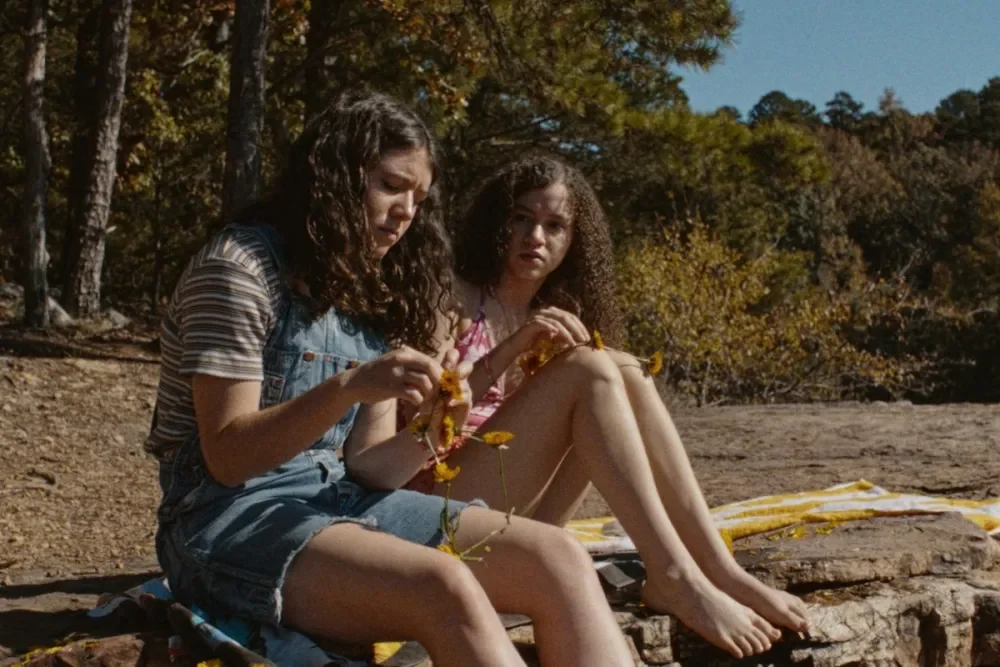
Beyond being a perfect movie (please watch this film), Mouse brings to surface the final piece of my spiral. Kelly O’Sullivan and Alex Thompson’s second feature circles the idea of who deserves to grieve, and at what level. A mother losing her daughter will never be the same as a best friend losing her best friend, which won’t be the same as an acquaintance losing a friend.
Jack was not my son, not my best friend, and certainly a friend, but at the end of the day, he was someone I knew for less than four months. I had this exact relationship with so many of my residents as an RA, and there are so many of them who I don’t speak to anymore beyond the occasional Instagram story like. And if Jack was still alive today, I probably wouldn't think about him every week like I do today. I probably would have spoken to him once a year on his birthday to give a feeble check-in.
So why do I care so much? I can’t call what was here love. Is it because Jack was a reminder of my failure? My lack of control? Was it sheer unfairness? There are so many others who have much more claim to the legacy he left than I do. I didn’t even show up to his funeral.
Jack was special, and I am glad I met him. But as selfish as it is to admit this, I’ve been holding onto myself with his grief. In Mouse, Minnie uses the memory of her best friend to try to turn herself into something she isn't, constantly measuring her grief against the mother's. At least Minnie could actually call her a best friend.
Mouse made me realize something brutal in my own selfishness, and this was something I couldn't have understood without the other three movies priming the canvas. I’m thankfully no longer as young as I was when I had to deal with this guilt, and now that I’ve been transported back to it through the lens of four films, I know that I still have some work left in my journey. And sure, it was torture and felt like eternal damnation having to go through the exact same traumatic event that led to my darkest time, but I’m glad I could come back and look at how I let it consume me and how I let myself hide behind it.
It’s really easy to lose yourself and stop trying. It’s even easier when fate hands you a tragic excuse that you can martyr yourself behind. I used the idea of Jack, the tragedy of his lost future, and merged it with my own future to have a crutch. It’s easy to be sad. I did the most selfish thing I possibly could have to him. He was nothing but kind and a friend. I used his memory as an excuse to justify my own weaknesses and my own descent into the dark.
It’s also really easy to be harsh on yourself. I probably won’t stop doing it (and I’ve certainly been doing several versions of it throughout this piece), but I am starting to understand that at a certain point, I need to stop mistaking being critical for being self-aware.
I will always miss Jack and I will always grieve for him. But I am still learning to grieve for him properly, to think about him with the respect he deserves: a brilliant engineer, and one of the funniest people I knew. I need to stop looking at him through the lens of my own selfish loss. It’s so embarrassing how long it has taken me to find the words for this, but I am trying to learn how to let go. I’ll forever remember how lucky I was to meet him.
The movies have not been very kind to me this week. But I’m deeply grateful for the intense reckoning they’ve put me through. And I know that for as long as I live, I will continue watching, writing, living, and breathing movies, praying that they continue making me a better person.