
‘It Must Be Heaven,’ But Apparently Palestine Has to Be Hell
There is a little game I play anytime I watch an Arab film. I open up some reviews and start counting how many times I see the words “Urgent,” “Important,” “Deeply human,” “Raw.” I read some more and suddenly all I’ve gathered about said film is that it is “Powerful,” “Necessary,” “Devastating,” “Timely,” “Haunting,” “Insightful.”
And then there is that word: “universal.”
I hate that word.
It is probably the most flattering word you can use to describe a film from outside the West. Grief, loneliness, family, love, aging, heartbreak, suddenly they become “universal” once someone from somewhere else makes them legible to a Western audience. Of course these things are universal. But why does an Arab film have to prove it? A Western film can assume its audience will understand a character’s loneliness without first explaining the culture that produced it. It seems to me that an Arab film often has to first earn that same assumption. And this is exactly why I always find myself returning to Elia Suleiman’s It Must Be Heaven (2019), because I find it disruptive of this pattern.
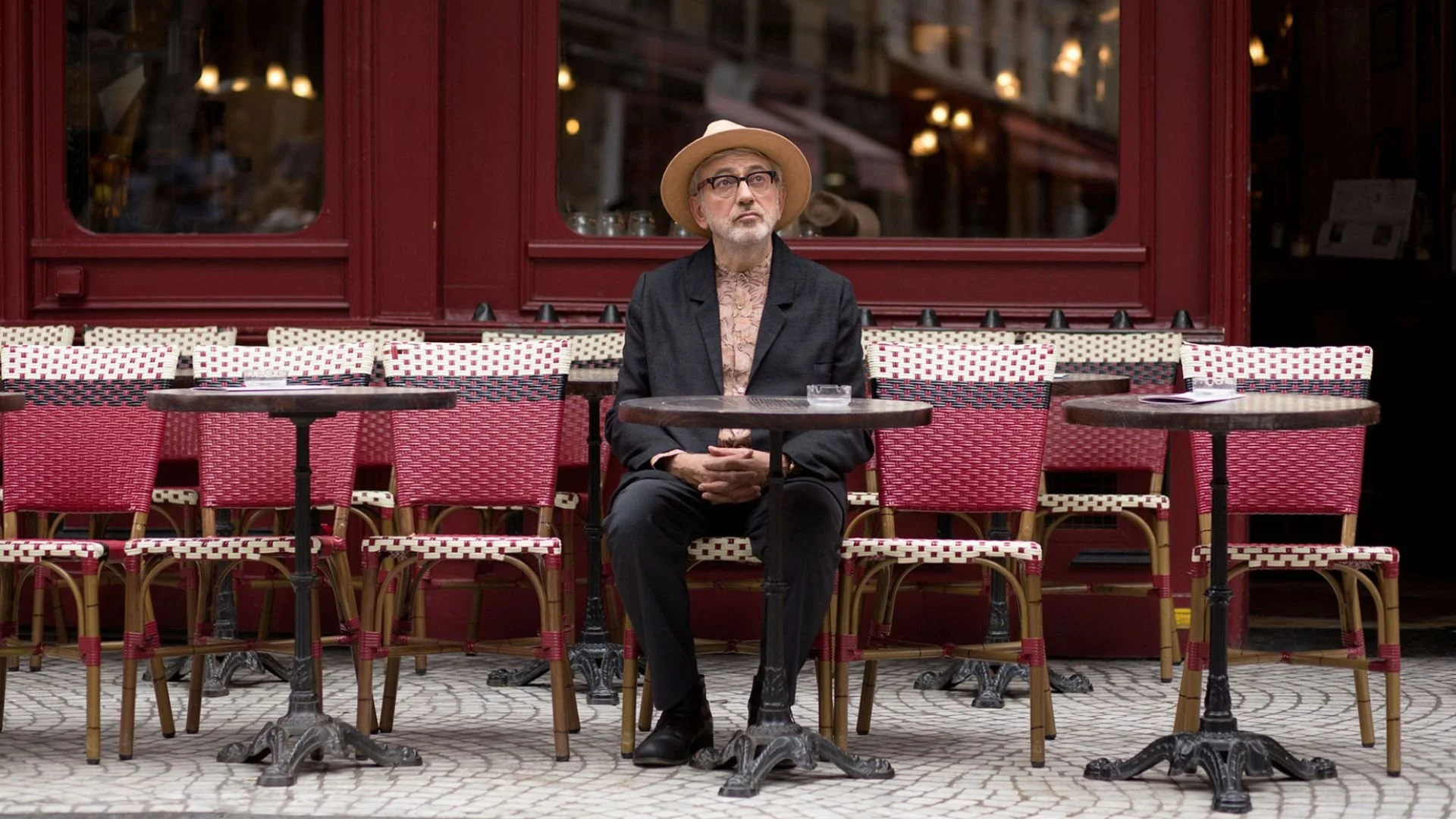
The film follows Suleiman himself as he leaves his home in Nazareth and travels to Paris and New York looking for a production partner and funding for his new film. Once he gets there, he watches people, police, soldiers, tourists, streets, restaurants, advertisements, all the little interactions happening around him. There is very little conventional exposition. There is no voice-over explaining what any of it means.
Suleiman’s Palestine is not absent from the film, but he disrupts the idea that Palestine is defined exclusively by violence and suffering. Because if you have watched enough Arab cinema, you know how easily suffering can become the plot. Give me a Palestinian family being separated by a checkpoint. Give me a Syrian refugee crossing a border. Give me a Lebanese mother mourning her son. Give me an Iraqi woman escaping an abusive household. Give me a bombed-out building, a crying child, a dead relative, a shot of rubble, a war, a genocide. Then put it in a European film festival, have someone call it “urgent” and “deeply human,” and everyone goes home feeling like they have learned something about the Middle East. (I also hate this word, but that’s a story for another day.).
I know this sounds reductive. It is. But it is also exhausting to watch the same narrow set of experiences become the easiest way for Arab cinema to be taken seriously. And I think part of why this bothers me so much is that I recognize that impulse outside of film too. I’m Lebanese-Armenian. I grew up in the Middle East between Lebanon and Jordan. For most of my life, I never really thought about what it meant to be the person from somewhere else. But I think moving to Armenia made me much more aware of what it feels like to have other people’s ideas about your home arrive before you. “Were you forced to wear a hijab back home?” (I got asked this multiple times…) “How do people go to school if there’s always war?” “Don’t they kill women?”—all are questions stemming from genuine curiosity and aren’t ill-intended. I hope… But what bothers me about these questions is the assumption underneath them, that there is a version of the Middle East I am supposed to confirm for you. The same way Arab films are expected to educate before they are allowed to simply exist.
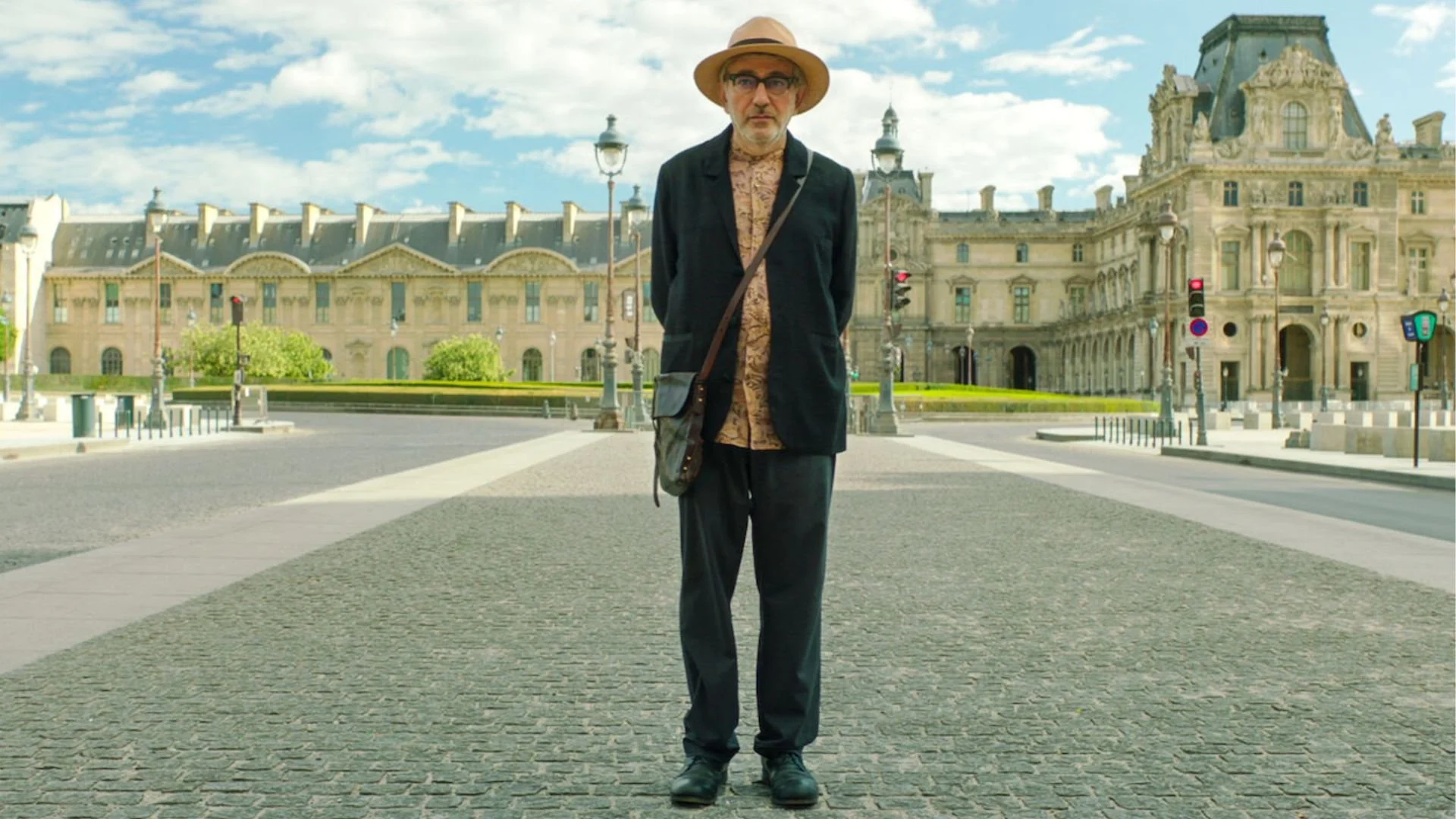
What I’m trying to say is, I understand perfectly well why Arab filmmakers make political films. I would actually argue that it would be ridiculous to expect them not to. My problem is not political Arab cinema, but rather, the Western demand (or almost expectation) for it. I think Suleiman understands this so well and flips it completely, because It Must Be Heaven gives us Palestine without giving us the Palestine that Western audiences have been taught to expect. This is even satirically referenced in the film itself, when a French producer rejects Suleiman’s film because it is “not Palestinian enough.” It is such a ridiculous complaint, because what exactly is a Palestinian film supposed to look like? Well apparently, it has to look sufficiently Palestinian for someone who is not Palestinian to recognize it, contained within the boundaries of what is already understood as Palestine.
In Edward Said’s Orientalism, he describes a Western tradition of turning the “Orient” into something to be observed, to be studied, to be explained. The “Orient” is an object of knowledge first, and merely exists as a place second. Here however, Suleiman makes the Western observer part of the picture. In Paris, police officers patrol the streets and tanks roll through an eerily empty city. In New York, people casually carry assault rifles and rocket launchers, police chase a Palestinian solidarity protester through Central Park, Suleiman is subjected to heightened security at the airport. Surveillance, militarization, violence, absurd displays of authority, paranoia, all the things we have been taught to associate exclusively with the Arab world, and specifically Palestine in this case, start appearing somewhere else.
Suleiman is obviously not saying “Look, Paris is exactly like Palestine.” Obviously it isn’t. That would be a ridiculous comparison. But I think that is where the film messes with the Orientalist gaze because Orientalism relies on distance. The Arab world is supposed to be over there. The crisis is over there. The violence is over there. The irrationality is over there. The occupation is over there. The injustice is over there. Meanwhile, the West gets to imagine themselves as the rational democratic observers looking in. But here, the Palestinian is the one doing the looking. And no. He is not looking at Paris or New York with the awe that we might expect from a story about someone arriving in the “developed world.” He is looking at them with the same suspicion, the same attention that he applies to home. We see these developed places that we are so accustomed to treating as the standard against which everywhere else is measured, resembling us. And apparently, that is a bit of a problem when the whole point of the hierarchy was that we were supposed to be the ones at the bottom of it.
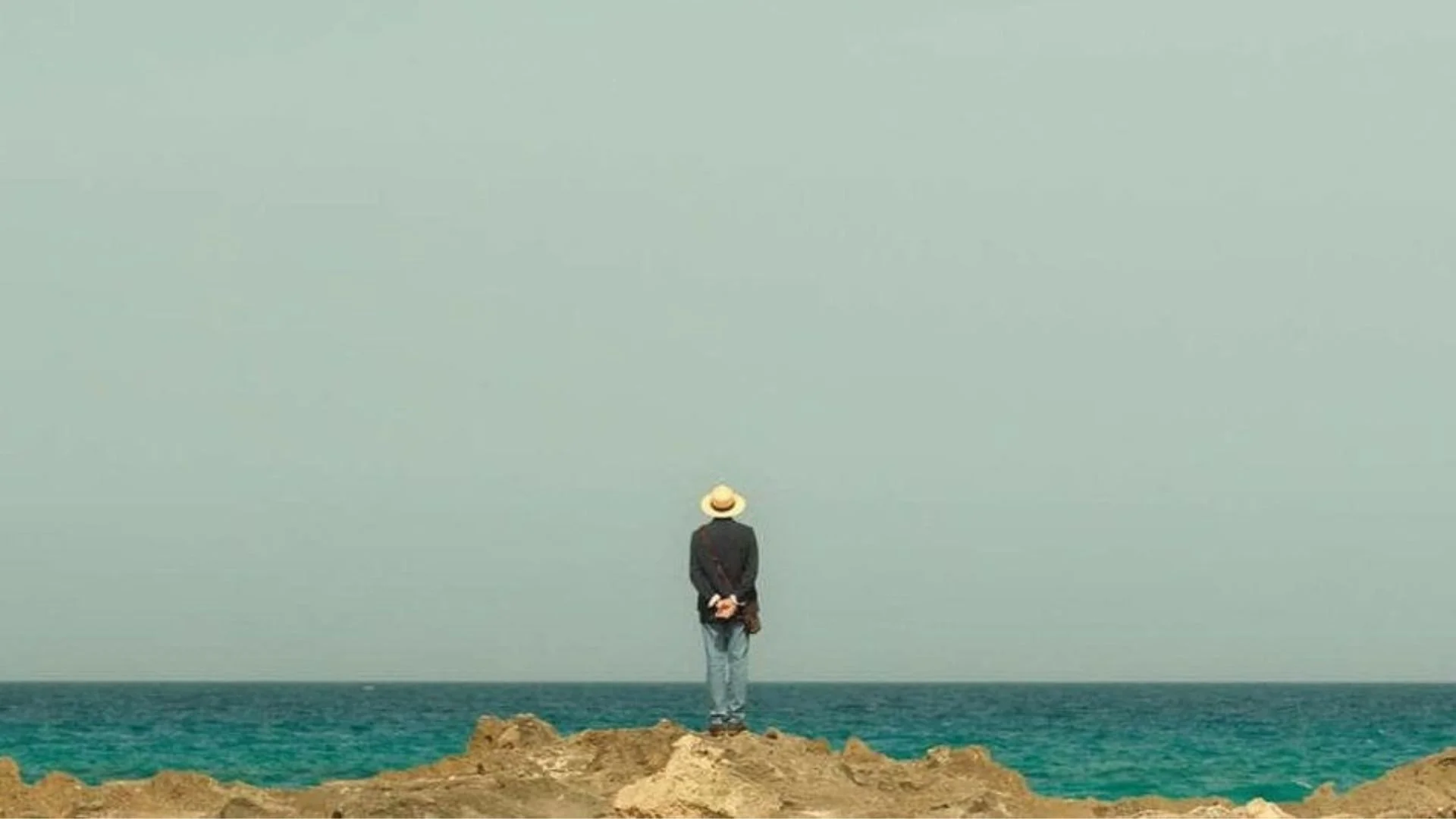
We are so accustomed to the Arab world being presented as the place that needs to be examined and questioned that it feels almost ridiculous to imagine doing the same thing to the West. Imagine watching an American romcom and demanding to know what it says about American society. Imagine telling a British filmmaker that their characters need to be “more universal.” Nobody does this. Western characters are already understood as people. Their individual stories are allowed to remain individual. But Arab characters have a habit of becoming representatives. They must always stand in for a bigger political message. An Arab woman cannot just be a woman. She is now a statement about gender inequality in the Middle East, usually either proof of its oppression or proof that it is becoming (yay!) “modernized.” A Palestinian man cannot just be a man. He is now a symbol of resistance. And depending on the film, he is a refugee, a militant, a father who lost his son, a teacher. A Lebanese family cannot just be dysfunctional. They are now a statement about how sectarianism produced them.
I am not saying this because I think films following these themes are somehow less legitimate. I love Nadine Labaki’s Capernaum (2018) for instance, and I even think it’s worth considering alongside It Must Be Heaven. Both films are deeply political and both come out of a region where politics is impossible to separate from everyday life, but they move in opposite directions. Capernaum’s anger is on the surface, and rightly so, but look at how easily the film gets reduced in Western discussion to the “heartbreaking Lebanese film about poverty.” It Must Be Heaven seems almost deliberately opposed to that kind of legibility. And from all the Arab films I’ve seen, this is why it feels so different to me. It doesn’t deny that Palestine is living in hell. How could it? The occupation and genocide are there. At one point, while driving through Palestine, Suleiman is passed by a car carrying two Israeli soldiers. They exchange sunglasses and check themselves in the rear-view mirror and barely even acknowledge Suleiman, until the camera pans to the backseat and reveals a young Palestinian woman (with a striking resemblance to activist Ahed Tamimi) sitting there blindfolded. We aren’t given any context on how we got here, we never learn what happens to the girl and the scene is never brought up again. The almost casualness is what makes it so telling and I personally think this scene shows the film’s treatment of Palestine in a nutshell: the occupation is embedded in the day-to-day alongside people going about their lives. Suleiman makes the point that the occupation is part of Palestinian life, but Palestinian life is not reducible to the occupation only. Palestine can be living in hell and still be more than a story about hell.
Maybe that is why It Must Be Heaven stayed with me. I keep thinking about that stupid question I was asked: “Were you forced to wear a hijab back home?” What do you even say to that? It’s so ridiculous having to explain your own normality to someone who has already decided what your life must have looked like—and whether it came from curiosity or plain old Orientalism is not really my job to untangle, but for once, I watched a film that made me feel like I am not being asked to look at the Arab world from the outside, because once you have been on the receiving end of that, there is something satisfying about watching a Palestinian character walk into Paris and simply not perform the role of the cultural spokesperson or representative. And maybe the Arab world does not always have to arrive on a screen already burning and in hell. Maybe it can simply exist. Maybe it can be heaven.