
The Loudest Movie in the Room: 'Obsession' as a Reflection of Modern Film Culture
I gave Obsession two-and-a-half stars on Letterboxd and spent several paragraphs writing an idiotic bit about Bear being an obscenely stupid name. I had a great deal to say about the stupidity of the name Bear, which is a deeply idiotic name, and I had multiple paragraphs prepared about how much I despise it, even given the fact that it is a nickname for the even stupider name Baron. I did not have paragraphs prepared about the film itself, which I had just watched at an early screening and found thin, frustrating, and entirely given away by its own trailer. The Bit was my way of sneaking in my true opinions between paragraphs of nonsense. It allowed me to tone down the actual paragraphs where I held my opinion, which is that I did not particularly care for Curry Barker's multi-million Focus Features horror hit, the festival darling that landed at TIFF Midnight Madness in September and arrived in 2,615 theaters on May 15.
The Bit was, in the end, cover. I generally save my real opinions for Film Slop and use Letterboxd to do bits whose sole purpose is to amuse myself. In this specific case, though, I was hiding behind the bit more than usual. Going on Letterboxd to say you did not love a film everyone else seems to love is conscript country, and the bit is what you reach for when you would prefer to stay a civilian. Perhaps I was too lazy to put my disdain into words, or perhaps I had no desire to look down on my friends for loving the movie, and even less desire to be read as someone using a Letterboxd page to look down on his friends. So I made the joke instead and called it a day. The review was received, as my bits usually are, with a few laughs and a small amount of anger. If you are getting mad at one of my Letterboxd bits (which are, genuinely, some of the stupidest permutations of sentences concocted by man; the science of Letterboxd Bittery is not for the faint of heart) you might as well be losing chess to a dog. The dog has very few moves available and is not really playing. It's mostly just eating the pieces and occasionally knocking the board over with its tail, and somehow the game has still ended in your loss.
Letterboxd has all of these moments. On the beautiful app Letterboxd, you can find deep-paragraph-reviewer people, one-liner joke people, strangers who get really mad at bad jokes people, and more! The whole apparatus the platform has built for quantifying everything and arbitrating good taste (more on that later) is truly something. Still, I love it dearly, even (especially) when it makes me want to throw my phone into the ocean.
I bring up Letterboxd and its place in my heart because Obsession has become, for me, a kind of map of where film culture is in 2026, and one can't talk about contemporary film culture without Letterboxd. To me, 2026 film culture is the push and pull of "we're so back," or more eloquently, a place that is simultaneously thriving and a little unwell. My obsession with the response to Obsession led me, somehow, to Letterboxd's careful middle, to Angelica Jade Bastién, to a long and earnest Adam Nayman defense, to a few tweets I cannot get out of my head, and to Jonathan Rosenbaum's column on his own website. Which is what I am actually trying to write about: the conditions of criticism right now.
If you came here looking for a review of Obsession, I am sorry, but this is not it. I'll try to trickle in notes of my obvious and perhaps incorrect distaste for the film, but for my purposes here, Obsession is an artifact I am using to map and understand the modern film ecosystem.
A few things about the movie, which I would like to get out of the way before returning to the map. Curry Barker is twenty-six. In 2024, on a reported budget of eight hundred dollars, the cost of one nice dinner for four in this city, he posted a feature-length found-footage slasher called Milk & Serial to YouTube for free, and it became a viral sensation. This, I want to note, is a heartwarming and beautiful thing for indie cinema. We are so back. Obsession is his second feature. It premiered at TIFF Midnight Madness last September, sold to Focus Features in a deal reportedly worth fourteen million dollars, and opened wide on May 15. Its second weekend grew thirty percent over the first, which Comscore's Paul Dergarabedian called "unheard of" for a wide-release horror film. The fact that this is a thing that is happening, that a horror film made by a 26-year-old YouTuber for less than the catering budget of an Apple TV miniseries is now the breakout theatrical event of the year, is genuinely wonderful. More proof that “we are so back.”
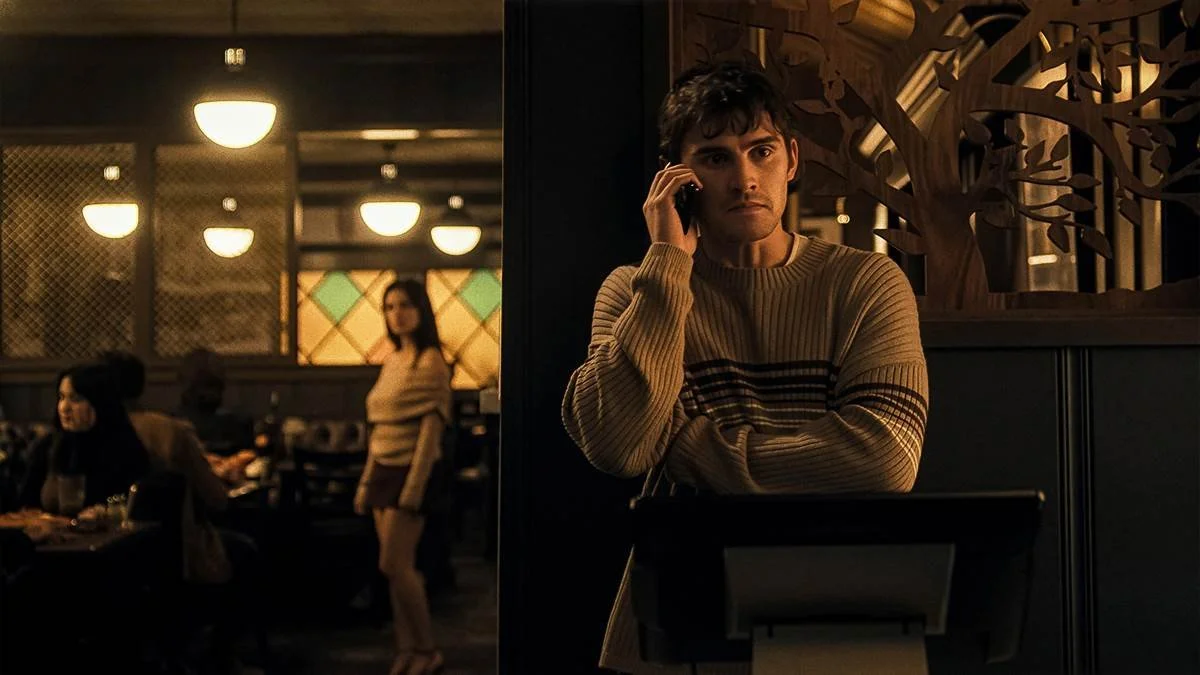
Bear (Michael Johnston) is one of our main characters - I assume the name is meant to nod to that exhausting man-or-bear debate, though, as stated on my own Letterboxd, I couldn't care less because "bear" as a name is stupid, "Baron" is also stupid, and if someone introduced himself to me as Bear in real life I would walk in the opposite direction. Anyway, BEAR wishes Nikki (Inde Navarrette) would love him more than anyone alive. The real Nikki gets pushed down into the basement of her own consciousness, replaced by whatever monster the wish birthed in her place. It's a cool concept but unfortunately, the concept is entirely present in the trailer, and once you see the trailer you see the entire movie. One hundred and eight minutes of a single idea, repeated louder.
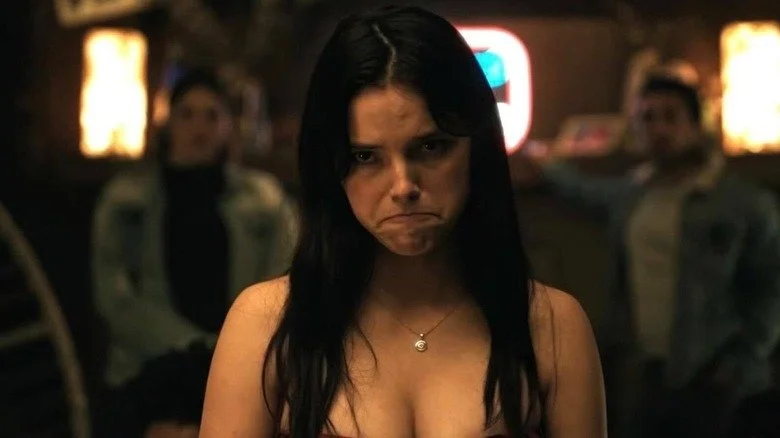
Inde Navarrette, though, is exceptional. She singlehandedly carries the film on her back. This is the one thing everyone (myself, my friends, and literally every review) agrees on. She is giving a performance that the movie around her probably does not deserve. To his credit, Barker is using filmmaking techniques that the film also does not deserve.
My friend Sean has a rule for a type of film discourse popular on Twitter, which he refers to as the "dogshit rule." The rule is that when he sees someone use the word dogshit in a tweet about a movie, their opinions are invalidated, because they belong to a cast of film Twitter he affectionately refers to as Dogshit Twitter. Dogshit Twitter is a contingent of users who love to belittle other people for liking things (I'm better than you because you like this specific thing), and the actual content of their tweets is just contempt for the people who enjoyed the work. While his rule might be dismissive and rather aggressive, his identification of Dogshit Twitter touches on something that is real. It is an implicit announcement that the writer is positioned above the film and above its audience. I mention Dogshit Twitter here because my biggest fear in writing about Obsession is partaking in that culture, the culture of using someone's taste as a way to belittle them. Most films, even the ones not aligned with my personal taste, are deserving of love, and Dogshit Twitter is the first piece of the puzzle, the contingent I want to be nothing like.
On the opposite side of Dogshit Twitter is another kind of rabid culture, one that can be identified through some of Obsession's most ardent defenders. I saw a tweet today that read: "i really didnt like obsession at all & ive been uncomfortable w/ the idea of expressing any critique of it here bc its one of those movies yall are insane over." This is another data point in our culture of insanity. The hesitation has nothing to do with the actual social consequences of disagreeing with a hit movie, which are mostly imagined and rarely material. It is instead about the energy inside of the room, which is loud enough that the act of speaking at a different volume registers as confrontation regardless of what you actually said. These are the two boundaries of the map that I am drawing in terms of the film landscape.
For about two weeks, I was alone with my thoughts, hidden inside an elaborate bit about the stupidity of the name "Bear." Once more people saw the movie, my timeline was drowning in hyperbole, from the four-and-a-half and five-star reviews by the masses to the inevitable, too-early Oscar campaigns—which, fine, people get excited. There were some neutral nuanced takes, but they were deafened by the surrounding louder takes. The doubt started to creep in. Did I miss something? Was I being a contrarian? Was I, as the kids would say, hating from outside the club? I saw people refracting their own lived experiences through the film, arguments about how it is a singular, one-of-a-kind representation of abusive men. Was everyone else right, and I was at the wrong frequency? I debated rewatching the movie, for a brief moment. But then I remembered how annoyed the first viewing had left me and decided against that for now. Instead, I went looking for reviews from people who felt the way I did, and that is how I found Mitchell Beaupré's review.
Beaupré walks scene by scene through what the film is doing and failing to do. The sentence that broke through for me was this one:
"it mistakes being LOUD for being effective, when so often all it has to lean back on is 'oh my god isn't she SO CRAZY?!?!'"
The review itself is a rigorous piece of writing, and more thoughtful in its construction than most of the positive reviews I had been reading. It was great, seeing my thoughts put into eloquence.
I had been talking about the film with a friend whose taste I admire a lot. She loved the film and couldn't understand why I didn't. After I saw Beaupré's review, I shared it with her, too lazy to construct my own argument and relying on the crutch of someone else’s voice. She read it and told me it came off as pretentious, that it sounded like someone who wanted to be different. This was pretty shocking to me. I went back to the review to try and read it through her eyes, but it still felt true to my own view. Was I being a snob? Was I behaving like a member of Dogshit Twitter? Was I joining the contingent of people online who dislike things because of their popularity, in a culture where taste has become a kind of class signal and currency of superiority? The most honest answer I have arrived at is that my friend was reading the writing through her own affection for the movie. I wish I had that affection, but unfortunately, I am coming at the movie from a position of disdain. We talked more and met in the middle, because at the end of the day her connection to the film is honest and true.
The other voice that broke the loneliness for me was Angelica Jade Bastién’s, in her newsletter Madwomen & Muses. Bastién is one of the few critics currently working at a level that justifies the older sense of the word, the sense in which a critic was someone whose review changed how you saw the film, whether or not you ended up agreeing with her. Her piece on Obsession walks through a scene late in the movie in which the real Nikki breaks through during sleep and begs Bear to kill her, to free her from the prison her body has become. "Is it so bad being with me?" Bear asks. "I've never been with you, Bear," Nikki responds. As she continues to beg to be killed, Bear slinks deeper into the shadows of the room before leaving her.
Her diagnosis arrives in the next paragraph:
"This is a moment of remarkable cowardice. I am not just talking about Bear's refusal to look at the horror his actions have engendered… what I am actually talking about is the cowardice of the filmmaker himself."
She continues, a few paragraphs later: "
The movie is so so eager to frame him as a victim, it loses out on a far richer line of inquiry and muddles its own story. The more I think about the film, the more damning its approach becomes."
Bastién's writing is the most rigorous on this film in any direction. Jason Adams at Pajiba landed in roughly the same place with smaller stakes. His framing of the film includes the phrasing of "Straight Nonsense" and praises Navarrette while naming the same structural problem. Dissent seems the minority view among professional critics, but finding it was the thing that allowed me to stop interrogating my own reaction and start interrogating the room around the film.
Several critics I respect have written thoughtful defenses of the movie, with the sharpest defense coming from Adam Nayman, in the Toronto Starand on his Letterboxd. Nayman acknowledges the technical flaws Bastién and Beaupré identify, but spins them as positive, acknowledging that we are locked inside Bear's POV with the exception of what he calls one "irritating, and maybe unfortunately telling exception." He touches on how the reflexive embrace of recent prestige horror has produced an equally reflexive skepticism. The beauty of his review is that he honestly tries to parse whether his dislike of certain scenes was a function of that skepticism rather than make his review a response to the film itself. He ultimately goes to bat for the movie and builds a compelling, articulate defense. The bat is detailed and beautiful, but it is also not for me. Candidly, I have never been a baseball guy. I find the sport boring, which, coincidentally, is how I feel about this movie.
Unlike baseball, however, this film is loud. When it wants to scare you, it gets louder. To return to Beaupré's review: "it mistakes being LOUD for being effective." The sentence identifies a craft problem in the film, but it also touches on a cultural problem in the room around the film. In my eyes, Obsession uses volume as a substitute for tension. The discourse around it, from the five-star reviews to the dunking and the hyperbole, uses volume as a substitute for being right.
This specific environment makes it difficult for nuance to survive. A three-star review with reservations is never going to be loud enough to make the rounds. Everything must be the Best thing Ever or the Worst thing ever. You rarely hear from the people in the middle anymore, because occupying that position in 2026 is an unsustainable way to broadcast yourself online. You Must Have a Take. Bastién's essay does not have the algorithmic reach of an Inde Navarrette fancam set to whatever audio is moving the most units on TikTok this week. Nothing does. The middle is invisible in both directions. Obsession, in this way, is a sort of perfect mascot for the cultural space it occupies. It has adopted the rhetorical pitch of the conversation it circles. Those conversations typically reward what the film does (being loud), and the film also does what the conversation rewards (being loud).
Despite everything I have just said, and how pessimistic I sound, I would like to repeat once more: We are SO back. This is an extraordinary moment to care about movies. I'll say it again, with ardent fervor: we have never been more back.
Jonathan Rosenbaum — who is eighty-three and has been writing about film since the 1960s — frames this contradiction with the kind of generosity I am actively trying to learn. In his words,
"Does film criticism still exist? Ask people my age or thereabouts and they will probably say no. Certainly the number of reviewers who've lost their jobs in recent years suggests a profession in its death throes. But ask someone who's 30 or younger and she or he is more apt to say we're living in a golden age. And it's possible both answers are correct, because the same term means different things to different people."
Both answers are correct. The professional middle of film criticism is becoming endangered. The staff critic at the alt-weekly, the reliable byline at the magazine, and the institutional architecture that used to surface dissent and amplify nuanced disagreements are being put in the line of fire. Rosenbaum's own column being paid for and shelved is an example. And at the same time, people have never cared more about film. Letterboxd has grown from 1.7 million users in 2020 to twenty-six million now, with nine million new users in the last year alone (more evidence for We are so back). Rosenbaum cites the New York Times Magazine piece from February that celebrated Letterboxd as the new center of film discourse, illustrated with a blurb about Béla Tarr's seven-hour Sátántangó that reads, in full: "I just watched a 7 hour movie with the love of my life. I really am the luckiest girl in the world."
The Tarr blurb is, for me, tthe environment from which I am writing from. Rosenbaum is careful about not referring to it as criticism, calling it instead "parts of ongoing exchanges about challenging films." The abundance is something I am grateful for, in the same way I am grateful that a multi-million horror film made by a kid who used to put sketches on YouTube can become a wide-release event that beats the new Star Wars film in week-over-week growth. Independent cinema is, in a way it has not been in years, viable theatrical infrastructure rather than a festival category. The audience is back. Curry Barker has been clear about this in his press, including in an MPA interview.
Rosenbaum gives us a definition later on in his column:
"I define a film critic as someone who joins a public discussion already in progress that will continue after the critic leaves. Critics should have neither the first word nor the last but should intervene in some positive way, expanding the options."
So here is where I land. Obsession, in the end, is a film that could only have been made for, and metabolized by, my generation, and the way it has been received is a kind of self-portrait. We consume film with the goal of quantifying everything on Letterboxd, arbitrating good taste, performing our taste in public as a form of expression. Obsession is built for that audience. The trailer pre-loads the schtick and the rest of the movie just spoon feeds it you in the most “here comes the airplane” esque fashion possible. The marketing campaign (another example done by Longlegs and Neon), featuring the working phone number, the One Wish Willow toys you could actually buy in real life, and the unhinged billboards in Los Angeles, does more load-bearing work than the script. The film cranks its score to signify fear in the same key that we crank our timelines to signify certainty. It gestures at the gender politics my generation has been thinking about, and then refuses, structurally, to look at the woman whose subjugation drives the plot. It stays locked inside Bear's cowardice the way our discourse stays locked inside the perspective of whoever happens to be performing it most loudly. The film is a mirror. The audience is the audience because the audience is what the film is about. This has its pros and its cons. The area in which the film operates allows people to insert themselves into the story, but it also gives room to certain disappointments. If people simply wanted the film to be about something it wasn’t then they will find themselves disagreeing with the film more ardently (another common phenomenon with the discourse surrounding Obsession).
Obsession raises the volume significantly in its score and asked me to be afraid, but I was not afraid. I was, mostly, a little bored. I am grateful to my friends for being less bored than I was (and for not being annoyed by Bear being a stupid and idiotic nickname for an even more stupid and idiotic name. Sorry to anyone named Baron who is reading this. You can legally change your name. That’s something you are allowed and encouraged to do if you have a dumb name like that.), to the critics who articulated the boredom on my behalf, to the friend who told me my favorite negative review sounded like posturing, to Adam Nayman for liking the film more than I did, to the tweeters for posting their tweets, and to Jonathan Rosenbaum for defining a critic as someone who joins a public discussion already in progress and intervenes in some positive way, expanding the options. The discussion is in progress, and the discussion will continue after I have left it. I am just glad to be here to witness it.