
The Pope of Trash Gets His Flowers
How can you honor someone like John Waters? He’s not only an iconic LGBTQA+ tour de force, but a filmmaker who’s changed the landscape of exploratory cinema. When he started making art, he pushed against the mainstream; but in doing so, he himself became the zeitgeist. His stories glorify themes that scare people: fatness, Queer culture, violence, discrimination, and mental illness—just to name a few. Over his storied career, he has won a number of awards for being a gay pioneer and for his audacious filmmaking. Most recently, Waters received the Frameline Queer Lens Award at the Castro Theatre in San Francisco at the Frameline Festival’s Trash Talk event. Peaches Christ, a local San Francisco drag legend, presented the award before Frameline’s screening of Serial Mom. The award honors a queer filmmaker whose accomplishments have helped shape LGBTQA+ media.
I was lucky to attend the event and even got to ask John Waters: “Is it possible to be edgy or provocative in today’s society?” To which he answered, “Sure, just think of a new way to startle people and make them nervous. For example, a baby smoking cigarettes with its family.” Hell yeah—I call dibs on the rights to this movie. Making people nervous is the foundation of John Waters' long and outstanding career in the arts, so we can trust that the Pope of Trash knows what he’s talking about.
Speaking of which, Serial Mom undeniably made people nervous. Even if the content itself wasn’t as shocking or disgusting as some of his other films, the fact that the movie was given $13 million in production money made some executives VERY nervous. In his book Mr. Know-It-All, Waters details the friction between him and Savoy Pictures, the production company. Apparently, no one at the company thought, “We’re funding a John Waters movie, it’s definitely not going to be a normal suburban flick.” They pushed back on the violence of the film (the core of the entire movie), but Waters refused to back down. A dark satire, the movie riots against the wholesome white family sitcoms that were popular in the 90s. That was the concept Waters pitched, and that was what he followed through with. He claimed that the production company specifically did a test screening for a conservative-leaning crowd (the type that rides for 7th Heaven). It obviously did not, and was never going to, test well for that demographic. Despite this failed screening, John did not budge on his convictions. Savoy eventually relented and let him do whatever the hell he wanted, but only after popular columnist and friend of Kathleen Turner (who plays the lead in Serial Mom), Liz Smith, a.k.a. “The Grand Dame of Dish,” publicized the censorship in a column titled “Leave Serial Mom Alone.” The fact that the movie lost the company about $5 million in revenue, and they shuttered a few years later, feels like an intentional slight by Waters, or even just karmic godly retribution. He is the Pope of Trash, after all.
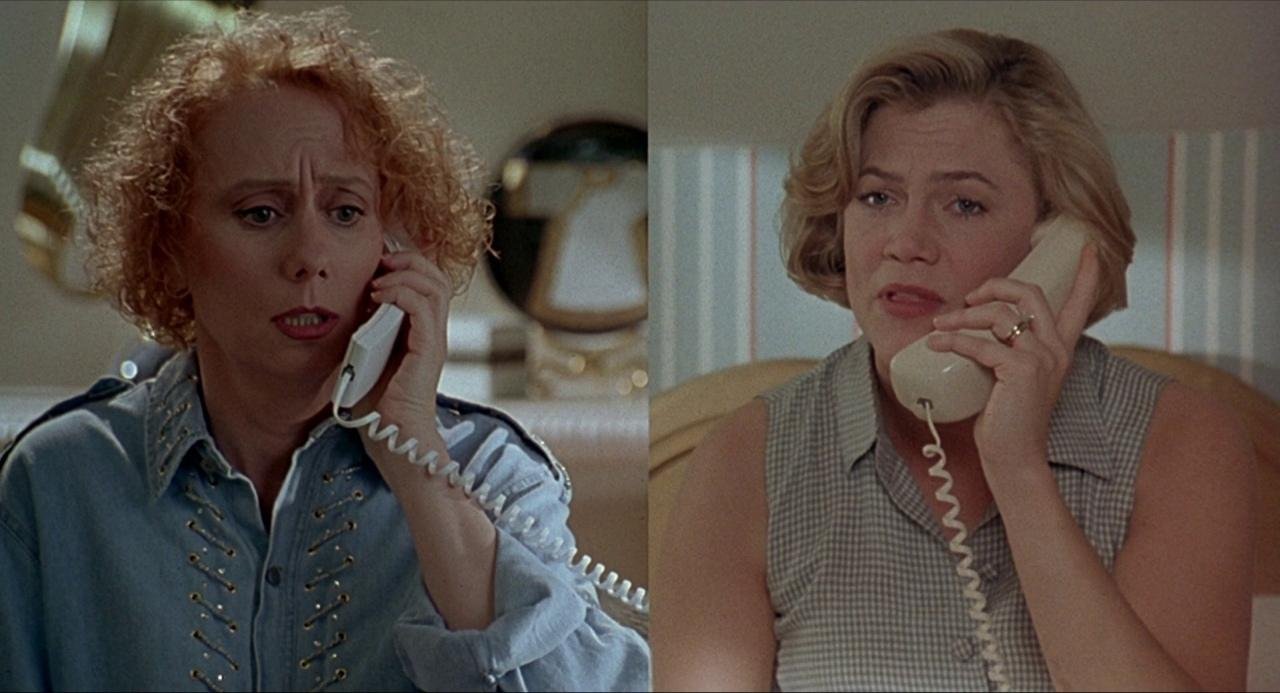
The screening at the Frameline Festival was distinct, as the main attraction was John Waters himself—his essence and his voice. I was pleasantly surprised that his post-film commentary was not in Q&A fashion, like many other special screenings; the organizers instead gave Waters a microphone, and he got to giggle through the entire movie with the audience, making quite a few jibes and jabs along the way. One of my favorite anecdotes was about the usage of the song “Tomorrow” from Annie, the musical. The copyright owners of the song were so perturbed by the way in which the song was going to be used (in the backdrop of a murder), that they hiked the price up to $60,000. Waters insisted to the studio that the song was absolutely necessary and pivotal to the plot, so they paid the fee. The song's use as a backdrop to a brutal murder truly encapsulates the demolition of nuclear-family-style suburbia that Waters deconstructs throughout the film.
Along with the fascinating anecdotes, Waters endearingly acted in disbelief that he actually made the movie. He kept saying things like, “I can’t believe they did this for me!” and “Wow, that was really funny.” Or my favorite—in the same way I act when I’m showing someone my favorite movie—“Make sure you watch this part, it’s really good.” Of course, everyone was engrossed in the movie, though most have seen it before. But Waters’ energy and commentary gave it a fresh feel. Like most other Waters films, Serial Mom has been deemed a “cult classic.” This feels like a redundant phrase, but for the Waters cult, these truly are classics. I’m thankful to Frameline Festival for the transcendent feeling of being in the presence of a true luminary. I felt like I was walking on a cloud of hairspray and glitter when I left the Castro Theatre.
Watching a Waters film feels like being in a very gay and sardonic episode of Fear Factor. There is always a level of discomfort, but it’s the same type of discomfort as feeling the wind whipping your face while riding a jet ski. It’s always something exciting, alive. No two are the same, but there is a general harmony in how one feels while watching them. He has the unique ability to craft a storyline, roll it up like a treasure map, shove it up a drag queen’s butt after they’ve taken a dump, then roll it back out and present an absolute spectacle that everyone is curious to see—whether to gape at it in disgust or to applaud the audacity. Making people nervous is just the start, and I hope, for the world’s sake, that there is no end to his slop.