
Ramadan Through Film
Introduction
This Ramadan, I'm trying to be a lot more intentional with my media consumption, so I'm going to work on something different with my movie watching habits.
For my non-Muslim friends: during Ramadan, it's encouraged to read the Quran in full at least once. Normally I try to do one chapter (or juz - there are 30 of them in the Quran, 30 days in Ramadan) each day. Each chapter typically covers different themes: justice, family, truth, moral clarity, God-consciousness, etc.
This year I'm going to look for a specific theme that speaks to me within each juz and will try to watch one film that connects to that theme, in an attempt to connect the movie thematically with elements in the Quran (with as little blasphemy as possible).
I’ve spent my whole life loving movies for the way they help me understand myself and the world around me. I’ve also spent my whole life with the Quran, and my relationship with it has defined so much of who I am. Both of these things have been fundamental to who I am and yet they’ve always lived separately. This year I want to see what happens when I bring them together.
The Quran is so overwhelmingly rich and layered that even after 26 years of familiarity, I still feel like a complete beginner. This year I hope to use my love for film to find a new way into each juz and see things I’ve never seen before.
Juz 1 - The Message (1976)
The first juz introduces the oneness of God and faith's foundations, so there's no better place to start than a movie about Prophet Muhammad (ﷺ) and Islam's rise.
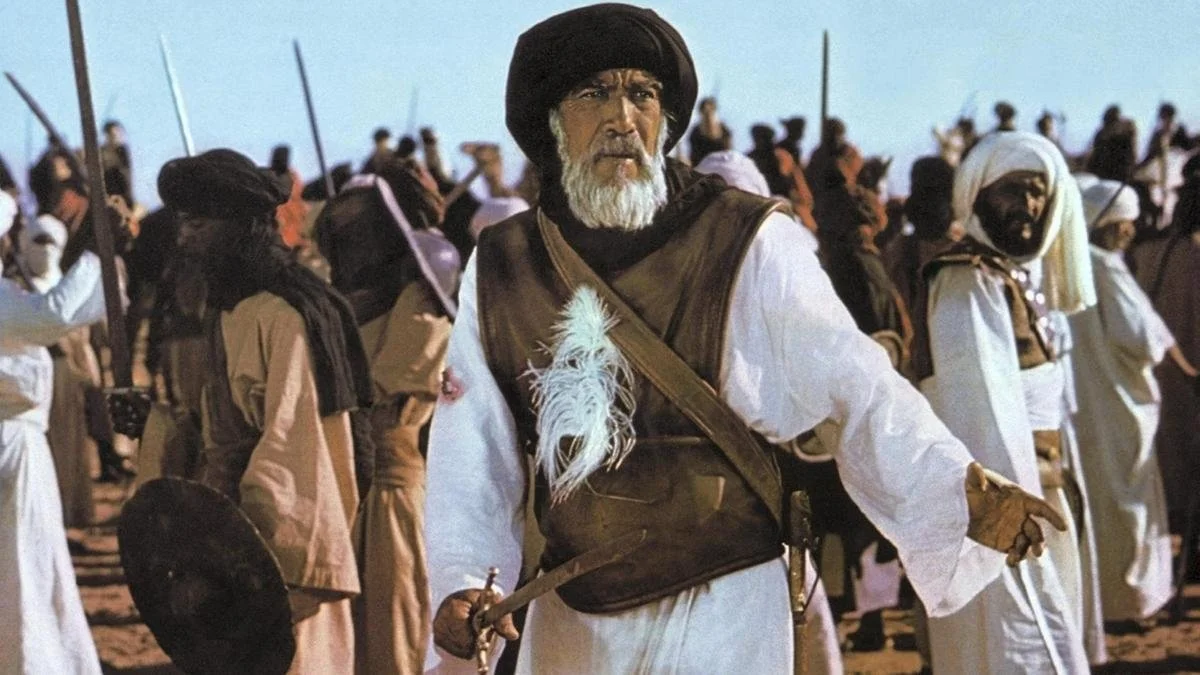
The first verse of the Quran: "In the name of Allah, the Entirely Merciful, the Especially Merciful. All praise is due to Allah, Lord of the worlds" (1:1-2).
I'm really grateful to have been raised with Islam as a strong part of my life & I'm super grateful for my relationship with the religion, especially in how it has shaped me personally, spiritually & in my relationships. I hope it continues to grow in my life. I’m going to start this project with my faith and God in mind. I want to bridge my interests with my religion, a force that has fundamentally shaped my worldview.
Islam to me is a prescription - everything the religion asks us to do is a clearer way to coexist with the rest of the world at large. Properly following the principles of Islam should aspire to make you understand the human condition better and be at peace with the way the world works. Logically speaking, attaining this state of mind should allow you to understand art better and see it in a unique way. I’m excited to train myself to think about the world in this sense and bridge my hobbies and interests (film) with my understanding of spirituality.
Juz 2 - A Man Called Ove (2015)
This juz talks about severa lconcepts, but there is a heavy emphasis on clear moral guidance, righteousness, and patience in daily life. "Righteousness is not that you turn your faces toward the east or the west, but righteousness is one who believes in Allah, the Last Day, the angels, the Book, and the prophets and gives wealth, in spite of love for it, to relatives, orphans, the needy, the traveler, those who ask, and for freeing slaves..." (2:177)
Modern society oftentimes abandons the notion of community with a strange emphasis on individualism, breaking awareness beyond oneself. Today's economy & capitalist values make it really easy to be served by greed, not need, creating a system that manipulates and brings forward our self-centered ego.
In Arabic, the word fitrah refers to our innate nature, the pure state of being we're all born with that instinctively recognizes truth and goodness. The Prophet Muhammad (ﷺ) said, "Every child is born upon fitrah.” Which goes beyond being sinless. Fitrah is really about having a clear moral compass that points you toward goodness and doing right. I’ve always said that the rituals Islam asks from Muslims generally are prescriptive. If you pray five times a day and fast Ramadan without being a kind person, then you have missed the point. We do the things Allah asks us so that we can be kinder, stronger, and better within our respective communities.

Looking at A Man Called Ove through this lens reminds me how universal these principles are. I'm not trying to Islamize secular films, but rather the goal is seeing how human stories often naturally reflect spiritual truths. Ove's path isn't explicitly religious, yet it perfectly captures fitrah in action. His grouchy exterior and suicidal tendencies are simply responses to life's hardships - trials and tribulations that distance us from our pure nature. His reluctant interactions with his neighbors, specifically the immigrants next door (and more importantly the cat; the cat distribution system never fails), gradually strip away these layers of acquired cynicism. Ove falls into isolation and cynicism because of a series of tragedies - which are ultimately, in the Islamic view, tests sent from God.
Each connection Ove forms is a kind of spiritual navigation, bringing forward his original kindness hidden deep beneath the grief and isolation. The film reaffirms the notion of fitrah: our essential nature is toward goodness and community. Islam may help many reach purification faster, but it’s also within our human nature to strive for it. It feels right. The Quran is just our guide to that state - and I’m grateful that I was born with the conviction to have that fitrah.
Allah creates customized tests for everyone shaped around our specific spiritual responses. There are many ways to fail those tests but ultimately there is one path to succeed within these tests: demonstrating patience. For Ove, he rediscovers patience through unwanted neighbors and a cat disrupting his isolation. A disguised nuisance becomes what saves him. Another metaphor for the divine test: what may seem like an inconvenience is almost what our souls require. The patience Ove demonstrates can be akin sabr, a spiritual surrender and a form of patience that we should all strive towards.
Juz 3 - The Hudsucker Proxy (1994)
The third juz contains Ayat Al-Kursi (“The Throne Verse”), a verse that emphasizes God’s sovereignty, a reminder that everything falls within His jurisdiction; everything is a part of God’s plan. “Allah! There is no god worthy of worship except Him, the Ever-Living, All-Sustaining. Neither drowsiness nor sleep overtakes Him. To Him belongs whatever is in the heavens and whatever is on the earth. Who could possibly intercede with Him without His permission? He ˹fully˺ knows what is ahead of them and what is behind them, but no one can grasp any of His knowledge—except what He wills ˹to reveal˺. His Seat encompasses the heavens and the earth, and the preservation of both does not tire Him. For He is the Most High, the Greatest” (2:255).
While Hudsucker Proxy does not necessarily directly acknowledge the notion of divine orchestration, its obsession with circularity harmonizes well the Quranic concept of a perfect, divinely ordained system, that God's knowledge and control encompasses all creation.

The protagonist of the film, Norville, is characterized as naive and earnest, stumbling his way through the film with almost no agency of anything. Ultimately he is a vessel for God's plan. "And it is not for a soul to die except by permission of Allah at a decree determined." (3:145). Norville’s repeated attempts at suicide are constantly stopped, not by his own will but by another mysterious force. This mysterious force can be seen as God’s divine orchestration; Norville is a piece of a greater plan.
In contrast to Norville's obvious lack of control, the film's villains operate under an illusion of control, scheming to manipulate the stock market for personal gain with unethical financial schemes - a behavior explicitly condemned within this juz. "Those who consume interest cannot stand [on the Day of Resurrection] except as one stands who is being beaten by Satan into insanity." (2:275). Their plans are rooted in greed and exploitation. Through their arrogance they ultimately craft their own demise. In a world dictated by Allah's plans, the only way forward is through trusting God and committing to ethics whether in commerce or anything else.
Juz 4 - The Two Popes (2019)
Juz 4 is a lesson in leadership. A true Islamic leader is some who rejects harshness and always leads with humility, gentleness, and forgiveness. While it feels slightly blasphemous to try and find Islam within the Catholic church, the first film I could think of that evoked this message was The Two Popes. The film itself is a bit baffling (feels like it is building towards a buddy cop movie or a fast and furious sequel starring popes in the best way possible) but it explores the transition of leadership within the Catholic Church, juxtaposing Pope Benedict’s doctrinal rigidity with Pope Francis’s compassion and humility.
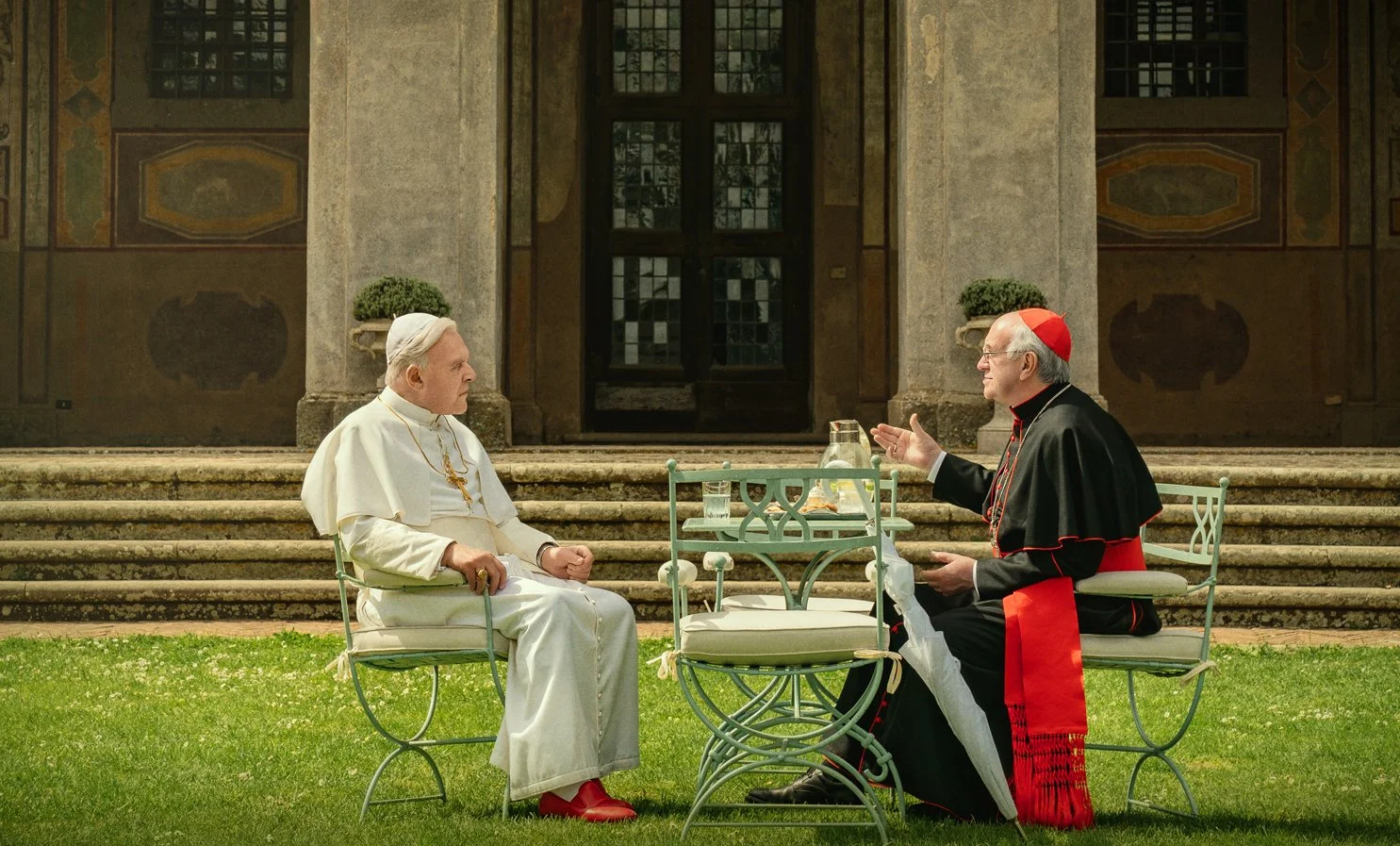
"So by mercy from Allah, you [O Muhammad] were lenient with them. And if you had been rude and harsh in heart, they would have disbanded from you." (3:159). Pope Francis leads in this vein. He is willing to listen, forgive, and lead with kindness, a style of leadership that stands in contrast to Pope Benedict’s more authoritarian approach.
In Islam, leadership is rarely about power. The purest definition of leadership in Islam about serving and uniting the people around you through kindness. Pope Francis rejects the previous harshness of the Catholic church and attempts to lead through forgiveness. His first step in doing so is learning to forgive himself, finding in it a source of strength that lets him lead with compassion and humility. "And let them pardon and overlook. Would you not like that Allah should forgive you?" (24:22). Islam is synonymous with forgiveness and it’s something all Muslims should strive towards. Harshness drives people away, while compassion fosters unity. True leadership requires patience and understanding.
Aisha (the wife of the Prophet) reported: The Prophet, peace and blessings be upon him, said, “Verily, gentleness is not found in anything but that it beautifies it, and it is not removed from anything but that it disgraces it.”
Juz 5 & 6 - 12 Angry Men (1957)
Central to Juz five & six is the concept of justice, specifically the importance of fulfilling one's obligations. Juz five is about justice as a personal responsibility (i.e., doing right by the people immediately around you). Juz six takes that same principle and asks you to carry it into the world at large, upholding a standard of righteousness that extends beyond your own community. The theme of justice runs so heavily across both chapters so I decided to combine them into one entry. Naturally the most obvious choice to explore this connection is 12 Angry Men (and I wanted an excuse to rewatch it. This is my project so I get to make the rules).
"O you who have believed, if there comes to you a disobedient one with information, investigate, lest you harm a people out of ignorance." (49:6). 12 Angry Men begins in a courtroom with a jury ready to condemn a 16-year-old boy to death, until Juror 8 insists on a more thorough investigation of the case. As far as thematic connection, it get more obvious than this. Juror 8's commitment to seeking the truth is very closely aligned to the Quranic ideal of justice.
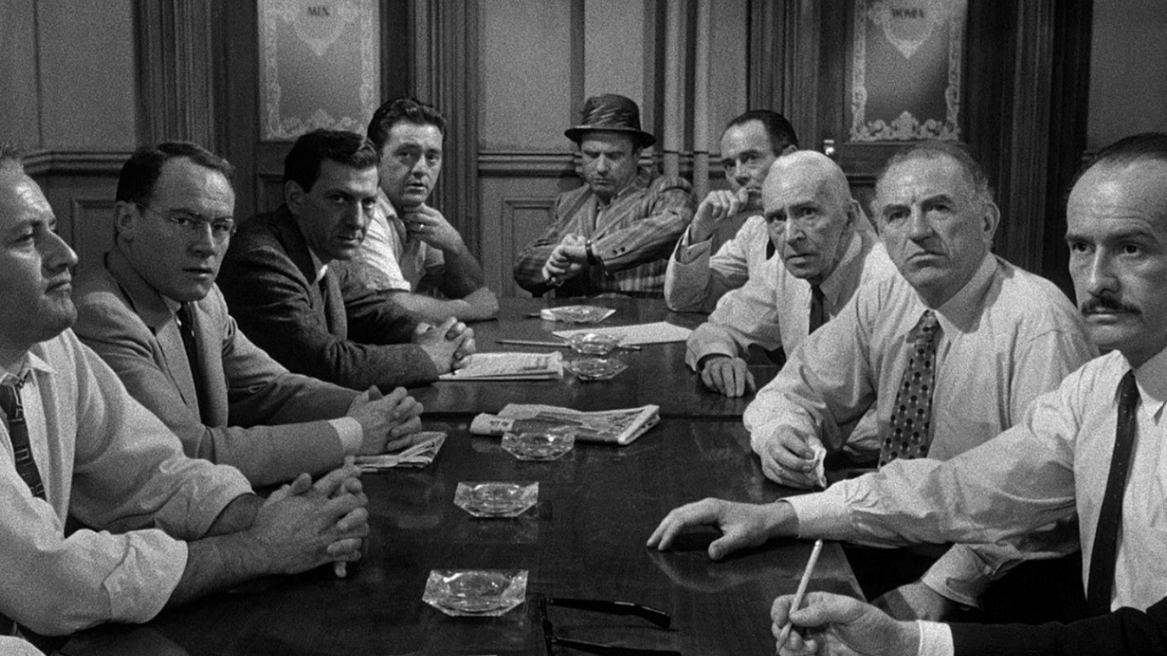
Islamic justice also commands us to be blind to all forms of prejudice. "O you who have believed, be persistently standing firm for Allah, witnesses in justice, and do not let the hatred of a people prevent you from being just. Be just; that is nearer to righteousness." (5:8). In his commitment to justice, Juror 8 is able to carefully dismantle biases and prejudices that threaten to overshadow the truth, insisting on a fair trial, reflecting the Quran's command. Justice extends beyond a legal obligation. It is a moral one, rooted in our duty to God and to one another.
Juz 7 - The Unknown Country (2022)
Juz 7 is filled with plenty of descriptors of the natural world. The tenderness and care with which its verses praise the beauty of creation remind us that appreciating nature with the right mindset and intention is a type of worship. When filtered through Tawhid (the understanding of the oneness of God), aesthetic appreciation becomes a liturgical act. We usually relegate worship to rituals, but the verses of this juz encourage us to find spirituality in nature. Getting closer to the purity of what was not corrupted by this world is a form of closeness to God.

In The Unknown Country, Lily Gladstone’s Tana goes on a journey through nature in order to come to terms with her grief, ultimately learning to leave behind some negative influences of the world. While her journey is not explicitly spiritual, it is grounded within the environment, guided by the stars and natural landscapes. "And it is He who placed for you the stars that you may be guided by them through the darknesses of the land and sea. We have detailed the signs for people who know." (6:97). Tana sees the stars as divine guidance; she allows them to guide her through her journey which in turn lets her detox and find spiritual rejuvenation. "And it is He who sends down rain from the sky, and We produce thereby the growth of all things. We produce from it greenery from which We produce grains arranged in layers..." (6:99).
There’s a natural cycle of healing that’s undeniable. Returning to the Earth and to God parallels the natural cycles of growth that we have become so familiar with. This cleansing is a ritualistic result of rejecting worldly toxicities and returning closer to purity and what is from Allah. "And the worldly life is not but amusement and diversion; but the home of the Hereafter is best for those who fear Allah, so will you not reason?” (6:32). Tana’s cleansing ritual may not have been grounded in Islam, but it was entirely grounded in a closeness to what is pure and from Allah. In this context, the purity of what God has created, untouched by humanity, is an extension of Him.
Juz 8 - WALL-E (2008)
Many of the verses in juz 8 caution against materialism and excess. History has repeatedly shown us that societies do not collapse suddenly because of dramatic sins. They fall apart because of gradual heedlessness, choosing convenience over responsibility. "O children of Adam eat and drink, but be not excessive. Indeed, He does not like those who commit excess." (7:31). WALL-E’s world is dystopian; humanity has fully succumbed to excess and has been consumed by materialism, prioritizing convenience and consumption over responsibility and stewardship over the Earth we’ve been given.

There’s a strong case to be made that WALL-E is Muslim. He showcases a commitment to the earth, his love interest is a hijabi robot, his name sounds like walid, I could go on… He is given a purpose, tasked with cleaning up the Earth, after it was abandoned by humans due to their wastefulness and excess. The humans have fully succumbed to their desires but WALL-E continues to show dedication and love to the earth.
In his ritualistic commitment to cleansing, he nurtures a powerful connection to nature that becomes his salvation. "And if you obey most of those upon the earth, they will mislead you from the way of Allah." (6:116). While WALL-E finds a restorative sense of self through his purpose and dedication to the earth, the humans are quite literally being enslaved because of their laziness and becoming prisoners of a lifestyle that demands nothing of their souls. In a world where AI is becoming more prevalent and continues to tempt us to outsource our agency, it’s critical to recognize that convenience can be a trap. Materialism is a pit that will never be satisfied. Hunger for worldly pleasure is a distraction from our purpose and connection to the rest of Allah’s creation.
Juz 9 - Kingdom of Heaven (2009)
There are some secular films that are undeniable entrants in the Islamic Canon of Cinema. immigrant Muslim parents across the world have adopted Ridley Scott’s Kingdom of Heaven into this coda. As such, it would not be a proper Ramadan list if I did not include it. Those are the rules.
If I had to distill Juz Nine down to one theme, I’d pick patience a.ka. trust in Allah and the knowledge that the earth belongs to Him and only Him. "Moses said to his people, 'Seek help through Allah and be patient. Indeed, the earth belongs to Allah. He causes to inherit it whom He wills of His servants.'" (7:128). This theme is extremely present in Kingdom of Heaven and the story of the Crusades.
Jerusalem has always been a contested space, often punctuated with violence and injustice. Every civilization that has tried to claim it through arrogance and force has eventually lost it. We watched it happen with the crusaders. We watched it happen with every empire that came before and after them. And we are watching that same story play out on the same land right now, except this time we have to watch it on our phones. We are at the stage where the oppressors have power. Anyone with a conscience is going a little insane watching what is happening in Palestine right now and not knowing how to make it stop. And yet the people of Palestine retain their faith because they understand that the land does not belong to whoever occupies it by force. They understand that the land only belongs to God and He decides who inherits it. The people of Palestine find their incomparable strength in patience and trust in divine justice.
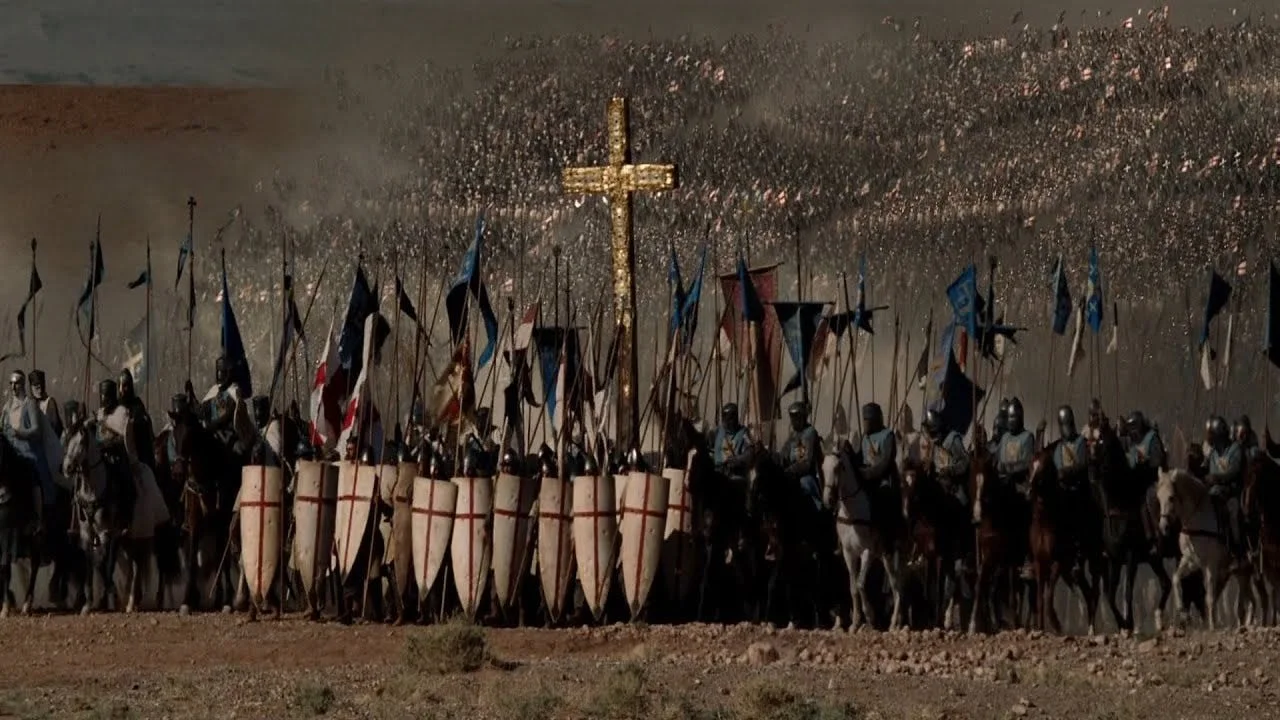
Kingdom of Heaven contrasts two styles of leadership. Bailan inherits a city that he does not want to lead but emphasizes justice and honor. "Take my place among my people, do right, and do not follow the way of the corrupters." (7:142). The crusaders, on the other hand, hunger for war and incite violence in God's name. "I will turn away from My signs those who are arrogant upon the earth without right." (7:146). In turn, they meet their downfall because they confuse conquest with righteousness.
This juz also contains the first part Surah Al-Anfal, which talks about how Muslims should behave during war. Islam commands honor in battle: no betrayal of treaties, no aggression, peace must be met with peace, prisoners treated with mercy. Saladin's conduct in Kingdom of Heaven (no massacre, safe passage guaranteed for every Christian in the city etc.) is a perfect example of these principles.
"And they plan, and Allah plans. And Allah is the best of planners." (8:30). Injustice will never win and Allah’s might will eventually punish those who transgress. It happened during the Crusades and inshaAllah it will happen again soon.
Juz 10 - Judas and the Black Messiah (2021)
A large chunk of Juz 10 focuses on the Munafiqun (hypocrites). In Islam, hypocrisy is defined with nuance and understood as a spiritual condition rather than a black and white trait. It’s a mindset that anyone, even those with faith, can slip into. This specific kind of nuance can be explained through the honesty that Judas and the Black Messiah (2021) uses to examine the psychology of Bill O’Neal.
The juz frames hypocrisy as the result of weakness. It is a slow process where the pressure of worldly survival gradually displaces a person's commitment to truth until they are balancing two separate identities. "They are apprehensive lest a surah be revealed about them, exposing what is in their hearts" (9:64). O'Neal is cornered by the FBI through a car theft charge and handed an ultimatum he has no real power to refuse. Despite his hypocrisy and the damage he causes, the film challenges us to extend understanding to his position. From that point on, he is stuck performing loyalty to a community he has genuinely come to care about while feeding information to the people trying to destroy it. The fear that runs through him in the film forces him to sacrifice his conscience because his need to survive has required him to set it aside.
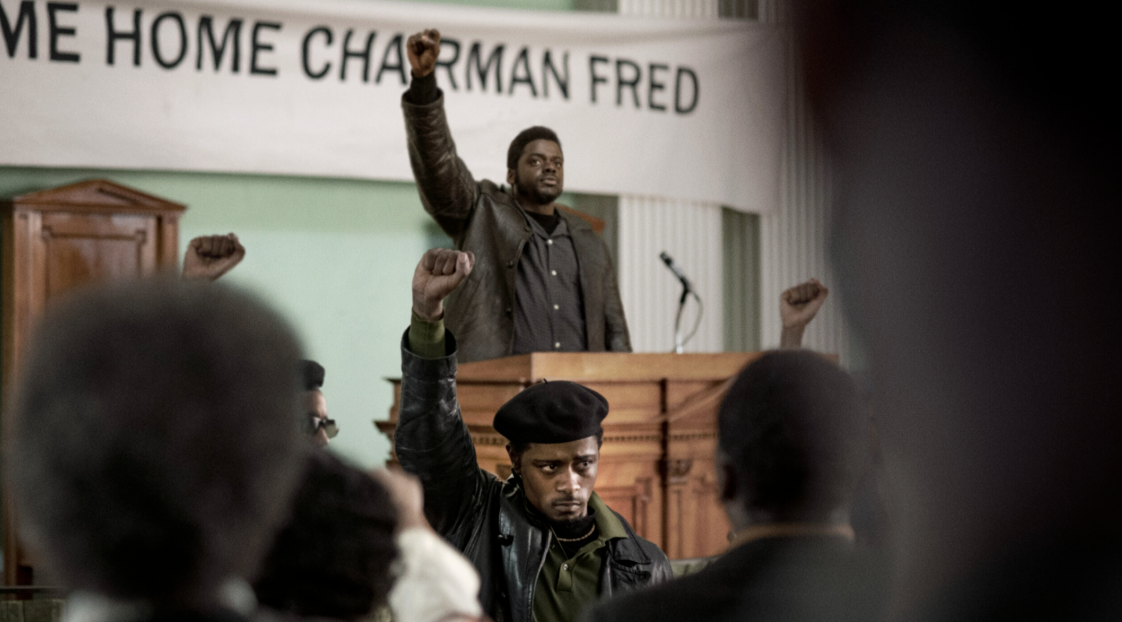
O’Neal’s hypocrisy is juxtaposed with Fred Hampton’s authenticity. Hampton’s activism (his leadership of the Black Panther Party and the Rainbow Coalition) is grounded in genuine passion for collective liberation. "Indeed, Allah has purchased from the believers their lives and their wealth in exchange for Paradise" (9:111). Hampton talks about his death as a settled fact without being performative; he acknowledges that the path he has chosen means giving up his life. This commitment to sacrifice is only possible because of the conviction he has in his mission. His authenticity and certainty in his purpose is magnetic, and that magnetism leaves O’Neal conflicted.
The Quran is specific about this grey area. "And there are others who have acknowledged their sins, having mixed a righteous deed with another that was evil" (9:102). O'Neal is passionate when he is doing work with the Party. He organizes, he shows up, and he helps sustain the free breakfast program. There is genuine care in those actions. But in Islam, the foundation of an act is everything and his foundation is compromised from the start. "Had it been a quick gain and an easy journey, they would have followed you, but the distance seemed too great to them" (9:42). O'Neal chose the path of least resistance. He allowed his fear to get the best of him and caused destruction because of it. The FBI offered a shortcut and he took it, a choice that ultimately dismantled the efforts of Fred Hampton and left O'Neal broken. The verses in juz and the Judas and the Black Messiah (2021) warn us against letting fear and desire dictate our actions. They are reminders of how easily a person can slip into hypocrisy when they prioritize their own survival over their principles. The cost of self-preservation is far too high if it requires us to betray our own souls.
Juz 11 - Paddington 2 (2017)
Most muslims are familiar with the story of Prophet Yunus (Jonah) and the whale that swallowed him. But shockingly enough, the chapter of the Quran named after Prophet Yunus (Surah Yunus), contains no mention of the whale. In fact, Surah Yunus isn’t really about Prophet Yunus. It is about his people and what they chose to do while he was gone.
Prophet Yunus was sent to preach to the people of Nineveh. They rejected his guidance and he abandoned them out of frustration. While he was away in the belly of the whale, the people of Nineveh were left on their own, still deep in their sin, and yet somehow found their way back to righteousness without a prophet to guide them. No force, no disaster, no inciting incident. Just a collective recognition and a turning back. "Then has there not been any city that believed so its faith benefited it except the people of Yunus? When they believed, We removed from them the punishment of disgrace in this worldly life and gave them enjoyment for a time." (10:98). The Quran marks them out as singular because this almost never happens. Communities usually need catastrophe first. The people of Yunus did not. Living in the world we live in now, where people witness human rights violations daily and find ways to keep going about their day, it feels even more remarkable that a community could fix itself without any external force demanding it. There was no trigger that helped the people of Yunus find their way back. They realized goodness on their own.
Candidly, I had a hard time finding a film that fit for this theme. Perhaps Hollywood is not particularly interested in communities that find their way back to goodness without an inciting disaster to force their hand. Or perhaps, because of Ramadan Brain, I can’t think of the right movie. Either way, please ‘bear’ with me if this is a stretch, but I decided to pick Paddington 2.
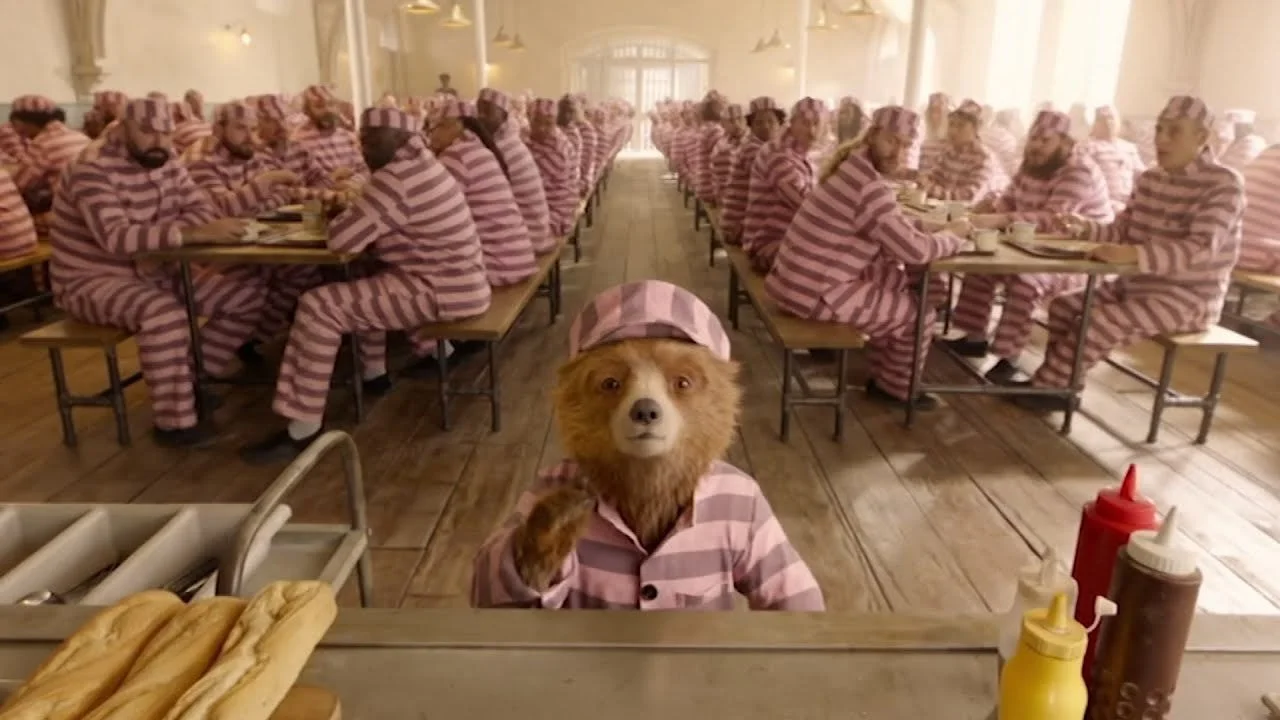
Paddington bear moves through the world with a sincere and infectious kindness that rubs off on almost everyone he meets. He does not lecture or push. He just finds kindness within himself that inspires others. When Paddington is wrongfully imprisoned (I recognize that this is an insane phrase to type out), his Notting Hill neighbors rally around his absence and organize without being asked. In prison, a cartoonishly gruff crew of men discover a softness within themselves and use it to build a community founded upon kindness. Both communities prove that goodness, once genuinely encountered, tends to find its own way forward.
The story of Prophet Yunus and the whale is proof of God's extraordinary power. But as I reflect on this juz and the current moment, the part of the story that I keep coming back to is not whale-related. That a community can find its way back to goodness from the inside, without being forced to, feels almost impossible. With so much evil and heartlessness in the world, it feels even more impossible today. But I trust in God's wisdom and know that it is possible. "Unquestionably, the allies of Allah will have no fear, nor will they grieve." (10:62). The people of Yunus proved it. Paddington 2 sort of proves it too.
Juz 12 & 13 - The Social Network (2010)
Capitalism loves to push the foolish mantra that "nice guys finish last." It’s an idiotic idea, but it feels especially prominent in Silicon Valley, making the 2010 film The Social Network an interesting foil to the story of Prophet Yusuf (Joseph).
Juz 12 and 13 tell the story of a man who experiences a number of betrayals but refuses to compromise his values. "My Lord, prison is more to my liking than that to which they invite me" (12:33). When faced with a choice between his integrity and freedom, Prophet Yusuf sacrifices his freedom.

David Fincher’s version of Mark Zuckerberg makes the opposite choice at every turn. He is brilliant, paranoid, and willing to burn any bridge he stands on. When tempted by the prospect of sole ownership of Facebook, he betrays Eduardo Saverin, the only person who actually believed in him from the start. Zuckerberg finds astronomical success, but he does so through cruelty and harshness. The film’s final scene finds him alone, pathetically waiting for his ex-girlfriend to accept his friend request.
Prophet Yusuf loses his freedom, and several years of his life through his journey but he never loses himself. At every point where he could have compromised, he chose his moral code instead. Even when his brothers who betrayed him show up asking for help, he feeds them and forgives them without hesitation. “There is no blame upon you today. Allah will forgive you. He is the Most Merciful of the merciful” (12:92). He finds himself governing Egypt with his integrity intact, surrounded by the people he loves.
One man chooses to commit to his character and integrity and the other chooses self-interest. The Quran is very specific about why that difference exists. “He who practices piety and patience, Allah never fails to reward the righteous” (12:90). The reward is never just the position or the power. It is everything that comes with it. Yusuf gets Egypt and his family back. Zuckerberg gets the valuation and loses everything else. In Islam, nice guys do not finish last.
Juz 14 & 15 - Honeyland (2019)
Surah al-Nahl is named after the word Nahl, which translates to bees. Honeyland (2019) is a documentary about bees. The connection here feels obvious enough and I’m tempted to leave it at that because, frankly, we are at the point of Ramadan where my brain is fried and I struggle to string two coherent phrases together. However, the link between the two is very thematically rich, and I have committed to this, so I will persist.
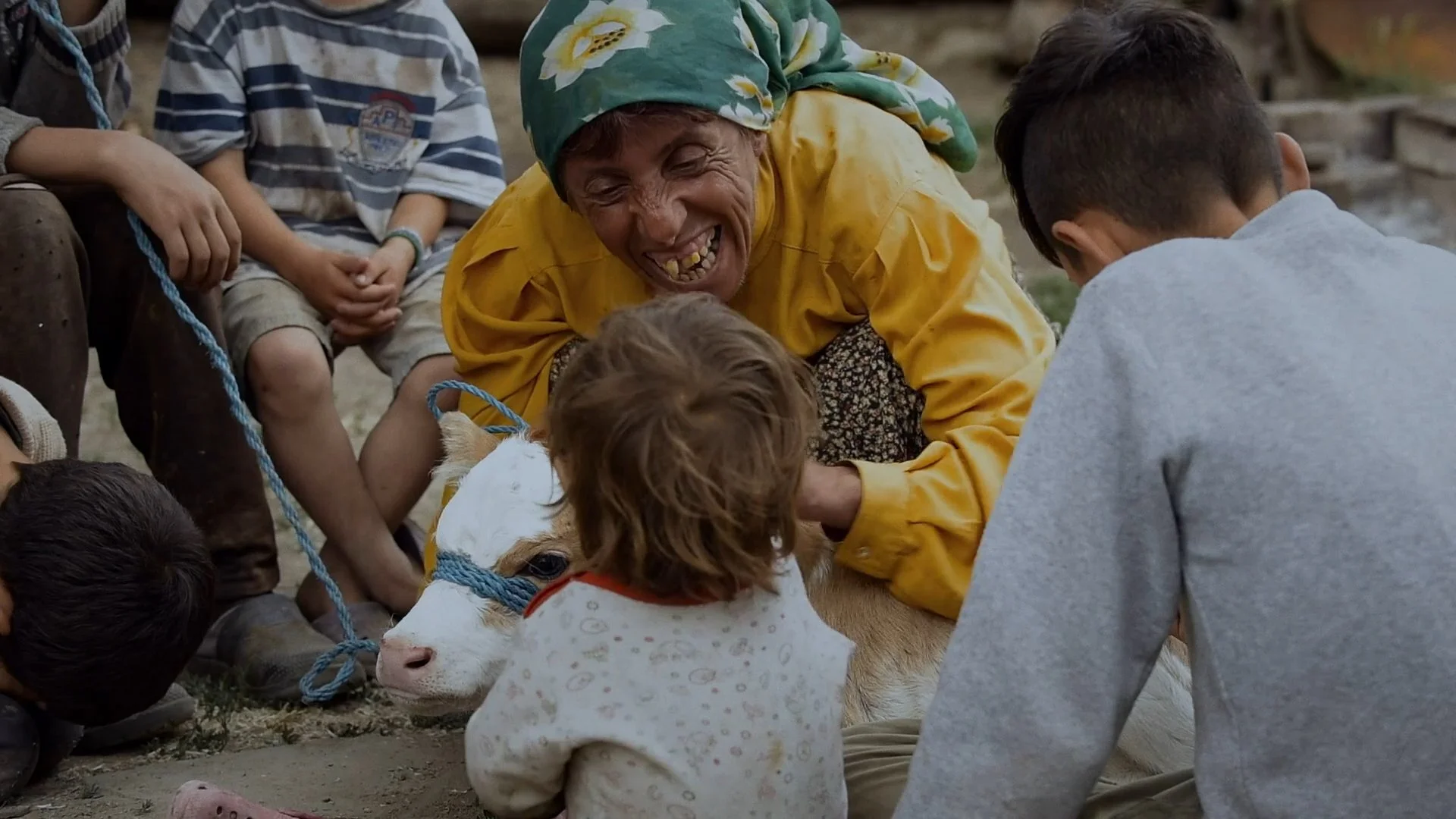
Allah created everything in this world for a purpose and with intention. “He created the heavens and the earth for a purpose” (16:3). Everything in the world has a natural order and purpose. In Honeyland (2019), Hatidze’s existence is colored by balance and respect for nature. She is a Macedonian honeymaker living in harmony with the bees, taking only what she needs and leaving the rest. She lives by the mantra “Take half, leave half.” Hatidze recognizes her role in the natural order; she understands that she is in a system that was established long before she was born. The hive is not Hatidze’s to exploit. “Your Lord inspired the bees: build homes in the mountains, trees, and what people construct, then feed from every fruit and follow the ways your Lord has made easy for you. From their bellies comes a drink of different colors, a cure for people” (16:68-69).
When a neighboring family arrives and begins harvesting aggressively, the balance collapses. “And do not cause corruption on the earth after it has been set in order” (16:88). Their greed brings destruction to everyone. But even as she is witnessing the destruction of her livelihood, Hatidze never raises her voice. She just watches the balance she spent her life maintaining get destroyed by people who could not see it.
Juz 15 asks us to reflect on the Islamic idea of Ihsan, the concept of applying top-tier effort and sincerity to every task. Hatidze’s process with the bees is grounded in Ihsan. She does everything with extreme patience, skill, and awareness of the environment around her.
Juz 16 & 17 - The Motorcycle Diaries (2004)
Every Muslim who is able is asked to make the Hajj at least once in their lives. It's a ritual designed to make you surrender your sense of self and dissolve into the collective. You are asked to wear the same things and do the same things as millions of strangers from all over the world. For a few days, you are asked to forget the life you know, surrender your individuality, and exist in a community with one higher purpose. These are some of the themes that echo across Juz 16 & 17.

Ernesto Guevara and Alberto Granado in The Motorcycle Diaries (2004) don't have any of that Islamic context. They're two Argentinian students on a road trip, trying to have fun before they have to go to med school. Then they get far enough from home. They meet miners in Chuquicamata pulling copper out of the earth for American companies who won't pay them enough to eat. They sit with families who own nothing. They end up washing the open wounds of leper patients that the rest of society has decided to forget about. Their distance teaches them to look at the world differently. "And keep yourself patient with those who call upon their Lord morning and evening, seeking His face, and let not your eyes pass beyond them, desiring the adornments of worldly life." (18:28). Guevara witnesses so much of the world, and that exposure is what eventually radicalizes him and turns him into a revolutionary.
Empathy is expected of us as Muslims, and empathy requires exposure. Hajj teaches it through ritual. Guevara's road trip taught it through sheer proximity to suffering. The result is the same either way. You come home and you can't go back to who you were. I think the journey itself is an act of worship when it's done with the right intention. It is our duty to go out and see the world and experience it. The religion is ultimately about increasing our empathy, and sometimes that can only be done by seeing what's out there. "Indeed, We have made that which is on the earth adornment for it, that We may test them as to which of them is best in deed." (18:7).
Juz 18 - 20 - Kedi (2016)
I chose to combine Juz 18, 19, and 20 into one entry because together they remind me of one of my favorite films, Kedi (2016).
Juz 18 talks about mortality and the inevitability of death. "After that you will surely die, then on the Day of Judgment you will be resurrected." (23:15-16). Juz 19 and 20 continue that thread with descriptions of the natural world and lessons that we can take from the animals around us. "In cattle there is indeed a lesson for you." (23:21). We are lucky to live in a world where we can interact with the purity of the natural world, where something as simple as a cat can teach you something about yourself that you couldn't have learned any other way.

My interpretation of Kedi lives between all of this. I wrote about it here.
Juz 20 - 30 - Malcolm X (1992)
The last ten juz of the Quran are difficult to boil down into one theme, and I kept going back and forth on what to say here because I've read some of these surahs at completely different points in my life and gotten completely different things out of them, which I think is sort of the point. Every word was chosen with divine wisdom, and the whole gift of the Quran is that it was written to be returned to, to meet you wherever you are and send you back out into your life a little closer to the person you're supposed to become.
In that vein, there’s really only one film that makes sense to close this project on.
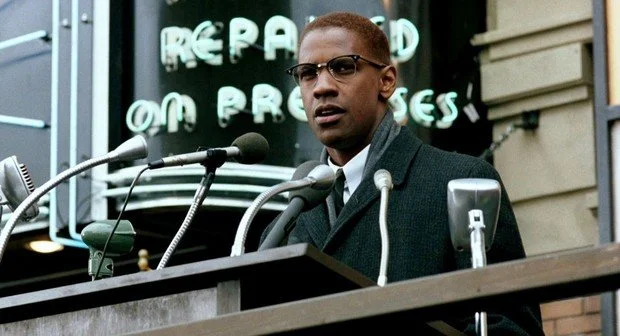
Malcolm X was nowhere near perfect. He said things he later regretted and held positions he eventually abandoned, but through it all, he maintained the humility to continue growing and learning. Instead of doubling down he let himself be humbled by what he didn't yet understand, kept his heart open, trusted that God's wisdom was bigger than his own, and came out the other side a better Muslim and a better person every single time.
He had the humility to admit he was wrong and the faith to trust that God had more to teach him, and that willingness to keep changing is what made him extraordinary. I pray I find that same humility. I pray I can continue living the lessons of the Quran and finding its themes in my life. And I pray that I can continue being changed for the better through the magic of cinema.