
Against the Algorithm: Video Store.Age and the Return of Curated Cinema
Ash Cook spent years at Sundance tracking films, scouting at festivals, and building relationships with filmmakers. Aidan Dick programmed at Frameline, watching filmmakers arrive excited about their festival moment and then seeing that excitement collapse for most filmmakers after the festival. "My help sort of ends at getting them there, and giving them the best time possible while they're there," Aidan says. "There's nothing past that I can do."
They both kept hearing the same thing from every filmmaker they programmed, every colleague they worked with, and every conversation at every festival: Distribution is broken. The complaint felt so universal it was almost background noise on the festival circuit, the kind of problem everyone agrees on but nobody fixes. "[We were] hearing this consensus build and be reiterated in all the circles that we run in as festival programmers," Ash says. "Every stripe of person in the industry agrees that distribution is broken."
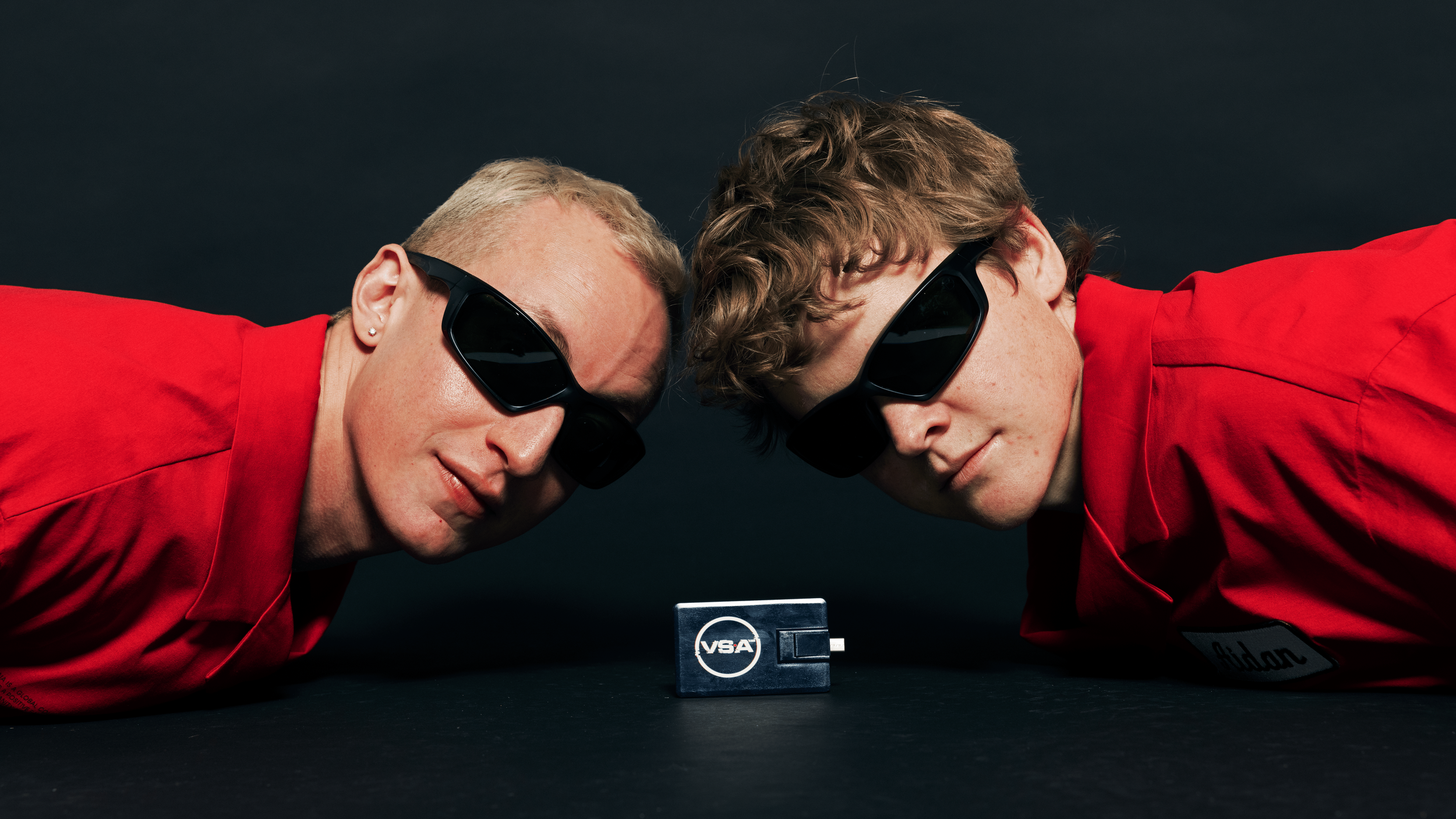
Earlier this month, Ash and Aidan launched Video Store.Age (VS.A), a grassroots distributor of independent films on encrypted USB drives. The project goes against every trend in media consumption today: physical media in a world dominated by streaming, hand-to-hand circulation in a landscape optimized by algorithms, curated collections when infinite content is supposed to be the point. But that rejection of the current system is exactly what makes Video Store.Age exciting.

The duo’s experience with festival programming gave them networks of filmmakers, a deep knowledge of underseen work, and years of experience figuring out which audiences connect with which films. "There's a pot for every lid," Ash says. "There's an audience for every movie." He's proven it over and over as a programmer. The film you don't connect with finds someone else who does — the work you champion finds the crowd that gets it. The alchemy that happens when a film meets the right audience is real and, as Ash puts it, "kind of mysterious and also kind of beyond any of us on our own taste level."
The problem is that even when those connections happen at festivals, they often don't extend beyond the circuit. Some films find traditional distribution and thrive. Others play festivals, generate good buzz, and then disappear because no distributor picks them up within the year. Others lose programming fights at major festivals and never recover from that early setback. And others exist only as Vimeo links passed between programmers who happened to be in the room when the film screened somewhere.
"We're in this situation where we have filmmakers who have made films that people want to see, and no way for them to get to each other," Ash says. "That's crazy."
Video Store.Age is their attempt to build pathways where traditional distribution hasn't. The company releases quarterly collections of five features and five shorts on encrypted USB drives. The drives use patent-pending technology. Files play through embedded players and cannot be ripped or copied. The technology addresses filmmaker anxiety about piracy, but Ash and Aidan are also betting on something harder to quantify. "If they're spending the time to wait to get this [at the launch], they're really excited about the preciousness of this object," Aidan says. The model assumes audiences who want to support filmmakers directly and want a world free from the shackles of the content machine.
The Winter 2026 collection includes Sam Feder's Heightened Scrutiny, Vera Drew's The People's Joker, the 2013 adaptation of Michelle Tea’s Valencia, Caveh Zahedi’s Higher Education, and L. Frances Henderson's This Much We Know, plus five shorts. Four of the five features are digital exclusives. These are films failed by the traditional distribution system.
Take The People's Joker, which has been on and off platforms, caught in legal battles, and inaccessible to audiences who felt seen by it. "A lot of trans women I've talked to [have had the experience of being, like, so seen in that media, [despite] not being able to see it once, in one place," Aidan says. "And then [they’re] never able to see it again, and [feel] like that's something that was taken away from them."
Or Heightened Scrutiny, a film that calls out how powerful voices in media shape policy. "Are those same people going to platform that film?" Ash asks. "I don't think so."
Video Store.Age's business model is designed with filmmakers in mind. They split profits 50-50 after production costs, committing to manufacturing all the drives necessary to fulfill demonstrated need. Their model also works alongside other distribution channels. Filmmakers can pursue theatrical runs, festivals, and other streaming deals. "We don't want to put anybody in a position where they're having to pass up basically any way to get their movie out there," Ash says.
Their business model also puts them at events, interacting with audiences who can then put a human face to the curation. Instead of traditional screenings, each title gets a dedicated launch event in LA or New York. These launch events are editorial experiences built around the films. For example, if a band scored the movie, the band performs. The cast reads scenes from the screenplay. One launch might be a scavenger hunt through the woods. The structure creates community before anyone watches, connecting audiences to the work and to each other.
This community-building approach addresses what Ash sees as the core problem streaming created. "We're in this kind of unprecedented age of access," Ash says. When streaming first took over, the excitement was pure access. "And now, kind of, we're a few years into that, and we have a stomachache, and we have a bunch of cavities," Ash adds. “[There's] this analysis paralysis, this bloat that you feel from the user experience end of just being lost in the sauce of how much is available to you."
Ash and Aidan's solution to this bloat is putting human judgment back at the center of a landscape increasingly run by algorithms and recommendation engines. Video Store.Age hopes that when someone picks up one of their drives, "they're gonna know this film is gonna be interesting. Cool. Edgy. Exciting." Their goal is encouraging people to "try films that are outside of your own necessary taste and give them a go. Watch them all the way through." There's deliberate friction in this model. "We're operating in an attention economy," Ash says, "and the introduction of friction and slowing down a little bit widens everybody's tastes and heart and sensitivities. That is something a lot of people want help with."
Video Store.Age opened submissions on launch day, partnering with festivals like LAFM, Frameline, and Slamdance. They're looking for films that have been intentionally buried, films facing political suppression, films trapped in archival limbo. "There's so much great work that isn't available right now," Ash says. "These are all rare and precious materials."
Ash is careful about how he frames their goal. "Our aspiration is not to change the film industry. It's to be a constitutive and contributive part of it." There's an endless population of films and filmmakers ready to connect with audiences, and endless audiences willing to do the same.
Years of festival programming taught both Video Store.Age founders that those pathways exist when you look for them. Every film has its audience if you can find the connection point. Now they're building those connections themselves, one encrypted USB drive at a time, testing whether physical media made contemporary can solve problems that streaming platforms created and cannot fix.