
Twelve Years in the Tenderloin: Rob Nilsson on Cinema as a Conscientious Objection
Filmmaker Rob Nilsson has always been a trailblazer. He became the first American to claim both the Camera d’Or at Cannes and the Grand Jury Prize at Sundance for his films Northern Lights (1979) and Heat and Sunlight (1988). In 1985, he shot Signal 7 (1985) on video and transferred it to film for theatrical release, pioneering techniques that would later become fundamental to the digital revolution.
After co-founding First Run Features to help independent filmmakers distribute their work, he disappeared into San Francisco’s Tenderloin for twelve years. He initially went there to find his missing brother Greg, a poet, but stayed to make improvised films with people living on the streets. Greg eventually joined him and acted in Chalk (1996). Nilsson’s choice to stay in the Tenderloin makes a lot of sense when you take it within the context of Nilsson’s understanding of the role of the artist. “For me, the job of an artist is to follow the inner flow...the questions that you ask yourself, the joys, and the sorrows,” he tells me.
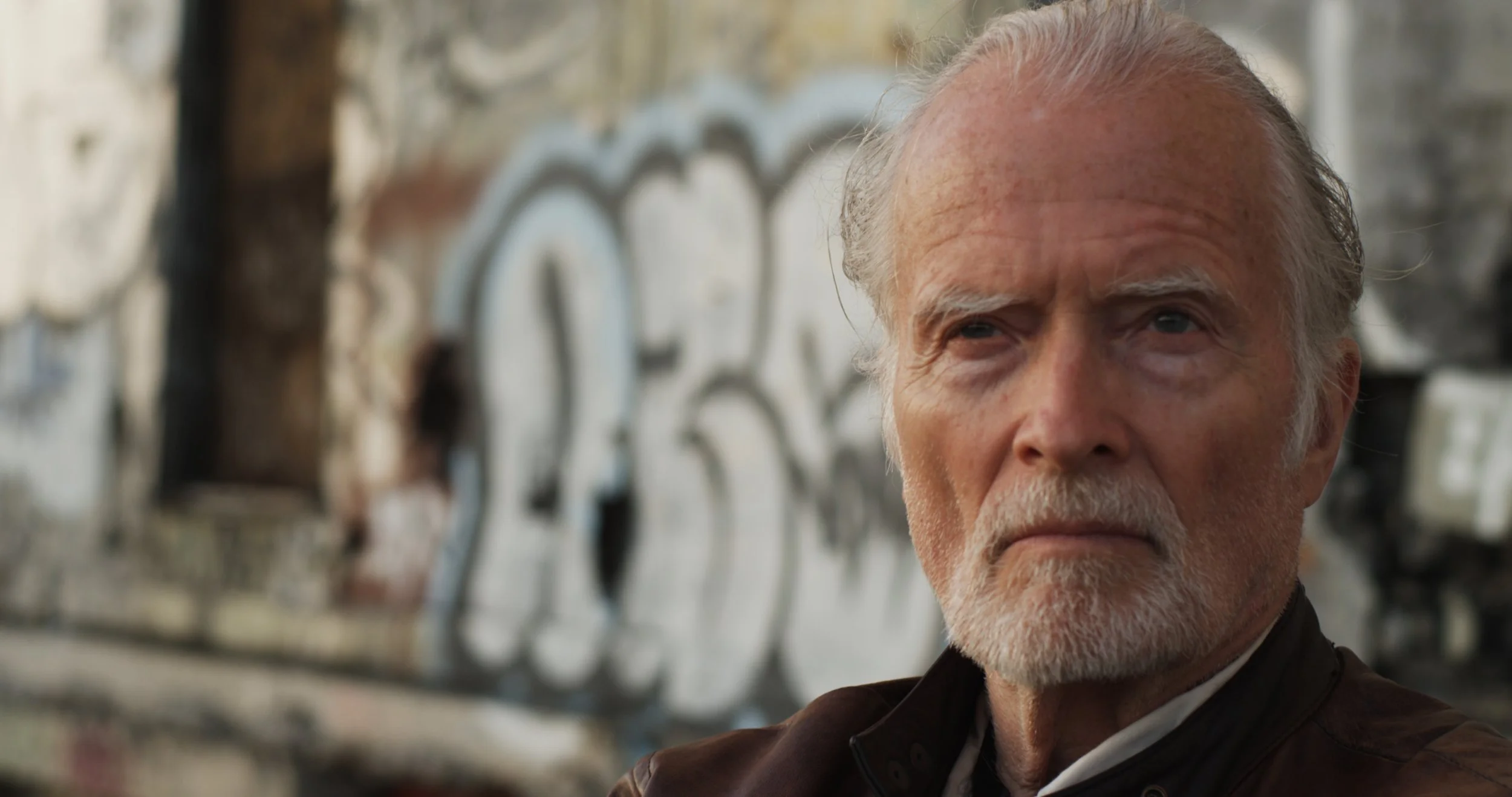
Nilsson’s 9 @ Night (1997-2007) series is a fourteen-hour cycle of nine interlocking feature films about people living on the tattered margins of American society: alcoholics, sex workers, drifters, and those without safety nets. The films are portraits of a world most people choose to ignore out of discomfort, created in collaboration with people who had never acted before but carried lived experience. The series is some of the most uncompromising independent cinema ever seen.
The filmmaker started his foray into art as a poet. At Harvard in the late 1950s, he won a prize from the American Academy of Poets for his poem “From a Refugee of Tristan Da Cunha.” After college, he joined the Peace Corps and left for Nigeria, where he taught English and spent nearly three years making his first feature film, The Lesson (1970), on an 8mm camera. A conscientious objector to war whose draft board rejected his essays on non-violence, he chose the Peace Corps as an alternative to Vietnam. He cut it with a knife and film cement he ordered from England, piecing it together on a board with a couple of brads hammered into the wood. The technical constraints didn’t matter in the least; what mattered was the impulse to express a specific internal necessity.
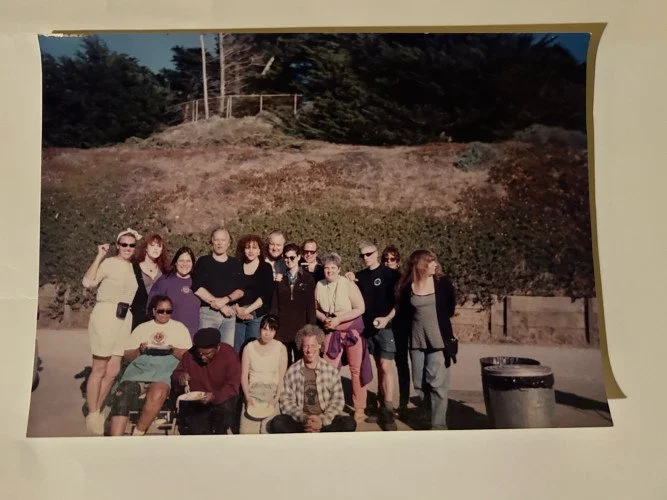
When he returned to America, Nilsson discovered the French New Wave, Italian Neorealism, and Cinema Novo, and the movements felt personal in ways Hollywood never did. But the film that changed everything was John Cassavetes’ Shadows (1958). “The first movie I ever saw that seemed to be about you and me was Shadows (1958),” Nilsson says. “John was the first guy that really felt personal.”
Cassavetes became a mentor, showing Nilsson that cinema could be made outside the system with friends and people you believed in. “I don’t see artists as people who are exteriorizing all the time. It seems to me that you’re trying to get something out. I once did a film for the Sci-Fi Channel—the only thing I ever did within the system—and it was like cookie-cutting. It was constraining. It was obviously for entertainment as a business. I did it because I took the money and ran, and I made the next film.”
This philosophy governed his entire career. Even as he took acting roles on Miami Vice or Beverly Hills 90210, he never viewed them as part of his "life's voyage." What mattered was necessity over strategy. “If I can’t feel it—wherever one feels these things—then I don’t want to do it.”
Right after winning at Sundance, Nilsson found himself in a building overlooking the Tenderloin, San Francisco’s poorest neighborhood stretching out below him. “I thought, Wow, maybe I should go down there. The first thing I experienced was apprehension and fear, because I didn’t really know what to be afraid of.”
He moved into an SRO hotel and began the work. First came Chalk (1996), a pool movie featuring a cast from the Tenderloin Action Group (created with Rand Crook and Ethan Sing, which later became the Tenderloin yGroup), a drama workshop for unhoused people and inner city San Francisco residents held at the Faithful Fools Street Ministry. “I’m a conscientious objector to war,” Nilsson says. “I believe in empathy and in doing good with people. So it became natural to start creating these workshops.”
He had never taught acting, so he invented Direct Action Cinema, a method built on three principles: relaxation, concentration, and powerful emotion. The theory was that people living on the streets are forced to hold everything in. “The joy, rage, despair, and intimate connection. You’re holding it in,” he explains. “I figured the thing was to get everybody to relax, an exercise I took from yoga. Then there’s a concentration exercise where people stare into each other’s eyes—something you do in karate. It’s a way of exchanging something. At first it’s threatening and you try to laugh your way through it, but when you get involved in the eyes of someone else like that, it’s a life experience.”
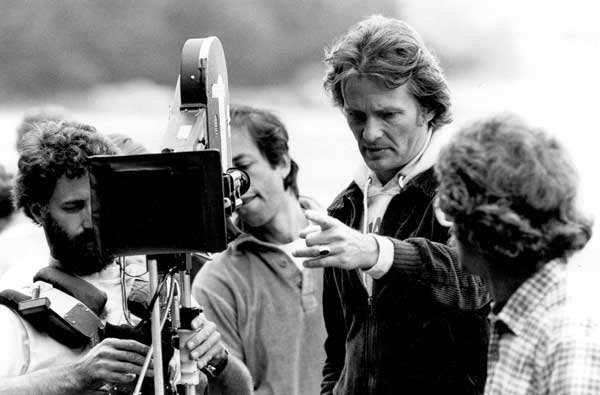
The workshops ran weekly for twelve years. Together, the group developed characters and stories evolved from "backstory improvisations." Nilsson shot in long takes with two cameras, refusing to call "cut" in order to keep the emotional flow from breaking. Nilsson believes that while improvisation must be "allowed" during filming, it must be disciplined in editing; for him, the two are inseparable. “It’s better to allow, allow, allow. It was all very in-the-moment, but based on the emotional flow of the group.”
The result was the 9 @ Night (1997-2007) series: nine films following 40 to 50 characters whose lives intersect in ways they don't fully understand. Robert Viharo and Ron Perlman appeared alongside workshop members who had never stepped in front of a lens. The series won the San Francisco Film Critics Circle Marlon Riggs Award for Courage and Vision in 2008. For Nilsson, the Tenderloin stripped away the "capitalist game" of status. “You can’t hide behind money, caste, or class. You are forced to be more yourself than those trying to protect their property.” He hoped the workshops provided a "rescue," giving people the impetus to take charge of their own lives.
Nilsson’s work is inherently political because it refuses to impose a "solution" from above. He views his films as a collective effort. “I’m very disappointed in the American distribution system, and I always have been. But you can’t go around and bitch all the time. You just do it yourself.”
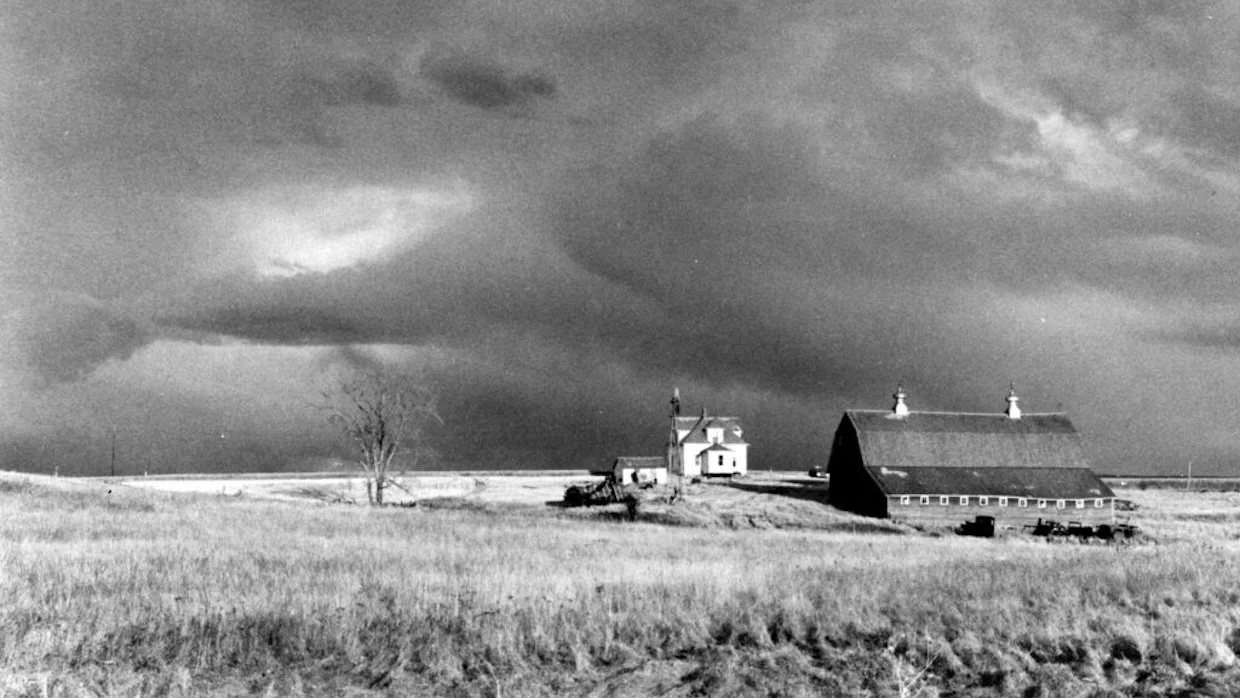
He is currently selling his poetry, paintings, and films through his website, Rob Nilsson Art Forms, so that his work is accessible to anyone, anywhere. “Even if you live in the South Pole, you could see those films.” He took this same "ground-up" approach to South Africa, Jordan, Japan, and Italy, always mining the "inner necessity" of the local people.
Nilsson is 85 now and he continues to be restless. He is planning three more films: one in the Tenderloin, one in a Berkeley bar, and one in Africa. “All of them would be mining the everyday people whose joy is in the work and not in the compensation.” When asked what he wants the legacy of these films to be, he talks of a cinema where people are their own entities and their own destinies. Forty-five years after his first triumph at Cannes, he is still following the inner flow and refusing to betray the feeling.
“If I can’t feel it,” he repeats, “then I don’t want to do it.”