
Interview with Franz Böhm, Director of ‘Rock Paper Scissors’
War films have often relied on a specific brand of artifice: explosions that bloom with cinematic precision, heroism backed by swelling scores, and endings that allow an audience to feel they have neatly processed the trauma of others. Franz Böhm’s Rock, Paper, Scissors (2026) rejects these comforts. His twenty-minute film takes place almost entirely in a makeshift bunker where seventeen-year-old Ivan faces a choice that no child should have to make while Russian soldiers move through the world just above his head.
The film earned a BAFTA for Best British Short Film and a place on the 2026 Oscar shortlist. While many "award darlings" prioritize a digestible narrative, this twenty-minute film creates a friction that cannot be easily metabolized into a comfortable meaning. Böhm intends for the viewer to feel this friction. "For me, this film wasn't really about war. It is about people, their decisions, and their behavior when everything around them collapses, and when they have to face extraordinary challenges," he says. The film follows seventeen-year-old Ivan, a young man who has been trapped in a makeshift medical bunker, caught between his responsibility to protect those inside and the approaching threat of Russian soldiers moving in just above his head.
The project began when Böhm, a 26 year old British German-Filmmaker, met Ivan in the UK after the teenager had fled the invasion of Ukraine. Their early conversations evolved into something deeper. "What started as random conversations turned into a collaboration and a wonderful friendship," Böhm says. They wrote the screenplay together, which was Ivan’s first experience with the form. "For me, it remains one of the most inspiring collaborations I have ever had. We spent a lot of time together speaking about how we want this film to feel and look. We spoke about the different important beats that this film would have".
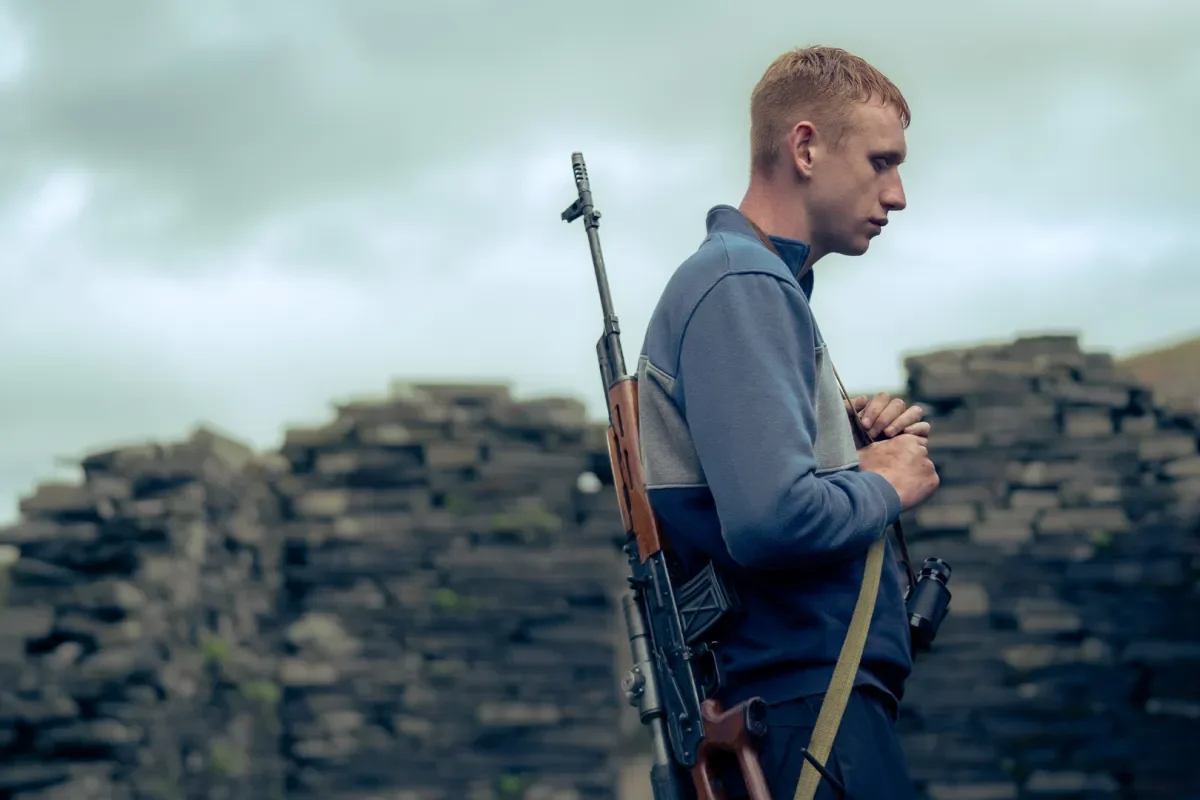
Reconstructing the most harrowing moments of a person's life requires a specific ethical framework. Böhm treated this process with a meticulous sense of protection. "Asking for permission and creating a safe space was important, not only when it came to Ivan, but also when it came to our cast members," he explains. He noted that even those without a direct connection to the conflict could be heavily affected by the material. This philosophy was applied to the entire production. Böhm uses a tool he refers to as a "rule book" to navigate these complexities. Before production, he asks collaborators to write down their emotional and physical boundaries. "I don't want them at any point to be surprised or feel like we haven't discussed something. I try to be as clear and as honest as possible up front. I ask for a rule book where people can note down boundaries that are important to them. I try to navigate our collaboration around these written rules and conditions we established at the beginning". This structure provides the necessary architecture for authentic expression to happen. During this process, Böhm found that many in the Ukrainian community were eager for this level of openness. "They want to speak about everything that happened to them. They want this to be part of our everyday discussions. They want to speak about how they feel, their fears, and their challenges.”
Böhm insisted on an all-Ukrainian cast, which involved the logistical difficulty of moving actors out of an active war zone to the UK set. He holds an immense amount of respect for their ability to inhabit fictional characters while their own homes were under bombardment. "For them to have the headspace to shoot a film and portray a fictional character, I have a lot of respect that they were able to achieve that," Böhm says, recalling the commitment and spirit they brought to rehearsals despite the weight of their lived reality.
Every detail in the film was built with historical and emotional accuracy at the forefront. The uniforms, the weapons, and even the cadence of the language were intensely scrutinized. "You have films that are perhaps inspired by true events, and then they take a lot of creative liberty. We are on the other side of that. We followed Ivan's subjective experience quite closely. The only thing we really did was streamline the timeline and summarize a few characters to make it understandable for the audience".
Ivan was forced to age years in the span of a single afternoon. This compression of time and the resulting loss of childhood is the heart of the film. "For me, it is a story about moral courage. It is about what happens when systems designed to protect civilians collapse," Böhm says. The title is really about the inherent randomness of that collapse. "When you play rock paper scissors, you can't really have a strategy. It doesn't matter how brave or smart you are. At the end of the day, it's a game of luck. That is true for people living in these horrible conditions. Whether they experience the next sunrise or not is often based on sheer luck and probability".
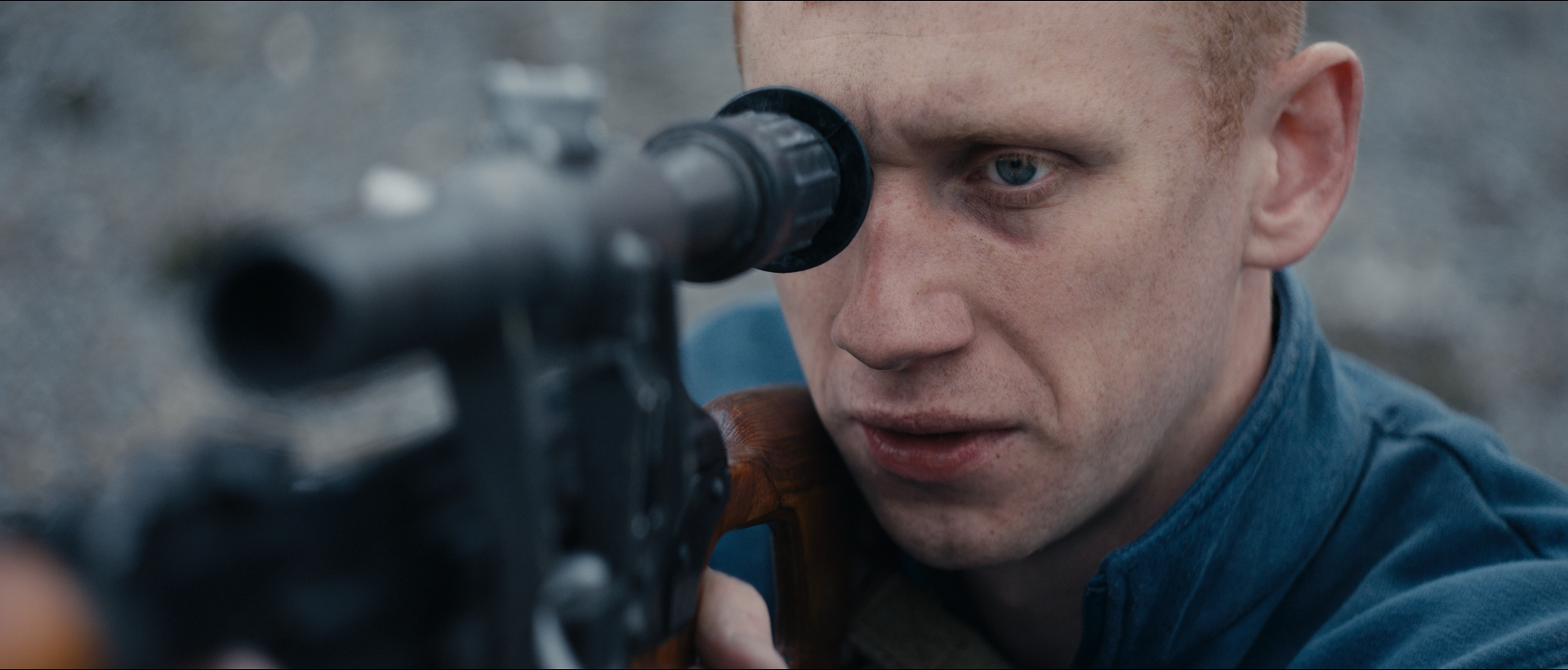
In a 2026 landscape where tragedy is a constant scroll on a smartphone screen, empathy can often feel like a limited resource. Böhm is aware of the fatigue that comes with witnessing endless global conflict. "The next few years and our future depend on how we as human beings understand each other and how much empathy we have for each other's perspectives," he says. He notes that people often discuss war through cold statistics—numbers of dead or displaced. He believes those numbers can obscure the human reality on the ground. "With this film, we wanted to zoom in on one individual experience, in just a couple of hours of that life. For us, this film was never a lecture, but a dialogue with the audience".
Böhm sees himself as an optimistic person. This hope does not come from the news, but from the community of storytellers he sees working alongside him. "I am impressed by how many filmmakers are pushing to get their films seen by both a big audience and by decision makers. They are working to get their films into parliaments, often collaborating with human rights organizations or NGOs. That is powerful and gives me hope," he says. He believes this drive comes from a place of care. Because we are globally connected through technology, we have the ability to reach out to people in Palestine, Ukraine, or Taiwan instantly. "I think it comes from a place of love and care".
At the end of our conversation, Böhm offered a perspective on why these stories must be told even when they are painful to hear. "In my opinion, this is what storytelling is all about. It was always about the urge and need to somehow understand each other, to understand where people are coming from, and to understand their thoughts and feelings". Rock, Paper, Scissors refuses to attempt to explain the geopolitical complexities of the invasion. It places the viewer in a bunker with a boy who is about to lose everything, and it asks them to stay. In a world where tragedy can be distilled into infographics, pausing and listening might be our only path towards humanity.