
I don’t really have a favorite genre of film. Whenever people find out I’m a movie guy™️, they usually ask me what my favorite genre is, and I almost always tell them that I will watch anything and everything. If I had to pick, though, I’ve become increasingly interested in the area of film I’d call “Brother Cinema.” I don’t know why I’m so drawn to Brother Cinema. I do have an older brother who I love dearly, but (and not to brag) our relationship is fairly uncomplicated. He’s five years older than me, and I’ve always seen him as a role model of sorts. I followed him to the same undergraduate university, got neurotically into movies because of him, and play the same sports as him. I’ve never felt a sense of competition with him. He’s always been someone I look up to and enjoy spending time with. We mostly talk about movies and play in the same adult after-work soccer league. I’d be lying if I said a big reason I’m so into movies wasn’t that we grew up watching them together and connecting through them. Needless to say, I am very grateful for my older brother.
I’m not sure why Brother Cinema speaks to me so much, considering its recent entries haven’t been great at reflecting my lived experience. I wouldn’t say I’m an expert in the canon of 2020s Brother Cinema by any means, but from what I’ve seen, it focuses mostly on complicated relationships and tension. There’s the nefarious cash grab of Mufasa: The Lion King, wherein the titular Mufasa sings “I always wanted a brother” in the most painfully earnest way. There’s James Gray’s delightfully tense Paper Tiger, in which one brother’s shady business venture pulls the other into danger, testing his loyalty to both his brother and his own family. And there’s the delightfully comic Seekers of Infinite Love, where Hannah Einbinder reconnects with her brothers (yes, women can be brothers too; this is indeed woke 3.0). Brother Cinema hasn’t left much representation for those of us who have normal, healthy, chill relationships with our brothers.
Of course, this is all a manically long preamble to Dempsey Bryk’s Crash Land, perhaps my new favorite entry in the canon of Brother Cinema. Following a group of amateur stuntmen who set out to make a movie in memory of their friend Darby (Billy Bryk), Crash Land is a love letter to the beauty of being able to make things with friends. But beneath the story, in the relationship between the brothers making it, it’s ultimately about how beautiful it is to have a brother, and perhaps the first piece of Brother Cinema I’ve felt this connected to.
I spoke to Dempsey’s brother, Billy, about the film, his role as producer and actor, and working with his brother. The Bryk family are no strangers to film, with their father, actor Greg Bryk, appearing in Crash Land too. Billy and Dempsey have taken different paths, with Billy reconnecting with Finn Wolfhard on Ghostbusters: Afterlife before the pair went on to write and direct Hell of a Summer. Billy has also appeared in When You Finish Saving the World and Friendship, while Dempsey’s acting credits include The Silence and Willow. Both brothers have had exciting careers, and I’m convinced they’ll eventually become household names, but Crash Land marks their biggest collaboration to date. Although they work in the same field, they’ve mostly followed their own paths.
The way Billy describes his relationship with Dempsey reminds me of my own relationship with my brother. Even when they audition for the same roles, there’s no sense of competition. Dempsey will read something and call Billy because he thinks his brother would be great for it, and Billy does the same for him. As the younger brother who got to direct a feature first, Billy saw Crash Land as a chance to return some of the support Dempsey had given him his whole life. Similarly, I’ve worked in a field close to my brother’s. I’ve never felt competition, but I am constantly in awe of his drive, resilience, and excellence, whether through work, seeing how vital he is to our soccer league, or even in how he loves movies. I saw that in Dempsey and Billy’s relationship, except they now have a film that’s a lasting legacy of that love.
Crash Land is available to rent on Letterboxd Video Store until December 12, 2026 (UTC), in participating territories.
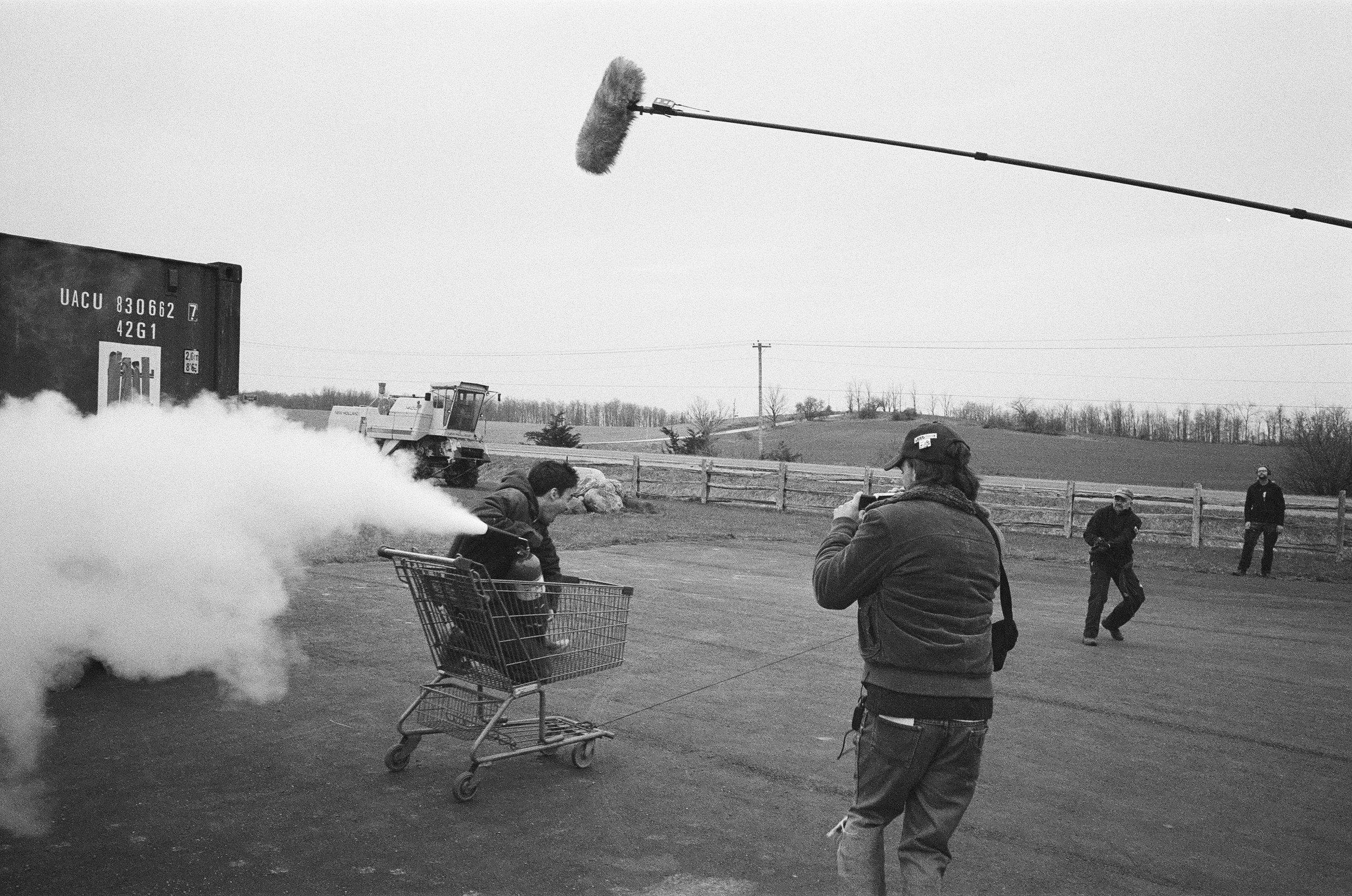
This interview has been edited for length and clarity.
Ali El-Sadany: I loved Crash Land. I think it’s such a beautiful, modern-day Gen Z Hot Rod. I mean, Hot Rod is a modern-day Hot Rod, but I’m curious about what you and your friends were like growing up. What kind of friend were you? Were you always trying to make people laugh? Where did that desire to be the comedian start, and how much of that person is still there when you’re making something with your friends?
Billy Bryk: It’s funny. I was always the quiet member of my family. At family dinners, I was not speaking. My mom and I were sort of reserved, and my younger sister, my older brother, and my dad would often be dominating conversations. So I had a perception of myself as being the quiet, reserved type, but if you ask my friends, I think they’d disagree. I’m probably not the quiet one in my friend group.
I always wanted to make my parents laugh, or my siblings laugh, or my friends laugh. Most of my friendships have been based on a mutual love of comedy in some way, or just a shared sense of humor.
I knew as a kid I wanted to make films; I’ve known that since I was four years old. I feel very blessed that I knew that so early, that I could focus on it from age four until twenty-four or whatever. I’m not twenty-four now, but I think I was maybe twenty-four when I made my first movie. Actually, I think I was younger than that. Anyways, I just feel very grateful that I always knew I wanted to work in film. Maybe I’m the exact same as when I was four.
AE: It’s interesting you mention your family and how you were the soft-spoken one, because from the movie and your careers, I would have thought Dempsey was the quieter one. I’d love to hear more about what it’s like being directed by someone who’s known you your whole life, alongside your friends, and bringing those worlds together.
BB: Absolutely. I wasn’t supposed to act in the movie until the very last second. I didn’t want to act in it. Dempsey didn’t particularly want me to act in it. The only person who was really set on me playing that part was Gabe LaBelle. He had said that, for whatever reason, from the second he read the script, he pictured me in that part.
The reason I was in it as an actor was, not to sell myself short, to save money. We made this movie trying to put every dollar we had onscreen. I knew that if we hired another actor, we’d have to fly them in, and they’d only be in town for a few days. We couldn’t afford to put someone up for the entirety of the shoot.
I was like, “I don’t want to shoot all that camcorder stuff in a day or two. We’re not going to be able to shoot in all the different locations. We’re going to lose a sense of history between these friends.” I thought it was important to see a lot of locations within these flashbacks throughout the movie, so you get a sense of the history of the town and their friendship, and understand that these guys have been doing the same thing for a long time.
I felt we would sell that part of the script short if everything felt so truncated. It would be like, “Oh, here’s Darby hitting his nuts in front of this dilapidated barn again,” and we didn’t have anything else.
So it was a conversation Dempsey and I had: “I’ll be on set every single day. I’m there as a producer. I’m there to support you, so I’m just going to get in the jumpsuit every single morning. If there’s a moment at every location where I can run out and we can grab something that might work in these montage-y parts of the film, then we’ll do that.”
It was funny because I had said no at the beginning, too. Eventually, Dempsey asked, “Okay, can you please do this part?” I was like, “I just want to focus on producing, man.” He really needed me to do it, but I was like, “I think we should just get someone else.” Eventually, he had to call in the big guns: our mom. She was like, “Billy, you have to do this, obviously.” And I went, “Okay.” Can’t say no. And he knew that. Cheap move.
AE: Yeah, that’s dirty. For me, obviously writing about film isn’t the same as filmmaking, but I’ve always seen movies as a way to vocalize things I don’t necessarily know how to talk about. I started FilmSlop because of grief, and because I didn’t have the words to explain some things. I often found myself resorting to the language of movies to fill in the blanks for me.
When I talk to filmmakers and actors, it’s interesting to see how they use their work to let other people get to know them. With you, there’s your friendship with Finn and your relationship with your brother. Specifically with Finn, what did you recognize in each other through Hell of a Summer and Crash Land? You got to know each other through making a movie together, but this time you’re helping realize someone else’s project. How has your relationship evolved through that language?
BB: As soon as I met Finn, I knew we were kindred spirits in the sense that we had such similar taste in film. I actually knew that before I ever met him. Obviously, I was a fan of Stranger Things, and I thought he was a very talented young actor. But I would see his online presence and kept thinking, “This guy’s really funny, and he keeps posting about all the same movies I like. He’s making these jokes, and he loves Jake and Amir. This guy just seems cool. I feel like we would get along.”
Then I met him randomly on the street in Toronto one day. I was having a butternut squash soup with my brother, Dempsey, and I said, “Oh, this is this kid, Finn.” He was walking by, and I talked to him for about three minutes until I realized that, having stopped him on the street, people were starting to swarm him. I immediately felt bad that I’d held him up long enough for him to start getting recognized, but we had a really nice conversation about film and comedy.
We went our separate ways, and a little over a year later, I had dropped out of film school and decided to pursue acting. The idea was that I wanted to get on sets as an actor to learn the process of filmmaking, work with directors, and learn film that way. One of the first things I got was a tiny, tiny, tiny part in this Ghostbusters movie that Jason Reitman directed and Finn was in.
For whatever reason, Jason was like, “I really think you and Finn are going to get along.” I was like, “Okay, maybe.” Then I sat down at lunch, and Finn remembered me from this two-minute conversation we’d had in the street a year prior. The conversation picked up where it left off. We discussed all the films we loved, the types of movies we wanted to make, and the things we wanted to see. We were so aligned that it just made sense to write something together.
Hell of a Summer was really based on our experience of getting to know each other and all these other young cast members in Calgary. I’d never been to summer camp. I went to a basketball camp for one summer, but other than that, I’d never really been. Our camp experience was living in this hotel with all these young actors. I’d never really thought I would be writing and directing with somebody else, and I don’t think he did either, but it just made sense right away.
I had read Crash Land. I guess I can say this: it was called Cowboy Up for the longest time. Dempsey shared it with me when we were living together in my parents’ apartment during COVID, and I loved it. I knew Finn would love it.
This is where Dempsey remembers it differently than I do. I distinctly remember telling Finn, “This is the next thing we’re going to produce.” It just made so much sense for us to produce it. Dempsey claims it took a little while longer, and it wasn’t until Gabe had been excited about it that Finn agreed to read it. I was like, “I don’t remember this, really,” but whatever. I won’t dispute him too much.
It was really cool to produce the movie with Finn and not direct it. We both acted in it, but it was awesome to step into the producer role and try to support Dempsey as much as we could. We believed in the script so much from the beginning and grew the team from there with a bunch of like-minded people.
Years before this, Finn had introduced me to Matt Johnson and Matt Miller. They were the first people we talked about: “Well, if anybody can make a movie for no money in Canada, it’s these guys.” So we brought them on.
There was much less pressure on Finn and me this time around. On Hell of a Summer, we tried to enjoy it in the moment, but it was so stressful and so fast. We were directing, we wrote it, and we were acting in it. It was this whirlwind. With Crash Land, we had a little bit of distance from it and could appreciate the ride more. Finn’s so funny in the movie. I actually think it might be Finn’s funniest performance. He’s so great in it.
AE: Crash Land, to me, is a monument to making stuff with your buddies and being able to make art with the people you love most. Are there moments in this movie that represent some of those people to you, that capture what you appreciate most about them? I know that’s a hefty one, so we can dance around it.
BB: I don’t know if this is necessarily the answer to your question, but the thing I always loved about the script, and the thing I love about the film, is that, to me, it so perfectly encapsulates Dempsey and my relationship to him growing up.
He was my big brother and would introduce me to certain movies or comedies. He had a rowdy, funny sense of humor, but at the same time, he was the sweetest older brother ever. This movie is at once quite rowdy and crass at times, but also just so sweet. It has such a heart to it.
The second I was reading it, it felt so specific to him. I was like, “There are very few people who I think are as earnest and sincere as you, Dempsey, but who also have the ability to write this joke about a guy smooshing his ass up against the glass,” or whatever crazy thing it was. The whole movie just felt so him to me. I really wanted to support him throughout and help him execute that vision. That’s not a specific moment, but...
AE: You don’t have to answer the questions directly. Feel free to talk as freely as possible. I really love what you’re saying about your relationship with Dempsey. My older brother is a big part of the reason I love movies so much. We have a five-year age difference, so we were close, but we weren’t super close until I turned eighteen. Movies were the thing I started to connect with him through. The reason I got so into it, the reason I have a film review site now, is because it’s the thing that grounds us together. I think it’s really special that you have that with Dempsey.
BB: My dad got to be in the movie, too, which was such an amazing experience. I’d only ever worked with my dad once, on a short film Dempsey directed, but I grew up hanging out on set and watching my dad work. It was so fun.
The first day of shooting was one of the scenes with my dad. That was a moment I felt I could appreciate because I didn’t have to go direct. I didn’t really have much to do that day other than help Dempsey, so I felt able to appreciate the fact that the three of us were all working together and making something together.
AE: You mentioned that short film and growing up around sets. Had you worked with your dad much beyond that?
BB: Dempsey directed a short film years and years ago that my dad and I acted in, so I did that with him once. But other than him helping me with auditions, or me growing up helping him with his auditions and reading lines, I’d never really worked with him.
Funny enough, he and Dempsey had worked together a whole bunch. They look a little bit more alike than we do, and I think they’ve played father and son before, or older and younger versions of the same guy. They’d worked together a whole bunch, or at least it felt that way, and I never had, up until this point. I mean, I don’t have any scenes with him in this, but still.
AE: Is your dad the reason you got into movies? With the humor in the family and the personalities, how much of it do you attribute to him?
BB: I obviously owe a lot to him in terms of why I wanted to work in film. Him and my mom, really my entire extended family, but my parents especially love film. They would sit us down as kids, and we’d rent movies and watch family movies. I always loved it. I think they got lucky that their kids loved movies and wanted to watch them with them, but they really wanted us to see interesting art.
The fact that my dad was working in film made it so much more accessible. I mean that in the tangible ways of nepotism: I’m auditioning for this thing, and they know who I am because my dad had been acting in Canada for twenty-plus years before I even went on a single audition. They’re aware that, “Oh, this is Greg’s son.”
But there’s also this intangible thing of growing up around the industry, seeing and meeting people who work in film, and feeling like it isn’t some impossibility. In a lot of ways, there’s a certain audacity you need, for lack of a better word, to just be like, “I’m going to be a filmmaker. I’m going to write and direct movies.” I think it feels impossible to some people. It never felt impossible to me.
AE: Where does the pressure of having a dad who made it, a brother who’s a writer, and being part of a family of creatives come into play? Were you nervous about getting into the industry and having those footsteps to follow, or did you jump in and feel good about it?
BB: Funny enough, I wasn’t nervous at all. I think that’s probably because my family is so supportive. My dad and Dempsey specifically are two people who are incredibly supportive of me, and always have been. So I never felt nervous about it.
It’s interesting. Dempsey and I are close enough in age that sometimes we’ll go out for the same parts or audition for the same things, but there’s never really been a sense of competition between the two of us. We’re both so supportive of each other. Sometimes he’ll get something sent to him and immediately call me: “You have to read for this. You’ll be great for this.”
I think there are people who wouldn’t want to call someone and be like, “I think you’d be great for this. I think you’d be better than me for this.” So that’s nice. I also feel like we’re different enough. We have very similar sensibilities, but very, very different personalities, and that’s been super helpful. Sometimes I’ll read something and think, “This isn’t right for me, but this would be great for Dempsey.”
AE: I think it shows in Crash Land, which is such a genuine movie about people who love each other without any stipulations. I don’t think it could have been made, especially with this crew, without having that foundation to build on.
These guys want to make a movie that shows other people who their friend is and why their friend mattered. When you’re making something with Dempsey or Finn, is there a part of you that wants audiences to see what you see in them, something that isn’t necessarily as clear outside of the screen? What about them do you try to bring across in the movie? Without leading anyone who’s watching it for the first time, what do you really want audiences to get out of it?
BB: I touched on this a little bit before. The thing that was so important to me about this movie was maintaining the heart and the sweetness of it, and the love between the friends, because I thought that was so representative of how much Dempsey loves his friends. We all love each other. We’re all so close.
There’s a version of this movie that’s a lot less sincere or not nearly as sweet, and the thing I always loved about it is how sweet it is.
With Finn, I won’t say too much more about this, but yes. I wrote this other movie for him that I will not comment on further. Part of the reason I was so excited to write it is because I feel there are sides of Finn that are so funny and unique and specific that he hasn’t quite gotten to show on film. I’m definitely excited about the idea of doing this other project and showing people that.
AE: Celebrity is insane with how parasocial people can get. There are parts of your friends that you want to keep just for yourself, but also parts you want the world to see, especially when you’re in a business so grounded in perception. I think that’s such an interesting thing to unpack. What has working with your brother taught you about being a friend or a brother? How has going through this feature together helped that evolve?
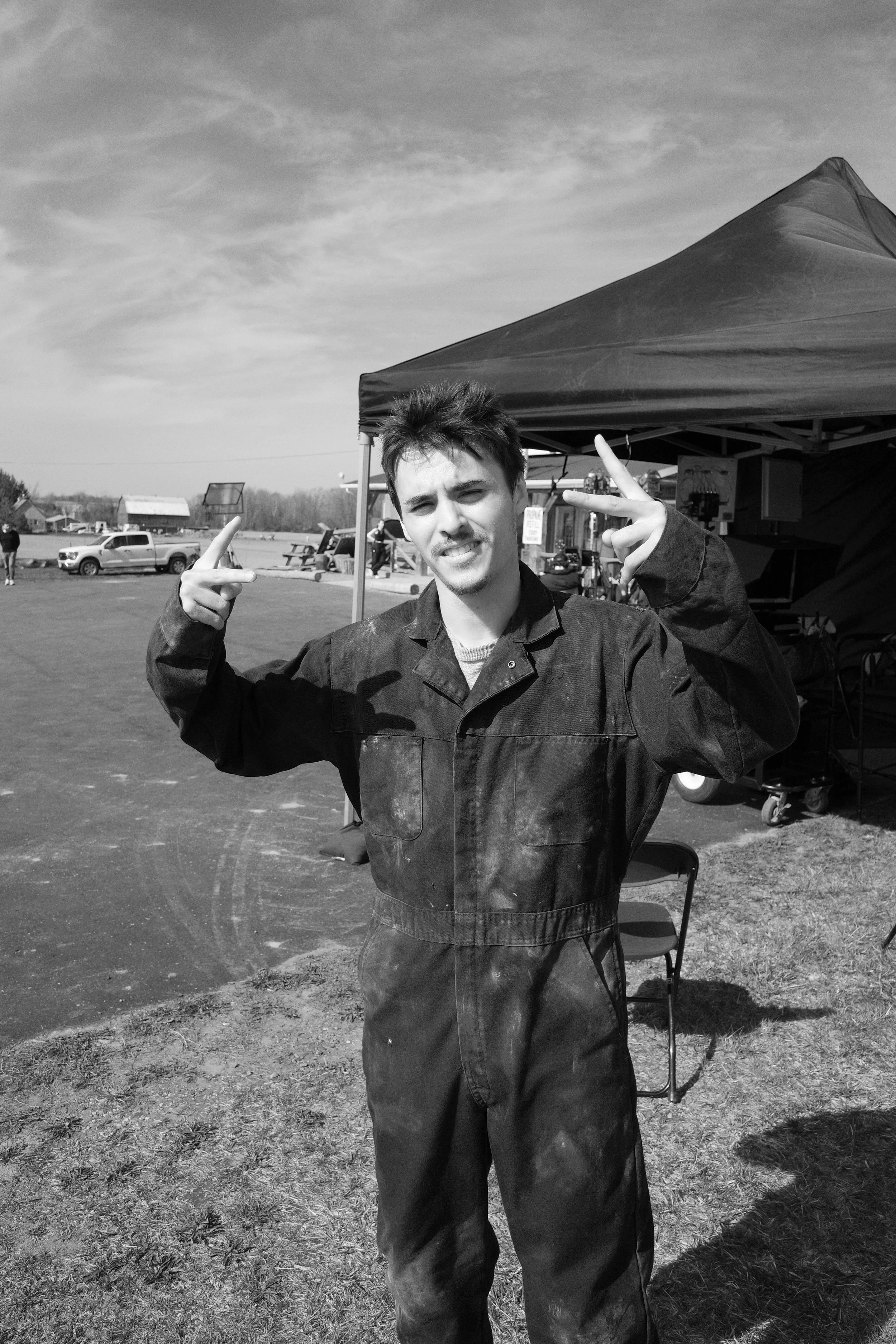
BB: The main thing is just the importance of showing up, I guess. I initially planned on being more hands-off. Dempsey and I had spoken about this. I loved the project and wanted to do everything I could to connect him to people to help him make it, but there was a world in which I wasn’t going to be as hands-on as I was.
As the film evolved, and you go through the process of trying to get a movie made, which is nearly impossible, I ended up becoming more and more involved. Way more than I would have thought from the outset, and maybe more than I would have agreed to had I known from the get-go. Not in a bad way, but it was different from the working relationship we thought we would have.
So just being able to show up and help him. The thing I always say is, I’m the younger brother, but I got to make a movie first. I went through that experience of making a similarly sized movie a couple of years before, in the same city-ish. Same province, at least. I wanted to do everything for him that I appreciated producers doing for me and support him in the ways I maybe wish I’d been supported more, or things I didn’t even know at the time that I wanted. I was trying to use everything I’d learned to help him navigate the process as best I could.
He’s been so supportive of me my whole life, really a cheerleader for me in a lot of ways. It was nice to flip the dynamic a little and try to ride out for him as much as I could the whole time.
The last thing I’d want is for it to feel like I’m trying to take more credit for the film than I deserve, because I really just wanted to support him. The movie is all him. This movie was on the page from the very beginning. I just wanted to help him execute it.
AE: Where do you see your work with your brother going? I imagine bringing the personal and professional together has opened up a different kind of closeness. What would you take from this into future projects?
BB: I think he’s a brilliant writer, so I’m sure we’ll work together again. In terms of closeness, we’ve just always been so, so close. I feel like I know him so well because we shared a room for the first fifteen years of my life, or whatever it was. Probably a little less.
I joke with him, “I’m not producing another movie of yours. I’m not doing it anymore. Let me make another one first, and then I’ll do that.” He’s got something now that he’s been calling me about, asking me to produce, and I’m like, “I appreciate it. I’m very flattered, but at the same time, I’ve got to focus on directing again.” That’s my main priority at the moment.
Maybe he’ll produce my next movie. I don’t know. We’ll see. I don’t think we could ever direct together. Maybe we could write something together at some point. I think we might kill each other if we had to co-direct something. What was nice about this was that it was like Batman and Robin. It wasn’t Batman and Batman, which I don’t know if two Batmans ever works.
AE: Which one do you see yourself as?
BB: I’ve always liked Robin, he’s my GOAT, but when you’re directing a movie, you’ve got to at least be Nightwing, you know?
AE: Outside of Crash Land, then, if you had to pick one movie you haven’t worked on that represents what you love about Dempsey, what would you pick?
BB: Oh, good question. Maybe Stand by Me. That’s something that has always reminded me of growing up with him, my cousin, and my sister, and that dynamic of being young. So Stand by Me would probably be my recommendation.