
My relationship with death is colored by my understanding of religion. I’ve always felt a certain comfort with death because of my conviction in an afterlife. Of course, that doesn’t entirely ease my fear, because the whole dying thing seems painful and scary. I also sometimes make bad decisions, so that might impact what happens to me in the afterlife. Still, I’m grateful for the sense of certainty my faith gives me. I believe I have some idea of what’s to come, and that it’s something more than an empty void. While the threat of (eternal?) damnation is scary, I’d take the possibility of punishment over certain emptiness. I’ve always wondered how people who don’t believe in an afterlife make sense of that void, or even the uncertainty of what comes next. I found some perspective in my conversation with Ted Raimi, where death came up pretty quickly.
Horror has been a defining part of Raimi’s life since childhood. He opens our conversation with vivid memories of heavy snow outside his Detroit home. Back then, the snow represented uncertainty and the mystery of what lay beyond it. The monsters have taken different forms as he’s gotten older, but they often come back to that same fear of uncertainty. Through his work, Raimi has turned his love for the genre into a way of finding some sense of control over the unknown.
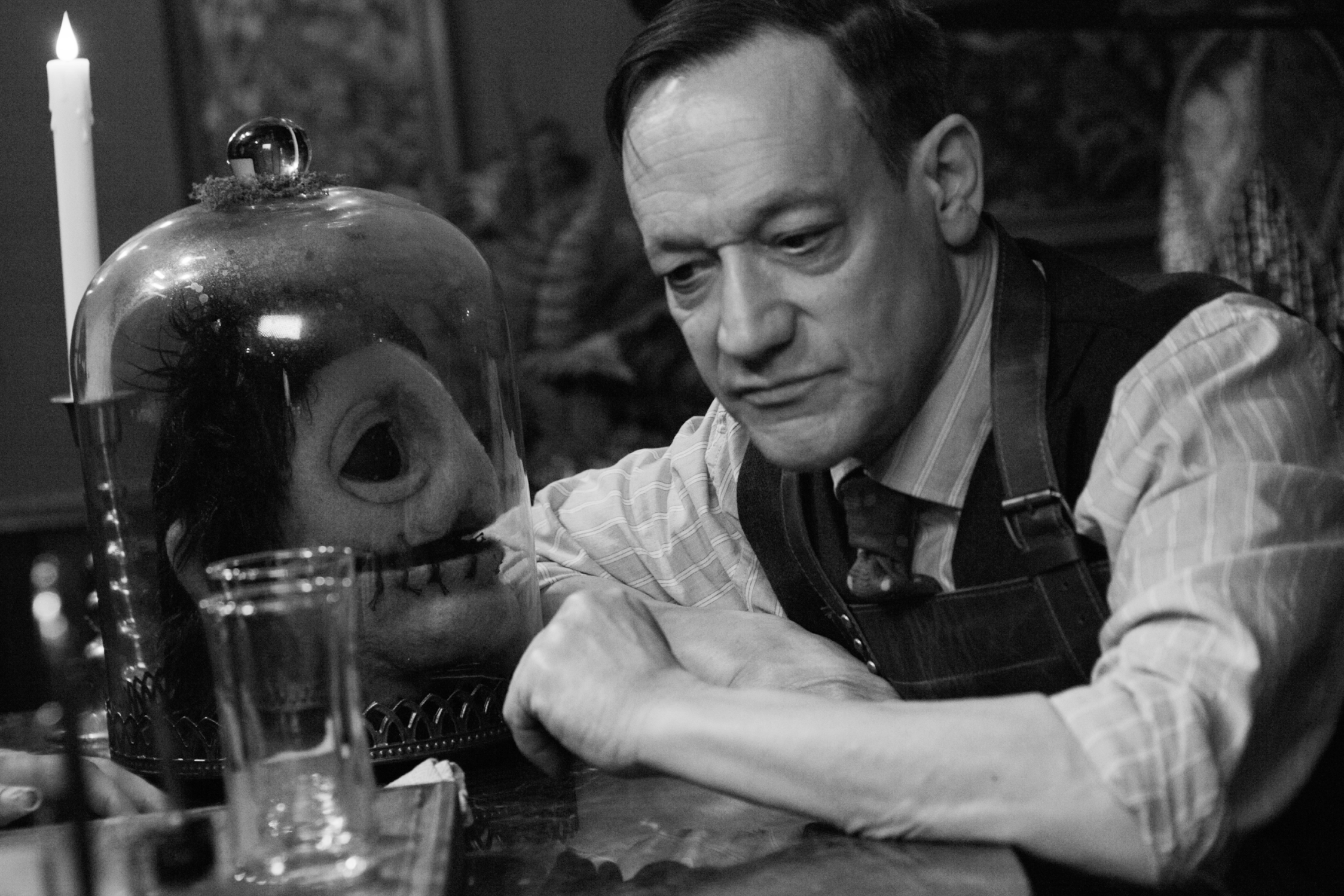
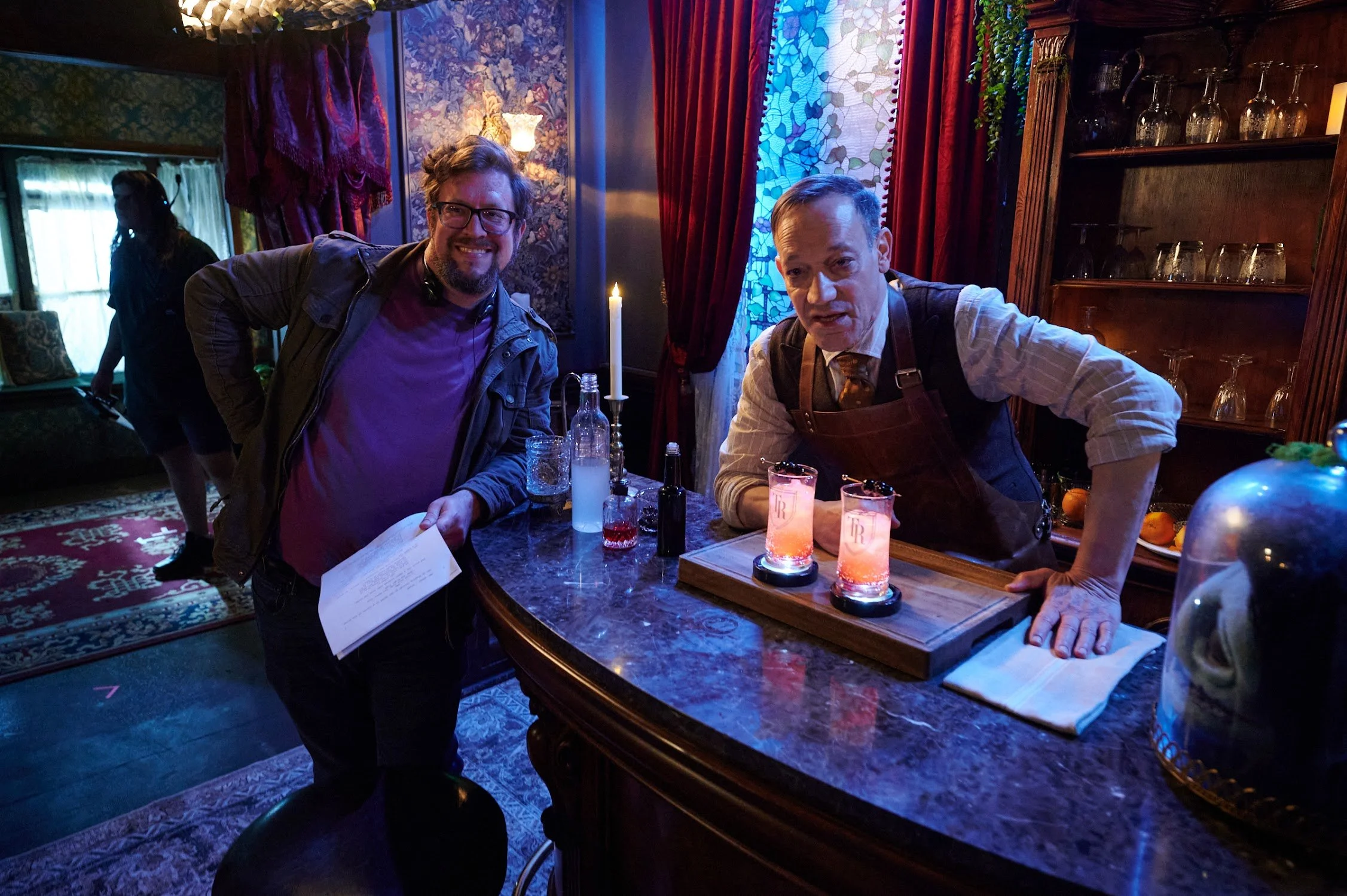
In his latest show, Your Darkest Friend, he brings decades of experience with horror to conversations with other artists. We spoke about the show, uncertainty, and the thin, fragile lines between horror, confidence, and comedy.
This interview has been edited for length and clarity.
Ali El-Sadany: I read somewhere that the inspiration for Your Darkest Friend came from childhood. You’ve spoken about being a fearful kid, spending time alone in an old house in Detroit and letting your imagination convince you that things were lurking around you. What were you afraid of back then? Do you remember the first fear that really stuck with you?
Ted Raimi: Heavy snow, because I couldn't see beyond it. I grew up in a very snowy part of the country, in Detroit, Michigan, and we had some of the heaviest snowstorms on record during the early 1970s. It snowed daily. I remember looking out at nighttime. You could only see two inches beyond the window from the light in your room, and I would always imagine all kinds of people, monsters, beyond the snow looking at me, but I couldn't see them. I think that was probably my earliest fear that I can recall.
I was a horror movie kid, but most of my love of horror comes from books and radio, strangely enough. When I was a kid, CBS decided to do a new horror radio show. The last network horror radio show had gone off in 1962, so they thought there were probably still a lot of people from the Greatest Generation who missed it. They reinvigorated it. It was called CBS Radio Mystery Theater, and it was really adult. It had gore, monsters, violence, adultery, everything. And I'm this nine-year-old kid listening to this radio show, and I wound up loving horror from that. So my love of it is more auditory and literary than film.
AE: That's really interesting, and I feel like it comes across in your show as well. One of the things I find fascinating is how you balance humor and horror. When you were a kid and your imagination was making the world scarier, did you already have the instinct to make that uncertainty funny? Or did comedy arrive later as a way to gain control over it?
TR: No, it comes later. Once you develop a sense of humor as a younger person, you realize how similar humor is to fear. They're both these hysterical reactions. A hysteria takes you when you can't stop laughing, and a hysteria takes you when you can't stop screaming because something frightens the hell out of you. They're really tied to the same thing. I imagine they're very similar in your brain. It's an easy crossover, and they've always been very related to me.
AE: When did you start developing that comedic instinct?
TR: Well, for a lot of people who like to do silly things, it's usually in high school, because you don't make friends. You have to develop a sense of humor or you don't have any friends. If I was incredibly good-looking or very rich or something, I guess I wouldn't need a sense of humor. But you do.
AE: Not at all. You're incredibly good-looking right now.
TR: Go on, go on, go on!
AE: Having grown up with Sam and making things together, I'm really interested in the relationship between creating horror and having control over it. As I've been writing more about film and using it to understand my own life, I've found that actually making things gives you something that simply consuming them doesn't. Was there something empowering about becoming the person who got to decide where the monster was?
TR: Oh, sure. You stop being the victim of the story and start becoming the monster, in a sense, which has its own set of strange limitations and advantages. When you create horror, you're the one doing the scaring, and you see it from a third-eye point of view. Which is really the best way to see anything in your life, I think.
When you're frightened of something, many psychiatrists will tell you, don't say, "I am frightened." Say, "This person is frightened." And as the writer, you always get to be that person. So you see it all. It doesn't mean I don't get scared. I do. I still do,ut it's also fun to create it.
AE: What are you afraid of now?
TR: The monsters change as you get older. Monsters when you're young are, "Am I going to be as successful as my friends? Are my parents going to think I'm okay?" Things like that. You get into your thirties, and the monsters become, "My God, I've got to make enough money to pay my rent."
And then at my age, now that I don't have to worry about my parents because they're gone, and I don't have to worry about my rent because I'm doing okay, it's, "Do I have enough time left to do all the things I want to do?" So the monsters in your life never leave you;They just change. Nobody is ever without these fearful things. You can't live your life without them.
AE: When you make horror, you're using it as a way to reclaim some control over those fears. Do you think that reclamation is more for the younger version of yourself or the person you are now?
TR: Younger.
AE: In what sense?
TR: There's a very large part of my mind that is still that fourteen-year-old kid. There's no doubt about it. One of my favorite things to still do at nighttime is go to bed listening to CBS Radio Mystery Theater, like I used to do when I was thirteen or fourteen years old, when it was first on the air. I still think they're good.
The movie of the mind is always more powerful than the one you see on the screen. So as an actor, as a show creator, as a director, you want to show as little as possible. That's my motto, and I feel that as an actor as well. I never give too much away. I always keep it close to the vest. Let the audience figure it out. What the audience is thinking is far more interesting than what you could ever tell them.
AE: When you think about that younger version of yourself, if you could place him inside the horror you're creating now, do you think he'd understand it? Would it frighten him, or would he recognize what you were trying to do?
TR: Oh, he wouldn't have believed it. My fourteen-year-old self would never believe I could have had the life I've had. I've been incredibly lucky. I've done things that would blow my fourteen-year-old self's mind to pieces. I'm a very fortunate guy, so I couldn't even answer that question. He'd have a brain explosion. That's all.
AE: For me, a lot of movies I've watched recently have excavated things I suppressed when I was younger. They've brought me back to memories and fears that I needed to look at through a third-person lens, from where I am now. In some ways, it seems like making horror is a conversation between you and your younger self.
But I'm also curious about those fears you mentioned having as an adult. Do you still use art to communicate with them, or have you developed other ways of engaging with them?
TR: I read a lot of books. I do talk about these things with my girlfriend and my friends. But the greatest way to do it is film. Filmed entertainment, also radio entertainment.
Look, I think a lot of the reason we love horror films so much is because you're practicing for that inevitable moment none of us want. If you see somebody die a gory death in a film, you say to yourself, "Well, I know I don't want to go that way." Or you go, "That's a great way to go! Everyone's cheering for you. That's the way to go." So I think there's a lot of that, and horror does get to exorcise those thoughts we all have.
AE: I really like that you brought that up, because one of the questions I had written down was, "What's your relationship with death?" I was trying to find a clever way to make that transition less jarring, but since we're already here, I'd love to ask you directly.
TR: You know, none of us is getting out of here alive. So I suppose mine's the same as anybody else's, except I've always been rather hyper-aware of the fragility of it all. I had a lot of people I knew when I was young die. Maybe not a lot, not as many as some, but enough that I knew I was not immune, even when I was young. So I was always aware of it, and I developed an interest in it.
Ever since I was a young man, I've loved to visit graveyards. Not so much for the morbidity of it all, though some people think I'm just some sort of ghoul. No,I like to go there for the same reason people like to visit the ocean. You see an ocean, or you look up at the sky, and you see this kind of eternity. That's part of the beauty of it all. I go to a graveyard and I see the same thing, the sort of life going on forever, and it's very peaceful. I like it. I don't go because I want to die. It's because I want to live, as a matter of fact.
AE: You touch on this interesting juxtaposition where thinking about death makes life so much more worth living and horror films let us imagine good and bad ways to die. What would you consider a good way to go, or a bad one?
TR: Everybody wants to go out a hero. Everybody wants to be the guy holding the gun that killed the bad guy, and then he gets shot. If you've got to go, everybody wants that. But almost nobody in this world gets to go like that.
In fact, I have a brother who's an ER doctor. Once I was doing a scene in a TV show where my character died, and there was this long, long speech they had written for my character. It was like two pages long. He was dying in a field, and it was, "I just want to tell you this, and I feel this, and I'm sorry I didn't do that." Something seemed wrong about it.
So I called my brother and said, "When you see people die in the ER, or they come in with critical injuries, what do they say? What are the last things they say?" He said, "Well, they usually don't think they're going to die." Unless you're very, very old, you think you're going to live another thirty, forty, fifty, sixty years.
For people in their twenties through their forties, they usually say very ordinary things right before they go. Like, "Hey, can I have that blanket?" Those were their last words. "Would you close that window? It's kind of cold in here." Those were their last words. "Boy, this applesauce in this hospital sucks." Those were her last words.
So as a human being, you probably won't get a glorious last moment, and you'd better live every moment until then as gloriously as you possibly can. That's a lesson I learned from that. That's philosophical, but you did ask.
AE: No, this is perfect. As we close, I'm curious how this project, and the many other projects you've undertaken throughout your career, have helped you recontextualize your relationship with fear, horror, and death. How has making horror changed the way you understand those things, from childhood to where you are now?
TR: Well, that's an excellent question. The truth is, every horror movie I ever do makes me more comfortable with dying, because almost exclusively, the subject matter is avoiding it. But while you're making a movie, while you're reading it, writing it, acting it, and directing it, you realize there's no escaping it. And it's quite humorous. It's funny, really.
It's not that you should live your life foolishly, but rather understand all the time that you're going to die, and you're no different than anybody else in that regard. It's funny watching everyone do all these extreme things to live another five minutes. I'm not saying you should be smoking six packs a day or doing something stupid like speeding. Rather, live right now. That's what horror teaches you.
AE: I love that. And I'm glad you've continued to make art. What specifically about this new project were you hoping to explore?
TR: This one was really about the craft of horror itself. This project is an insider talk show. I've been in this business for forty-plus years, and I'm talking to others who've also been in the business a long time.
We didn't want to talk down to fans. That was the big thing. Most horror celebrities get dumb questions asked of them all the time, like, "Did you think a real killer was behind that closet when you shot it?" Of course not. But those are the dumb questions we usually get asked. So in this one, I wanted to be more genuine with the guests and ask them questions I would like to get asked. That was the impetus for it.
AE: And how did having those conversations help you understand your own experiences in the industry?
TR: It amazed me that they had such similar lives. If you're in any entertainment business long enough, it becomes the horseshoe effect. You're a musician, you're an actor, you're shooting movies, you're playing for thousands of fans, and then it comes around like this. You realize you're much more similar than you are different. So despite how different a musician's life on tour might look from an actor's life on location, it's really very similar in many ways.