
When I was a kid, some of the warmest rooms I found myself in belonged to a Vietnamese family down the street. I spent much time in that house, with the smell of rice always cooking, the PlayStation 2 loaded up on the TV at all times, and the stairs, a reliable friend on my left every time I walked through the front door. I was at their house regularly during my elementary school years, and I understood their world the way kids do: through playtime, helping each other with homework, and enjoying the meals served to me (and trust me, it was always delicious).
I think about that family often when I watch films about Asian diaspora communities, and I notice how rarely the screen resembles what I remember. The Vietnamese stories that reach mainstream audiences tend to arrive through the same narrow doors: war, displacement, the immigrant sacrifice narrative. These stories matter, and I’m not interested in dismissing them. But the family I knew was also passionate, hilarious, and loving. They were a regular, everyday family whose everyday stories deserve to be told.
Not long ago, I spoke with Marianna Phung, whose upcoming projects grew out of a simple frustration: “so many Vietnamese stories are about the war”. She’d rather see more of the culture she grew up with, “crazy aunties” included. Phung is an actor and director who has helmed episodes of Pillow Talk and Ezra, and has starred opposite Diane Lane, Domhnall Gleeson, Merritt Wever, and most recently, Hudson Williams and Julia Garner. She describes herself as a proud voice in the Vietnamese Canadian and queer creative communities, telling stories “rooted in humor, heart, and lived experience.”
Her latest role puts her somewhere new — and big. Netflix’s The Altruists is an eight-episode series premiering November 19, with Julia Garner as Caroline Ellison and Anthony Boyle as Sam Bankman-Fried. Created by Graham Moore, it dramatizes the collapse of the cryptocurrency exchange FTX. Phung appears as Lily Zhang, the cofounder of Modulo Capital who is vying for Sam’s attention. It’s a story about ambition, money, and moral failure, which is something that Marianna has confronted during filming, and even after.
I spoke with Marianna about The Altruists, her upcoming projects, and the inclusive stories that “we still have to tell.”
This interview has been edited for length and clarity.
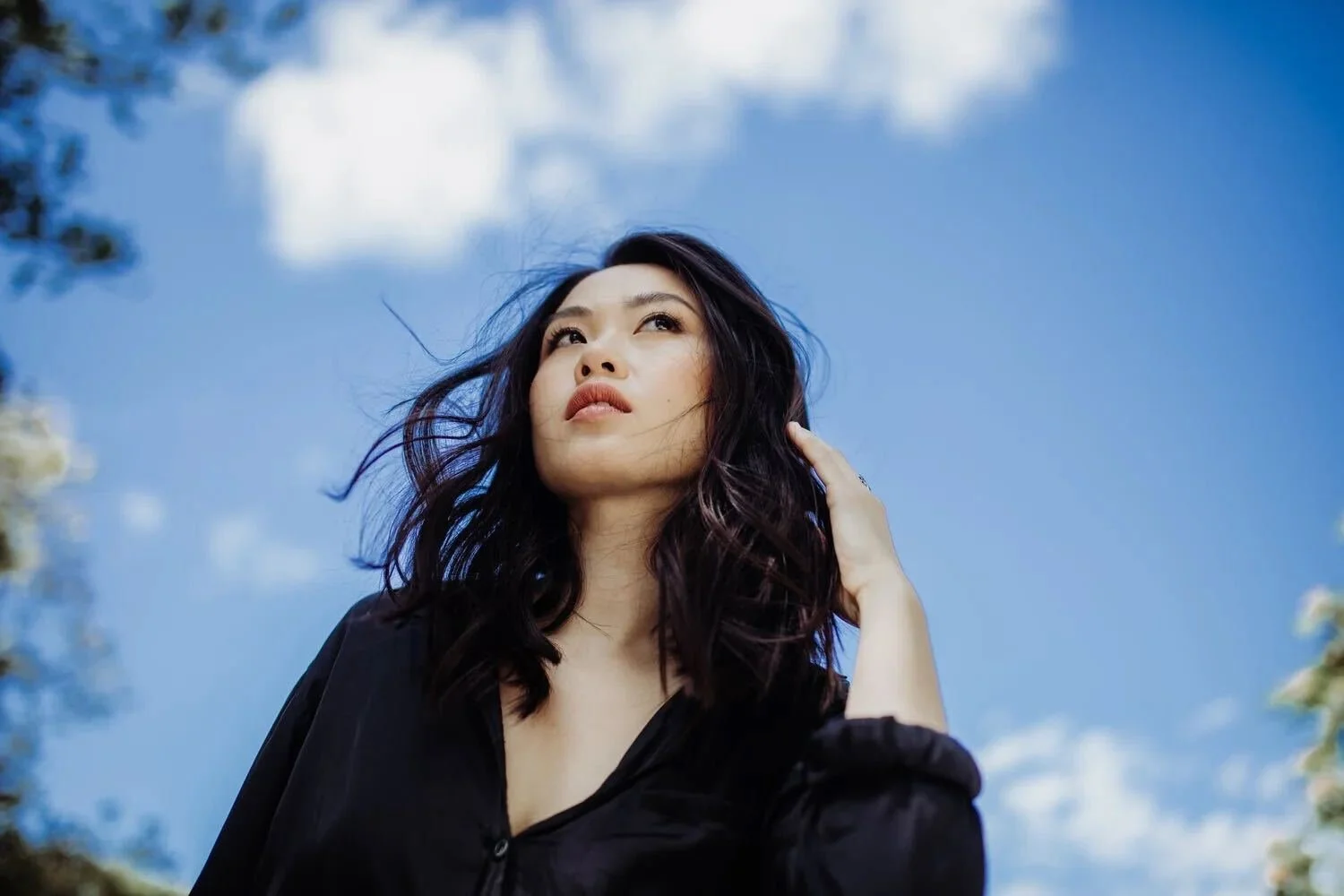
Hannah Reasor: So first and foremost, The Altruists. It is crazy. I got through half of it, and it's intense. You're phenomenal in it. So to start off, stepping into the shoes of such an important and powerful person, Lily Zhang. How was taking on that role for you?
Marianna Phung: So obviously, this story is a story that's inspired by the New York Times reporting. I knew that when I got the job, and I asked our showrunner, “What's the vibe here?” and he says, “Well you know, we're not really looking for you to try to copy who the real person is. We don't care about mannerisms, how she speaks or anything like that. So, it's really what you choose to do with the character.” It gave me so much creative freedom to just play her as I would like to and create the arc that I wanted to reveal her character in during this whole catastrophic situation.
HR: That's awesome. I feel like when you take on a role, for a person that is also a real life person, not just a character created from the mind of somebody, it can be very intense and almost scary. I feel like sometimes you try to live up to making sure that you're being truthful, while also trying to put your own take on them. I feel like it can be really, really jarring for any actor. So, I commend you.
MP: Thank you. What was a blessing is that there's not a lot of reporting about Lily Zhang. For me, I was able to really play here, and the scripts were so brilliant, written by Graham Moore and Jack White, that there were so many pieces that made sense as to why I would make the decisions that I do. But yeah, I was one of the lucky ones that don't have the real character for people to compare me to. There's literally just one picture of her that is online.
HR: Oh, wow. I mean that does give you a lot of creative freedom, as you said. Right now it feels like we’re in the age of these big documentaries coming out that are exposés, or at the very least, depth-based. They dive into a lot of different real experiences and real people which can be like laying all your bones out or letting all your skeletons out of the closet. So I think it's amazing that you were able to characterize a real person essentially.
Speaking of Graham Moore, I know you're a director as well, so how was working with somebody who is such an incredibly well-renowned director?
MP: Graham Moore is the most special, wonderful, creative and kindest human on earth. I was blown away by meeting him on Zoom in my callback and he was very complimentary, kind and warm. When I stepped foot on set, literally my first day, I had just flown in, they said “You have a rehearsal with number two, Anthony Boyle.” It was supposed to be my makeup test and my wardrobe fitting, as well. So, I’d finished my wardrobe fitting, I’d finished my makeup test, and I'm sitting in my trailer waiting for this rehearsal thinking “What are we even rehearsing?” I was trying to compute when I got a knock on my trailer door and the AD Levi says, “Marianna, so there's no rehearsal.” I said, “What do you mean there's no rehearsal?” I’m thinking, ‘Why are you keeping me here in this trailer?’ He says, “Just come out of your trailer” and I walk out and there is Graham Moore and the entire creative team – all the producers, our director, James Ponszold, and even Jim Frona, our DP – and they just said, “Welcome to the show.”
HR: That's so sweet.
MP: The insane thing about Graham Moore is that this guy is an Oscar winner. His work is brilliant and I'm just inspired and in awe of his genius. But he literally said to me on that day, “We are so elated you said yes to this show.” So I jokingly said, “Yeah, you're welcome.” But he's that humble. I got to really work with him in episode six, which is the only episode that he directed, and my God, he's such a wonderful storyteller and he really trusts his actors and doesn't push anything on us. He just trusts our instincts and his own. I mean, he knows this story better than anyone, and I was just so blessed to be directed by this wonderful human who's so collaborative and has no ego at all.
HR: That's hard to come by these days in the industry. As a director, actor and a writer, when you go into an acting job like this, how do you use your directing and your writing experience to bring to life these characters that you take on?
MP: Yeah, so because I'm a director, I ask a lot of questions. The set of directors that we had were just incredible. I loved every director that I worked with and they were really collaborative. So anytime I had any questions about decisions of why Lily would do such a thing or what the heck is this scene about, really, we'd go into detail. For example, with me and Mairzee Almas, we talked at great lengths before we even shot anything about the character. And Graham was an open book too. He said, “You have any questions about Lily, definitely reach out to me.” When we bumped against certain things in the writing or in the blocking of things, we just all worked together collaboratively to find the solution to our problems. I think most of them knew I directed as well, so we’re all just storytellers working in tandem to tell the best story.
HR: Yeah, that's awesome. I feel like sometimes, definitely not in your case it sounds like, but multifaceted creatives that come to set try to get a bit intense with their suggestions, rather than being collaborative. So it's wonderful that you all were able to consider each other's feelings and opinions and work to create the best scene possible. It does show, from what I've seen in the show. Everything is very seamless. It doesn’t feel like the actors or the creatives on set were fighting against each other; it really feels like it was a collaborative effort. Something that we like to do with FilmSlop is bringing our own experiences to film and television. As somebody who grew up queer and in the queer community, things can be really scary. There were a lot of roles that I felt like I wasn't able to take on just because I was queer and feeling as though I was barred from certain parts of theater, despite how open-minded theatre can be. But there were a lot of male roles that I wanted to take on that I really thought that I could because of my vocal range and such, but people were like, no, absolutely not.
So my question to you is, as a queer artist maneuvering through this world, this industry, how have you been able to take those experiences as a queer artist and really find your niche in the film industry including directing, acting, and writing.
MP: So I had the opposite experience because I was a theatre kid too. At New York University, you'd have to audition for these plays. At that time, I would audition for different roles and they would give me male roles! One of the first roles I did was a character named Cruz, and all these men auditioned for it, I got it, and now I'm telling a queer story on stage.
I grew up in a very religious household where you don't tell anybody you're gay, and you almost think that it's a sin. You're indoctrinated, and it's really sick. But yeah, I'm all about representation; it’s so complex.
I'm fortunate as an actor that I'm also straight-passing. That's a luxury for me. But anytime that I get the opportunity to play a part of my community as well I'm just so, so blessed to, because it's such a complicated thing to be straight-passing but also queer.
HR: I feel like the industry itself has moved in strides. We're not necessarily where we should be, but a lot of queer media is making a name for itself and I think that a lot of people have accepted queer media as just media. Of course, it has to be distinguished to make sure that these voices are being heard and not swept under the rug, but it's not being ostracized as much, which I do enjoy. Moving as an actor, director and writer through the industry, do you feel like there are stories that maybe are not being voiced in this industry or that maybe you would be interested in voicing at some point down the line? Do you feel like we've made enough strides to where we are at a point that feels a thousand leagues further than we've been before?
MP: No, we have not told the stories that we have to tell. I feel like we’re just barely scratching the surface here in terms of queer stories, and also, I'm a person of color as well, in Vietnamese stories or different cultures and identities. I think we're just at the beginning, and we need to break down that door and tell more stories. We're sick of seeing the same story repeated over and over again in TV and film. It's something that I'm super excited about doing with my own work as a filmmaker as well. I'm working on a story, my first feature film, and it's a rom-com. It's gonna be centered around a Vietnamese family. Vietnamese people are always, for some reason, just making films about the war and the struggle. It’s always just really sad stories. I just want to say, “Hey, no, we're funny people, too. We've got crazy aunties and family members that need to be locked up because they're just batshit and hilarious.” So, yeah, my film that I'm writing is kind of like Meet the Fockers and The Proposal, and it's gonna be really fun.
HR: I have to say I am going to be there. Growing up, there was a family just down the street from my house who were from Vietnam. It was a mom, a dad, a young boy and then a girl who was in my kindergarten class. I grew up in that house almost half the time in my elementary school days. So I'm very connected to that culture in my own way. I still have dreams about that house sometimes; I loved that house. It brought me so much joy seeing that they were such a family, and they loved each other. I watched them all grow up and helped them learn the language as much as I could because they’d just moved over from Vietnam. So, I definitely want to be there.
In reference to your new role in The Altruists, I was looking a little bit into your profile website, which stated that you want to tell stories that are “rooted in humor, hurt, and lived experience”, which I thought was a beautiful phrase. Lily being a co-owner of this cryptocurrency company, I feel like the role is very far removed from your day-to-day experience of who you are as a creative. She’s a very different kind of person. So how did playing her and performing in The Altruists really live up to that “humor, hurt and lived experience” story you want to tell?
MP: That's a good question. Lily and I do have something in common. We're very ambitious people. I don't think Lily ever rests on her laurels. She is not a creative in terms of art, but she’s very creative financially. I think for me, with Lily, I just wanted to understand her psyche, and I think we do have some similarities in terms of how do we get further – how do we keep chasing that thing and keep the ball moving to get to where we want? I think that's her driving force. She'll do pretty much anything to get Sam's attention. If she's invited to the party, she's going to be staying at the party. She's going to try to get there and hopefully be acquired by this billion-dollar company.
HR: Yeah, definitely. I feel like a lot of times ambition is really something that we all share, like, as just anybody that is in the industry, like, if you are in the industry, you know what it's like to work hard. And there are a lot of characters that I feel like really embody that ambition.
I would say, honestly, to kind of round this out, when you're approaching a character, you know, everybody's different, every character is different, even if they have similarities. Is there anything. It doesn't necessarily have to be about Lily, but it can be. When you go into a character, what has surprised you the most, either about Lily or about any other character you've played, you know, as an actress or just as a person even. Because I know, like, a lot of times when people have played characters or even as myself, like, when I've played a character, I found a lot of interesting things about who I'm playing, Even if it's a side character, Like, I just feel like I've discovered a lot about this person and their motivations and who they are internally. So what would you say is the most surprising thing you've found?
MP: I'll talk about Lily. For this character I did ask a lot of questions of my own about my moral compass. What would I do in this situation? Would I still be involved with FTX if no one knew that we were stealing $8 billion of customer money, or would I not? It really opened my eyes to seeing who I am as Marianna. It's very easy to say, “Well no one's acquiring me for $400 million right now,” but if that money was in front of me, would I change as a person? I think that was the biggest thing that I took away from my character and I’m still asking those questions. I would think that I would do the right thing, but would I? I don't know, because I've never been in that situation, so.
HR: And what impact do you think The Altruists is going to make when it releases? I can see, just halfway through, the kind of impact that it's going to make on my personal community, but, from somebody who grew up a person of color, grew up queer, and grew up in a religious household, how do you think it'll impact your community, the industry, or even yourself?
MP: I think the big takeaway for this show, I hope, is for everyone to see it as a cautionary tale, but the truth of it is that it's a love story. I hope that people are able to learn how to communicate their feelings better, to be honest with each other and remind the people that they love that they're loved. That's what my big takeaway from it is. I hope that's what the audience has too; the reminder that no one can read your mind. Speak your truth!
HR: Well I definitely think it's seen here when you described the way you communicated with the other creatives on set, as well as, in the show between your co-actors. Do you have anything you'd like to add or anything that you feel like people need to know before the show comes out or anything?
MP: I would like to plug another thing because I've been pitching a TV show, too, called Stage Daughter to a bunch of people here in Canada. It’s a TV series, a half-hour comedy that I'm working on, and it’s about lived experience, humor and levity. It’s about a Vietnamese mother and daughter, and she’s been in pursuit of acting for 10 years with a mother who constantly says “quit your dream, it’s not a real job.” Then one day her mom stumbles upon an audition, puts it on tape, and gets casted as one of the recurring guest stars on the show, while her daughter is not successful. So now she’s her chauffeur, manager, translator, all to help her mom be successful in the industry. I’m looking forward to that.