
If the apocalypse happens in my lifetime and the world is going to end, I expect time to stand still. When the asteroid is heading toward Earth with no laser, no Superman, nor Andre Iguodala to stop it, I’ll call up my loved ones to remind them of what they know and what I should’ve told them sooner. I’ll gather my companions so we can grieve the future but live for the time we have left. I expect a truer nature from the world around me. Those who truly love, and those who are impure, will forgo their self-imposed limitations and finally, for once, live the life they desire. I don’t expect things to be perfect, but I expect all movement to be pure. I expect a new world, but I’ve yet to even fathom that I could be surprised with more of the same old world.
The world we live in is the world we’ll die in, and no asteroid, natural disaster, or alien invasion will change that. Every day, we see the world end for someone, whether it’s in Nepal, Gaza, or Sudan, and still little changes in our day-to-day lives as Westerners. So if the actual end of the world came, would we even recognize it, or would it be just another day? Imagine a world where we all truly believe the world is ending. If we’re being realistic, the world probably won’t end in one fell swoop. It’ll probably be a series of events that get us there. Now, who says those events aren’t already in play? Several Franz Ferdinands could have been shot several times, and we’re still holding discourse on the flavor of the month. Even if it was one huge disaster, the world wouldn’t change. It’d just be next week’s news.
If things aren’t changing, then I seriously gotta come to grips with the life I’ve got here. What is my dream last-days-on-Earth rotation? Will my crew gel? What if I want to spend my last days on Earth with them, but they don’t want to spend them with me? I haven’t even thought about the politics of who’s throwing which end-of-the-world party. Do I want to go to the big block party with everyone and their mom, or the kickback with my closest crew? What if I get excluded from the close-friend get-together and now I don’t know anyone going to the Project X parties? There goes my invite to the coolest pre-apocalypse parties in Chicago, and there I am playing Wii Bowling as fire engulfs the planet.
I’d never really imagined the apocalypse happening outside of a Hollywood-like version of it until I watched GALICIA!. I talked with Anna Maguire and Kyle Garrett Greenberg about the apocalypse, human nature, and the trials and tribulations of vacation.
This interview has been edited for length and clarity.
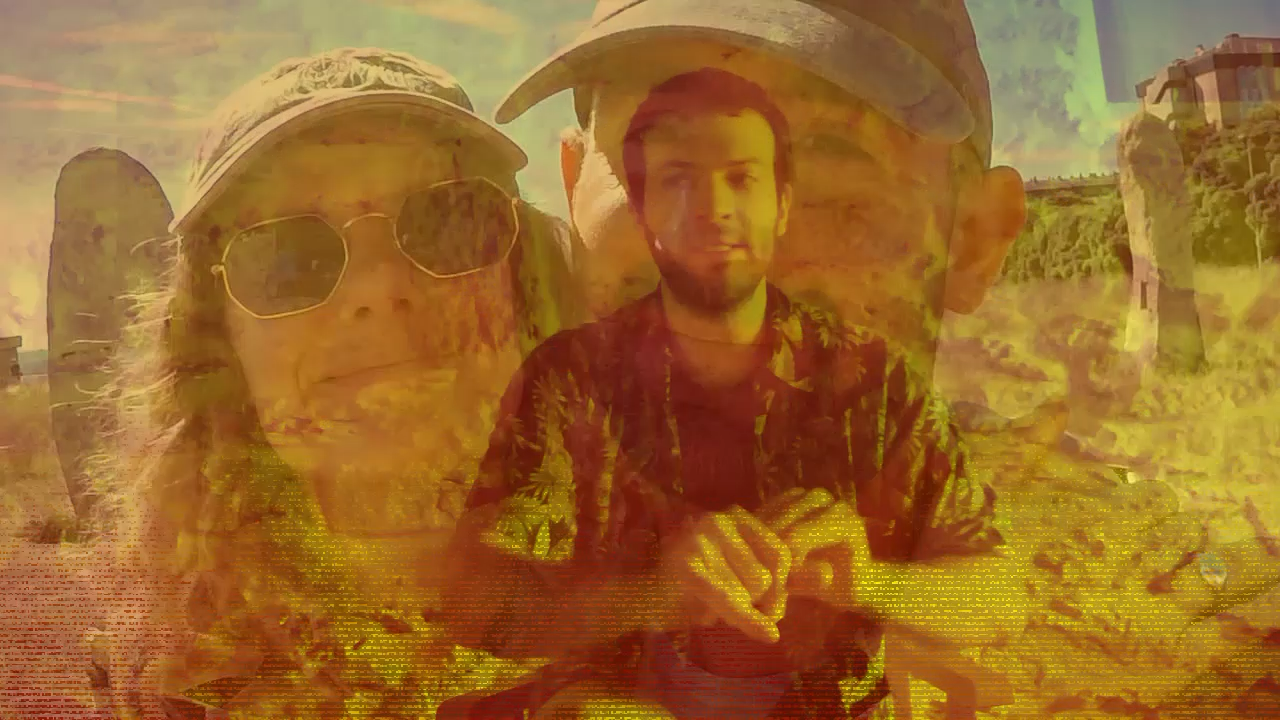
John Longoria: The first thing I wanted to talk about is that you co-directed this film. Whenever something is co-directed, it’s not really just two people. It’s the relationship between those two people that guides the film. How did that relationship help guide the creation of this?
Anna Maguire: We’d made two shorts before we made this, and there was never really any question that they were going to be co-directed. I’ve been writing, directing, and acting for years, and Kyle had directed and written projects when he was in college. When we met, we knew we wanted to work together. I’d been coming off making stuff on my own, and I think I’d hit a wall with my own work. I was trying to make a feature and was just stuck. Then we had this really fun idea for Hi! You Are Currently Being Recorded, and we wrote it really quickly on the beach. We were like, “Let’s just make it with our friends. Let’s just do this.” Initially, there were maybe four of us. We managed to rope a few other people in, but that was where the basis of Stupid Co. and the way we wanted to make things originated.
That same ethos snowballed into French Lessons, which actually had even fewer people. It was just Matty, Christina, Arran, and us. Then GALICIA! was the same thing. It was originally going to be a short, but all these things started happening. We kept all the material, and the story grew and grew. It was always a co-creation. I don’t think these films would exist if we made them on our own. They really are inherently collaborations in every sense of the word. They were born from us meeting and falling in love, and then us being like, “Let’s make some things,” and just going out and doing it.
Kyle Garrett Greenberg: Yeah. All the films Anna and I have made together differ pretty greatly in many ways from the stuff we’ve done independently. All three of our projects are almost like a spiritual trilogy, and they stem from real life. GALICIA! is a documentary, but it’s not. Our shorts are documentaries, but they’re not. We made Hi! You Are Currently Being Recorded in 2024, French Lessons in 2025, and now GALICIA! completes that loop coming out at festivals this year.
JL: With that, it’s kind of a documentary and kind of not. Still, everyone has been on vacation in some capacity. What was the vacation that inspired you guys to say, “What if the apocalypse was happening during that vacation?”
KG: The movie stems from us taking a vacation. Anna’s mom lives in Cannes, France, and we went to visit her for Christmas a couple of years ago. After the family time, we were working our way back to London and said, “Why don’t we stop in Paris for a couple of nights?” We like wine. A friend told us to go to a natural wine bar, and when we got there, we ended up meeting this couple, Max and Paula. We spent the whole night with them and struck up this amazing friendship. It turned out they’re artists and designers, but they were also launching their own wine on a really small scale. We kept in touch, and they said, “Why don’t you guys come visit us in Galicia and help us harvest wine?” That’s the jumping-off point.
AM: It wasn’t like we came up with the idea for this movie and then found the people. It all came out of real life. We were walking to dinner one night in London, and I was like, “Wouldn’t it be weird if you went on holiday and then the apocalypse happened and you just never came back?” I think that was off the back of having just been on holiday and coming back to “reality,” whatever that means. It made me think about what the division even is between holiday and not-holiday. Why do we make these divisions? What would it mean to just not come back from a holiday? Are you always on holiday on some level?!
It was quite playful. A lot of our ideas stem from us smoking a joint and being like, “Wouldn’t it be funny if…” Then suddenly it becomes, “Well, yeah, let’s make that. Let’s make that as a film.” Often, you make friends with people in another place and then never see them again. This was a great opportunity for us to continue the friendship and do something fun, rather than just saying, “Hey, let’s meet up and drink.” Of course, we drank a lot. But it was also, “Let’s meet up and make something together. Let’s play.” Thankfully, they were very up for it.
KG: Even flashing back to our short films, they’re structured around holidays too. Hi! You Are Currently Being Recorded is about Anna visiting her executive boyfriend in Los Angeles, and when she smokes a joint, she realizes all these surveillance cameras are watching her in the neighborhood. Then French Lessons is oriented around myself and Arran Shearing, who’s Anna’s cousin and a filmmaker, secretly practicing French before going to the Cannes Film Festival. All we do is go on holiday, basically.
AM: It’s all holiday-based.
JL: With holidays, I think you captured something I can personally relate to from all my past vacations. What goes wrong on the vacation is often what sticks in your mind. I went on this dream vacation where we were able to go to Greece and Italy. We also went to Turkey for a day. It was awesome. But some of the most vivid things I remember are that three people in our group got robbed by a fake cop, two people got pickpocketed, and one of the people who got pickpocketed was a priest.
AM: Holy shit.
KG: That sounds like an epic trip.
JL: You know what’s funny? It was a pilgrimage.
AM: Whoa! Oh, wow.
JL: All of that happened, and I still had such a great time, but those are always the first things that come to mind. In the film, Anna, your character is focused on the lost luggage. It’s one of the big things haunting her. Why do you think humans have such a predisposition toward focusing on those little things? You can be in Spain drinking wine with your best friend, but you still can’t get that lost luggage off your mind.
AM: That’s a great question. I have so many different ways to perceive that. It was really interesting losing my luggage because it fucked me up. That was real. None of that was created. My mum had given me a really important dress of hers. It was this beautiful designer dress, and she doesn’t really have that kind of thing. It was a gift for my birthday. We’d had a fight before, too, so it felt really meaningful. Then the bag got lost, and I was like, “Oh, fuck. Well, I’m a complete asshole.” It felt like I was bad. Like I’d done a bad thing. I was really sad about it.
Maybe there’s an element of that. We create narratives around these things. You go on holiday and think, “I just wanted to have a nice time,” and then this shitty thing happens. On some level, we feel like it reflects some quality in ourselves. Like we’re shitty people or somehow deserve it.
KG: One thing I remember striking Anna about losing her luggage was that those belongings were also the accumulation of a life well traveled. When Anna lost her luggage, it wasn’t just—
AM: “I lost this jacket.” I got the jacket back.
KG: It was this dress. It was this scarf she got in India. It was all these other things we as humans like to collect.
AM: Even if we realize at the end of the day that it’s all stuff, it felt like the universe was giving me this lesson of, “It’s just stuff.” But at the same time, we love that stuff, and that stuff is part of us. There’s this funny duality of learning to let things go while realizing it’s okay to love the things that you have.
When shitty things happen to you on trips, I feel like it comes back to how we create stories and narratives. That’s sort of what we were doing with the film itself. We were creating a story out of what happened to us. We weren’t imposing it upon the piece. We didn’t plan that. We weren’t like, “What if the luggage gets lost?” There’s this sense of, how do we let these things go and just have a nice time? How do we release the stuff? How do we release the hold it has on us?
KG: On the trip we met someone else who also lost his luggage recently. He was really distraught at first and within the first 48 hours of going through it, he said “I might off myself.”
AM: It does kind of feel like that. Then you feel like a terrible person, and you start beating yourself up because you care so much about the stuff. It becomes this vicious circle of not being able to just say, “Okay, well, how do you trust the universe?” I guess that’s the whole point about going on holiday. You let go and you trust.
There’s an irony in the movie where there are these signs and symbols that we’re going in the right direction, but actually we’re heading toward the end of days. But who’s to say that’s not the right way? Again, there’s this notion of what the apocalypse is that we never really see. There’s this sense of, what’s going to come next? There’s something amorphous about it.
KG: We’re living in Los Angeles a lot these days. We experienced the fires that hit L.A. last year, as we live in an area that’s very susceptible to fires, so everybody prepares a “go bag”. What do you put in your go bag at the end of days when you need to flee? Is it the luxury dress, or is it cleaning supplies, living supplies, a flashlight?
AM: The film became a meditation. It really felt like a dance with the universe in a funny way. It was like the universe was saying, “Oh, so you’re going to make this film? Okay. You’re really going to think about what it means to let go of the things that make you you on some level.” It did feel like this interesting interplay with something beyond us.
JL: There’s a lot of Palestinian imagery used in the film, such as a rally and a Palestinian flag. There’s a lot of apocalyptic images coming from there and it sometimes does feel like, “That’s happening over there. It’s not happening here.” Throughout the film, there’s that question of, “It’s close by, but it’s not affecting me personally.”
Did you ever meditate on the ethics of enjoying yourself while the apocalypse is happening outside of you? Even with Anna having her luggage taken away, that becomes this very personal thing in the middle of much larger events.
AM: Yeah, but it’s also in the context of a genocide. It’s obviously completely self-absorbed and bullshit. Absolutely. That was a huge part of it. But aren’t we all consistently doing that? We’re dancing on the edge of the abyss, and the abyss is right there. We’re looking at it every day on social media, and we have friends who are affected by it. There’s this cognitive dissonance we’re living within right now. We’re also playing versions of ourselves that we actually find to be quite—
KG: In all of our projects, Anna is Anna and Kyle is Kyle. There’s a level of caricature happening where we are living our lives. The film wasn’t scripted in a traditional sense. No one in the film other than Anna and Sergio Frejo are professional actors. What we were very aware of is that the film is essentially us exercising the worst versions of ourselves.
AM: And we end that world. Maybe a better world is possible if we can end that world. I think it’s super important, and thank you for noticing, because we really do think about how you draw attention to this stuff and how we live within it. The year after we shot the film, there were really awful fires in Galicia. Our friends were okay, but it was really touch-and-go for a minute.
You think you’re fine until you’re not. There’s this level of complacency we’re all living within, but also constant fear. There’s a constant sense that the other shoe is going to drop. We’re all living that way because I feel like we’re being held ransom by these anti-life forces.
JL: You touched on the fact that you’re playing exaggerated versions of yourselves at points. There’s already a kind of performance whenever someone brings out a camcorder. My little brother loves pulling up old videos of us and putting them on our projector. There’s a performance there. You’re obviously not acting, but someone puts a camera on you and you’re not doing exactly what you would do without the camera.
How did you navigate keeping that authenticity while also acting within the acting? I’m also glad you committed to the camcorder throughout the entire film.
AM: I really hate camcorder stuff where the form and the content don’t echo each other. For me, it has to feel authentic. Otherwise, why use this form? I’m a bit of a purist when it comes to stuff I’m watching. I’m a Virgo, so I’m a pain in the ass. I’m like, “Well, that has to make sense.” We really wanted to bake that in.
Initially, we were like, “Oh, we have this camcorder. We should use it more.” By the end of it, we were like, “Let’s give it back now.” We borrowed it from a friend, and we were like, “No more of that.” It did become quite head-fucky.
KG: Anna and I have thought a lot about our friends Grace Glowicki and Ben Petrie, who are an acting and filmmaking couple. They’ve talked about how challenging it can be when you’re playing a role with your partner for quite some time. We weren’t anything other than ourselves, but we also weren’t ourselves. It’s not healthy to live that way.
No one wants to be recorded every single day. There was an amazing quote on Letterboxd about our first short film, Hi! You Are Currently Being Recorded, that stuck with us. Somebody watched the film and said, “I also hate to be perceived, so I get it.”
AM: I was literally about to say that. It’s really connected to Hi! You Are Currently Being Recorded, which was all about cameras watching you all the time. We’re living in a period of heightened surveillance and performativeness. There’s this box within the box within the box and the discomfort of that. You know you’re being watched or perceived in some way, and that changes how you act. I think humanity is in a very specific space with that right now.
KG: Even if you take away the camera and imagine your living room is a zoo and there are just people on the other side watching you, there’s going to be a point where you want to hide in a corner and have a moment where no one is fucking looking at you. No one wants to be perceived every single day, all day. We need our space. We need to define ourselves outside of everyone else.
AM: You’re right about your brother and the performance element too. How much are we doing that more and more with social media, Zoom, and all these other things? There’s this constant sense of being perceived. Who knows how that affects what the future holds?
JL: How was it navigating having the camera around? I know friends who hate it and are like, “Please never pull that camera out on me.” When you were on vacation and recording everything, were there moments where someone was like, “Can you please put that camcorder away? This is not going into the film?”
KG: For sure. There were definitely some of those moments. Some didn’t make it into the film, and some did. There was an element of, “We just have to commit to the bit.” There’s going to be a day where Anna is pissed off that I’m filming her, and vice versa. But that’s the assignment.
That’s another reason why eventually it became, “Okay, we’ve had this camera long enough.” At first, I was like, “Maybe we need to buy this camera so we can keep adding to the film and getting more footage.” Eventually it was like, “Absolutely not. Let’s return it to our friend.”
AM: It’s a powerful tool.
JL: Wrapping things up, my last thought was about the hopefulness of the film. There’s this realization that it’s just stuff and this idea of starting a new day. How do you grapple with finding hope in a world that feels a little hopeless to a lot of people?
KG: I’ll start, and then I know Anna is going to have some great thoughts.
AM: It’s the end of the day on Friday.
JL: That’s when the best thoughts are. Usually the thought is, “I’m going to grab a beer.”
KG: Exactly. Using that as a starting point, it’s the end of the world. We might as well go grab some wine. We can always watch more movies, but we try to watch a lot of stuff. When we go to big-box movie theaters, we often leave feeling kind of appalled at how much violence, hate, and propaganda there is.
AM: Maybe we’re just getting old.
KG: Maybe we’re getting old. But there’s not a lot of love out there. For us, it was really important to communicate as best we could that the end message is love and hope.
We’re living on a living planet and need to remember that. We need to use our hands. We need to touch. We need to taste. We need to feel. Sure , I still have to work at a computer most days. That’s the reality. But how do we start shifting the mentality and working toward a better future? A better world is possible.
Ultimately with GALICIA! we wanted to ask one question: What the fuck are we doing to the world?
AM: We have everything right here. We’re good if we could just realize it and wake up before it’s too late. I believe clichés exist for a reason. I really do think the answer is love. Loving each other and realizing that we should keep things local, do things locally, be present, make stuff out of love, share it, and make sure you’re doing well by people.
It’s not rocket science. It’s literally the opposite of rocket science. Make friends. Make friends across cultures. Celebrate each other’s differences. All of the basic, good, gooey, mushy stuff your teachers at primary school tell you. It turns out they were right. That’s what we hope for with the film.
KG: To some filmmakers, success is making a million dollars at the box office. For us, success is touring and traveling with the movie, meeting more people, having more conversations, maybe trying some more tasty food and drinking some more wine.
JL: There’s a James Baldwin quote that I always butcher, but it’s something along the lines of the world being held together by the love of a few people. Sometimes it really is.
AM: That’s what it is. Love. It’s so basic, but it’s actually everything. That’s all it is.
JL: That was going to be my last question, but you stumbled onto something I wanted to clarify. I know that as part of the promotion you’re also doing something with wine.
KG: On October 1st, we announced a partnership with a Napa Valley based winery called The Vice Wines to release our own limited-edition Stupid Co wine called STUPID TO DO! STUPID NOT TO! In celebration of the film. The Vice was co-founded by my sister and brother-in-law. It’s a coincidence. We didn’t set out to make a wine movie because I have family who make wine. But I love their wine. They make organic wine and have an amazing orange wine.
We paired the new orange wine, along with some other Vice wines at our New York premiere at the Downtown Festival and Santa Fe International Film Festival and plan to host more screenings with tastings next year.
Max and Paula are our friends in the film. They’re Purrela Wines, based in Galicia. They don’t have distribution in the U.S. yet - it’s almost like figuring out how to distribute a movie; how the hell do we get distribution in this country or that country? Our goal is to partner with them for screenings in Europe and, obviously, Spain, where their wine is available.
AM: It’s a nice way of thinking about it. We screen the film, it goes into this place of the apocalypse, and then everyone shares a glass of wine. How can we take that into the real world? Now we can all share something. It’s almost like aftercare. We can share a glass of wine and actually talk about how things could be better.
JL: Everyone goes into the bunker and everyone’s drinking the wine now.
AM: Exactly. It’s like an offering. Thank you. The wine gets passed around and then passed out into the real world. It’s all alchemy, isn’t it? Making wine is alchemy. Making anything is alchemy. It’s about how we carry that energy forward with something positive. The film ends on a kiss. It ends with love. So it was always made with love.