
Grief is never linear. It constantly evolves and takes different shapes. Almost exactly seven years ago, at nineteen years old, I experienced my first real version of loss. In the years since, I've dealt with that grief in many different ways, trying to hide from it, burying it, confronting it, and feeling guilty for it. But the only consistent thing, as time went on, was the way the space occupied by grief gave way to different kinds of love--love for the friends who helped me get through it, love for the experience of living, love for film, and, most difficult of all, learning to love and forgive myself. Needless to say, my relationship with death is complicated.
Mouse, Kelly O'Sullivan and Alex Thompson's most personal film to date, understands that complication intimately. Written by O'Sullivan and drawn directly from her own experiences with grief, the film follows Minnie (Katherine Mallen Kupferer), a teenager who loses her best friend and develops an unlikely relationship with her friend's mother, Helen (Sophie Okonedo), while growing increasingly distant from her own mother. It deftly tracks how the empty space created by grief can become an outlet for love, and the different ways people try to fill that space. Minnie and Helen are grieving the same person, but the love they have for her, and the grief that follows, are entirely their own. They find comfort in one another while also struggling to understand where they fit into each other's lives without the person who brought them together.
O'Sullivan and Thompson talk about Mouse almost in the same breath as they talk about their relationship with each other. In the truest sense, grief exists just one step away from love, and O'Sullivan has taken her grief and made a film full of it. Her loss colors the film, but so does her love for the people in her life, those she's lost and those she's lucky enough to still have. As both her filmmaking partner and life partner, Thompson is trusted with that love, with a part of O'Sullivan's life that happened before they knew each other. Together, they turn something deeply personal into a film they can share with others. He speaks about the loss that inspired Mouse with an understanding that no matter how much it informs the art they make, the work itself pales in comparison to the urgency of that loss. He can't fully know that grief, but he can love the person carrying it, and bring his own love and understanding into the work they make together.
For anyone who has experienced a loss, there's also the inevitable knowledge that the people they love will likely experience that same pain one day. There's something difficult about knowing how intensely someone you love will hurt, and understanding that there's very little you can do to prevent it. In that knowledge, O'Sullivan's grief becomes a work of love, one that she entrusts to Thompson. Together, they make Mouse as a way of holding each other a little closer in the face of what's to come. We don't know what will happen to us, what we can avoid, or what we'll be able to endure. You can try to prepare yourself for grief, but I don't think you ever really can. I know I've tried and failed multiple times. But you can surround yourself with people you love, people who will be there when that time comes, and learn how to be there for them, too. Mouse is exactly that. It’s a labor of love about the love born from grief, and the people we hold on to through it. I spoke with Kelly O'Sullivan and Alex Thompson about grief, loss, making art with someone you love, and the ways we learn to show up for one another.
This interview has been edited for length and clarity.
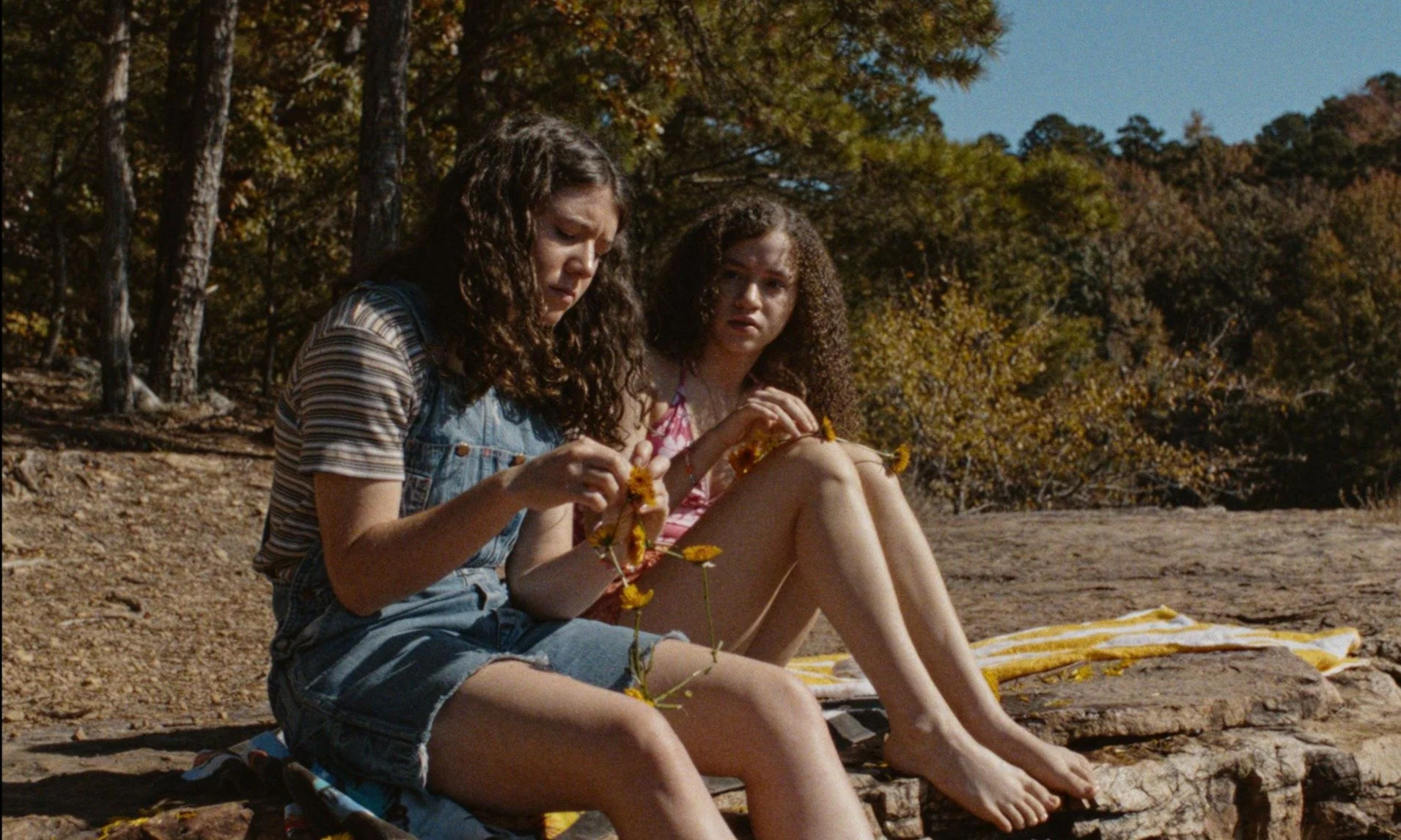
Ali El-Sadany: Kelly, I know Mouse started from a loss in your teenage years, but Minnie and Helen’s relationship was something you created. I’m curious about the distance between something you lived through and the story you eventually decided to tell. I find that movies sometimes give me a way to talk about things I haven’t quite found the words for myself. Where do you put yourself in these characters?
Kelly O’Sullivan: This sounds like such a cliché, but it’s so true. I feel like I am all of these characters and I am none of them. When I’m writing these characters, I’m pulling from different parts of my personality, different periods of my life. Some of it is straight up pulled from life. The majority of it is just imagined. So it’s this big mix of things that I actually did feel that then I spin into story or take farther than they actually went in real life.
It was important for me to show the complexity of female friendship and the idea of basing your personality around somebody else in the way that can really happen in your teenage years. And to show all these different ways to mother, to show the distance that happens between mothers and daughters around that age especially. I really felt myself in that relationship. Then there’s revisiting the way that I felt when my friend died, but also the way that it’s so much more tragic to me now. Now that I’m an adult and I’ve gotten to live so much longer, and it’s totally through luck and happenstance.
To me, the biggest thing that I feel myself in is the final moments when Helen says, “You have time.” You have time to fuck up and make mistakes and then make it better. Now that I’m a parent, I feel like I understand that. There’s going to be a period of time where your children go away from you, and there’s a real kind of grief in that, in the way that Minnie does with Barbara. But then, if you’re lucky, you have time for them to come back. Helen doesn’t get that. And to me, that’s the ultimate tragedy.
AE: Alex, there are parts of Kelly’s life in this film that happened before the two of you knew each other. Did making the movie change how you understood her relationship to the story?
Alex Thompson: I think something I learned about Kelly while making this project was that all the things Kelly just talked about are true, all the thematic nuances of Minnie and Helen and Barbara. But as much as the death of Kelly’s friend was a jumping-off point for a really wonderful script and a successful film, that loss is still the most personal and paramount thing about the story.
That personal loss is still extremely present, and that sort of supersedes it as a point of inspiration. Maybe that’s what makes the work really vibrant and vivid. But also, the work pales in comparison to the urgency of that loss.
AE: One of the things Mouse made me think about is how people measure their grief against somebody else’s. I went through loss when I was nineteen, and I’ve been grappling with the question of who has the right to grieve, whether it’s a mother’s grief, a friend’s grief, or a best friend’s grief. How were you thinking about that?
KO: I think what you spoke to is what the movie is trying to get at. There’s no right way to grieve. Everybody has a right to. The Grief Olympics is so toxic. Competitive grief is so toxic.
AE: Alex, I find that stories sometimes give us a way to understand things about other people that are harder to approach directly. You’ve worked with Kelly on several films now, and I’m curious about what that collaboration has taught you about her as a filmmaker. Was making Mouse different from your previous projects together?
AT: [Laughing] These questions are so tough. They’re relationship enders, I feel like.
[To Kelly] You’re an excellent director, and you have good instincts. It’s scary to do it without you. But I didn’t learn that on Mouse.I was just excited that you were great at what you do, and that you were a great writer and a great director. I think a lot of my life is filtered through making films. It’s a big part of my identity because it’s a thing I really love to do, but it comes with an enormous pressure because it costs an enormous amount of money and it mobilizes an enormous amount of people.
You’re a brilliant screenwriter and a brilliant director.
AE: I know I’m making you dance around some minefields here, but I really appreciate how thoughtfully you’re approaching these questions. Something I find really interesting about making personal art is that once it exists, it doesn’t entirely belong to you anymore. Other people can watch it, recognize parts of their own lives in it, and form their own relationship with something that began from your experiences. How does it feel to have Mouse out in the world now?
KO: I’m just glad that people seem to like the movie because it would be a big fucking bummer if everyone was like, “This movie sucks.” In many ways, I made it about people that I love so much. I’m really glad to see that people are moved by it, that they feel connected to their own grief through it.
I think that means that we’ve painted these characters in a very humanistic, empathetic, flawed, messy way. I think that’s what a lot of people are responding to. It feels like real people, and they feel recognizable rather than archetypes or stereotypes.
KO: It is bizarre. The thing that’s hard sometimes is I never know when I’m going to cry. I think it’s okay to cry, but it’s that weird thing when you have grief that you almost find yourself wanting to protect the person you’re talking to and be like, “Okay, don’t worry. I’m okay.” Sometimes I find myself wanting to be like, “You guys, don’t pay attention to tears. Pay attention to what I’m saying.”
I feel so grateful that, in a way, my mom gets to live on and be seen by lots of people. I miss her, and it’s nice that so many people get to read her name at the end for the dedication.
AE: You’re both parents now, and Mouse explores different relationships between parents and children. I’m curious whether becoming parents yourselves has changed the way you approach these relationships, especially after watching Katherine and Tara work together.
AT: I don’t think it’s changed at all for me. I think I’m more affected by the people in my life than the films I make in that way. Seeing my parents be grandparents and seeing Kelly’s parents be grandparents has informed more about the way that I think about parenting. Seeing the way that they’re different than they were when we were kids is really freeing. It’s similar to how I think about directing, where the less of a black box parenting is, the more encouraging it is.
I think of my parenting in the context of Mouse in that I love that we made a movie with a ten-month-old. I love that he was in the movie because I get to see him in the movie. There will be a day when I’m sobbing about him being older or something that I can’t wrap my head around now. That would be the best-case scenario.
I think watching Katherine and Tara work together, mostly what I think about is how important our individual lives are. I see how valuable it is to pursue fulfillment and pleasure with your family. I find it really brave and exciting. It makes me think that anything is possible in terms of hanging out with your kids.
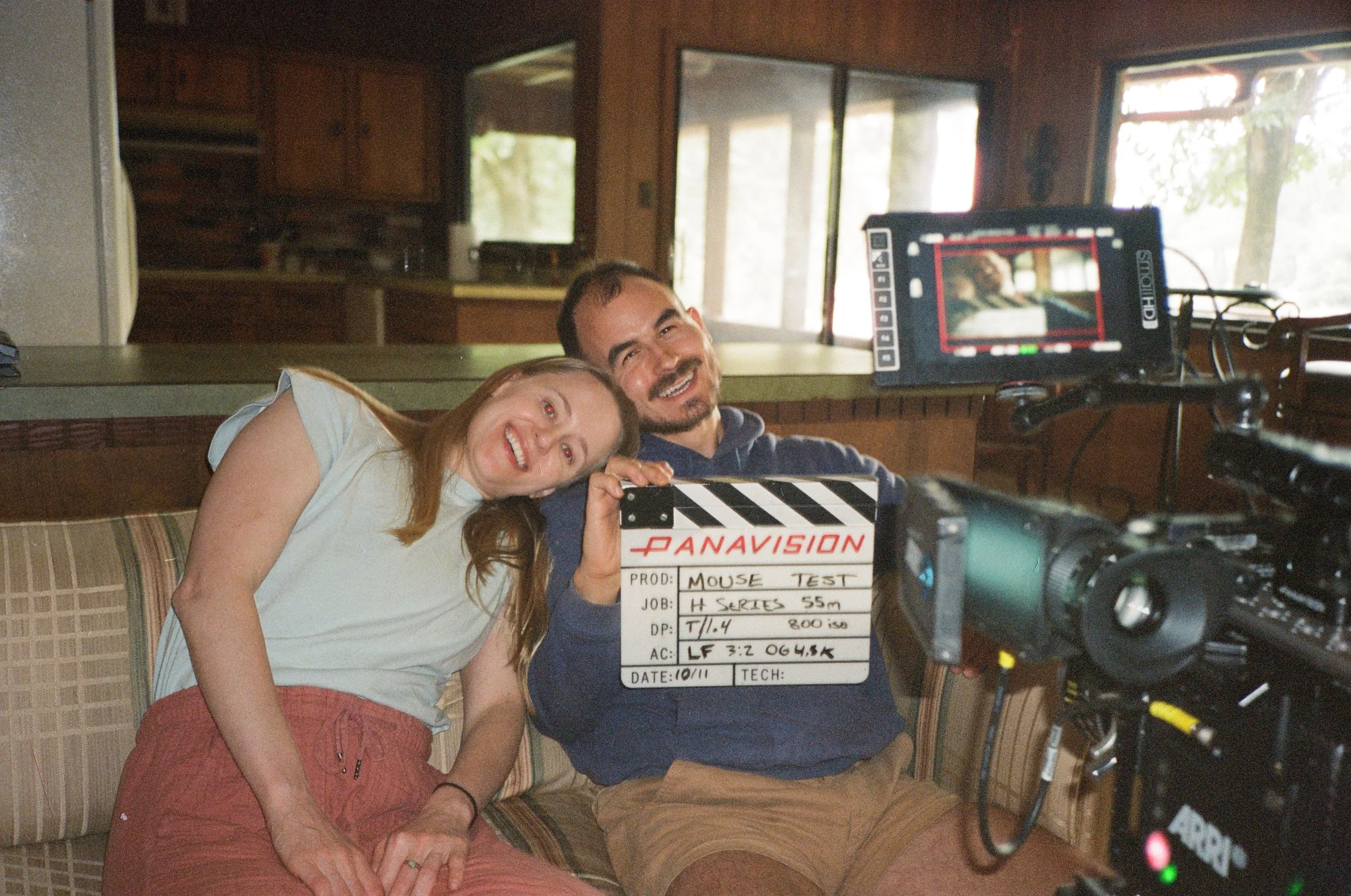
AE: To close, for a film that asks so much about how we grieve, has making it together changed the way you care about each other and the way you love each other?
AT: I think our relationship feels more necessary, but that’s also the act of making a film. I don’t think I really thought about the film as being about grief when we were making it. I thought about the scenes and the things that people were doing in the scenes, and the actors and the script do the work of focusing on the grief. So I think I kind of avoided that, but making a film together continues to be probably the most gratifying thing I’ve ever done besides having kids.
KO: [To Alex] You know the last scene with Barbara and Helen, where they talk about how one of them has lost a child and one hasn't, and their experience is so different? I am pretty sad for when you [Alex] lose a parent, because I know how much it's going to suck.
Hopefully it's many, many years down the line and they live to be over a hundred. But you know how, when you've been through something and you know somebody who you love eventually is going to go through something similar, it makes me so glad that his parents are here and so heartsick for the time they won't be. And I think that changed the way that I love [Alex]. It feels a little more urgent.