
It’s never been more exciting than it is right now to be a Muslim-American cinephile. The number of films centering Muslim-American stories keeps growing, and those stories are increasingly finding their way into the mainstream. As a programmer for the Muslim International Film Festival in Toronto for the last three years, I've seen the quality of these films rise, along with the diversity of stories being told. In the mainstream, films like Your Mother Your Mother Your Mother and shows like Ramy have reached audiences far beyond Muslim communities.
But we're still nowhere near where I want us to be. Despite the increasing quality and variety of these stories, Muslim characters often feel extreme or exaggerated. Their identity as a Muslim is almost always central to their narrative and becomes the central conflict in their stories. Stories that treat Muslim identity as a descriptor rather than a battle are still far too rare. Islam is often portrayed as something that needs to be explained (sometimes even justified), which mutes the rest of the story. This was at the center of my mind during my conversation with Ezra Franky, an Indigenous actress, singer, and filmmaker whose relationship with identity reminded me of my own.
Franky approaches representation as an actress in her own way. “Every story I tell is an Indigenous story, because I'm an Indigenous person.” For Franky, an Indigenous story doesn't need to center colonialism or historical trauma to be considered an authentic expression of Indigenous identity. Franky appears as Pam Russell in Yaga, a contemporary mystery thriller that reimagines the folklore of Baba Yaga. It's an interesting role in the context of our conversation. Pam’s identity is constantly at odds with how other people in her small town perceive her, and Franky describes a similar tension in her own life as an artist.
Franky’s goal as an artist was never visibility. “It was always to make things, and make art, and create.” In the same way, as a Muslim-American critic and consumer, my dream for Muslim media goes beyond visibility. I hope that we get to see more Muslim artists tell whatever stories they want to tell, without having to justify their religion or represent an entire community that’s far from a monolith. I spoke with Franky about representation, Indigeneity, the relationship between art and identity, and what it means to tell your own stories while navigating the expectations other people place on you.
This interview has been edited for length and clarity.
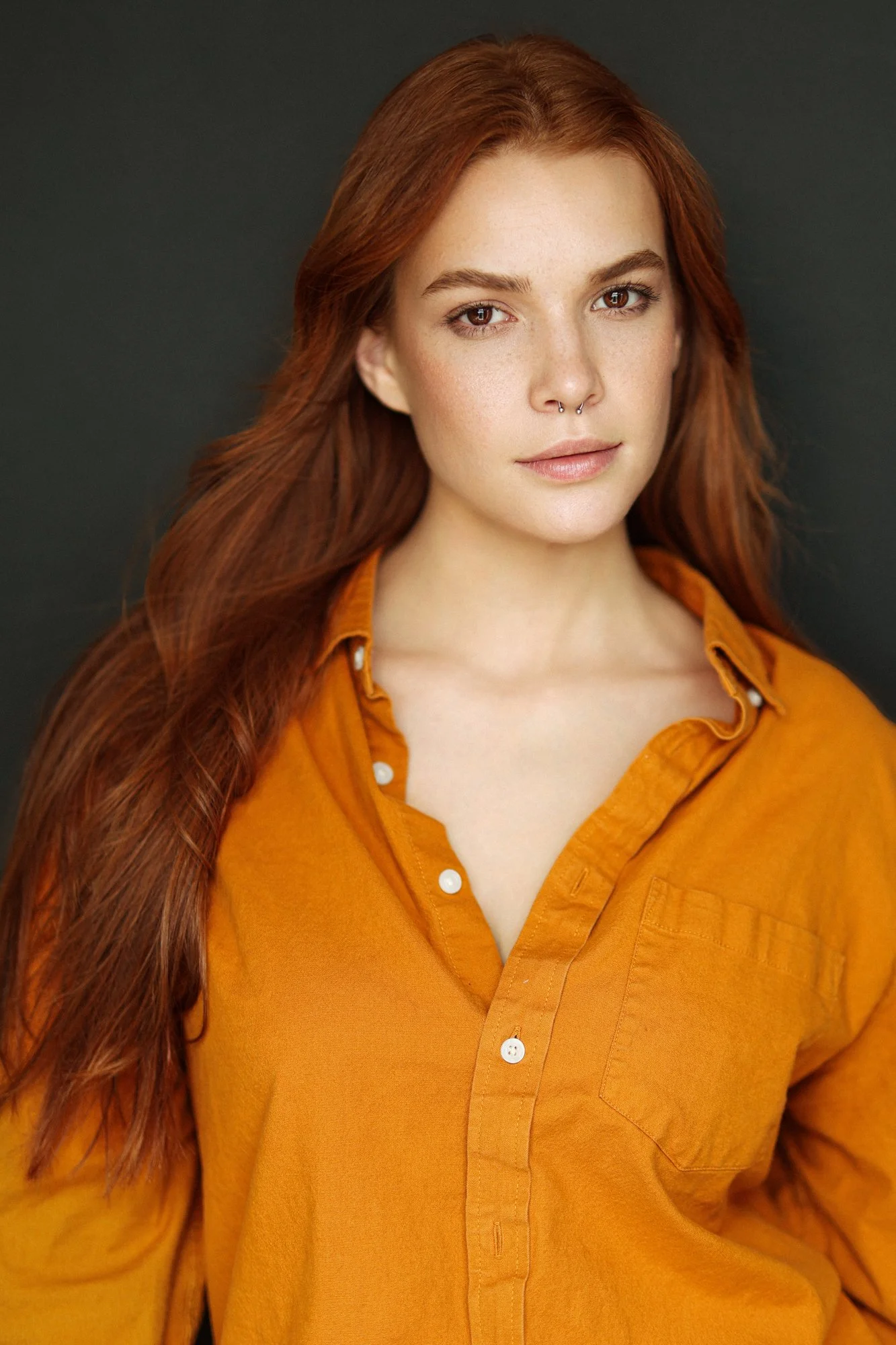
Ezra Franky, photographed by Karolina Turek
Ali El-Sadany: I'd love to start by talking a little about your relationship with your Indigenous identity. You've spoken about reconnecting with your heritage through your work, and I'm curious how making art has shaped the way you understand that part of yourself.
Ezra Franky: Yeah, I think through making art and being involved in a storytelling world, new parts of myself tend to unlock that I didn't really realize were there. So, for example, as I delve into my Indigenous heritage and explore it, and look at my experience with it, I become more curious about the story that I'm telling. I think that's the beautiful part of filmmaking, storytelling in general. But filmmaking is so unique because you really get to try to convey a human experience with a visual, which I just think is so special.
AE: Did becoming an artist make you think about that part of yourself differently? In what sense?
EF: Yeah, absolutely. I think having the agency to actually explore it. As much as you can share experiences with other people that they can potentially relate to, it's hard to relate to people specifically about a feeling. When you're making films and sharing them in wider spaces—like when I was in film school, sharing films and stories with our classmates and being able to discuss them together—it felt so much easier to explore them on my own terms. Having people who were curious about how to tell the story or what telling it might do for me, even just exploring the idea, felt really free. There was a lot of freedom in that.
AE: I connect to that, especially having started FilmSlop and having a sense of ownership over the work. You've worked across acting, writing, directing, editing, and music. Does creating your own work give you a different kind of ownership over how people understand you, compared with acting in someone else's story? Where do you find that balance?
EF: Oh, totally. Writing and directing my own film, or telling a story that I'm building from the ground up, I'm invested in a different capacity. Because if it's my story and I'm acting, telling it, editing, and putting it out, it's a lot of me on the table. That amps up the pressure. I want to represent that authentically. I want to feel like I'm properly putting myself in it.
Whereas when I'm acting in somebody else's story, or helping somebody else bring their story to life, there's a lot of freedom on the perception side of things, because I know it's not entirely me throwing everything out on the table and saying, “Hope you like it.” There's stress in that. Being able to collaborate with somebody and say, “How do you want your story told? I hope I can make that happen for you,” there's freedom in a different sense.
AE: More and more people are going to meet you through characters like Lucy or Pam before they know you personally. What's it like to have a public version of yourself forming that you can't necessarily control?
EF: I think it's interesting because there's no blueprint for navigating a career like this. I think it's about feeling really proud of the work you're putting out. I hope to be able to work, be proud of it, have it exist in the world, and then step away from it and allow it to speak for me.
Being too aware of how it's received, especially online—how do you navigate that world? Nobody knows. Being able to step away from that is something I'm really trying to focus on and figure out how to work into a routine. All of our lives are online, but I want to be able to step away from that if I need to.
AE: I love that notion of doing something for yourself before it goes out into the world. What makes you proud of something you've been involved in, and what makes you proud of yourself?
EF: I love being able to convey a feeling or an experience and feel like I've expressed it properly, because it does something for my body. It does something for the way I feel about creating. I don't even know how to explain it, but it does something for my actual body.
And then being able to have conversations with people who say, “You were able to communicate this feeling that I've never been able to put into words.” That feels really special. It feels weirdly intimate. I don't know this person at all, but I know this specific feeling that I've also felt, and they feel it in me. It's super special.
AE: The reason I write about movies is that I sometimes have trouble accessing certain feelings. I'll watch something made by someone I'm never going to meet, and it helps me find the words to say something. There's a difference between being visible and being known. As your career grows, what parts of yourself do you want people to understand through your work, and what parts do you want to protect from the screen?
EF: Good question. My personal life—the quite personal sides of it, whether that's close friendships or relationships or whatever—is something I always want to keep private. But there's also a lot of that in art. I think it's unrealistic to expect that not to spill over in some capacity, especially if you're writing or creating something that's your own story.
I just hope that the stories I get to be involved in telling speak to an audience and that I get to continue being part of that. Whether that's visibility or not, the goal was never visibility. It was always to make things, and make art, and create. As long as I keep being able to connect with people on that level, I'll be happy.
AE: Having worked across acting, filmmaking, editing, and music, do those different forms of art access separate versions of you, or are they different ways of expressing the same person?
EF: I think it's all me. At the core, it's all me, but I definitely tap into different parts of myself based on what I'm creating. There's the art-making side of it, but there's also the Ezra who has to exist in the world while creating art. Maintaining the part of me that wants to make things and the part of me that has to be seen by the public and perceived as myself—finding that balance is interesting.
AE: As an Indigenous actor entering an industry that hasn't always allowed Indigenous people to define themselves, how conscious are you of the difference between being represented and representing yourself? How do you navigate the expectation that your work might speak for others?
EF: I always want to be really aware of why we're telling the story we're telling, especially when it comes to Indigenous stories, because there's so much history that has been told incorrectly. Doing your due diligence to tell it appropriately, respectfully, and truthfully is very important.
I also like to be aware of how my voice sits in it. I look very white, and I'm still trying to connect with my own heritage. But I also acknowledge that if they're trying to tell a story about specific representation and suffering, I'm not the right person to tell that story. Maybe I can be a bridge between somebody who should and somebody who can. Being able to make that connection and build community, at least in a way that I feel is contributing, matters to me.
AE: I'm Middle Eastern and also really white-passing, so I relate to thinking about how you carry yourself and the expectations around you. I think minority artists often face the expectation that every piece of work has to carry cultural significance or represent something bigger. As someone watching stories about people who share my identity, I feel that pressure too. Do you think creative freedom includes getting to tell personal stories without having to justify their representation? How do you balance that with the importance of telling histories that have been misrepresented?
EF: I think it's very interesting that there's this common rhetoric online, or in the media, that in order to tell Indigenous stories, they have to be centered around certain things. But every story I tell is an Indigenous story because I'm an Indigenous person. All of my stories are the Indigenous experience, even if they aren't specifically shaped around history or colonialism or intense suffering in our ancestry. I think it's about being able to tell both, while acknowledging that just being an Indigenous person is the Indigenous experience, and every story I tell is part of that.
AE: As you've gotten closer to your Indigenous identity, has that changed what you look for in the films you participate in or create—not just the stories themselves, but whose perspectives you trust and how you approach telling them?
EF: Yeah, absolutely. I think the more you learn about yourself, the better you can tell it. The more I immerse myself in the culture, the more I'm able to weave it into parts that are less surface-level. There are always those top-of-the-iceberg pieces of your heritage, but the more you learn, the more you can weave those things into the stuff that's a little more under the surface.
AE: In Yaga, Pam is introduced partly through other people's ideas about her. Do you think about the difference between who Pam actually is and the version of her that exists in everyone else's head? Does that connect to the difference between who you are and the public version of you?
EF: Yeah, absolutely. There's definitely dialogue in the show about rumors growing around Pam, and that shapes not only her part of the investigation and her place in the town, but also her own self-identity and self-confidence. I think that's really realistic.
I'm in a unique position where there's public perception to consider. You have to draw a line between how I feel about myself and how others feel about me. Those are not mutually exclusive.
AE: Yaga takes a myth that's been told and reshaped across generations and cultures. Does that make you think about who controls culturally inherited stories, and what happens when different people reinterpret them?
EF: I think it's cool because it's such ancient folklore. Recycling stories, retelling them, revamping them—it's always told through somebody else's eyes. With something that has so much history, everybody gets their own interpretation. I just love the way Kat did it. I think it's so powerful.
AE: Pam is also rooted in a small-town world. Does playing someone so tied to a place make you think about your own relationship to where you came from, and how living in different communities has shaped you?
EF: Totally. I grew up in a somewhat small town. It's not tiny, but it's no Vancouver. It's very interesting hearing about Pam's desire to escape the place she was from, or the roots tying her down. She has big ambitions she's chasing, and I resonate with that. That's why I'm in Vancouver. That's why I'm doing what I can to see the world and experience it all. I think it's important.
AE: Pam can be reduced to labels like ex-girlfriend, suspect, or small-town girl. As an artist, you probably encounter labels based on your culture, background, and identity too. Are you drawn to characters who complicate that first impression and show people something they aren't expecting?
EF: Always drawn to those characters. Always. If there's a little bit of nuance, it makes my job so much more fun. I get to tie in other people's construction of the character, and then I get to put in my own. If there's less of that, it's harder to have as much fun with it.
On a first read, I'll think, “This character's cool. This character is super cool and has depth.” That's going to make my job ten times more fun.
AE: Given your background in directing, writing, and editing, when you were working on Yaga, did you find yourself thinking about the larger construction of the show beyond Pam, or were you able to fully immerse yourself in her?
EF: Once you know the crew side of filmmaking, there's no way not to acknowledge it, even when watching films. Especially having edited before, watching television and film is an entirely different experience. There's no separating the two.
But when you have a team as fantastic as the one working on Yaga—my cast members, Kat and Mackie, all the people building it, and our fantastic directors—they give you the space to lean into the character. It was easy to drop specifically into Pam because the space was so ready-made.
AE: To close, having played Pam and gone through this experience, did you come away changed? What did you bring to the role, and what did you take from it?
EF: Pam is very strong, very independent, and I find that all the characters I've been playing these days are like that. I think that's interesting, and I resonate with it, so tying that back into my life feels easy.
Really, I took away a great experience with very talented people—people who are extremely experienced. I felt lucky to absorb their goodness, their connection, their collaboration, and the way they showed up on set every day. It felt like a privilege to see that. My takeaway was just feeling lucky that I got to experience it.