
The Three-Dimensional World of ‘Pop Pop’: Dylan Stephen Levers on His Feature Film Debut
For Dylan Stephen Levers, producing his debut feature film was no easy feat. Developed over the span of a decade, the narrative of Pop Pop germinated along the course of the production—what began as documentary footage from the 2020 “Stop the Steal” protest, a precursor to the events of January 6, grew into a no-holds-barred, surrealist romp through the far-right Internet. Pop Pop, as a finished product, is disconcertingly representative of the decade that made it possible.
I have a feeling that Pop Pop is better off for having been no easy feat. Pop Pop doesn’t feel like a film that’s been Frankensteined—it's an incredibly coherent explanation of how we got to where we are today, manifested through the individual trajectories of its protagonists, Dustin and Dibz. Frustrated with their socio-economic realities, the boys branch off and discover respective political circles that address their 21st-century woes. For Dibz, that means organizing with left-wing figures and contributing to community initiatives; for Dustin, it means time spent in the darkest corners of the Internet, holed up with nothing but the glow of his screen.
When I sat down to speak with Levers, the first-time film director described it to me as a process of growing pains, piecing such an ambitious project together with the help of his creative community. Pop Pop came together as it did because of Levers’ community-forward approach to creativity: “I’m here to make the best work possible," he told me over Zoom, “whether that comes from you, from me—from the universe.” It’s easy for Levers to practice what he preaches: things tend to come together when you let others in, as he learned during his years as a theatre director.
In my time speaking with and interviewing creatives, I can honestly say that I’ve never left an interview feeling as inspired as I did after speaking with Levers. He’s a true class act, always speaking about his approach to artistry with a great degree of consideration and care. Pop Pop is a film that has potential to change how America sees itself, and Levers is a filmmaker who has potential to change lives with his nuanced, nakedly human narratives.
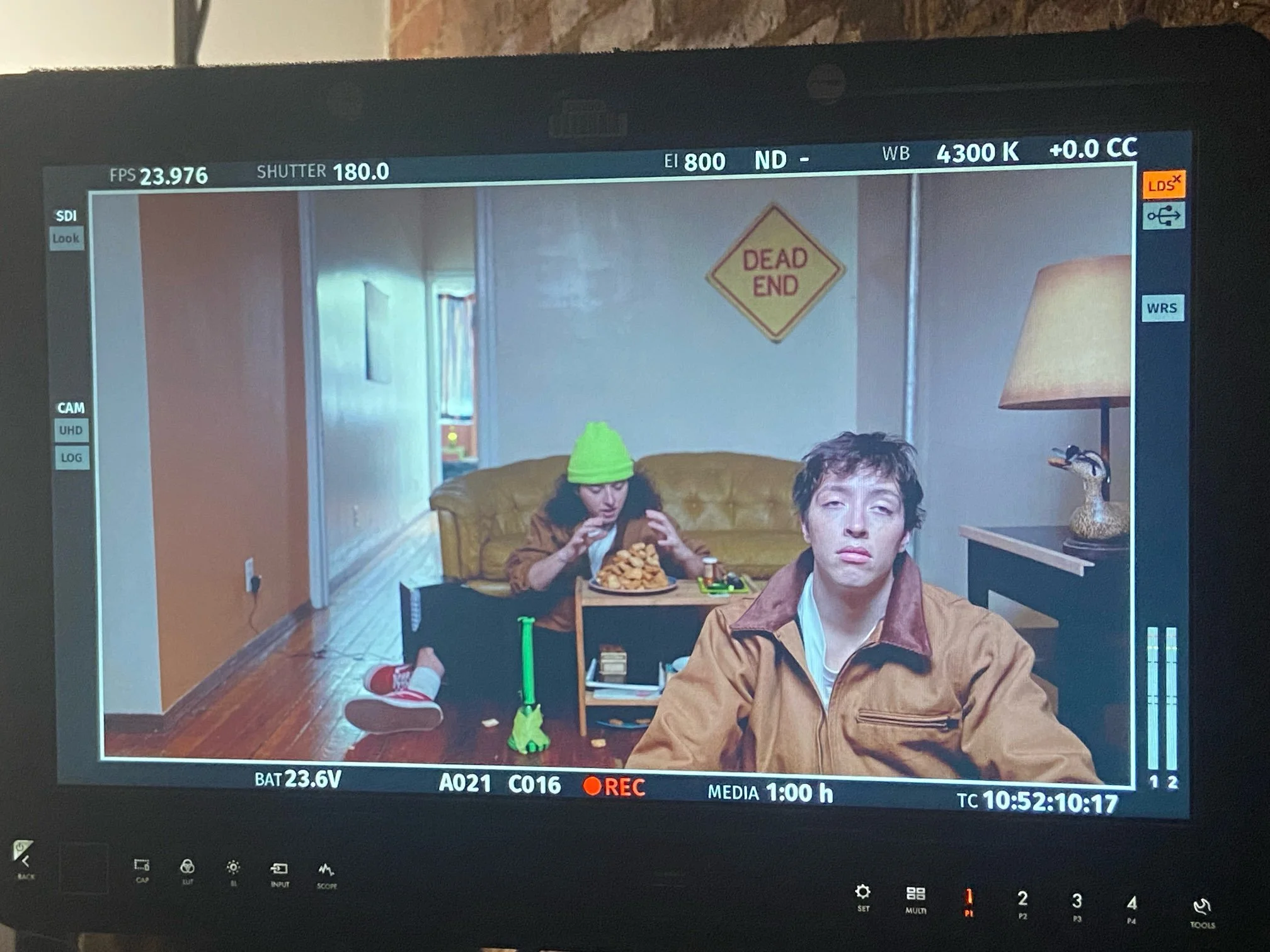
[Pop Pop] has been a few years in the making. How long has [Pop Pop] ended up taking you, from the beginning to your interview today?
…Longer than I care to admit, which is about a decade ago. It started as a whole other project, thinking about the same issues but in different countries. And then as some of the concepts around, you know, “What does it mean to be a man in society?” were coming to the forefront here in America…it hit a little bit closer to home, and a lot of this was happening in the context of this great storytelling around what it meant to be a young woman: things like "girls," things like Frances Ha. I was sort of like, OK, where’s the conversation about the dudes here? And what does that actually mean for us?
I actually began life as a theatre director, sort of a new play director, so as I was writing this, we workshopped [Pop Pop] as one would workshop a new play. You convene a cast, you throw out half the scenes afterwards because you’re like, oh my God, that was so terrible, let me rewrite this. And six months, a year later, you convene them again and hopefully it’s stronger. So over the course of three or four years, we really tried to strengthen the script. It ended up being finished in February of 2020—we did a six-day workshop and five seconds later, the pandemic happened. I was like, oh, this is DOA.
Over the course of the pandemic, I got linked up with this amazing cinematographer, [Consuelo] Althouse, who shot the film, and we just started having these tiny conversations about…is it dead, or are there little things that we could do? And Consy comes from a [documentary] background; it was the summer of 2020, and things were really politically hot, and so we were like: could we start, at the very least, from a documentary angle, taking some footage now and seeing what would happen?
In August of 2020, we ended up commissioning some footage to be made for us in Atlanta at Stone Mountain, which is the birthplace of the KKK. There’s a relief chiseled into the side of the mountain. So there were armed Black Lives Matter protests, and then the next week there was a white nationalist protest. But, according to our sources, not a lot was gonna happen that week—so we were like, let’s just commission some footage. But, in doing so, we saw that somebody else was there, too: this guy Ford Fischer, who has his own independent news outlet called News2Share. We were watching his Periscope stream at the same time our footage was being made, and [we] contacted him and he sort of became the political consultant for the film, in the sense that he was like, “DC is the next protest you should be at," which was the Stop the Steal protest that kind of ended up being like the dress rehearsal for January 6, although we didn’t know it at the time.
So that’s the first footage that was actually made with actors—with Trevor Lown, who plays Dibz in the film, kind of wandering through that protest. We ended up going mid-December, and that was our first unit…so basically over the course of five years, I worked to pay the bills and keep the lights on – I work in experiential marketing, producing large events for brands. I sort of have this weird mad lib resume, where I’ll be, like, following a giant Bath and Body Works candle around the Eastern Seaboard for four months. Or, like, at the Grove, telling people to buy LEGOs. I tried to Tetris as many of these jobs into my schedule as possible so that we could do a little bit more and then a little bit more.
In 2023 or 2024, I was like, ‘Oh, did I actually fund this film pretty much myself?’ So it got made in a very kind of roundabout, non-traditional way. I actually think, given what the project was, it was really amazing to feel like we’re gonna go out and make a bunch of footage, and we’re gonna come back and lay it out on the table and see what this project is now. For something where, tonally, we wanted it to start out as a dopey bro comedy and change tone, and change tone, and change tone again—so that it felt like the curtain was always rising on a different genre or a different tonal palette—I think we sort of needed that time going into the Crucible and really figuring out: what is this today?
Even though I would not recommend it to any filmmaker ever, I think it was sort of, delightfully, the only way this could’ve gotten made.
That’s so interesting, because if we’re looking at the timeline from 2016 to 2026, it’s been weird. Something shifted. It’s incredible to hear you describe the process of [political] things being revealed as this film was being made. Can you pinpoint any specific moments in that decade that changed the shape of the narrative, as it was being formed?
In doing research for this film, you could sort of see the contours of what was happening in American society slowly revealing themselves. To do research for this, I talked to all these people, and obviously we had Fischer. Also, I was going to these protests, which, at the time, felt more on the fringes of things. In 2019, there was a straight pride parade in Boston, which was actually led by Milo Yiannopoulos, recently deported…there was enough friction there that I could see an opening, [that] this was not gonna just stay contained.
One of the places we went to do some filming was Portland, where there was a large armed Proud Boys protest, deeply terrifying. As we tried to tackle this last act of the film, you could see these things getting bigger and bigger and more a part of the national conversation. The Trump election of 2016—obviously, huge. January 6—huge, huge, huge. We had just shot this unit in DC. For a lot of us, it became our way of being politically curious; this was our vessel, us making this film together…a lot of us were texting each other like, the guy with the horns is in our footage. These people were ten feet away from us, and now they’re on national news, breaking into the Capitol. That’s so crazy. And again, in 2024, the Trump election.
I think, for me, the political heart of this film is…in 2024, a lot of people on the left started asking questions like, “How could this happen again?” And I think, for me, the answers to that came out of a lot of the heat and purity politics of the 2020 summer—how so many people were like, “You’re not a good person if you don’t exhibit X, Y, and Z characteristics publicly." I think, as we look forward, a lot of people on the left are thinking through coalition building and impurity politics—how do we invite people into the fold whose line of thinking is, maybe, not 100% in line with yours?
Hopefully, what this movie is asking people to do is identify where the moral lines are for themselves. Are there times where these characters do things so inexcusable you can’t forgive them, or are there ways in which you can say, I recognize that you’re a three-dimensional person. I am, too. What’s in the concentric circles between us, even if it’s just like, do you want to eat some chicken nugs with me? Which is what these stupid boys are all about.
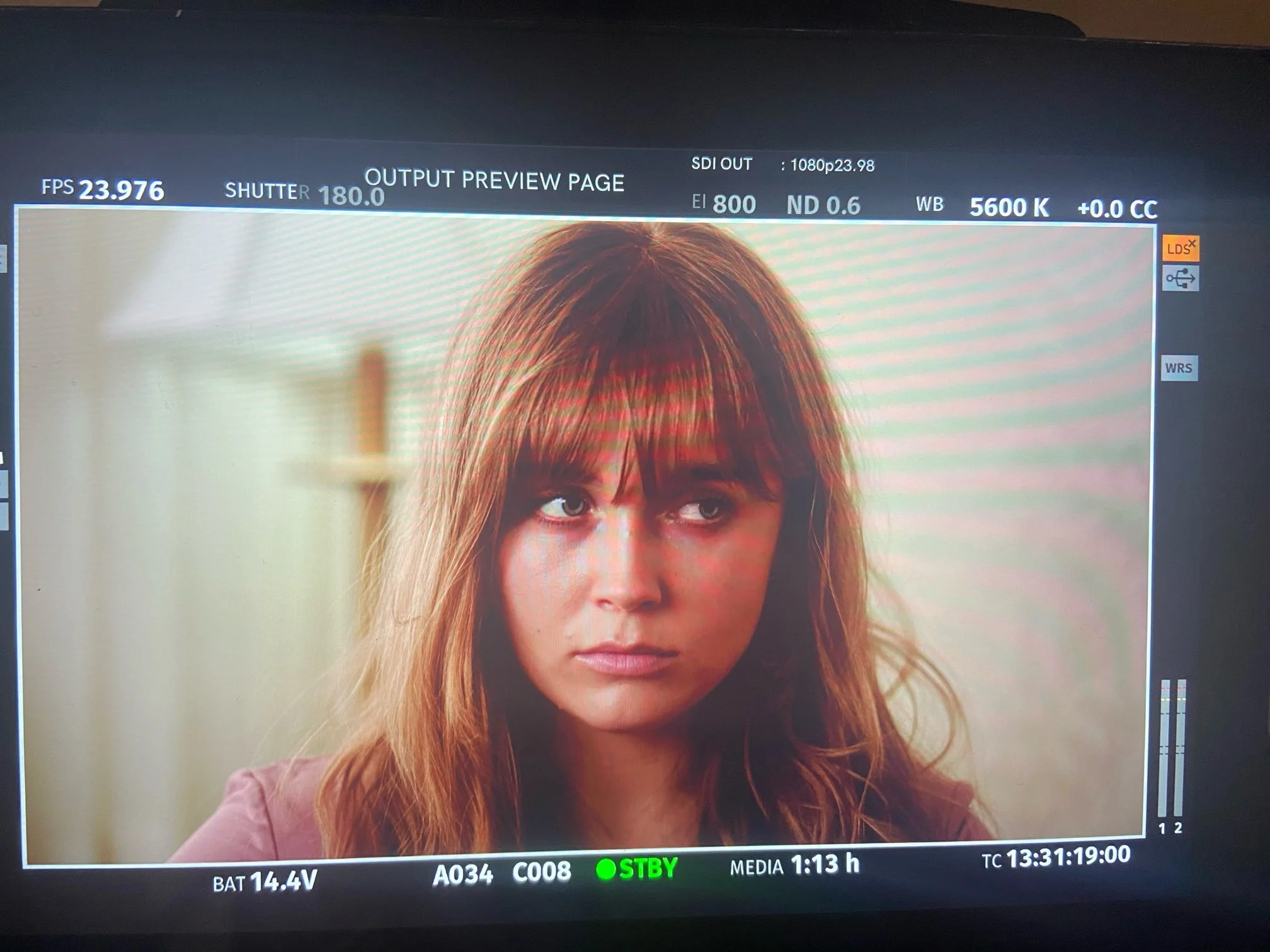
That’s what I found so interesting about how this film turned out—neither of these two main characters comes to you in a vacuum, and as the pieces come together, you get to see all these different ways that they do have these prerequisite ideologies for the respective roads they go down. The radicalization channels are just channels; they’re just things that reflect ideologies in the real world. I’m curious to know more of your thinking around that.
I think with this film, I was like, yes, we have these large political figures who we can blame for a lot of the seismic shifts that have happened over the last 10-15 years of our lives. But I’m more interested, at a ground level, what are the conversations that people have among each other are—and how do we see each other three-dimensionally? Sometimes, the grievances are really real, but the manifestations of those grievances are misplaced. Like, yes, there are downwardly mobile white men who exist in the country. But are immigrants the problem? I don’t fucking think so. Are trans people the problem? Absolutely not.
I think it’s about how you have a conversation that also doesn’t say, tsk tsk, all white and straight men are bad. How do you say, welcome in, we’re all in this together? To me, blaming minority groups is a smokeshield for class consciousness often. The ruling classes who are sucking us dry of all resources are actually ruining our ability to be in community with each other and actually figure this out at the ground level. My biggest political belief is that we’re the ones who can save each other, and it’s all of us working together in community.
Researching Pop Pop, how much time did you actually spend in the Manosphere?
We did a lot of political research – I read a lot, I talked to a lot of people, obviously we had Ford. I worked with this really brilliant creative director, Sally Thurer, who teaches at Pratt and also does some illustration work and creative direction at the New York Times, to think through how the Internet would look in the film. One of the greatest joys of this project really has been…you write this script alone, and then you get to call in the troops: Concy; Ford; Sally; Galen Tipton, who did some of the scoring; my sister [Hedra Rowan], who did the other scoring. You get to be in community with them, much like we’re talking about the political center of the movie.
With Sally, she’s such a brilliant genius. She said – we have to make the Internet super maximalist, because when you’re in it, from a visual perspective, we’re dealing with all these different textures, different media that comes from different sources. We wanted to make it feel like you’re actually deeply in it. So there’s a lot of memes referenced, that fly by really quickly in that first Internet sequence…that I’m hoping somebody will write a listicle about someday.
And then, in the Manosphere, how do we use little references of what’s going on? There’s a woman in a lobster suit – that’s a reference to Jordan Peterson’s daughter, who wore a lobster suit once.
We worked with a team of animators, multiple different ones. Jefferson Wenzel did a lot of animation in that first sequence…Joe Pascale, a Canadian animator who goes by Young Gun Motion, who I’m obsessed with… Dave Rasura, who has directed a lot of episodes of “Jimmy Neutron” and also looks like Jimmy Neutron. You get to play with these incredible people in the sandbox! I was the luckiest filmmaker alive.
I thought the memes were brilliantly done. Memes are so important to those people – alt-right, fascists, Manosphere guys, to the point where the Trump White House posts fancams and funny deepfakes to official government social media accounts.
That was the way in for a lot of people…like Pepe the Frog, or this event called the Ball of Deplorables that happened after the 2016 election. It was all of these Internet people who, like, manifested in real life to celebrate the fact that they had, in part, gotten Trump elected. We didn’t quite understand then that the boundary between the digital world and the actual corporeal world was gonna collapse in the way that it really has in the last decade of our lives. That’s another big part of what this film is about – are you living in your actual body, with real people who you have to be in community with? Or are you in this digital space which is going to reflect back to you everything that you want it to say?
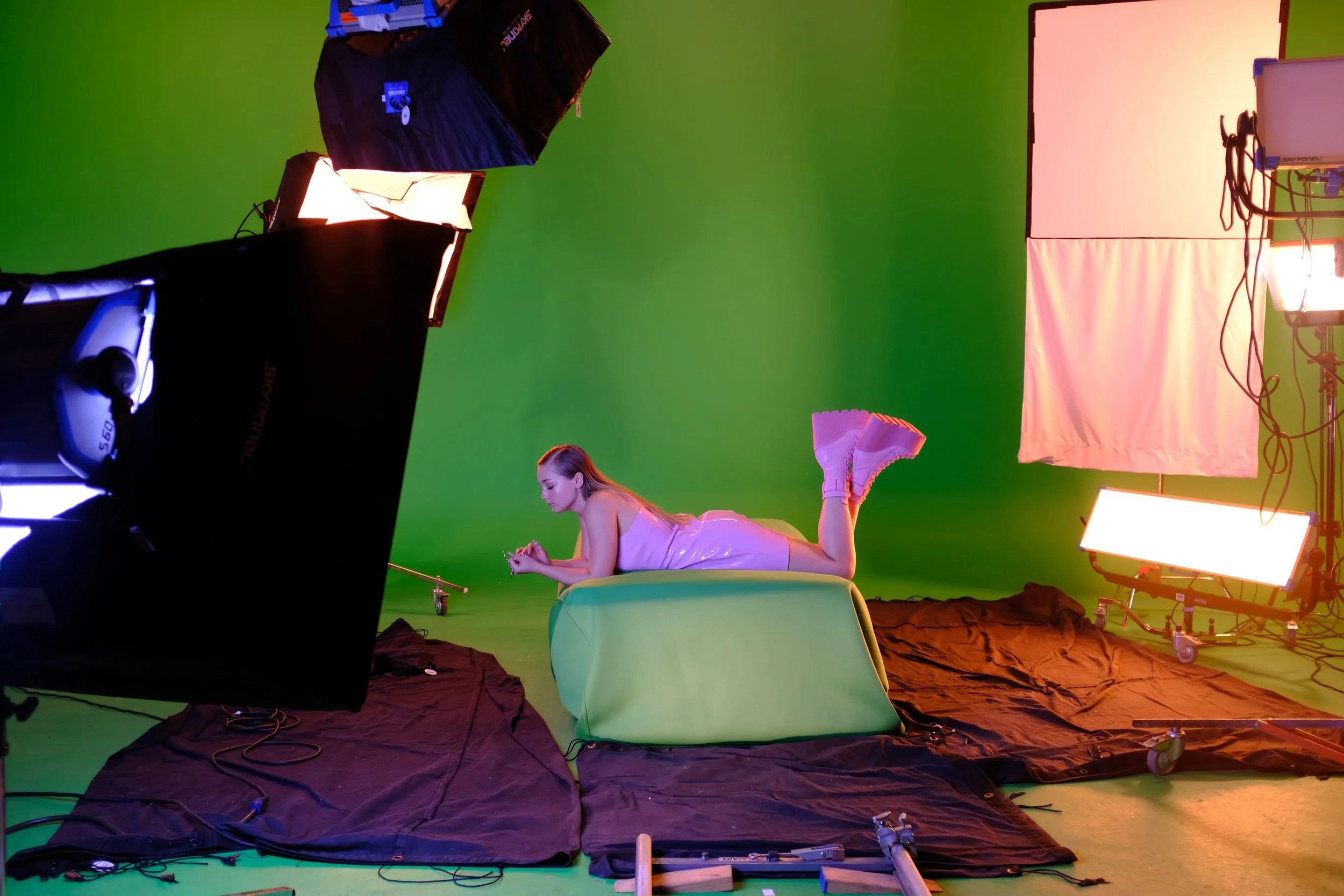
In this film, you see two guys who are the same age, who are the same kind of stoner bro, who fit very well together as friends at one point. Remove the politics from it—you see one of them hole himself up and go on his computer all day, and you then see the other guy being in the world, trying new things, trying new hairstyles.
I tortured sweet Trevor with that hair. But, to your point, this is why I’m such a big fan of cities. I think they force you to have to reckon with other people, and when you live in isolation—Dustin has removed himself to the suburbs, so even if he was to go out and be in community, I don’t know that there would be much for him. During the pandemic, I was here in New York; even though it felt so scary and you felt so alone, you were like, I have to actually buy myself food.
I want to know more about your actors, because I was blown away by these performances.
I am so thrilled to hear you say that. I’m so obsessed with them.
Where have these guys [Trevor Lown, Tate Rekhlau, and Lena Kutscher] been hiding?
When I first started thinking about making this film, I was really obsessed with these ‘90s filmmakers who…for the first time you were seeing a Parker Posey, a Liev Schrieber. Movies like The Daytrippers, where you’re like, what a stacked cast—but you’re watching it 20 years later. Or Hal’s Hartley’s movies, [him] I am a huge fan of. I call it “HBO casting," where you’re discovering people in these brilliant parts who are capital-A Actors.
We are often making movies based on likes on Instagram; these influencers who can sort of move the needle in terms of funding. We all need to get this stuff done at the end of the day, but I come from a theatrical tradition and I live in New York, and so we have these really incredible talents. I was like, we need to cast people who you’ve never seen before.
As I was getting older, I was starting to have more friends who were teaching in acting institutions. A lot of [my actors] were taught by people I know. Trevor and Tate both went to NYU, and Lena came to us from a casting call—a friend of mine was like, oh, she was in my class. All of them are incredible actors—I can’t wait for people to see them; it’s gonna be so exciting.
I have to give Lena her flowers for what she pulled off in your movie. She’s something else.
To be perfectly honest with you, I burst into tears when her casting video came to me. She’s so good; there’s something about her where you just understand all moral sides…everything that’s going on.
She was very down to clown, and so well prepared. I hope she doesn’t kill me for sharing this story, but there was time between units—we would shoot two weeks one year and then not shoot for another 6 or 8 months, so I saw her one day on the first day of filming one of the units. She said, “I’ve been journaling a little to get back into this character. I decided that she’s a hostess at the Odeon,” which is this restaurant in Downtown New York. I was like, yeah, she is; that’s brilliant.
That just changed the movie for me.
Right? She’s so smart. And the two boys, I love them. It’s been really moving for me to watch these actors grow up before my eyes—I feel a bit of fatherly responsibility for them, in a sense, just because they took such a risk with this project. It’s a big swing, and the stakes are a little bit higher in terms of what we’re asking for emotionally. clown and
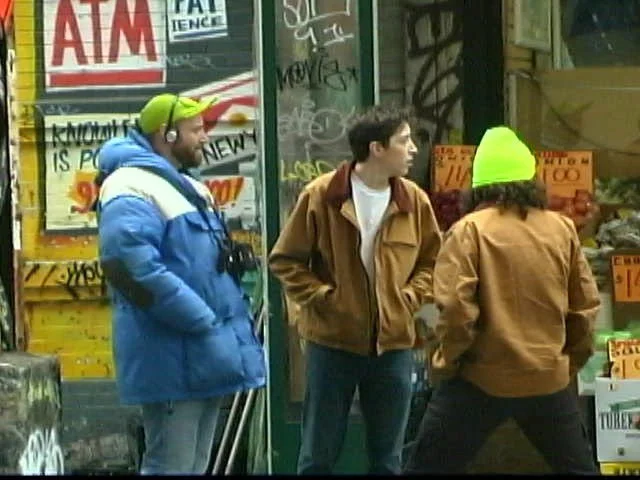
I want to know more about your approach to directing performers, how you developed these characters in a directorial sense. And what was it like for you going from theatre direction to film?
In terms of directing actors, one thing I learned really early on is, like, 90% of it is good casting and getting out of the way. I think a lot of directors I’ve seen whose work I don’t love; part of the problem is because their ego doesn’t leave the room. I’m here to make the best work possible—whether that comes from you, from me, from the universe. This is an active collaboration, and we all have to inspire each other here. We all have to make this libidinally awesome.
I think a lot of this was honestly just getting out of the way and also letting them improvise. I forget who said this on set, but they said, “Film is so different from theater because it feels more akin to an improv class." You make a choice, and the choice is then recorded, and in the edit we can work to massage what that performance is gonna be…having a space where some play can enter the room is really important.
As a young theatre director, you sometimes get these grants to watch older theatre directors do their thing. I had this grant in Chicago in 2011 to watch this production of The Real Thing being rehearsed, which is a Tom Stoppard play. This actress walked in, and we were all like, who is that? I watched this woman craft this performance and find these emotional tentpoles, which came from a very spontaneous and honest place, but she knew she had to repeat them every night. And she turned into Carrie Coon! It was incredible watching that, and I learned so much from how that was directed.
Knowing that, on the back-end in film, you can shape these spontaneous moments into something that’s maximally controlled—which sounds a little psychotic, but it’s true. This movie was edited within an inch of its life. Everything was touched, and touched, and touched again because we just wanted to plop you down and blast off. A lot of it was saying, we captured these spontaneous moments of behavior—how do we sharpen that so the energy, the momentum, is positioned in the way we want to go?
The more you talk about this film, the more amazed I am at how it all came together. This does not feel like a movie that was “edited within an inch of its life!” It all feels deliberate.
Part of the exciting thing about this going to film festivals—I’m so excited to meet audiences and hear who really fucks with it and who really does not want to touch this film with a ten-foot pole…really, my intention behind making this was that this could be a jumping-off point for conversation. Whether that’s about film and what film could be or the political epicenter of this. You watch this movie with your parents, who are on the other side of the political coin from you, and at Thanksgiving, you don’t have to make the conversations personal—you can use these characters as ciphers to talk about where you’re at, potentially.
It’s gonna be wild that this deeply American movie is premiering in the Baltics [at Tallinn Black Nights Film Festival]. I’m really curious about what the Estonian response to this film is gonna be.
It’s deeply American, but it’s also deeply global at this point. I think an Estonian audience has experienced some of the same themes, probably just less Bushwick-specific.
I wonder how many Estonians have been to Bushwick. That’s a question I’m gonna ask in the Q&A.
I wonder how many Bushwickians have been to Estonia. I want to circle back to something I was saying earlier about how the film made me feel personally when we first spoke. I have a real stick up my ass about this—I get really frustrated with the political cynicism in my generation. It feels like talking to a brick wall. I think there’s an irony poisoning going on in some far-left circles these days, and it feels really disheartening because I can also feel myself getting to this point. I don’t think that’s specific to just people in their mid-20s today.
I think, also, the curtain is up on the Democrats. Let’s be real. There was insider trading [with] the people who were supposed to be representing the left in the public forum. Of course you’re feeling super cynical about politics writ large in America! I totally understand that; I feel like it’s a logical response.
But I think where we have to go is super local. We really need to start thinking [about] how to protect the people. The speech that Arik [Austin Davis] gives in that movie is, I think, the closest to my own personal political beliefs—he's saying, "We're in community with each other. We have to start really thinking about how we can protect anybody who’s in our line of vision.”
That was another part of the film that really struck me. I feel like there were more mutual aid organizations a few years ago. Even the DSA was a very different world in 2020. This used to be a thing we did in those days, and a meeting like that is a little rarer now.
I think it’s a tricky balance, right? Because at a certain point, you have to say, I have to protect my personal sanity against the craziness of the world writ large. I think that’s a very real thing, but what we also have to keep in mind is [that] the buffer to that, the antidote to that, is knowing your bodega guy. Just having simple, basic interactions so that you don’t feel like a lonely person circling around and around on your own individual planet…with a complete powerlessness about the world.
That also brings me back to Dibz’s evolution…you see him get a little lost in the sauce in those circles as he’s exploring his identity. On that note, I want to commend you for writing this queer discovery story so beautifully and realistically—it's so nice to see something between two gay men that’s not, like, set in the forties and miserable.
I’m really done watching the queer trauma narrative manifest in really specific ways. It’s just boring to me now. What’s funny is—early on, when we were looking for funders, I reached out to a bunch of people who supported more traditionally capital-G Gay films. I was like, maybe that’s an avenue; we have this character… It became very apparent to me that there was one kind of narrative that many of these people wanted to support, which was like a small boy growing up in Iowa, who only has his grandmother who helped him try on a dress one time. I think there’s a lot of room for that, but at this late date in our history we’ve seen that story play out a billion times, so I’m interested in more nuanced queerness on screen.