
Monuments to Their Friendship: Nick Psinakis and Kevin Ignatius on 'Valley View Motel'
One of life’s beautiful, simple pleasures is having best friends. An even more beautiful and simple pleasure is being able to create something with those aforementioned best friends. There are many films that understand this fundamental truth. Most notably, 2026 fall festival darling Wild Horse Nine takes us to the 1970s, using McDonagh’s sharp dialogue and CIA war crimes to capture the beauty of having a best friend. From massive blockbusters like Spiderman: Brand New Day to smaller indies like The Travel Companion, 2026 has been a strong year for friendship in film.
Despite the wealth of friendship in film this year, there’s one movie that stands out to me as a particularly literal monument to it. Nick Psinakis and Kevin Ignatius built a lasting testament to their friendship with their most recent film, Valley View Motel, which recently had its world premiere at the TUBI Frightfest film festival and North American premiere at Screamfest LA. Shrouded in the aesthetics of the ’70s, they describe it as the one film they were finally able to put themselves fully into. After years of working together and navigating the traditional industry, the film became a chance to make something that finally wholly felt like them.
At a time when creating things is difficult enough by itself, it’s really special to see a film made and grounded in love. Valley View Motel is perhaps the purest reflection of Psinakis and Ignatius’ friendship, built on nearly two decades of trust, collaboration, and making things together. We talked about the aesthetics of the ’70s, friendship, creative jealousy, and the irreplaceable feeling of making something with your buddy. This is a conversation about the rare joy of finding someone you care about enough to make things with for twenty years.
This interview has been edited for length and clarity.
Ali El-Sadany: You both have described Valley View Motel as the movie where you finally got to make one for yourselves. After spending so long going through agents, managers, producers, and the more traditional system, what did “making one for us” actually mean?
Nick Psinakis: Kevin and I have been making movies together for a really long time. I think sometimes it’s easy to feel like there’s a specific path or a certain trajectory you’re supposed to follow. For music, it might be labels. For film, it might be studios or production companies. There are gatekeepers, and you’re asking for permission. Especially with this film, we just kind of had it. We were like, we want to make a movie that feels like us, that’s inspired by movies we love and movies that we don’t feel are really being made anymore.
So it became: what do we love? Let’s take all these elements of movies and filmmakers that inspired us and make something fun that we would actually want to see.
Kevin Ignatius: That was absolutely what we set out to do. We said it so many times: we gotta make one for ourselves. We had made things before where there was agents’ input, sales agents’ input, people saying, “You guys need to make one like this.” We appreciate that input, but with Valley View, it really felt like the grit we wanted, the inspiration we wanted, and the vibe we wanted.
There are things in the story, moral dilemmas and choices we made, that might have been shot down if we had gone through another route with more gatekeeping in the creative process.
AE: What are some of those things you think might have been shut down?
NP: You know what it is? It’s art versus commerce. It’s been around forever, and I don’t know if anybody has figured it out. It’s really hard to be true to yourself and make good art when there are so many outside voices, influences, and suggestions. That tends to happen once you’re working with more money, bigger production companies, studios, whatever it might be.
Kevin and I were pitching a TV show called Life Behind Bars, and we did the whole traditional thing. You get the agents, you get the managers, you take the general meetings, meet producers, get to the next stage, bring in cast, bring in other writers. We always joked that some of the suggestions felt like they were being made for the sake of somebody having something to say.
So one day we joked, “Forget Life Behind Bars. What if it’s Life Behind Cars?” Just totally riffing on how silly some of the notes could be. And of course the executives were like, “That’s a really good idea. You should think about that.” That’s just one example from our overall experience, but with this movie I’m sure we would have gotten pushback on us acting in it. We probably would have gotten pushback on some of the casting. We probably would have gotten pushback on the structure because we went a little more nonlinear, with character introductions and vignettes.
Those are the kinds of things where, if we were doing it the more traditional way, somebody might have said, “Well, why are you doing that?”
KI: With these larger productions, there are so many hands in the cookie jar. An idea at its organic level can be really good if it’s nurtured by a tight team. Our crew is very small. It doesn’t need a hundred people mashing the idea and fighting over it and creating this slop out of it, no pun intended. We were talking recently about Rian Johnson and how, even when he was making something on the scale of Star Wars, he talked about trying to preserve that indie atmosphere. We love Brick. That kind of environment is what we need too.
NP: Even Paul Thomas Anderson has talked recently about wanting a huge production to still feel like an indie film. You’re talking about a massive director and a huge cast, but still trying to capture that intimacy and not have it feel like this giant machine. That’s what we’re trying to protect.
AE: A lot of the cinematic influences are obviously there in the film, but I’m interested in the personal ones too. There’s such a strong affinity for the ’70s. Where does that come from for you?
NP: Kevin was born in the late ’70s, I was born in the early ’80s, but growing up, I think we fantasized about what it would have been like to live in the ’70s. It just seemed like such a different time. It seemed rebellious, cooler, simpler. I think that always drew us to it. We try not to look at our work too retrospectively. We leave that to the audience and critics. But I think themes of family and morality always come through in our movies, whether consciously or subconsciously.
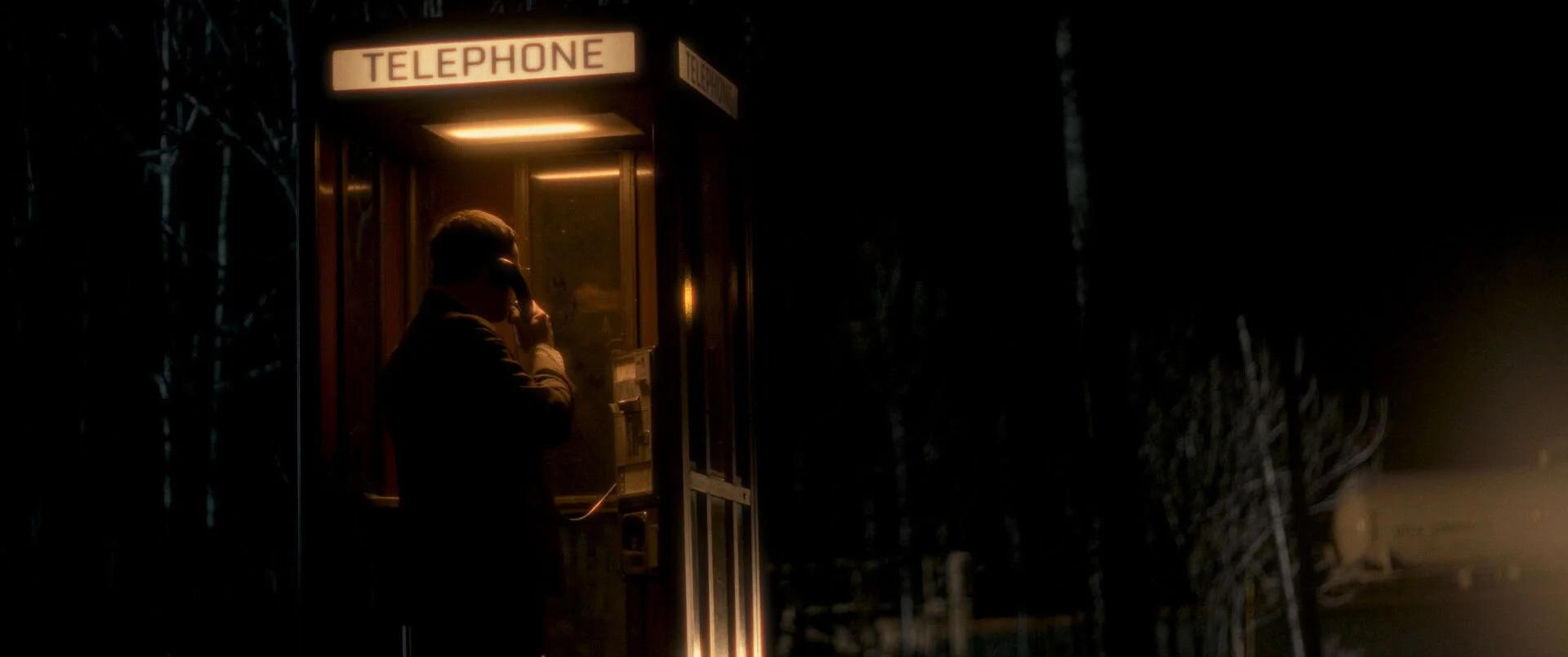
Then there’s Kevin’s hometown, where we shot the film. It actually lent itself to making a period piece on a budget, which you’re usually not able to do. Normally, if you tell somebody you want to make a period piece, that’s probably the first thing they try to cut. Kevin would drive around town and be like, “Dude, this place is stuck in the ’70s. We’ve got ’70s cars. I think we can actually pull this off without breaking the bank.”
KI: The music of that era is also fantastic. The ’60s and ’70s are just so good. We were looking at the styles, the clothes, everything. We basically reverse-engineered the movie. I would be driving around while Nick was in New York or LA, sending him pictures. “Okay, we can use this. We can transform this. This looks crazy, but we can use the location.” Friends had cars they could donate to the production.
My wife Shannon does production design and costume design for us, so we were going through Etsy, eBay, all these different places trying to find the right pieces and using references constantly. We scrutinized everything. We were constantly asking, “Are we nailing this, or is this bullshit? Does this actually look right?” We would look at the shot and go back to the references again. It was hard, but it was really fun.
NP: We would even cut shots in the edit if we thought they gave away too much and made it obvious that something wasn’t really the ’70s. Sometimes that meant losing a shot we otherwise liked, but protecting that feeling was more important.
AE: When you say you miss the ’70s, are you nostalgic for that world itself, or are you more nostalgic for a time when movies were allowed to be a little messier and rough around the edges?
NP: Probably both. From a career standpoint, we’ve been doing this for so long, and we always talk about that period of renegade filmmaking. Obviously the ’90s had another movement like that too. We’re hopeful this could be another period where people start paying attention to indie film. There seems to be this rebellious thing happening. Kevin and I always say, “Let’s bring back rock and roll. Let’s bring back punk rock.” Where is that rebellious spirit in filmmaking and art? As far as actually living in the ’70s, we didn’t, so that part is more of a fantasy. We’re imagining what it might have been like.
KI: But we heard from a lot of people who did live through it. At our screen tests, people from that era were saying, “Oh my God, you guys nailed it.”
That was really nice to hear because when you’re testing your movie, you feel like the movie is dogshit. You’re feeling good about it one second, and then you’re like, “Oh God, is this actually working?”
Hearing that from people who could really scrutinize it gave us a little bit of confidence.
AE: You both write, direct, produce, and act in the movie. Did anything in this process become harder once you had to live inside the characters you had built from scratch?
NP: Kevin and I both studied acting. We actually met studying in New York, and then I did a conservatory acting program in Manhattan. We always felt like so many of the best actors and directors came out of New York theater, so studying that was important to us.
As we went on, we drifted more toward directing and writing because it gave us more control and ownership, and we could write parts we would never otherwise get offered. With this film, though, I have to give Kev a lot of credit because I didn’t want to act in it. I was like, “We’re setting ourselves up for disaster. This is crazy.”
I’m really happy he pushed me to do it. We knew we were both going to act, so we reverse-engineered the script around that. We specifically wrote it so we were never in the same scene together until the very end of the movie. That meant one of us could always be behind the camera while the other was acting. The scenes where we are finally together were shot on the last day. By then we figured we would have enough chemistry, momentum, and rhythm with the crew to trust everything and do it. In a weird way, acting while doing all these other jobs was probably good for me because I tend to overthink. There was no time to overthink. Kev and I talked a lot about our characters, made strong choices, and then we just had to commit.
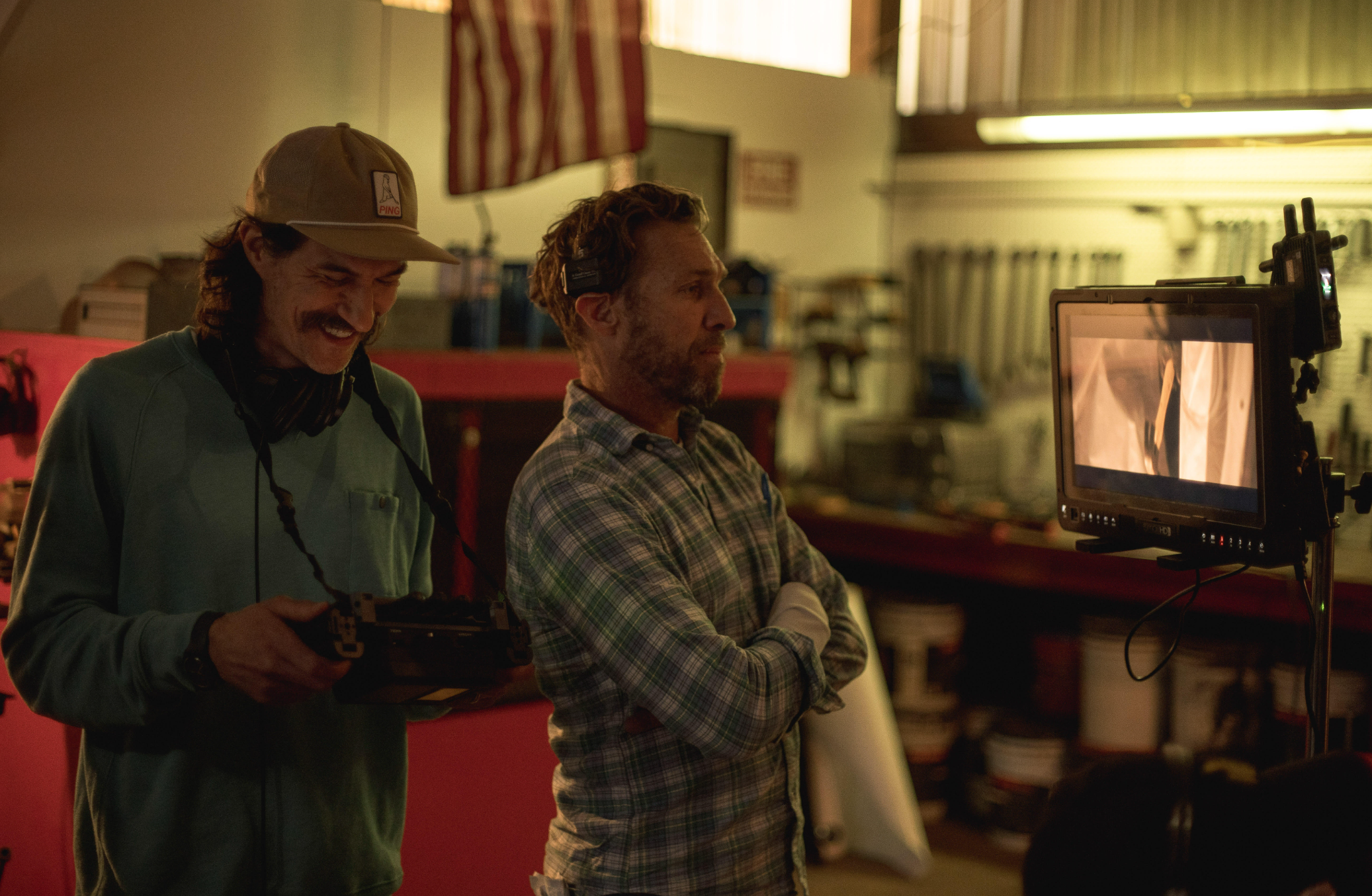
KI: There was no time. We shot the movie in 13 days. It was moving. We did the work on the characters beforehand, and then we kind of unleashed it. As the snowball of production got crazier, you really didn’t have time to sit there questioning everything. We also don’t do a ton of takes. We’ll do a few, and when we feel like we have it, we move on because everything is so time-sensitive. You have to remember that we’re directing each other too. There are behind-the-scenes pictures where Nick is in the Hal costume directing me, or I’m in wardrobe directing him. You need a really tight dynamic to pull that off. We’re not sitting there arguing on set. We know what we want, and we’re trying to help each other find the gem in the scene.
NP: Doing our own post-production helps too. I usually edit and Kev scores, so we’re thinking that way while we’re shooting. If it’s a montage, Kev might say, “We have enough. Musically, I know this is going to work.” If I’m worried about coverage, I can look at what we have and say, “I can cut this. We’re okay.”
I think sometimes we take for granted that we work well together because people constantly ask, “How do you do it? Do you fight? Are there egos?” We’ve known each other for 20 years. It’s nice having somebody to share in the pain and glory.
KI: The end result is all we care about. It’s not about one of us winning over the other. We’re looking at the frame going, “Did we get it? Are we good? Does this feel right?”
NP: We genuinely trust that the other person wants what is best for the film. Neither of us has some ulterior motive. We really want the best film at all costs, sometimes at the cost of our own health.
KI: We probably lose a couple years of our lives every time we make one. But this was definitely the most fun I’ve had making one of our movies.
AE: Your friendship is so special and it’s cool to see you make something that lives on as a testament to it. Nick, My Best Friend’s Famous is about watching your best friend succeed while you feel like everybody else has figured life out except you. Where did that fear come from? And after all these years of working together, have either of you ever been creatively jealous of the other?
NP: Before My Best Friend’s Famous, Kev and I were doing the quote-unquote traditional thing. We were pitching studios, doing writers’ rooms, dealing with agents, all of that. We got really, really close on a TV show. It was with a big studio, and we probably spent two or three years developing it. It was on, it was off. At one point they publicly announced that it was a go. We thought, okay, maybe we actually did it. Maybe we weathered the storm.
Then, like so many things in Hollywood, it fell apart. We looked at those years and thought, that really feels like a waste of time. We probably could have made two features in those three years.
Creatively, the project had also become mush. We were trying to take every note and be good team players, and eventually we lost track of what the thing even was. That’s what made us say, “We have to make a feature on our own.” My Best Friend’s Famous was a little snapshot of where we were living in LA and how we felt.
KI: We were beat down, man. After that TV deal went south, we were fucking beat down.
NP: We were looking around and seeing people who, in our eyes, maybe weren’t particularly good people or maybe weren’t as talented as we thought they should be, even though obviously talent is relative, and they seemed to just fall into success. Meanwhile, no matter how hard you work or how much you try to do the right thing, you can’t break through. I hoped that was universal. It doesn’t have to be Hollywood. It could be any career, any friendship, any part of life. Then making it your best friend is just the most painful possible version of that.
KI: That movie was cathartic. We were definitely guilty of seeing somebody in the trades and going, “Fuck, she just got a show? Did you see that? They just sold a pilot?”
We were inside the Hollywood machine, so that was how we understood success. Go to the meetings, sell the pilot, get the deal.
Making My Best Friend’s Famous put us on a different path. It became, “Fuck, we made that. We got through it. We learned a lot. Let’s make another one.”
NP: And to answer the jealousy part, definitely.
On a personal creative level, I’m really envious of Kev’s musicality. He’s a musician. I’m as tone-deaf as it comes. I probably couldn’t play a tambourine in tune if it really came down to it.
He does that stuff seemingly effortlessly. I know it isn’t effortless because he has studied and worked at music his whole life, but it’s something I’m so far from being able to do that I’m definitely jealous of it, or maybe jealous is the wrong word. I really admire it.
KI: Likewise, Nick has this uncanny visual knack. That’s part of how we get these movies done. We build the sequences, build the shot lists, and his visual ability is a huge part of it.
It’s a band. We’re making fucking records. We’re making indie records. He might be playing guitar. I’m playing drums. Connor Smyers, our cinematographer, is like our little brother, and maybe he’s playing synthesizer or keys. Everybody supplements everybody else.
It isn’t, “I need to be the person who wrote this scene.” It’s, “Oh man, that’s a sick guitar part. Let’s use that riff.” If somebody brings something great in, forget what we were originally doing. Let’s go with that.
AE: You talk about yourselves so naturally as a unit, but there are also things in the movie that feel very individual. Kevin, part of your Korean heritage is woven into the story. What came specifically from each of you, and how do those individual experiences become something you make together?
KI: The Korean aspect has always been something I wanted to include. That’s the culture I grew up with. I’m half-Korean, and my mom was a total tiger mom. She continues to be. Judy Lee’s character, Young-ja, was based a bit on my mom. Nick’s mom is an Italian from Queens, and I’d call her a tiger mom too, so that’s actually something we come together on. The tough mom, the expectations, that dynamic.
I wanted some of my heritage in there without forcing it, just weaving it naturally into the storyline. That was huge for me. We’re actually working on another script now that is based in Koreatown in LA, another noir-thriller kind of story, and we’re incorporating more of that culture there too. Nick embraces the hell out of it. Even when it starts with something that comes from my background, we work through it together. The mother-daughter relationship is important too. There are real expectations within Korean culture that we wanted to explore, especially that strength of the mother figure. Judy Lee and Laura Im were fantastic. They brought so much.
The translation process was also interesting because I don’t speak Korean very well. I know when I’m getting yelled at. I know certain things. My family gives me shit about it. It’s actually one of my regrets. My mom got Americanized pretty quickly, and the language didn’t get absorbed by us in the way I wish it had. We had my cousin helping us translate the scenes and making sure everything was right.
NP: I think both of us grew up around a lot of different cultures and family dynamics. Kev grew up in Pennsylvania, I grew up in New York, and then he lived in New York and LA too.
We’re also both very close with our families, so family themes always sneak into the movies somehow. For me, there’s sometimes guilt around leaving home, venturing out, trying to discover the world, while also wanting to remain true to where you came from. I think those things find their way in, even when we aren’t consciously putting them there.
KI: Even with Cliff, as we kept writing him, the family stakes started becoming bigger. His daughter, his desire to do right by his family, all of that became part of his moral dilemma. That comes from us too.
AE: Nick, you’ve talked before about being an extra on SNL and seeing the Lonely Island guys, aka best friends who get to make things together. That’s the dream. You two have now built your own version of that. Does this reality feel anything like the fantasy you had back then?
NP: The FrightFest premiere was pretty special for us. For me, it felt rewarding and overwhelming. You don’t want to chase acceptance or spend your life worrying about people liking you, but cinema is an art form that is meant for an audience. So when an audience responds to it, especially positively, it is really rewarding.
We didn’t know what to expect at that premiere. Afterward, we got kind of bum-rushed by people wanting to talk to us and tell us they enjoyed the movie. I don’t think we’ll ever be completely happy with where we are in our careers, but that moment was probably the closest I’ve felt to thinking, we kind of are living that dream we were chasing for so long.
KI: I agree. That felt like a high point. You work so hard on this stuff, and it was nice to feel like we entertained people in a good way. That’s really what we’re trying to do. We aren’t pretending we’re doing some groundbreaking thing. We want to create entertainment that we truly love and hope an audience loves too.
AE: Yeah I mean your movie really does feel like a movie made by friends meant to be seen with your friends
KI: Exactly!
NP: That was important too. Everything feels so heavy now and so message-driven. We grew up going to the movies to escape, have fun, go on a ride, fantasize, live through somebody else’s eyes for a little bit. We wanted to make something where people could do that again. Just escape for a while, go on a fun ride, and feel something.
AE: If somebody who has known both of you and your friendship for years watched Valley View Motel, what do you think they would understand about your relationship that they might not have understood just from being around you?
KI: I think the trust. If somebody watches it knowing we wrote it together, directed it together, acted in it, and handled all these different parts of the production, I think you understand how much trust has to exist between two people to pull that off.
NP: I think that’s right. It’s especially flattering when other filmmakers say something about it because they know how hard making a movie is. The average moviegoer, through no fault of their own, just wants to see a movie and be entertained. They don’t necessarily know that something like this can take two or three years of your life, how much time and money and effort goes into it. When another filmmaker looks at it and says, “I don’t know how you guys managed to do all that together,” it means something because they understand what it actually took.
AE: Obviously this is an indie production so there were limits. If money suddenly wasn’t a constraint or somebody gave you essentially unlimited resources, would this movie fundamentally change?
NP: I think we would want to keep the same approach. We’d just put more of the money onscreen. Bigger stunts, bigger effects, being able to dive deeper into the world of the story. Stylistically, this feels the most like us, so I don’t know that we would massively change what we were doing. Maybe we’d have a few more hands on set. Maybe the scope gets bigger. But I don’t think the underlying thing changes.
KI: Exactly. Punch up the effects, the practical stuff. Maybe blow something up. But the story wouldn’t suddenly become something completely different just because you had infinite money.
NP: The bigger thing is surrounding yourself with the right people. We’re big believers that it isn’t about the amount of people. It’s about having the right people. Somebody thinks having a crew of 50 automatically makes the movie easier or better. It doesn’t. If you have the right 10 or 15 people who are really invested and really part of the thing, they’ll go above and beyond for you. That matters more to us.
AE: Before making this movie, what was your favorite thing about each other? And after going through Valley View Motel together, what became your favorite thing about the other person through that process?
KI: I think Nick’s creative fire was huge throughout the whole thing. Hal was not an easy character to play. When we first started shooting his scenes, I remember looking at the monitor and going, “Oh man, he nailed it.” He had done the work internally. I could see it. He embodied Hal. But it isn’t only the acting. It’s every part of the production. That creative fire has to stay alive. If you lose that, the production is in trouble. One of the beautiful things about having two of us is that if one person starts losing a little bit of focus or energy, the other person can jump in more.
NP: Hopefully we’re just never both having the bad day on the same day. One of us can usually balance the other out.
KI: Exactly. I keep saying trust, but that’s really what it is. It’s there without us even thinking twice about it.
NP: For Kev, it’s hard to find somebody who is as crazy and passionate about this stuff as you are. A lot of people say they want to make movies. They say they want to be artists. They say they’re willing to work hard. Kev is actually all in. He’ll do whatever it takes to get the thing done. I don’t know if I learned something completely new about him through this movie as much as it reinforced what I already knew. He’s still punching walls to get the take right. He’s still willing to do a fight scene, roll around in the grass, probably get Lyme disease, and then go serve food to the crew. He’ll do whatever it takes.
KI: We’re a tight family, man. My kids call him Uncle Nicky. He’s known them since they were born. He was at the hospital after they were born. We’ve been through so much together that you don’t even think twice about it anymore.