
Sacrifices for a Dream: Eric Foss and Brandon Pickering on 'Sell Your House'
As a researcher, I deeply understand and empathize with the struggle of being in an industry where you give your all to your craft- detrimentally. Because you love it and don’t care about the money, so you have to make sacrifices. Sacrificing time, health, sleep, even relationships; All while also trying not to sacrifice your morals or passion in the process. And even though you claim you don’t care about the money of it all, you still actually really do, and have to. And because of that, you can’t even blame or hate others for having to bend more than they can to still get food on the table or have a place to live.
There are truly 3 things I hate more than anything else: wasting food, inauthenticity, and seeing art and passion destroyed for greed. Of course, I have a longer list of things I hate as a certified hater. But I don’t love being a hater; this hate is born from my extreme love and devotion to humanity itself. It is my duty to feel these things so intensely, and we all should when we see such injustices that wish to diminish our spirits.
Recently, I spoke with Eric Foss and Brandon Pickering about their lovechild, Sell Your House, a documentary following the evolution of two friends bringing their indie movie dreams to fruition. Eric Foss’ extensive experience in documentary filmmaking (especially in Naked and Afraid), alongside Brandon Pickering and their excellent editing, made for an absolutely hilarious, raw look inside what it takes to succeed in an industry where making it feels impossible without significant sacrifices, like literally selling your house.
From this documentary and interview, I truly was able to rediscover my passions and purpose again. Because even though the process is stacked against you, and you often end up feeling lost or like pulling your hair out, you still have to do it, because it IS your purpose. To paraphrase a quote from James: “Because what's the alternative, right? Sitting there with a house and never trying?”
This interview has been edited for length and clarity.
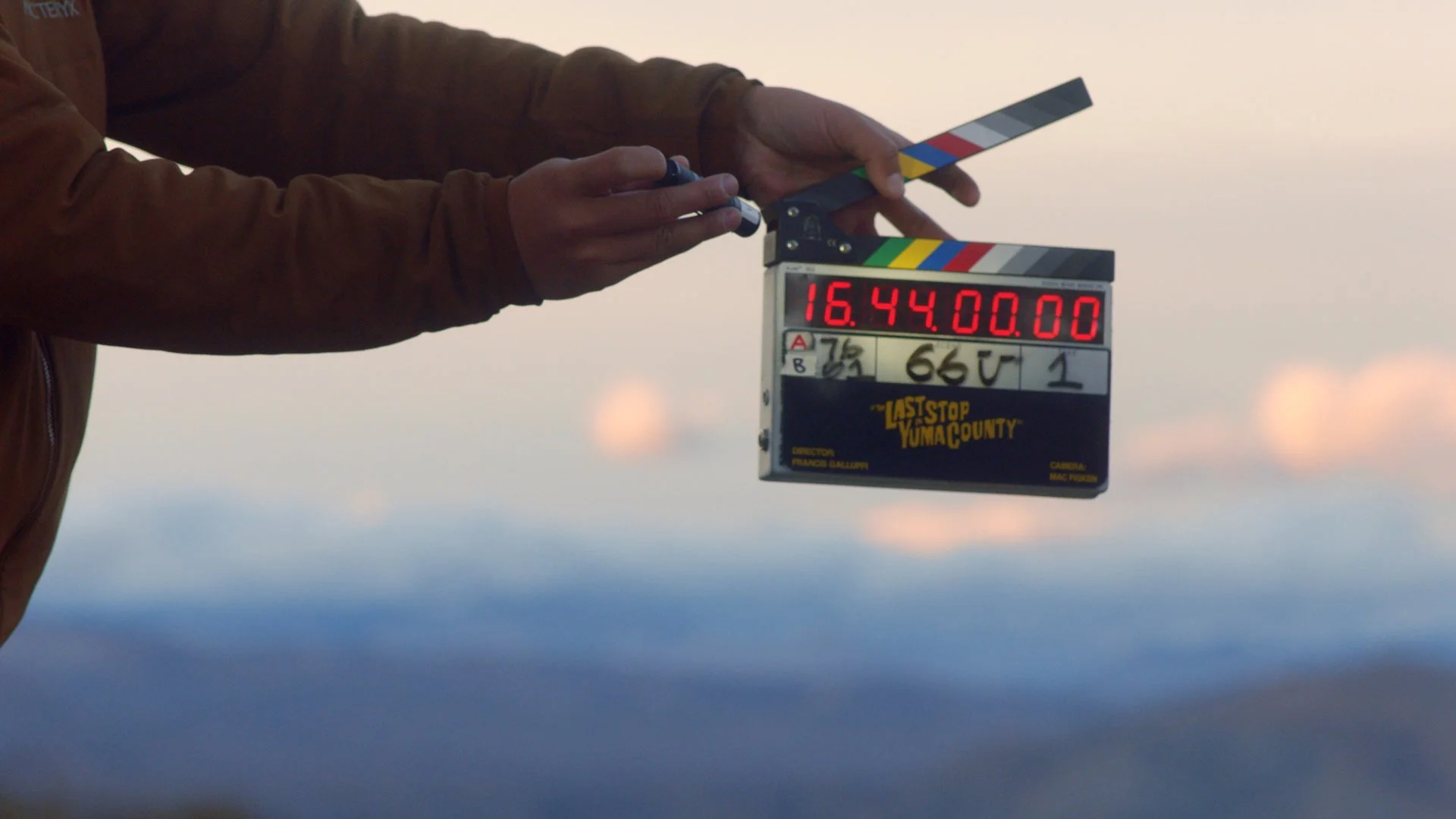
Faith Dunn: When you were touring this film at schools, what were some of your favorite takeaways from students? What were some of the things you noticed coming up most often after screenings?
Eric Foss: We’ve been doing little interviews after the film school tour screenings, and I’ve noticed that film students are really tired. They’re already like that before we get there, and they need some type of re-motivation to keep going.
Ironically, a movie that talks about how fucked up the industry is somehow re-motivates them. It’s this mix of fear and rekindled self-motivation to jump back into the creative side of filmmaking that they originally went to film school to do.
FD: You seem to be somebody who can really pull the truth out of people, and sometimes be a little bit of a shit-stirrer. You know how to get what you want out of people when you’re documenting them. Were there any times when you felt like you might have overstepped or struggled to get through those tense moments, especially with one of your subjects being a close friend?
EF: Brandon’s loving this.
Yeah, every day it was hard. That’s the hardest part. These people are two good friends of mine. We included some of that in the movie. There’s a scene where James literally gets up and walks out, and he’s nice about it. But really, he’s like, “Fuck you, dude! You don’t ask me that. I don’t want to think about how I’m going to get my house back. We haven’t even gone to a festival yet.”
So I definitely have a thing. I don’t know. Brandon, who am I?
Brandon Pickering: That’s what an enigma is.
No, as Foss said, there are hours of footage of Foss poking people, probably a little too much. I’ve worked with him on a lot of different TV and movies, and he’s very good at finding the truth behind the walls people put up. Foss will just tap at that wall until it crumbles, sometimes slowly, sometimes all at once.
He’s very, very good at finding the truth behind the facade.
EF: The weird thing is, people put up walls, but they don’t want to have those walls up. They want to talk about the things that are hard to talk about. They just don’t have the words for them, or they don’t feel entitled to. I think giving people space to talk about the painful sides of life is somewhat therapeutic.
You have one hard conversation on camera, and if it goes well, that gives you license to have another one, and another one, and another one. We were filming James and Francis for three and a half years. By the end, I didn’t have to say much. I would just turn the camera on. Actually, they would start, and then I would have to quickly get the camera up so I could catch what they were saying because they were already interviewing themselves.
I think that’s just trust. They’d already seen some cuts. They knew I wasn’t going to make them look bad unless it was funny. So yeah, there’s a trust thing there, and it’s tricky. Honestly, I’ve lost sleep about it in the past.
FD: What do you mean when you say you were losing sleep over it?
EF: Sometimes you can say the wrong thing or plant the wrong seed, and there is a certain manipulation to documentary filmmaking. People want to pretend there isn’t, and it’s not super conscious, but we do it because we have a goal that isn’t necessarily the goal of the people we’re filming.
This makes me sound like a really bad person, but I am conscious of that manipulation. I think it’s important to stay conscious of it so you don’t do something wrong or influence somebody in a way that could be damaging. Most of the time, I think I succeeded at that. Sometimes I went to bed at night thinking, “Man, did I?”
Here’s a good example. There’s a moment at the very beginning when I showed up on day one and said, “Hey, Francis, are you nervous?” And he said, “No, I’m not nervous. I’m not nervous.” I kept asking if he was nervous because I knew he was nervous. I’d known the guy for about six years at that point.
He kept saying, “I’m not nervous. I’m not nervous.” Then five hours later, he said, “You know what? I was nervous. I am nervous.” And I’m like, “Yeah, dude. I know, but you just won’t say it.” But now I’m going to make you look like an idiot because you were saying you weren’t nervous.
FD: You guys do a good job of making it comedic, at least, and not making him look like an ass.
EF: Well, we make ourselves look like asses too.
BP: That’s sort of the idea. Everybody looks a little goofy at times.
FD: It’s perfect. It’s really vulnerable, very human.
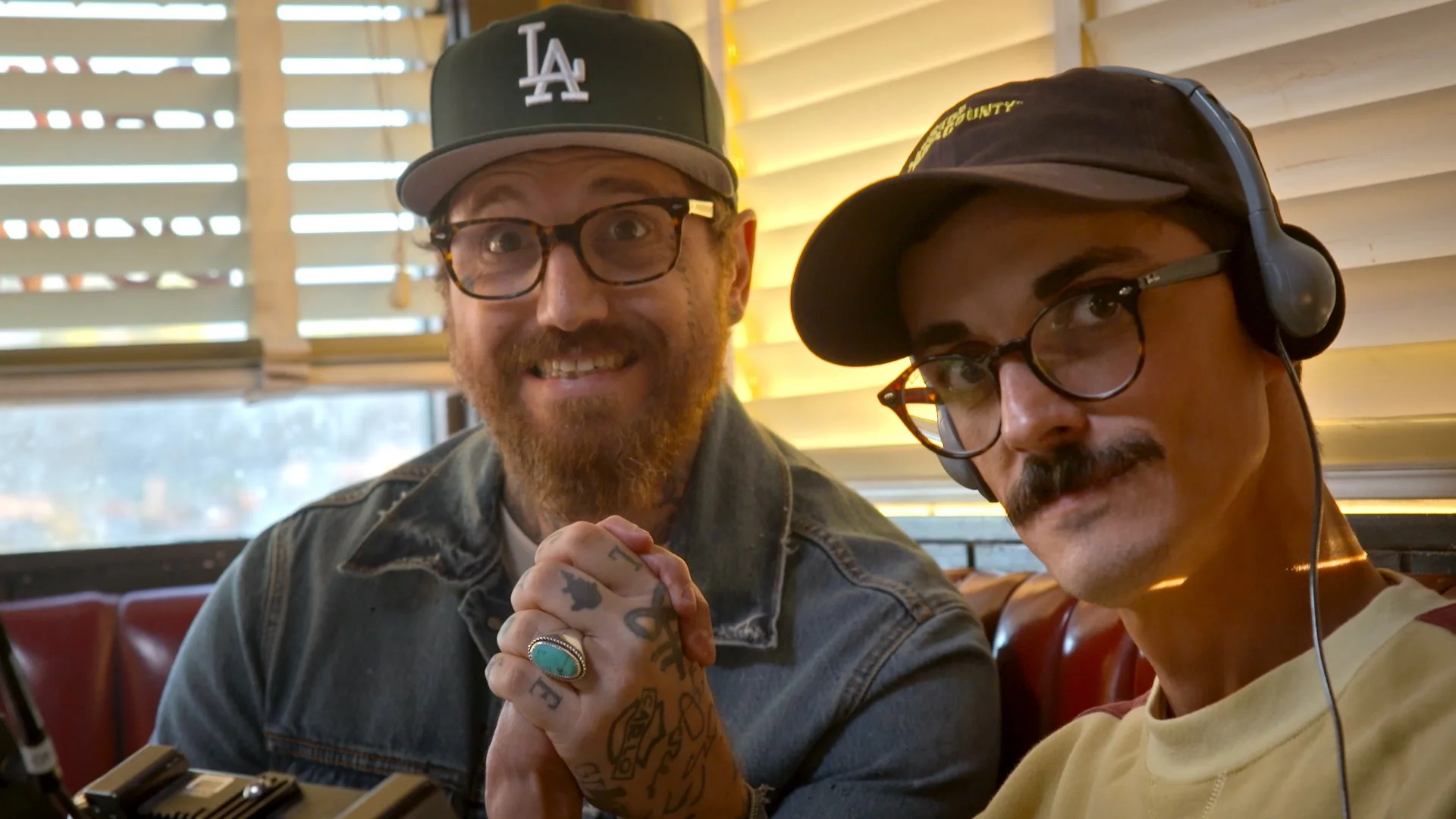
James Claeys & Francis Galluppi
FD: After seeing how James handles the injustices of distribution and corporate greed in the industry, do you think he should have handled anything differently or approached it differently, despite how he felt about it?
EF: That’s a super tricky one. I don’t know all the conversations behind the scenes, so it’s hard for me to say. I know he can be pretty pushy, and that works for him in a lot of ways. It can be productive because he’s very good at knowing what’s right. That’s his superpower. He knows what’s good and what’s bad artistically.
When he feels something isn’t right, he pushes back, and a lot of times that makes it better. So is that wrong? I don’t think so.
But I think when they hired a distributor, once they had a team around them that they weren’t necessarily as close to, he would push back and they would have an ego. There was an ego side to it. That’s the sense I got. I wasn’t part of any of those conversations, so it’s hard to say if he could have handled it better or what the correct approach is to begin with.
Then we’re getting into: Is the product the most important thing, or is the way you go about it the most important thing? I don’t know. I didn’t really answer your question. I just asked more questions.
BP: I think making decisions in the moment is different than analyzing them again in hindsight. I’m sure a lot of the decisions that were made in the moment felt right in the moment, and maybe they weren’t. I don’t know. It’s tough to know that.
FD: I really respected the way he wanted to stand up against the industry, and it was interesting to see the differences in how Francis and James both had to navigate the situation and ended up with different hardships and rewards.
EF: It’s interesting because I think Francis’s situation gets equated with James’s, but they’re totally different parts of the industry. You have an independent distributor like Well Go, and that’s who James was dealing with. Then you have an independent studio or production company like Ghost House, which is making Evil Dead. Those are two separate deals.
They were happening at the same time, but they weren’t really the same thing. James is the money person, so he’s dealing with the money side. Francis is the filmmaker, so he’s dealing with the filmmaking side and making another movie.
They’re very different situations happening simultaneously. I think it’s easy for people to look at it as, “Oh, James got left behind.” But Francis says it in the movie: “What am I supposed to do?” What is James supposed to do?
He doesn’t have any money, and even if he did, Ghost, the people that produce Evil Dead, what are they going to take? A million dollars on, I’m guessing, a $30 million movie? No. They already have the money. It’s already financed. They’re not going to take independent financiers.
And what is James going to do? Say, “Oh, don’t take Evil Dead?”
EF: Exactly. It’s just a bad situation. Not bad, but a very tricky situation that the success of their movie led to, which is the tragic, ironic part.
FD: If you had the power to change one thing in the industry immediately, what would be your top priority?
EF: Brandon?
BP: That’s a tough question. We’re at a place in the industry right now where there are so many changes happening. A lot of the traditional gatekeepers that were there originally, there are ways around them now.
It’s easier than ever to get your film in front of a lot of eyeballs. It’s also incredibly hard to get money to make movies right now. So there’s a weird dichotomy there.
EF: I would love an organization or group of people to build a pathway between audiences that want independent cinema, indie cinemas, and independent filmmakers.
There are a lot of cinemas that would love to play these indie films to a hungry indie audience, but there’s no system in place to plug those three things together: audiences, indie cinemas, indie filmmakers.
If somebody could create a system that promotes regular attendance to those things, where people know, “I can go to this place, this little community gathering every weekend,” or whatever it is, that would be really awesome. It would take a long time. I think that’s a five- to eight-year project, but it would be really awesome if that existed.
It would make it so we’re not dependent on distributors to make money on a theatrical release.
FD: Yeah, it would be great to cut out the middleman. If we haven’t discussed it yet, what is something you hope people take away from the documentary? Is there anything you wish more people would pick up on?
EF: I want people to take away that the bouncy balls are super, super fun, and if you lose your bouncy ball, you basically just lost your purpose. That’s what I want people to get out of this.
BP: I think that actually goes into your last question a little bit. It’s sad that right now the best way to get your film made is to get your buddy to sell their house to make it.
If there’s something people can take away from that, it’s how difficult a decision that is, and how tragic it is that the only way you can get your vision made at this point can be some crazy swing. To expect somebody to take that swing is difficult.
It’s easy to say, “Oh, the guy has a house, and that’s awesome that he was able to have a house to sell.” But when somebody works that hard to get a house and then does something that crazy to fund art, I think that’s both a beautiful and tragic thing.
That’s where we’re at. That’s the only way to get things made.