
Confessional Camera: McKenzie Goodwin on 'Meeting Marsha'
I find it really hard to speak to people directly about the things I struggle with. As a writer, though, go through my work on FilmSlop and you’ll find a corpus of reviews that use film to explore some of my most sincere feelings. I’ve found movies to be the best way for me to access the words for things I’m otherwise too scared (or maybe just not ready) to unpack directly. I’m a fairly guarded person on social media and in person, yet so many of my vulnerabilities are sitting somewhere on the internet for a stranger to read and engage with. In conversation, there are things I struggle to say plainly. But writing feels different. I still haven’t completely figured out why it’s so much easier to bare my soul when talking about film, but it's my favorite means of expressing vulnerability.
I recently connected over this with comedian and podcast host McKenzie Goodwin, who has similarly built a digital archive of some of her most intimate thoughts. Across years of Two Dykes and a Mic, strangers can get a window into her dating life, sex life, queerness, relationships, insecurities, and everything else that adds up to the different versions of herself she has grown through. Like FilmSlop is for me, Goodwin's podcast has become this living, breathing archive of her across different dimensions of her life. And yet, she still doesn’t think of it as the most vulnerable thing she’s made.
Goodwin told me that honor now goes to her debut film, Meeting Marsha, noting how filmmaking felt even more exposing than talking publicly about her sex life. “With a movie, you’re really trying hard, and it can fail so miserably,” she reflects. For Goodwin, writing and directing a film meant taking pieces of herself that she had already explored across other forms and expressing them in a much more vulnerable way.
In the same way I’ve used movies as an entry point for feelings I struggle to access directly, Meeting Marsha is a very honest confession. The film follows Lily, an aspiring actress whose estranged mother comes back into her life as she is about to propose to her girlfriend. In conversation, we talked about being true to yourself, the process of accessing yourself across different mediums, and filmmaking.
This interview has been edited for length and clarity.
Ali El-Sadany: You're a podcast host, you've written criticism, you do comedy, and you've put a lot of yourself out there through all of those things. Making a movie feels like a completely different level of expression. What changes for you between talking about yourself directly on the podcast, writing about something, and putting pieces of yourself into a film?
McKenzie Goodwin: That's such a good question because it is so different. With podcasting, it took me so long to open up. I think I'm naturally very guarded, and that comes from childhood trauma and all that nonsense.
When I started doing Two Dykes and a Mic with my co-host Rachel Scanlon, who is the exact opposite of me, she really got me to open up. She's very open, very boisterous, very sex-positive, and she never really had internalized homophobia. Podcasting together helped me come out of my shell and stand firmer in my queerness and who I was as a person. I think that stripped away a lot of my insecurities as a comedian and a writer.
But there's something about writing and directing a feature that is so personal because I drew a lot from my own life and put that into Meeting Marsha. I think it might be one of the most vulnerable forms of expression. Maybe being a singer-songwriter is up there too, but really putting it all out there and showing people a movie that I made has been the hardest. It's a lot harder than podcasting about my sex life and stuff like that. That doesn't feel as vulnerable to me because I'm not trying hard, if that makes sense. With a movie, you're really trying hard, and it can fail so miserably.
The first screening we did was at OutSouth in Durham, and I was so nervous to show people. I hadn't shown my wife. I hadn't shown anybody in my family. It really is vulnerable to create a project like this.
AE: What do you think would surprise somebody who has listened to you for years about the process of actually making the film?
MG: Honestly, I think even the cast would be surprised by how chaotic everything was behind the scenes. They were on set, so they saw most things, but there was so much happening that I was somehow able to manage without everybody really seeing all of it.
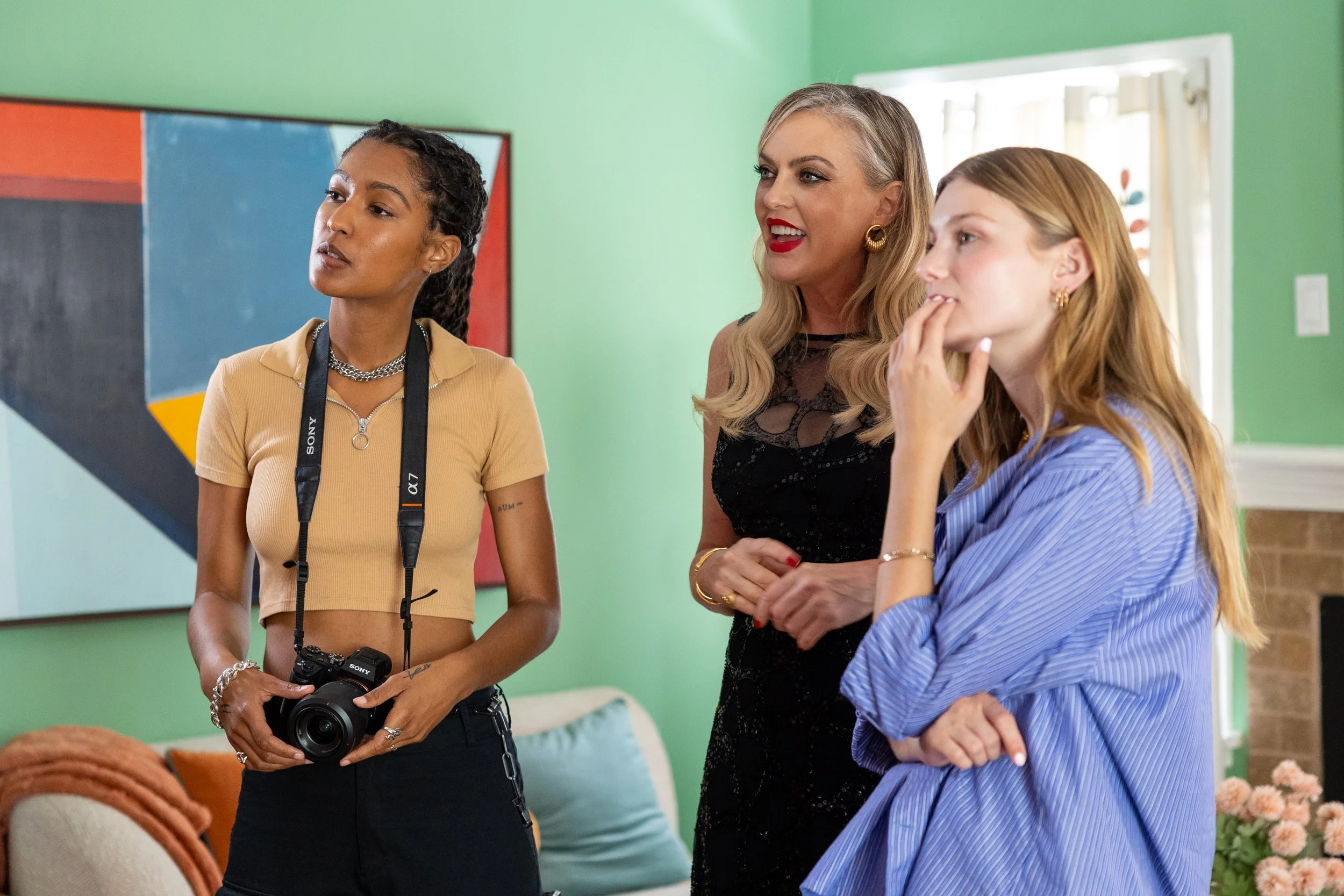
We had cast members drop out the day before. We had a major cameo drop out right before we were supposed to shoot that scene, and I'm running around trying to figure out how to get somebody else there the next day. Thank God Elaine came to my rescue. She gave me a list of like 20 actors and was like, "Pick who you want. We'll try to get them in tomorrow."
There's always going to be something that goes wrong on a film shoot, but when you're doing an indie, everything goes wrong. It was constant. I don't think people would realize how chaotic it was because we also kept a really good vibe. Everybody was happy. We were laughing. We were having a great time. But it was a lot. I'm not gonna lie.
AE: You talked about understanding yourself differently through your relationship with Rachel. I imagine creating fictional characters can work similarly. Were there things about yourself that you could only really understand after giving them to Lily or Marsha instead of talking about them directly?
MG: I think, in talking about the film afterward, I realized there were a lot of subconscious things that I put into the dynamic between Lily and Marsha. A big inspiration for those two characters was me losing my mom when I was younger. I really wanted to explore being able to find a second chance at having a mom because that was something that really helped me. I had a second chance with my stepmom.
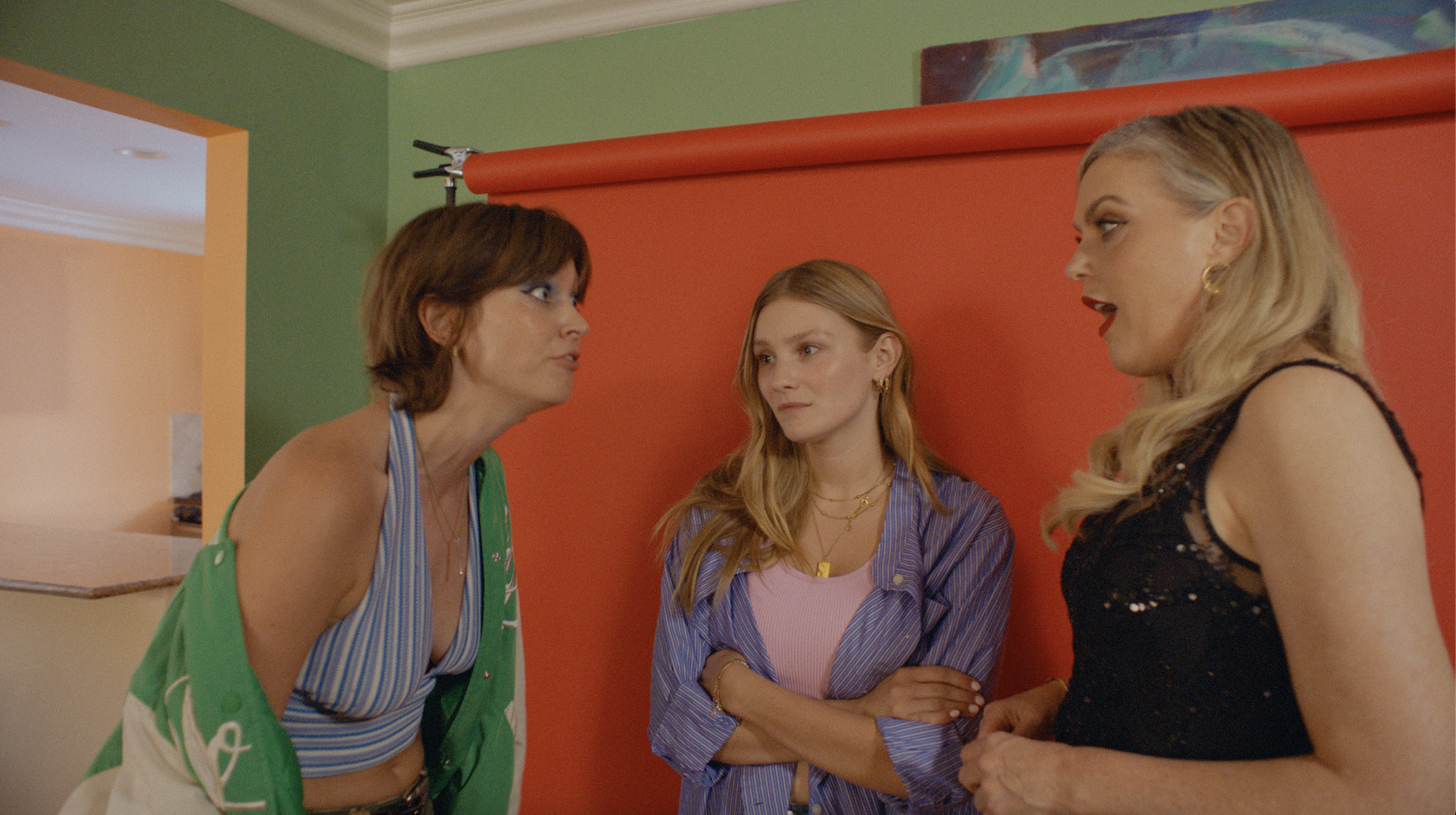
I don't think I fully comprehended how much of that dynamic was in there while I was writing it. But then I saw Elaine and Lindsay playing those characters, how they interacted and how they needed each other, and it was really beautiful to see afterward and to talk about with them.
AE: Have you had conversations about that part of the film with the people in your life who inspired it?
MG: I have. I was doing a Q&A in San Diego for the film, and my stepmom happened to be in the crowd. I was talking about all of this, but I started getting caught up and choked up because I could see her crying in the audience. I was like, okay, maybe I don't want to make her go too crazy right now, so I pulled back a little. But I think she knows how much that mother-daughter relationship means to me. I'm really glad I got to show at least the beginning of what Lily and Marsha can have through finding each other. I also think chosen family is so important within the queer community. Obviously, with a stepmom, it's not necessarily chosen family that I personally went out and grabbed. That was my dad, thank him. But it does matter.
I think it's really beautiful for queer women, and queer people in general, to have parental figures even when they aren't your blood parents. We can lose those relationships when we come out. I thought that was a really beautiful thing to explore in this.
AE: Was that mother-daughter relationship already in your head when you started writing, or was it something that became more important as the movie developed?
MG: The script had, I think, three different iterations. Earlier on it was a little more coming-of-age and juvenile. Not childlike, but juvenile. It's already very campy and fun, but I wanted to instill more of that mother-daughter relationship, so that came in a little later.
Besides that, it mostly stayed the same from what was on the page to what ended up onscreen. I let some of the actors improvise on set, and some of that made it into the film, but I wrote the script in about four months. It was pretty quick, so there wasn't that much time for it to completely change.
AE: Did writing the film help you discover anything new about your relationship with your stepmom?
MG: Maybe not that relationship specifically. If anything, it helped me put into words more about my relationship with my wife and why I love her so much. Without giving away too many spoilers, Lily eventually realizes that her friend, who she loves, is somebody who has always been there for her. She's someone who supports her, wants her to succeed, and wants her to win. I was writing that through how I see my wife and me. She is my biggest, strongest supporter, and I think I was able to put that into better words after writing this. I understood more clearly that one of the reasons I'm so attracted to her is that she's just such a good, solid human.
I love her.
AE: When you first met your wife, what did you gravitate toward? And now that you've built more of a life together, what do you admire most about her?
MG: I remember telling my friends that she had the best soul I had ever met. She was just such a good person. As we've grown together, what I admire is that we're both able to keep growing. It doesn't feel like one person is stuck. In the last two years, she went from being a corporate girly out here in LA to becoming a full-blown romance author.
We get to grow together. We both had our quote-unquote "real jobs," and now we're following our actual passions. That's something I really admire in her.
AE: You and Rachel give a lot of relationship advice through the podcast, and Meeting Marsha is so grounded in different kinds of love, whether that's romantic love, family, or community. Did writing the movie give you any more clarity about the advice you give people?
MG: It's tough. Rachel gives really good relationship advice, and I think I've learned so much about who I am and how I date through the advice she's given too.
As the years go on, and as my relationship with my wife gets stronger, I'm hoping I can give better advice. One thing I tried to put into this movie is that you shouldn't date somebody who doesn't give you the same effort you're giving them. That was something I experienced a lot while dating women. A lot of women I dated just wouldn't put in any effort. Matched effort is something I always tell people to look for.
I don't know if I learned something through writing it that I'm now giving out on the podcast, though. I don't know yet. Maybe that'll change. Don't marry the clown, I guess, is the advice I would give now.
AE: Lily is an aspiring actress, Jordan is a comedian, and Marsha is a star. All three of them are in different places creatively. Where do you recognize your own creative career in them, not necessarily in what happens to them, but in what they want, what embarrasses them, and how they navigate the industry?
MG: Weirdly, I see myself in all three characters, which is probably why it was so easy to write their dialogue. Lily is obviously the most aligned with me. I've had so many scripts written for so long, and I just sit on them. I haven't been able to go out and get them made, and I think my frustration with that is one of the reasons I wrote her character.
She so deeply wants her projects to be out there, but she's always waiting for somebody else to give her that opportunity. That's something I've always struggled with. I think that's also why I made this movie. No one's going to give me that opportunity unless I take it.
But I see myself in Jordan too. When you're a performer, you want to get out there and you want your name seen. She has that line about how there are hotter clowns coming up behind her and now everybody wants her to do nude scenes and all this stuff. I've had crazy agents and managers in the past give me pretty horrific advice. I remember somebody I worked with telling me to come out as bi instead of coming out as a lesbian because they were like, "You'll get more jobs that way. You want both sides to want to be with you," or have the option, essentially.
So I see myself in Jordan getting horrible advice from people in the industry. I also know so many comedians who are exactly like Jordan, and I find them very charming and fun.
AE: How much of that were you consciously putting into the characters, and how much did you realize was there afterward?
MG: Honestly, I think I'm pretty open about a lot of it. We talk about the industry quite a bit on the podcast, so I've already shared a lot of those experiences. I wish more had been revealed to me through the writing, but unfortunately, I'm very well aware of the industry.
AE: Beyond what an audience might learn about you from the movie, what were you hoping Meeting Marsha would do for you personally? Was there something you wanted from making a film that you weren't getting from podcasting?
MG: I've always wanted to be a screenwriter and a director. I went to film school.
I kind of fell into stand-up comedy and podcasting by accident, and filmmaking has always been more of my passion. To me, Two Dykes and a Mic is my day job. I've always wanted to write and direct. I finally had the Kickstarter, and I was able to utilize the fan base that we've built to help me make movies that are hopefully for that fan base too. Queer movies made by queer people for queer people is what I wanted to do. Hopefully I get to do more. I want to keep producing and directing. It's a huge passion for me.
AE: I think part of why people responded so strongly to the Kickstarter is that you're making something for an audience that doesn't always get to see itself this clearly. As a viewer, what did you grow up wanting more of, and what are you trying to put onscreen now that you're in a position to make it yourself?
MG: I want to see more representation of the queer community in film and television, period. I've been seeing that representation has actually been going steadily down over the last couple of years. Especially with sapphic stories, I want stories that don't hinge on queer pain. That was a big reason I wanted to make a comedy. So much of what I was seeing at festivals and onscreen was about coming out, being persecuted as a queer person, somebody dying, or the queer person being a side character without any real backstory.
Having an almost entirely queer cast really meant a lot to me. Those are the stories I want to see onscreen. There are queer stories coming out, but I want more queer comedies, ideally. I'd also love to see an action-adventure movie, something like Ride or Die or a 007 movie with a lesbian lead. That's what I'm looking for.
AE: You've worked across podcasting, comedy, criticism, writing, and now filmmaking. If you had to choose the medium you most want to commit yourself to, what is it about that form that lets you feel the most like yourself?
MG: It's going to be screenwriting. That's definitely what I want to do for the rest of my life. I love being able to transfer words into something visual. I think having a visual medium is so beautiful. Everything is a screen now. So much of what we're getting is through our phones, although obviously I think we need to be going back to theaters. It's something I grew up with, and I want to be able to put my words onscreen. When I watched the movie the first few times in theaters, it really filled my heart to see my jokes onscreen.
That's probably the biggest thing that fills my cup these days, getting to do that.