
Beyond Catharsis: Liz Sargent on 'Take Me Home'
Liz Sargent’s Take Me Home, winner of Sundance’s Waldo Salt Screenwriting Award, finds its magic in honesty. Sargent has no delusions about the mix of ego, desperation, and love required to make independent art about your own family. She also does not shy away from letting that mix show. Drawing on Sargent’s family life, the film follows Anna, a woman with a cognitive disability who helps care for her aging parents while needing support herself. Sargent’s real-life sister Anna plays the role, alongside Ali Ahn as her sister Emily.
It’s no secret that I’ve been obsessed with film as a means of understanding oneself. One cursory scroll through FilmSlop and the pieces we’ve curated will show you that fixation at length. Most of my interviews have centered on how filmmakers insert themselves into their work, exploring the spectrum of that insertion (see more here). I’ve come across so many variations of this expression, but I’ve never seen anything quite like Sargent’s.
Her candor is violent, passionate, and close to home.She refuses to sugarcoat her experience. In an active rejection of martyrdom, she normalizes the frustration, guilt, and impatience that often arrive with caretaking. That specific flavor of pain is exactly the kind we are routinely encouraged to hide or disguise.
I spent our conversation searching for an explanation for why this film feels so unflinching. I think I found my answer in its purpose. Beyond a means of expression and catharsis, Take Me Home functions as a kind of crowbar to push her family toward action, to help her sister move toward independence.
The same honesty that makes her film so singular runs through our conversation. She brings every ounce of it.
This interview has been edited for length and clarity. The conversation includes discussion of the film’s ending.
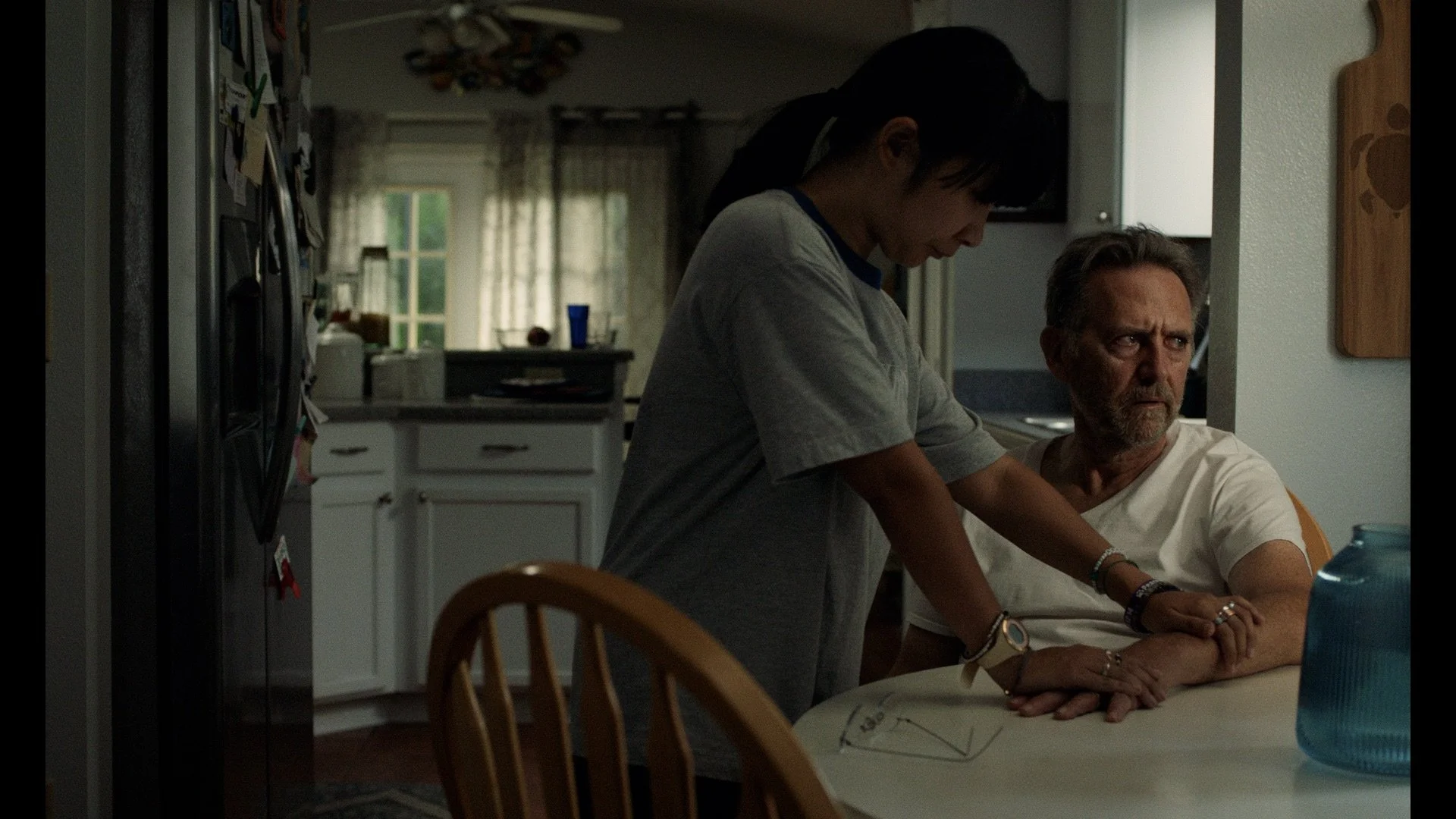
Ali El-Sadany: The film draws on your family’s life, and I’m interested in how much of yourself you put into Emily, the sister played by Ali Ahn. How honest did you have to let yourself be about your own impatience and frustration?
Liz Sargent: I write from personal experience. I write like a diary entry. I try to be as fair as possible to everybody in the story, and through the writing process, that’s how I figure it out.
I try to be as honest and authentic a human as I can in this world. This caregiving challenge, this transition where our parents are aging and maybe we have a disabled sibling or children of our own—it’s a hard ethical dilemma to be in. It’s a hard space.
It’s really important to talk about what that means in a nuanced way. I think the impatience and irritation are human. They’re not directed at her family. I think they’re directed at the way this world is set up, at the impossibilities of the American healthcare system, the inefficiencies of it. That’s what I was really trying to show.
I think it’s a universal experience that everybody is feeling. I’m not afraid to share that.
AE: I appreciated that you allowed those feelings into the film. To add to that, there’s both the frustration that can come with caregiving, and also the guilt of feeling frustrated in the first place.
LS: Some people get very angry at Emily and feel like she should have come back or she should have done more. I think that’s really interesting because it’s something we put upon women as caregivers. We also expect the family to do this work.
But actually, it should be the country’s responsibility, and these resources are not readily available. It makes it an impossible situation. The idea was to leave people sitting with that.
AE: You described writing like a diary entry. What was it like to watch Ali Ahn perform moments drawn from your own life? Was there a particular scene that hit you hardest?
LS: Ali is incredible. There was a moment where Emily was in her room crying, talking to a friend or her boyfriend on the phone. I looked at one of my best friends who worked on the film as well, and it was eerie. We felt like she had totally captured that experience I’ve had in that exact bedroom, because it was filmed in my parents’ home, in Anna’s home.
I had just been living that life, and all of those frustrations were so alive. It was really eerie and also really healing to share that with someone.
But these actors brought their own lives into the film. These are their own characters, their own interpretations. Everything shifted and became its own unique film.
AE: Emily has a life far away from home. How do you navigate that distance with your own family, and how did making the film fit into it?
LS: Part of making this movie was actually a way to try to save my family, truly. It was to sort of force this transition for Anna to create her own independence, move on to live with my sister in Colorado, and have her adult life, which is actually what happened. It was also a way for me to have my own creative output.
Making the film, I was multitasking with my responsibilities to my family. I was working on guardianship for Anna and trying to find resources for future caregiving for my family. Even though I’m far away, I’m still very active. I think I’ve learned that caregiving is a broader term, and I’ve done everything I can.
Now, this movie being out in the world, I feel like I have a bigger mission to shift what is available for my family and all families, and to have this conversation in the world.
I’m not sure if I have a clear answer to all of that. I’m working through all of it as I make this film in real time. Even the film is left a bit open-ended because I want people to sit with the dilemma of what’s available in this world and how we can change it.
AE: I don’t expect there to be a clear answer. I love movies because they help me understand some of the things I’m struggling with myself. I appreciate your willingness to talk through it.
LS: A lot of people have this distance nowadays, and I think it’s uncomfortable. We all live with a lot of guilt about it, and I don’t know if we can change that. I think part of loving and wanting to protect our family is being able to sit with that discomfort and doing the best we can within it.
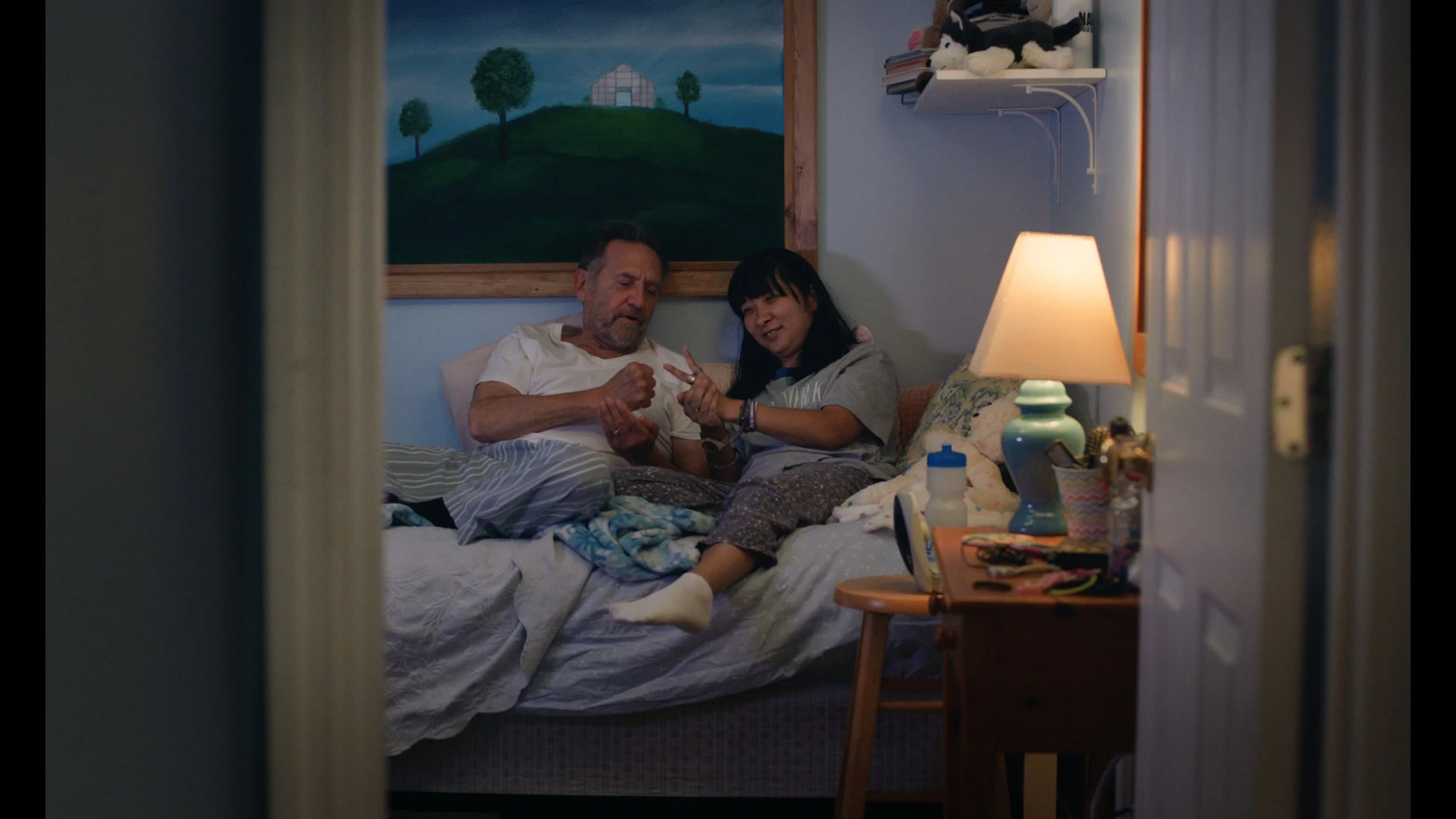
AE: You mentioned wanting the film to help Anna move into her next chapter. The role also asks her to move through grief, fear, and loneliness. How did you talk with her about what it would involve, and how did you know when she was ready?
LS: Anna is tough. She’s the youngest of 11 kids. She is so stubborn and loving and empathetic. I’ve seen that through a lot of hard times that she’s lived. Making a feature film is actually not hard for her, and experiencing those really big emotions is not a challenge for her.
I think the hard part was drawing the line between the film and real life at a time when my parents were in the hospital and Anna was going through that transition herself.
We had an acting coach who is just a beautiful human being. Her name’s Terra Mackintosh, and she became a friend and also took Anna seriously as an actor. She read through the entire script and talked to her about it, and really helped her separate real from pretend and understand the character.
I am her sister, and I can challenge her, and I know what her limits are. But also, this woman took her seriously in a way that a sister can’t. It was a very organic situation. I think all of us giving her that challenge is what made the film successful.
AE: I’m interested in how you wrote a script that still gave Anna room to make the dialogue her own. How did you build in that freedom, and how much of what we hear comes from her?
LS: Even in the script phase, Anna owned every word in that script, because it’s ripped from life. I come from modern dance and experimental theater. I still love that script deeply; every moment and image was so metaphoric and precious to me. But because of that performance background, I also value what’s on screen. It has to feel alive and original.
It’s really about continually passing over the ownership and giving it back to Anna again.
We used structured improvisation. We would loop a scene over and over and let it organically unfold. She has full ownership of almost everything on camera, and she said it in her own words that felt right to her. The other actors also jumped through hoops and rewrote in the moment.
Maybe because of my modern dance background, I don’t really care about words. It’s the emotional experience of two humans together, the tension between them, that’s most important in a script. Things that are really dialogue-heavy—that’s its own thing. That’s not what this is.
AE: You’ve talked about giving Anna ownership of the role. What did working with her as an actor show you that you hadn’t seen in your relationship as sisters?
LS: I didn’t know she was so funny. I’ve always had that sense with her and enjoyed her company, but I didn’t know that she’s a comedian. That unfolded in the film and also in real life. People love her so much as a friend. Even when we’re on the festival circuit, she’s hilarious and really picking up comedic timing.
Also, I think she really started figuring out filmmaking. Part of that is a credit to her acting coach and how aware she is of the room.
In the short film, she started calling “tail slate.” She asked me once, “What’s tail slate?” And I just ignored her. Then later she said to me, “Oh, tail slate means we’re done.” I’m like, “You’re right. I don’t even pick up on the terminology. Teach me.”
As an actor in the scene, and a creative person, and as a professional, she really surprised me by stepping up to the plate in a way I couldn’t have imagined.
AE: I found the ending hopeful. How much of the future you imagine there reflects what you believe will happen for Anna, and how much reflects what you’re hoping could happen?
LS: I hope this film leaves people feeling bittersweet. It’s hopeful, but what we see at the end doesn’t exist in this world right now. In a way, it’s a call to action. We can see Anna, exactly how she is, thriving in this world if it just shifted a bit.
Part of that hope is to feel empowered that we can do this work in the world.
AE: When you talk about the world shifting to make that future possible, where would you most want people to direct their energy?
LS: Supportive community resources that are disappearing right now. The irony is that our short proof of concept was shown at the White House to celebrate the 25th anniversary of the Olmstead decision.* Right now, a lot of those resources are being reversed. I think a lot of those resources are what make the ending of this film possible.
I don’t want us to feel like we have to fight and go backwards, but that we can go forwards. The ending of this film is a grounded reality that we could make possible. It’s not too much to ask for.
I’s about a deeper embodiment of love and protection for the people that we love. We will all need caregiving at some point. We will all probably age into disability or have been disabled at some point. Shifting the world to function this way is for everyone.
AE: It’s a film grounded in so much love. I’m glad it’s out in the world, and I hope more people get to see it.
LS: We all need care in our lives. It’s a universal human experience. I hope the film helps adjust and shape the way that we make every move in our day.
*Editor’s note: Olmstead v. L.C. is a 1999 U.S. Supreme Court decision concerning unjustified segregation of people with disabilities and access to community-based services under the Americans with Disabilities Act. The 2023 short, rather than the feature, was shown at the White House for the decision’s 25th anniversary.
Take Me Home opens at New York’s IFC Center on September 23, 2026, and at the Laemmle Monica Film Center in Los Angeles on September 30.