
Friendship and Grief through the Effed Up: Alice Maio Mackay & Annapurna Siriam on ‘Our Effed Up World’
Alice Maio Mackay’s Our Effed Up World is the 21-year-old’s seventh feature in her fast-growing filmography. While continuing her streak of low-budget creature feature horror—this time with a murderous slime-covered alien living in a local video store—it’s the film’s depiction of grief and friendship that makes it resonant in the world we’re collectively surviving through.
Sheri (Sara Thompson) lives with her astronomer father and is grieving the recent loss of her beloved grandmother. But when a mysterious entity capable of imitating those it’s killed crash-lands in the woods, Sheri and her friends are all that stand in the way of the creature’s insatiable, intergalactic hunger.
Sheri’s grief is not wallowing in silence or frozen inaction; it’s a grief that permeates her everyday life, manifesting in a deep desire for change at its most radical. She’s breaking up with her boyfriend after their latest bout of unsatisfying sex, punching drunk men in the face for hitting on her, and trying to keep those closest to her at a distance. To Sheri, the loss of her grandmother shattered the facade of her previous life—a life she no longer sees as worth continuing.
In my discussion with Alice Maio Mackay, she clarified that she never intends to make her films autobiographical, but this one came from close to home.
“The way I’ve been making films over these last few years—each captures a moment in time of how I’m feeling,” she’d voiced, “about the world, my personal life, or just something in my feelings that inspires me to write something. For this one, I had lost both of my grandparents in the short span of a year. This film kind of came out of a few different thoughts in my head, and then connecting it all through Sheri’s grandmother and her grief was something that I really wanted to lean in on.”
It’s at this low point for Sheri that her struggles are compounded by the arrival of the murderous alien creature. “I like tying in an alien plot into a film about grief and relationships and kind of processing that,” Mackay added. “It’s like making her grief this even bigger monster to tackle. It’s not just her own personal grief. It’s like, oh, maybe the whole world is fucked. It’s that kind of feeling when you lose someone close to you, and your whole perspective of the world shifts and how you interact with your day-to-day problems.”
The title of this film echoes in everyday life. More specifically, it’s a sentiment that reverberates through Twitter, Instagram, Facebook (God forbid), or whatever social media platform connects you to the effed up things happening beyond the 500 square feet eating your paycheck each month.
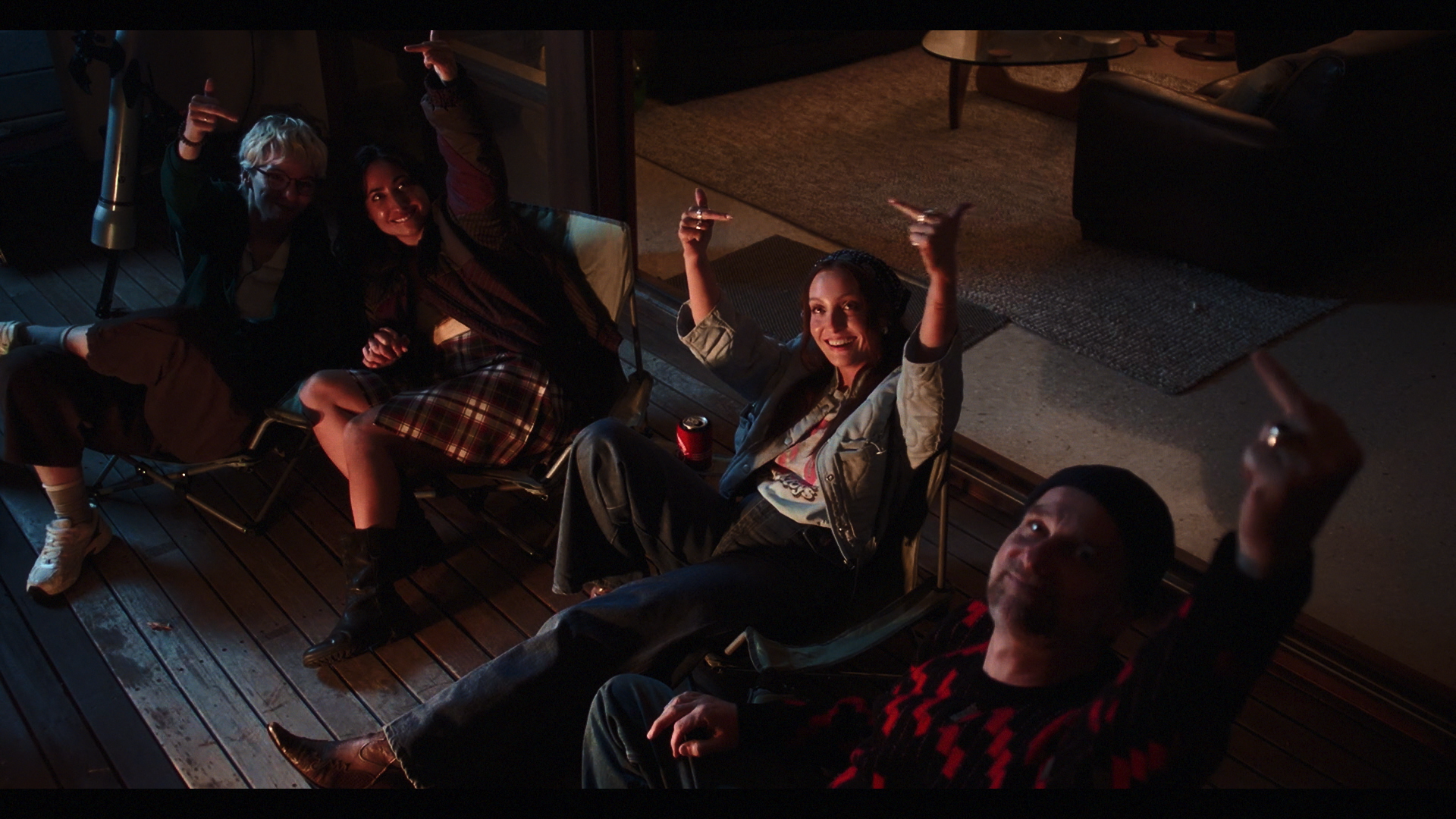
A key location in the movie is the video store operated by Jess McLeod’s character, Finn, the basement of which is taken over by the creature as it repeatedly stalks the characters around the DVD-lined shelves. But before that, Finn has already had enough with the struggling business left to them by their uncle, commenting that, “nostalgia alone can’t pay the bills.”
“Having the film’s central location be the video store and having it start as a safe haven for this friend group, and then having it turn into something more sinister kind of reflects how I feel about nostalgia,” Mackay admitted. “I feel there’s definitely comfort in nostalgia, but getting too comfortable in it can just be sinister, and kind of hinder yourself from things progressing too much, from growing up.”
I brought up the parallel of what happens to the video store to how certain fandoms and online spaces can start from a place of genuine appreciation, only to be morphed into these toxic spaces. Annapurna Siriam, best known for directing and starring in Fucktoys and who plays Sheri’s best friend Poppy, added: “I have this really intense grief around the fact that time passes. I really miss and yearn for time periods that I grew up in, specifically pre-social media. I feel this really intense nostalgia for just how free I felt back then. The surveillance of smartphones and social media has restricted and oppressed a lot of the feeling of freedom in society and just in culture. I grew up in Tennessee and whenever I go home, it’s all now gentrified. And especially being in the States, it’s become very MAGA. It’s become this caricature of evil that makes me yearn even more for the most magical moment before everything got scary and terrifying.”
Having grown up in Texas, I’m very well acquainted with the breed of nationalism that Sriram’s experienced. It’s torn through our communities in a way not all that different from the arrival of an all-consuming alien monster. It landed in our neighborhoods, absorbed many in our families, and turned places that used to be home into something sinister. In reality, maybe these places always had this evil in them and it’s only the blissful ignorance of childhood that protected us. Or maybe it was the lack of access to information that the internet brings to everyone now.
Every day we’re exposed to horror after horror. The nightmares of the world are all a swipe away now. It’s compounded to the point where there’s little that could surprise most of us anymore (short of an alien ripping someone’s face off). It’s hard not to see what we have as unsalvageable, to want to burn it to the ground.
When discussing what in her life makes her feel that need to burn it all down, Mackay had a quick answer:
“The state of the world politically. You wake up, you see the news and whatever disturbing information presented to you on Instagram Reels, and it makes you want to self-destruct a bit. That paired with AI slop. Like wow, the world is really coming down to this.” It’s a very easy sentiment to relate to. But in spite of this, Mackay says that, “the whole film is [about] leaning on those around you as support. Those relationships really matter and ground you to deal with that everyday bullshit.”
Every day I wake up and scroll through my apps like it’s the morning paper, finding out about the new ways in which the planet is dying, new atrocities being committed, new reasons to give up on it all. But it’s the people in my life that make it worth living, whether it be my wife next to me in bed, my childhood best friend sending me pictures of his newborn son, or the cashier at my favorite burger place who keeps treats ready for my dog. Nationalism thrives on lonely and isolated people. But our relationships, big and small, are what keep me going.
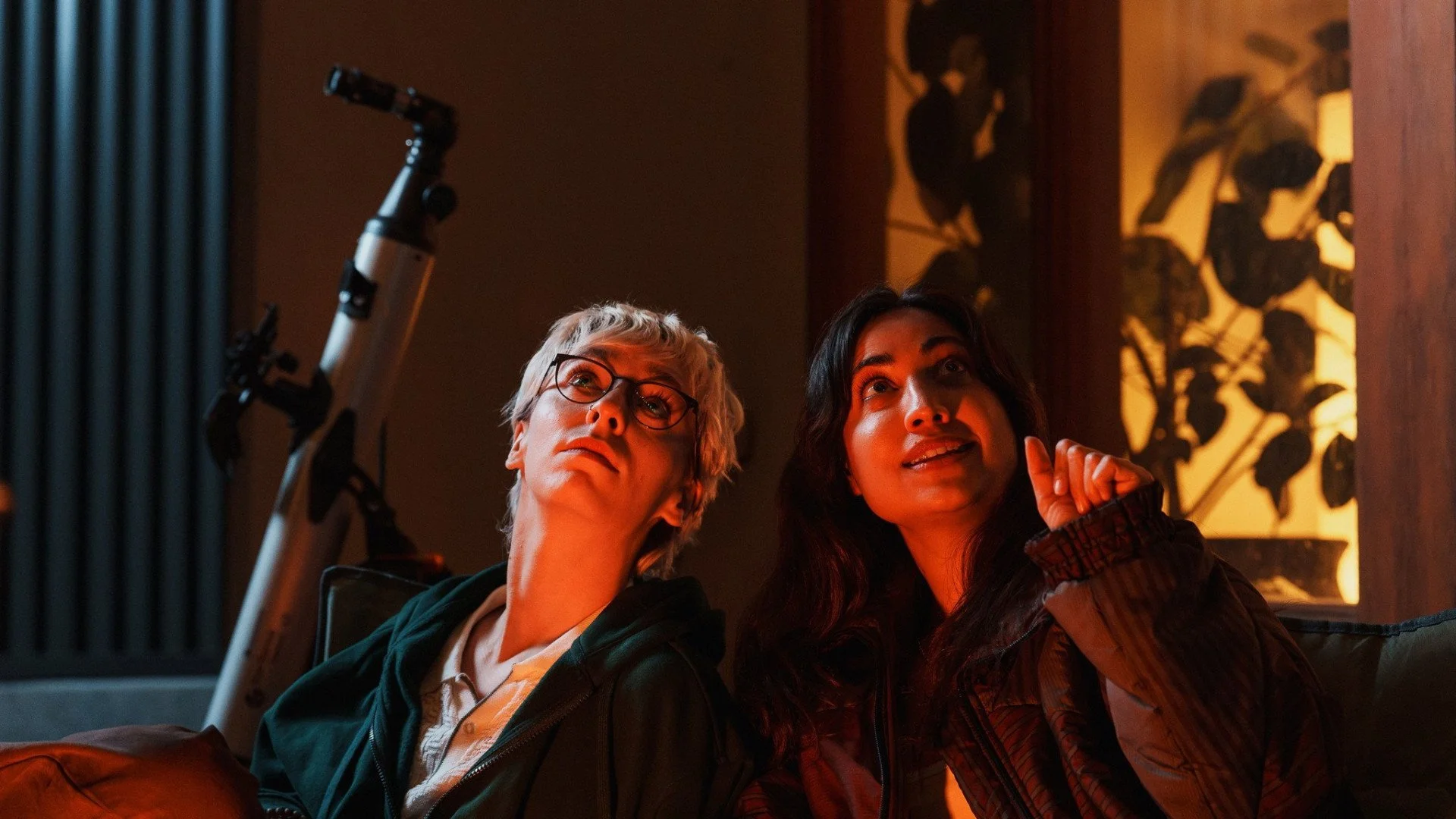
Despite the film’s greater scope with its genre elements, this central idea of friendship was key to Mackay. “It’s almost like the movie is an ode to those friendships and personal relationships. And it’s about—not to sound cheesy—the power of love and how that can really carry you forward in the shittiest of times.”
One of the film’s standout scenes is a conversation shared between Sheri and Poppy over a joint. Poppy finally gets Sheri to open up about the rage she feels against what is, to her, a cruel and unfair world. It’s hard to disagree with Sheri at this moment; cancer took a good person from her, when worse people get to live on happily and healthily. It isn’t fair. But as Poppy reminds Sheri, “Cancer doesn’t choose good people or bad people. Cancer’s like nature.” When Sheri adds onto this with the guilt she feels for not missing her mother, who died when she was very young, as much as her grandmother, Poppy insists that she does. “It’s there. It’s just down in the basement, where the lights don’t work anymore.” In spite of her best efforts to push away those closest to her, Poppy’s line struck me in how what’s keeping Sheri together is the love from her family and friends, even if she isn’t in a place to see it in action.
The onscreen chemistry that carries the central friendship began to form offscreen before the camera started rolling. “The three of us were all in an Airbnb together, so I think we organically developed this instant bond,” Sriram shared. “We would rehearse together and develop our own dynamic that we were able to then translate into the characters’ relationships.” She also added that they were aided by the fact that the three of them “were all coming from another place in the world to Australia, and so we were all battling jet lag.”
“Throughout my work, going back to T Blockers and earlier on stuff, I’ve just been really inspired by the friendships in my life,” Mackay added. “For me, friendships really inform what I do and the person I want to become. And especially queer friendship groups and those kinds of relationships are something that’s rarely depicted. So for me, it’s been important to depict different types of friendships and the playfulness, the seriousness, and just all those mixes of feelings.”
I, like Sriram, feel an immense amount of grief for a world that no longer exists—grief for a better future. In our world, the alien isn’t just in the video store; it’s spread far beyond. Our world is really effed up due to a number of reasons I could name, but what Our Effed Up World demonstrates is that even if we want to give up and push everyone away, we’re not in this fight alone—whether it be against the cruelty of this world, or a monster from another one.