
Portraying the Fragmented Realities of African Migrants in ‘Promised Sky’: Interview with Erige Sehiri
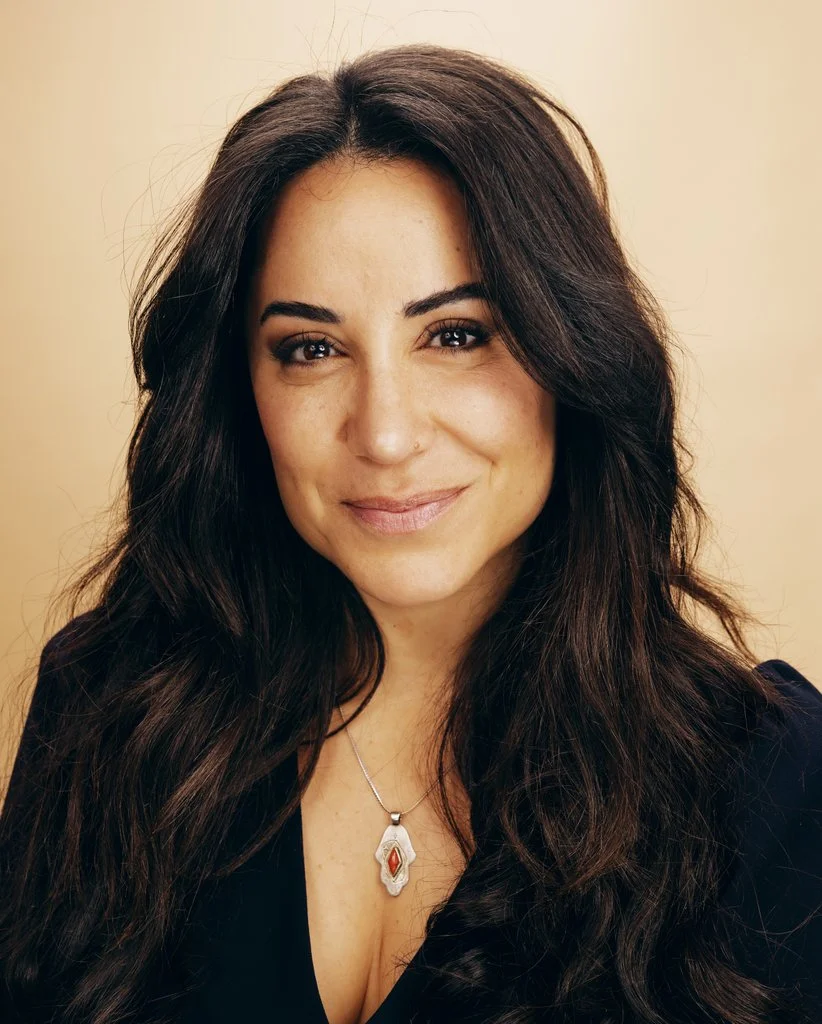
When Erige Sehiri debuted her first fictional film, Under the Fig Trees, at the 2021 Venice Film Festival, it was immediately clear that a major auteur had hit the scene. The French-Tunisian filmmaker had spent her early career as a journalist and documentarian — experiences that laid the groundwork for the imitation-of-life that was her first feature. Sehiri’s second effort Promised Sky, now playing in theaters, premiered at the 2025 Cannes Film Festival. With it, the writer-director has begun to establish a trademark: extraordinary intimate performances given by non-actors, loosely scripted scenes so natural they feel impromptu.
But while Fig Trees explored young Tunisians coming-of-age, Promised Sky explores the lives of African immigrants in Tunisia. Marie, a female pastor, houses Naney, a down-on-her-luck mother, and university student Jolie in her home in Tunis; they come across Kenza, a child survivor of a shipwreck, and shelter her instead of reporting her to the authorities. In telling the story of these three (and a half) women, Sehiri shines a light on the inner lives of African migrants, their dreams, motivations, dispositions, and individual circumstances, while avoiding the trap of becoming a sententious statement film.
We spoke with Sehiri about the genesis of the script, the process of directing first-time actors, her background as a journalist, the roles African migrants take in Arab society, and the trauma that comes with forced migration.
This conversation has been edited for length and clarity.
————
Eman Ibrahim: How did the idea for Promised Sky come about, and what made you pursue it as your sophomore film?
Erige Sehiri: I think it's always several things. My encounter with one woman that I met several years ago, she was a journalist from the Ivory Coast. We became friends, and then we met again, and she explained to me how it was more and more difficult for her to settle down in Tunisia. She started to explain to me her point of view, how she perceived the situation in the country at the time. And I thought it was really interesting, because since the Tunisian Revolution, you know, we used to have Libyans, Algerians, Europeans, and I felt like these past years, we've been between Tunisians only. Something has changed, and I think it was really interesting for me to have her perspective.
She also told me in confidence that she had a second job, and her job was being a priest in a church. I was really surprised, because I knew her for several years, and I've never noticed anything like that, I've never even thought about it. She invited me to go see the community. I knew that it was not, like, really legal in Tunisia, no Tunisians go to Evangelical churches on Sundays. So I felt like I was privileged and that she trusted me enough to welcome me in the community, and it really, really touched me. And so this is how it started, to write the story. And then, of course, the idea was not to make an archetype of women, migrants, but to get out of stereotypes and cliches. I didn't want anybody to represent anybody, I just wanted to have characters and personalities. That's what I did also with Under the Fig Trees.
And also, I was really interested in statistics. I always say this in the media, but I think it's really important, it's a reminder. When I started my research, I found out that actually, 80% of migrants are migrating within Africa, and not to Europe. This was something that was really important to show in the film, without making it a thesis about migration. But it was really interesting to see other faces, and more women migrants, also, that we do not often see in cinema. Also to liberate them from this, social, let's say, identity that we give to people. That's also something that I really care about in filmmaking, to liberate my characters from what they're supposed to represent in society, in a social film. By being themselves. Who they are, with all the complexity.
Ibrahim: The four characters at the center of the film have this sisterly bond, and the bond is born out of a necessity for survival. You're very intentional with how you present the lives of the three different adult women. They have collective struggles, but they also have their individual struggles with their own identities. Would you be able to talk about how you balanced each woman's personal story with the collective identity that they form together?
Sehiri: I think it was a challenge already in the writing, because it's not a typical writing of a collective film where you balance between characters, and they are related somehow. This time, I liked it to be fragmented and everywhere at the same time, I thought that was closer to life. You know, to have these women, they have nothing to do with each other, they don't have the same background, they don't come from the same social conditions. But somehow they found themselves in Tunisia, in this house of Marie, and they had to wait on this child, and compromise their own personalities, dreams. I felt like, I'm not gonna force all the characters to be equal. I'm not gonna force that in the writing. I want to follow the characters, and what they're going through, and then we'll see. In the beginning, Marie was the main character of the film, and the other characters were secondary.
Ibrahim: Yes, I remember reading that when this film was announced, it was Marie and Jolie, and then it changed.
Sehiri: Exactly. It changed, yes. Because through auditions, I really followed my instinct, and I started to add other characters. And then Naney became the main character of the film at the end, because of many reasons: she left her child, Kenza reminds her of her own child, and also because I felt like she's the one who really goes through Tunisia in her own way. She's the one who goes outside, she's the one who has a friend, she's the one taking things the way they're coming. She does the best with what she has.
Ibrahim: Yeah, and I found that I really liked Naney as a character. And you mentioned that these characters are based off of real women that you met. How was it translating those real stories into fiction for the film?
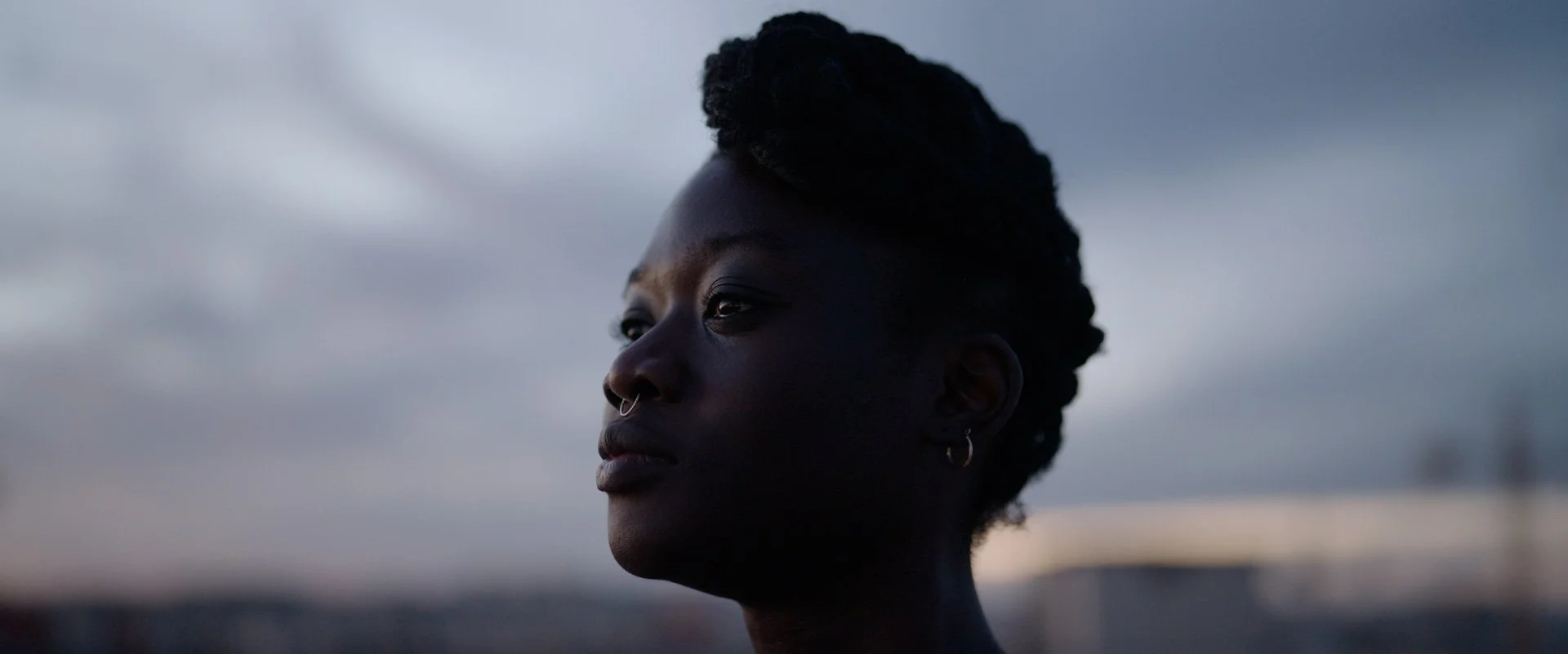
Sehiri: Well, for the other characters, for Marie, we had a priest with us in rehearsal and during the shooting, who was really close to her. Marie is not an archetype of a priest. She has her own background, her own personality, she's not representing something. She is who she is, but at the same time, it was important during the preaching that we had a pastor with us that also can relate. And I've met a lot of warm students like Jolie, so that was an easy character to write. Not easy, it's never easy, but it was based on many students that I've spoken to. I even did a short documentary about Sub-Saharan student life in Tunisia back in 2016. So I had an idea of the character of Jolie.
And Naney, Naney was a big surprise, because it's her story. So that's why she feels so real, because it's based on her story. Not all of it; she has no relationship with Foued in real life. They are acting in that relationship, and she met Kenza at rehearsal, but it's her character. In the film, when she's asking questions that we wrote in the script, it was a question that she was asking herself while making the film. The questions she's asking at the end in the church, like, when will God make it happen? So it was really a mix of fiction and reality.
Ibrahim: That's one of my favorite things about this film, and also Under the Fig Trees, is how good you are with actors. I know Fig Trees features a lot of non-actors, and then Promised Sky has a mix of professional and first-time actors. And you're credited as the casting director for this film. What is your relationship to the casting process? How do you know that someone is the right person for a role?
Sehiri: It's the same thing for the Fig Trees, I casted all the characters of that film. It's very important that I do, because when I work with my DP, I want her to film them [as] if I had the camera myself. I take a lot of time to understand more of their own world. I spend a lot of time, like, one year and two years, in the community to understand how they — also, I was a journalist, so maybe because I have this investigative way of working, investigating as an emotional process, not as just, you know, numbers or statistics or whatever. And then, I think it's something instinctive. I see something in someone that I found interesting to build on. And then during the shooting, there's a lot of trust between me and the actors. We have the tendency to say that art needs to come from something hard in your life, and I try to do the opposite. I try to create art through something beautiful, not through suffering, but through love, and trust, and being comfortable, as much as we can.
Ibrahim: That's one of the things that I wanted to ask you about: even though the actors, a lot of them are first-time actors, they feel so comfortable in front of the camera, and it's clear that they have a lot of trust in you, to the point where sometimes the dialogue feels so natural that I can't believe it's scripted. And a lot of your shots are close-up shots, a lot of them are long takes, so the fact that they are first-time actors makes it all the more remarkable how you're able to achieve such emotion. How scripted is the film from scene to scene? And then how do you direct the actors so that they are comfortable?
Sehiri: It depends on which scene. Some scenes of Marie's scene were scripted, and she had to learn the text. But then, of course she can arrange some things that she doesn't feel comfortable with. A lot of Jolie's scenes were improvised, but we did a lot of rehearsal, so it was not 100% improvised. I tell her what I want from the scene, I tell her some sentences I want, but I'm not so strict with dialogue. So, it depends on whom. Like Marie, she's a big actress in France, I know if I give her a text, she'll be able to [tackle it]. So it really depends on each person’s capacity, you know, but I love improvisation. I love that, because I feel like we're still searching for something while we are shooting it. So it's always surprising for all of us, and it can be scary for the actors to do that. I remember that Laetitia Ky — Jolie — was, in the beginning, a bit lost. But it's through rehearsal before shooting that she got it.
And for Naney, I think she had only the text of the church scene. Other than that, it was improvised. But it's improvised in such a prepared place. We've spent one year together, so I know her type of jokes, I know how she reacts. We went out together, we went to restaurants, we went to the park, I went to her house, so I got to know her, and to see where she's good at, what can bring emotions from her, and all these things. So then, when we work on the scene, I kind of guide it, but then it's all their talent. They have so much talent that they are able to have fun and improvise some of the best dialogues of the film, like, the scene where Naney talked to Foued in the coffee shop. I'm telling them what to say when we're shooting it. But I don't tell them so much in advance, so they don't have to think so much about it. If they have a reaction, it's in the moment.
Ibrahim: The relationship between those two characters is also fascinating to me, because there's not a lot of Arabs in the film. It takes place in Tunisia, but it's mostly the story of these migrants. And to be honest, living in Libya, there are so many migrants here. Of course, there's a difference between Libya and Tunis, Libya is a much more socially conservative country. But there are so many African migrants here working as cleaners, or as maids, or sometimes they are on the street asking for money and things like that. And I don't know if you can maybe share your experiences with this — is that when I'm around other Arabs, sometimes they feel very comfortable being blatantly racist about these people, and feeding into a lot of harmful and damaging stereotypes about these migrants. Is that something you've experienced as well, and if so, did that feed into your making of this film?
Sehiri: But did you feel it was mentioned in the film?
Ibrahim: No, I didn't. Not that much.
Sehiri: Not even with the owner of the house?
Ibrahim: Yes, but I mean it wasn't the focus.
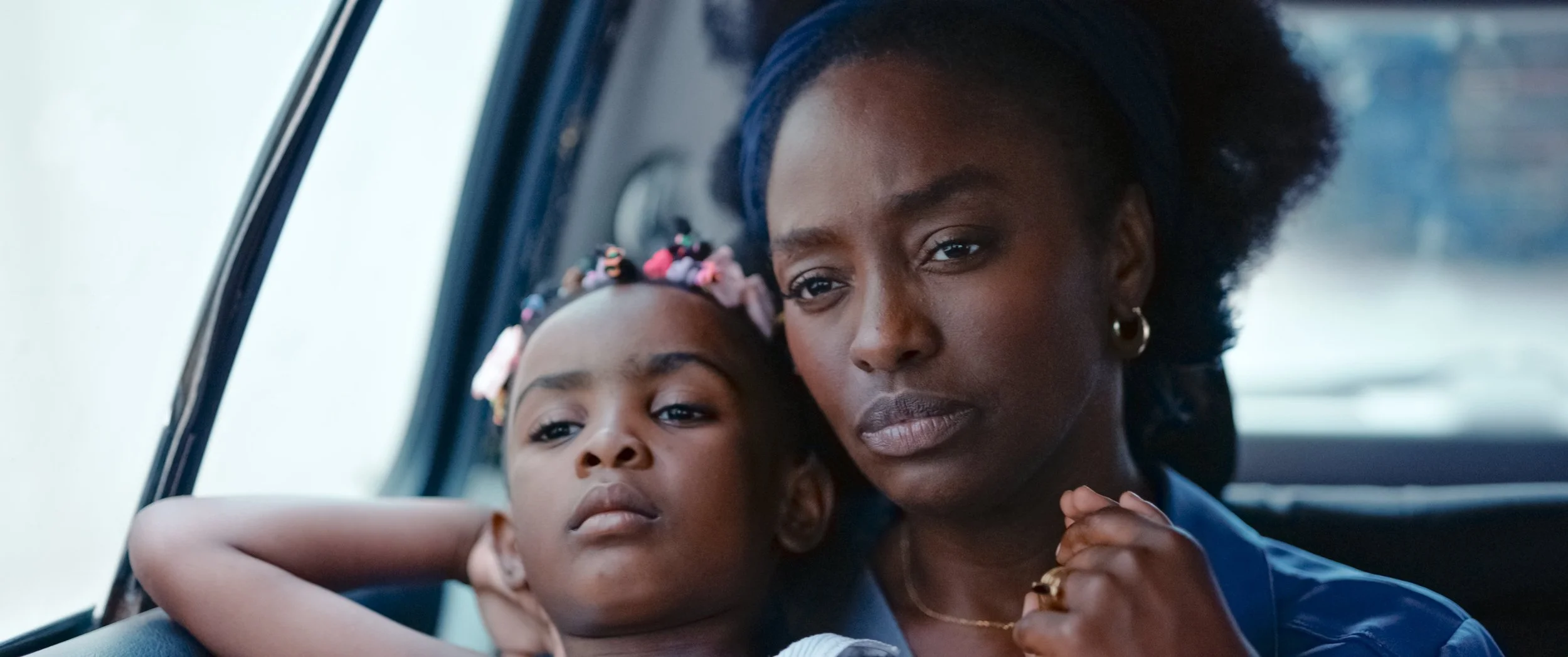
Sehiri: It was not the focus, because the focus is their perspective. First of all, there's not a lot of Tunisians, because there's not a lot of Tunisians in their lives. And if you see migrants in Libya, did you see them with Libyans, other than working? Do you see them spending time with Libyans?
Ibrahim: Nope.
Sehiri: So that's the idea. For me, we are entering their bubble, and in their bubble, there's no Tunisians, other than the owner of the house. Of course, you can imagine that people from the church work in houses. We didn't mention it, but for me, it was obvious, and I didn't want to also show another image of them as workers in houses, or babysitting. It’s images in cinema that we have seen, and I don't want to put up this image again. So that's why I wanted to kind of change it. But I'm not denying it, it's happening.
And racism, I think for me it was important that — if it's the focus, then it's become a statement, a statement film, and I didn't want to…it was too easy to do that. For me, it's there enough to understand: the fact that they cannot grab a taxi, the fact that the owner doesn't want to take the chocolate from her, things here and there that are part of their lives. Also, the fact that [Jolie] is being arrested by the police while she has a permit. So this is state racism. Of course, it could be harder than this. Of course, some of them went through much, much harder than what I'm showing in the film, but also, as you are Libyan, you may know that the film is happening in Tunis, in the capital, which is more modern, more open-minded. Marie seems to have more money than many migrants, and they are not the ones who go through Libya, or through the desert, or through the South. But it's another type of migration. We don't see this type of migrants, like, who are settled down, they try to make their life, they study, they do business, they go to church, you know? And they're not just begging for money, or they're not just waiting to cross to the Mediterranean Sea. This was also more of a choice.
Ibrahim: Yes, and as you said, their lives don't intersect with the migrants, and personally when I see these people from afar, I always wonder, what is their internal life? Like, how did they get here? Do they have dreams? What do they want to do? I specifically want to ask about Kenza, the child character in the film. She's such a precious part of the story. This film is already humanizing this frequently dehumanized group of people, but she is a reminder that they're often put in these positions because of impossible circumstances. What does she represent in the film?
Sehiri: She's representing the whole traumatic situation of migrants, the political decision of Europe to put pressure on North Africa and Tunisia, Libya, Morocco, Algeria, to stop migration. She's the real victim, I mean, all of them are, but she's symbolic of the naufrage, the sinking boat, in different ways. The real boat, but also the sinking boat, [as in] human issues today, political decisions that have direct impact on people's lives. She's the trauma, even though she doesn't look like it, because she's fun, and she's a child. The ending scene with her is showing this trauma.
And actually, it's also based on people I talked to from Libya. I remember I worked on a documentary about rape, male rape, just after, you know, the Libyan's uprising. And I remember they used to want to sleep after they talked about it. They had to shut down. I started to research the fact that, you know, sleeping during a moment of trauma is a way to shut down, and this is what I saw from Kenza. The whole film, she's there, around. She finds a family, but at the same time, she's so lonely. [They’re] not her mothers. Each one of them could be a mother to her. But that's the drama, that's the real drama of the film, is Kenza. Kenza means treasure, as you know. And at the end of the film, she'd shut down sleeping, because it's too much for her to hear again, that she's going to be out.
Ibrahim: That just made me so sad!
Sehiri: Yeah, I know, but for me, that's why I said when people tell me the film is not so harsh enough on what they were going through, I feel like it's not harsh in what we’re used to seeing, like, violence, blood, and everything. But if you see Kenza's story, for me, it's so dramatic.
Ibrahim: And especially because the film ends in kind of an open-ended way we're not sure what's going to happen to them. We're not sure what's going to happen to this little girl. Her life could go worse, or better, or we don't know what's going to happen to them.
Sehiri: Yeah, because it's fragmented, that's the real life of migrants. They have different lives. This is the life they had at that moment in the film, and they probably will have another life completely different, even maybe another identity, you know. Like Marie, she used to be called Aminata. So, for me, it's symbolic of the multiple identities that they go through on their journey.
Ibrahim: You talked a few times about your background in journalism and documentaries. Obviously, your films feel almost like docu-fiction. How much has that background influenced your fiction filmmaking? What is something that you always take in with you when you're trying to capture fiction?
Sehiri: Yeah, I think it's influenced a lot. It's part of my filmmaker DNA to do documentaries. And also in terms of journalism…philosophically, it's trying to find a certain truth. I say philosophically, because truth, that's a big question, what is truth? But it has certain ethics, I feel, documentaries. You have to deal with what life is bringing you, but you also have to re-question your own point of view all the time. Because you're not building from A to Z something fictional, you are interacting all the time with your story, the people, yourself, so you have to question your own point of view all the time.
Ibrahim: One last question: what is something that you want audiences to take away from this film?
Sehiri: Well, of course, new faces, hopefully. Beauty, all the time. I love beauty, I think there's beauty everywhere, and there's a lot of beauty in human spirits. Of course, to change their perspective on migration, like, to kind of stop thinking that everyone is just wanting to replace the DNA of whoever, all these cliches. To question our own self as a mirror, specifically to Tunisians. As they are migrants themselves. For me, one of the reasons was to make a film for Tunisians to watch. Like you said, people you see every day, but you don't know what's inside their house, what's happening. People that could be your friends, you know, but they are not your friend because you have a certain point of view, or because there's media, or political speeches, and xenophobia, and all of that. And of course, the vitality. The vitality and how inspiring those characters can be to any woman in the world. As the film is finishing on them, you know, still walking, still going, still doing, like, probably doing something, and with a lot of energy. And I think it's this energy that I wanted to fill the film with.
Promised Sky hit theaters on June 12, 2026. Find a local screening near you.