
The Weight of the Critic: A Conversation with David Ehrlich
If you’ve spent any time on Letterboxd, film Twitter, or the more obsessive corners of movie social media, you’ve likely come across some of David Ehrlich’s work. He is the film critic that people love to read, love to hate, and most importantly, cannot ignore. He is also the architect of a meticulously edited, viral year-end video essay that raises thousands of dollars for charity. At IndieWire, where he works as Head Film Critic and Reviews Editor, he spends most of his year writing first-wave reviews as films hit festivals and theatrical release. He’s often the first voice to start the conversation about a film before the rest of the world has even seen a trailer, introducing movies to readers who are hearing about them critically for the first time.
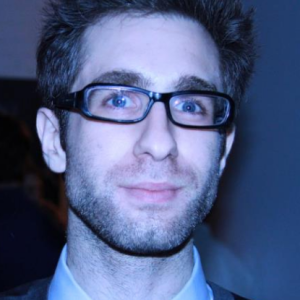
Ehrlich is aware of the pressure that comes with being first. “You know that a year from now, you’ll look back, and this review might seem naïve in some ways,” he says, “because there are so many levels of discourse and focused thought that have not happened yet.” But being first is also a huge advantage in a world where AI increasingly threatens to automate creative work. When Ehrlich writes first-wave reviews, those films haven’t been reviewed before. “There’s simply not the data that the AI would need to scrape,” he says. “The AI doesn’t know the plot of the movie. It doesn’t know the general sentiment about how the movie was received.” Six hours later, AI could generate a review. When he’s writing, it can’t.
But critics won’t survive the AI era just because they can beat the algorithm to publish. As the technology continues to be evolved and used to cut corners, being first won’t be enough. The only thing that will matter is whether you can do something AI fundamentally cannot and bring a subjective human perspective to how you engage with art. This is something Ehrlich actively tries to do every time he reviews a film. As a professional critic, he has to thread a needle between the trade obligation and his own lived experience. On one hand, there’s the basic responsibility of answering: was it good, was it bad, what’s it about, who’s in it? On the other, there’s the work of bringing his own experience as a human viewer to bear on art. “I’m often trying too hard to find that balance,” he says. “I’m trying too hard sometimes to write something interesting about something that I did not find interesting myself, which is the hardest part of the job by far.” In his effort to avoid just coasting, “sometimes it ends up well, but oftentimes, it blows up in your face.”
That attempt, the messy human effort to articulate something true about art, is what distinguishes criticism from content generation. Ehrlich describes his strongest footing as a critic as the moment when “the movie is sort of a prompt to bring something out of me, and we’re meeting in the middle.” He might not be writing in the first person or explicitly discussing his lived experience, but “you can sort of read between the lines and see that I’m speaking from a place of something that I at least think I understand.” Meeting a film in the middle is what AI cannot replicate because AI has no middle to meet from, no subjective human life to bring to bear on art.
In that pursuit of humanity, films can do something other forms of discourse cannot. AI is incapable of the moral courage or political nuance required to frame cinema as a tool for human rights. Ehrlich points to Palestine as the clearest recent example. “It was the films that were made about Palestine and came out of Palestine over the last three years that really helped drive public opinion and sentiment, at least in the media ecosystem, towards understanding the barbarity of the genocide and the extent to which it was being conducted over there.” Before the shift in public discourse late in 2023, Palestinian media content often faced institutional hostility or pre-emptive silencing. Even No Other Land, which is now recognized as one of the most significant films to emerge from Palestine in decades, navigated a volatile path. While it eventually won the Oscar for Best Documentary at the 2025 Academy Awards, it was met with plenty of resistance. When it premiered at the Berlin Film Festival early in 2024, the filmmakers' speeches calling for equality were met with immediate condemnation from German politicians. But things have been changing recently. “Last year, there were a handful of films that centered Palestinian stories and called the genocide out for what it is that had a less hostile reaction, and that were received better festival play.”
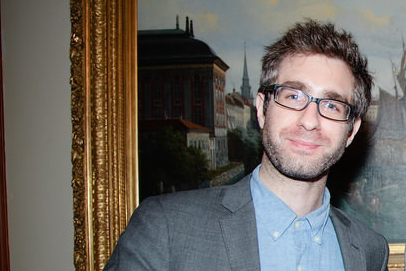
How we talk about those films becomes crucial in preserving what cinema can do. Professional film criticism matters here, even as anyone can post opinions online. “The appetite for opinion is an enduring human trait,” in his words. The difference is people who are entrusted with thinking deeply about films, with setting the tone for conversations, with defining the terms for how we talk about them. “If you did not have a class of people who were entrusted with thinking deeply about these things, I do think that the nature and the complexion of the conversation would suffer even worse than it has already.”
He sees critics as curators who matter more now, not less, in the current landscape. “Because of the glut of content out there, film critics play a more important role than ever in focusing people’s attention.” The sheer volume of things available means accessibility doesn’t make critics less valuable—it makes them more so. “Now we live in a world where anyone can be a critic online publicly, on Letterboxd and whatnot,” Ehrlich says. “And yet, I haven’t felt that the privacy of critics’ voices have been diminished by that, because it all feels like part of a conversation that is more supercharged than ever.” Ehrlich pushes back on the idea that movies becoming part of larger media discourse is inherently bad. “That’s what art is supposed to do in a way,” he says. “I mean, maybe not always for the benefit of someone’s personal branding, but this is just the modern form of it.” The problem isn’t people talking about films online. The problem is when the talking replaces the watching, when discourse becomes more important than experience itself.
Theaters create conditions where you can engage with discomfort and ambiguity rather than immediately converting everything into content. “When you are so thoroughly making yourself present, so completely making yourself present in an experience, that does sort of confer a thinking in the moment,” Ehrlich says, “not extracting out of that about what am I going to say about this on Letterboxd.” He defends the theatrical experience with a certain sanctity. “I am such an adamant defender of the theatrical experience, and think of it with a certain sanctity, because it is antithetical to all of that. It’s a place designed to reinforce and focus the privacy of the experience that you’re having.”
Ehrlich has been at IndieWire for ten years at a website that gives him room to write long when that comes naturally to him. “It is easier for me to write 1,600 words about a movie than it is to write 400.” He knows people would say “this is a great flaw in my writing that it is not succinct.” But he leans into it anyway, betting on something fundamental about how people respond to criticism. “The hopefully undeniable humanity of what I’m saying, whether or not you think it’s stupid or right or wrong, that there’s a clearly recognizable person behind it, is similar to the way that we find value in the art itself.”
The work can make you jaded, though. It’s an occupational hazard expected from the sheer volume of content a professional critic is required to digest. “I think that happens to me in an even more pronounced way than it does to a lot of my colleagues.” His job demands a lot of eye rolling and complaining and criticizing. “I relish the opportunities to rave about movies that I love, but I do spend most of my time with more qualified reactions to things.” His year-end video essays are partly how he fights that jadedness. He started making them in 2011 to teach himself editing software. “I am very ordered in my thinking, inflexibly sometimes, and I found a real cathartic pleasure in moving things around and creating these little patterns that no one else would ever see.” The videos force him to re-engage with what he loves about movies in a visceral way. “Trying to crystallize the broadest emotional response that I have to movies does help me, even at my most jaded, sort of re-engage with what I love about movies.” At the end of a year spent mostly with qualified reactions, “I think it is healthy for me to focus on the positive in some way.”
His relationship with movies has changed as he’s gotten older, which shapes how he thinks about the work. “The stew of your life becomes a little bit fuller in a way that a movie can’t save you in the way that it maybe used to, or explain things to me, or illuminate life for me in the way that it used to.” At this stage of his life, with two children and a full-time job, he can only justify the colossal amount of time the videos take because he uses them to drive attention and money toward causes he cares about. “I wouldn’t be able to waste the colossal amount of time that I do on these videos if I weren’t able to marshal that effort towards a good cause.”
Ehrlich is defending through his work the possibility of sustained attention in a landscape designed to fracture it. The critic’s job, as he practices it, is refusing optimization in favor of something more valuable. This means writing long-form content when a reel would get more clicks or finding ways to meet films in the middle when meeting anything in the middle has become a radical act. It means championing the insistence that films deserve the kind of attention that has become nearly impossible to give them, that human experience brought to bear on art matters more than pattern recognition, that the privacy of watching something and letting it work on you remains worth defending even when everything around you is designed to make that impossible.