
The Dark Side of Acting: An Interview with Emily Robinson, Director of Ugly Cry
Understanding one’s own physical form is already difficult. Having that understanding graded by casting directors before you can even articulate an identity is probably destabilizing. As a child actress, Emily Robinson spent formative years being evaluated her on a physical level and absorbing the expectations of the entertainment industry as a baseline for her own self-image. “My first memories of being sexualized were not actually being sexualized—they were getting audition breakdowns that were, ‘Oh, she’s sexy,’ or ‘She’s flirting,’ or ‘is voluptuous. Because of that, my understanding of self and body and performance are so informed by this world.”
Emily Robinson, the writer, director, and star of Ugly Cry, is describing an acute hyper-visibility that feel specific to the occupational hazards of being a child actor. However, her words also touch on something more universal, perhaps grounded in a world shaped by the internet. Robinson sees shades of her highly specific Hollywood upbringing in the anxieties of an entirely online generation. “More and more as a culture, young people, whether they’re in entertainment or not, can feel that way with the internet, with seeing other people, seeing how we should be looking.”
The following interview has been edited for clarity.
Ali El-Sadany: Looking at your professional life, you've been the younger version of someone else, the teenage stand-in for adult memories and adult trauma. Now you created a film where you get to be the person who tells her own story, spiraling on your own terms. Do you feel like you finally aged into that role, or does it feel like something different?
Emily Robinson: By nature of writing the script, I wrote myself as this protagonist. Maybe there's something about aging into it, and maybe there's something about needing to take the space to tell the story. I'd been thinking a lot about growing up in this industry, where my understanding of self and body was completely informed by being an actor. My first memories of being sexualized came through audition breakdowns. She's sexy. She's flirting. She's voluptuous. And I was a young teen. Because of that, my sense of self and body and performativity is so informed by this world. More and more as a culture, young people, whether they're in entertainment or not, can feel that way with the internet. Seeing other people, seeing how we should be looking, how I want to be looking, how I can make myself look. These are all things I've been thinking about a lot. It didn't come from a place of wanting to position myself as anything. This is something I feel, and I feel like I need to express it and share it. I don't know that I hope other people relate. It would be nice if no one had these issues. But I feel that other people will relate, because this is the culture we live in right now.
AE: I've been fortunate enough not to experience it as aggressively, and it's still clear that the film is true to a universal lived experience. In your statement, the thing that caught me was learning to objectify yourself before you learn to read, which is devastating on the page. It also reads like clarity that comes out of therapy, or writing, or a mix of both. Your career is interesting to me because you've found so many outlets, whether it's short films, acting, or publishing your book. When did you find the distance to see what was actually happening to you as a kid, and did writing this film give you new breakthroughs, or confirm what you already knew?
ER: I was a child actor, and then I took a gap year before I went to college. College was absolutely the thing that broke me in ways that entertainment never could. It gave me some of the most challenging relationships I've ever had, and also some of the best friendships of my life, and some of the most rewarding academic relationships as well. It broke me in a way that forced a healing and an introspection afterwards, and it allowed me to look at my childhood more objectively, as well as look at some of the things that didn't occur until college. That's when I wrote my book, which was very much a processing, and in process. It's the most in-process writing I have done, which is maybe only possible with prose. Feature scripts need to be concise and targeted. Prose is more forgiving. By the time I wrote Ugly Cry, I had already done a lot of the processing, and I knew the things I wanted to explore. I wanted to use this amalgamation of maybe thriller, maybe body horror, maybe comedy to explore these things that at one point were a lot more urgent and spiky in my body.
AE: I resonate with a lot of that. The reason I write about film is because writing about it helps me understand whatever I'm going through. You've circled so many mediums, short films, a novel, and now body horror, and it feels like they all circle the same wound. Maybe what it means to have a body that other people look at and want things from. It feels like an intense subject, and like a form of therapy through the work. What were your goals for yourself in making Ugly Cry, and then for other people?
ER: It's a much more extreme version of any experience of entertainment that I've gone through, on purpose. Structurally, it would be deeply concerning if this was my exact lived experience. One of the things I really wanted to represent was the toxic competitive dynamics that come up, especially when you're new to the industry, or new to these hyper-competitive creative worlds. It's so important to have creative community, and it's so important not to pit yourself against each other, because the world already does that. So I wanted to depict how that dynamic can turn toxic, and I wanted the audience to feel pain whenever the characters go against each other, to shed light on it. As a child I experienced that more directly, where you have stage moms doing pitchy things, or you experience waiting room dynamics that don't quite exist anymore, and those can make it easier to feel the pangs of jealousy and comparison. I hope that people who watch the film use it as an opportunity to introspect on the way they engage with their people.
The meditation in the film is based on a true story. I did this meditation thing in college that was incredible. You close your eyes, and it's a visualization, and you think of three people who love you and only want the best for you. I'm very lucky, and I thought of three people who love me and only want the best for me. It was during the pandemic, so we were all on Zoom when we did it, and we were crying after. These were people who'd never met in person, not my college friends, just people we were paired up with, and we were all on Zoom sobbing, talking about how beautiful and moving the experience was. And I don't meditate. I'm not a meditator. I've tried. My brain's too non-stop for that. It was really, really special, and I was telling a friend about it who also works in entertainment, on a different side of it, and they said, oh, it's so depressing, I can't think of three people. This city can make you feel that way sometimes. The internet can make us feel that way sometimes. The world right now can make us feel that way sometimes, and that is sad. We need to work on in-person third spaces, human connection, and caring for each other.
AE: Talk to me about those three people. Where did they come in when you were making the film? What influence did they have on your journey?
ER: My mom, my partner, my fiancé. My mom is the first person who reads all of my writing. My fiancé, I relocated him when we were filming, all sorts of crazy things. The way these people were most helpful to me during the process is that they provided real-life stability and support and normalcy. Film and so many industries like this are all ups and downs, and it's so important and so hard sometimes to remember that you have to protect your daily life, and your rituals and your relationships and the things that are normal. You have to create a life that makes you feel grounded and happy and fulfilled independently. Then the art and the creation and the work is a happy cherry on the cake.
AE: I want to flag that a lot of these questions are probing, and I'm not publishing the recording. I'm pulling quotes and writing around them. If anything is too much, please say so. No pressure at all. One of the shows you worked on, Transparent, was very much about building trust and handing power to the people around you, and that contrasts with what your film is, which is about an industry that punishes vulnerability and demands perfection. When you were directing, which impulse won out? Creating safety, or pushing yourself and everyone else to the dark places to get the performances?
ER: The reason I wanted to start directing, honestly, was working on Transparent. I've been on a lot of sets that don't feel creative, and a lot of sets that do, and when you're on a set that feels creative, it is so exciting and fun, and it makes you want to go places and try things, from a place of play and collaboration. The reason I work in film is because I don't want to be sitting alone in a room writing on my own all the time. It's fun to do that sometimes, and it is so much more fun to have an idea and then watch a room full of other people elevate it and make it way more special. My goal here was to create a container where we could bracket out time and empower everyone to bring their art and elevate it. We had limitations on time and resources, as every film does, and I was thinking a lot about how to make that possible when I wasn't going to exist only as a director to the other actors. I couldn't exclusively operate from the space of providing directorial gifts to the cast. I thought about that a lot. I never wanted to operate from a place of pushing and going harder, because in my experience that is not how special moments and discoveries are found. It was really about giving us the time we could have, and planning to create space and moments even when time was tight.
AE: It's cool to me that you were a child actor who went writer to director, because in my head it's a very specific trajectory of accumulating power. Being directed as a child, when you don't have much agency, to controlling the narrative, to controlling the full frame and the end result. Now you've made a directorial debut about someone who loses control trying to be perfect. Is there freedom in directing, or is it a different kind of performance and a different kind of pressure?
ER: What's beautiful about film is that it's only what can be done in a moment in time. You can have all of these plans, and then the light is not working with you, or it's raining one day, or there's a crazy sound next door. There are so many things you cannot control. I certainly have perfectionist tendencies, and part of that was probably a result of being in film and wanting some sense of control. What I really love about being on set is that you have to give it all up. You have to come in with a plan and then be ready to pivot, and if you let that get to you, you're in trouble, because it's going to waste time. It is all about being in the moment and reacting to what is happening, and asking what we can make of it. Sometimes the most beautiful discoveries come out of constraints and boundaries. With writing, you can keep editing forever. With directing, what's nice is that you only have so many days to get it, and you only have a limited number of resources, as big as those resources are. You get to create the thing you can create at that time with those people. It's a moment in time. So I don't let the perfectionist tendencies get to me there. I think that would be very challenging. Of course I love test screenings, I love getting responses, I want it to be a film that people enjoy and I want to be proud of it, so to the best of my ability I'm going to put my whole heart and soul into it. And there comes a time where you have to release it.
AE: Talk to me about release, and not in the sense of releasing the film. This movie is a lot about crying. What's your relationship with crying, and how did the film change it?
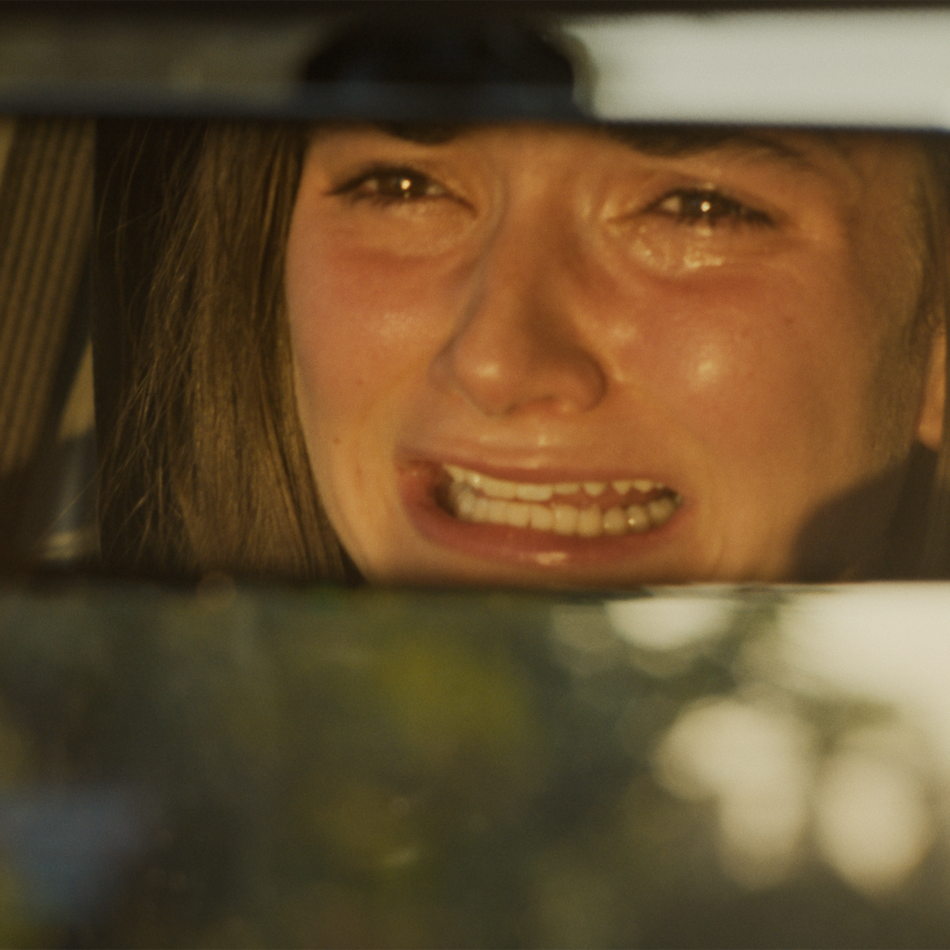
ER: I remember the first time I ever really thought about crying. I was ten years old, doing The Orphans' Home Cycle at Signature Theatre in New York, and there was an actress, Virginia Kull, who has an incredible cry. It was performed in repertory, so every third performance she'd have this big crying scene, and it was captivating and amazing, and after each show I'd say, you need to teach me to cry. And she'd say, no, you have to just go to acting school, you'll be fine. I was obsessed with her cry, because it was so earnest and red and vulnerable. I felt it in my bones. So I thought about it a lot. There are all these different methods people have, and I went to all these acting classes and tried all these different things, and for a period it was a thing I thought about constantly. I could get red, I could look, I could feel, and I didn't get tears. I don't know what changed, honestly. Maybe I stopped wearing contacts. One day I just started to be able to generate tears, and once I could, it became this thing where I did have an ugly cry. I view that I have an ugly cry. My mom viewed that I have an ugly cry, and she'll hate that I said that. But I have this thing I love to do, and it's been in a few projects, where there's a lot of snot, and it's not a snot bubble, though sometimes I can get a snot bubble going. I love getting a really juicy, disgusting cry. It feels very satisfying. Normally you section yourself off and get into the headspace, and when you're actually crying, you feel it too. You feel your eyes burning a little, you feel your nose start to go. There's something about being able to channel emotions, be aware of them, and then play with these intense emotions that makes it feel exciting and fun to me. For the film, I thought it was a perfect visual point of conversation, because to be judged in the moment when you are at your most present, at your most vulnerable, bearing your heart, and to be told that in that moment you are ugly, I thought was really devastating.
AE: Tell me more about your personal relationship with crying outside of the screen, and how the two inform each other.
ER: Outside of acting, I've become a really easy crier. I'll watch a bad movie and cry. My fiancé's sister has a dog that I'm obsessed with, and she's perfect, and I went to text a friend about how wonderful this dog is, because they're going to dog sit, and I started tearing up thinking about how wonderful this dog is. I'm going to tear up right now. I love this dog. I don't know if it's an age thing. Tears of joy, tears of whatever, it's become pretty accessible to me, in a way that sometimes is funny and sometimes is inconvenient.
AE: The scene where she's watching all the how-to-make-yourself-cry videos brought a chuckle out of me, because I'm the opposite. It takes me a while. I also loved the relationship between the character and her mother, two people who want the best for each other with a huge barrier in communication, which translates across a lot of relationships. What were the threads that resonated with you there?
ER: Mothers. The best, the hardest. There's something about a mother-daughter relationship that I will never get tired of writing and exploring the different sides of. I also love their relationship with the grandma, seeing the generations, each one frustrating the other when they want the same things and they want the best for each other. Her mom makes a comment about, is there anything else you could be doing, you're no spring chicken, you need to play the ingenue. That prompts her to go in for the Botox appointment, and then the mom at the end says, what did you do? Our words have power that we don't necessarily feel in the moment, in these relationships that are so important. Patience, and taking time with words, is something I still, and probably forever will be, working on. I wanted to show this complicated, loving, imperfect bond.
AE: What are some of the other relationships in the film that were informed by your life?
ER: The Maya role, to some extent. Luckily I wouldn't say I have a relationship like that now, and there are hints of things I felt, especially when I was more of a child actor. It was really special getting to play Delaney alongside Ryan Simpkins playing Maya. The two of us have known each other for over ten years. We audition for a lot of the same things, we've co-written something, we've known each other in a lot of capacities and have survived the industry together. We've commiserated, and been annoyed, and been in love with the industry. All of these things. We've worked on other films together. We've gone through it all. So getting to play that out more directly, in this meta way, was really special. Especially filming the scene at the pool, where they're having that conversation about meditation and who wants the best for you, amidst them both betraying each other in some ways. It felt weirdly cathartic for both of us, despite us not thinking it would feel any which way.
AE: Where did that catharsis come from?
ER: Sometimes when you are using words that are not your own, you're able to think about things that are related and different, that apply and don't. It was an acknowledgement of, we've been through a lot together. There's a line Ryan says, and now I'm going to forget the line that I wrote, but it's something like, I'm glad I'm in it with you. After that scene we both said, can we hug? It was this moment where I was really grateful that Ryan was in the movie with me, and that they'd agreed to do it. It felt like a beautiful moment.