
Kevin Hamedani on ‘The Saviors’ and the Evolution of Profiling
I'm Muslim, but I am also white-passing enough that I’ve been fortunate enough to never directly experience Islamophobia. I've really only ever consumed prejudice indirectly, through news headlines and other people’s stories. My relationship to that fear is paradoxical, tethered to my community but also connected to an awareness that the way I’m perceived often doesn’t reflect one of the biggest parts of my identity. In fact, the only thing outwardly Muslim about me is my name. Still, I’m very familiar with the hypervigilance that comes with Islamophobia, especially in the inherited unease of knowing your community's safety can be conditional.
That paradox of passing (being able to hide behind how people perceive me) feels distinctly similar to the political landscape of the San Francisco Bay Area, where I live. For a good chunk of my life, the stories of profiling I heard on the news always felt far from my bubble, like something that existed primarily in more conservative spaces. But the older I get, the more I experience the dissonance of living somewhere as politically "progressive" as San Francisco. In these spaces, a progressive identity becomes its own alibi. It gives us something to hide behind, making it easier to discard empathy when our own comfort is at stake.
Filmmaker Kevin Hamedani is no stranger to these ideas. Growing up in Seattle, another predominantly liberal city, he was surrounded mostly by white friends and also saw himself as just another white kid. But anti-Iranian sentiment had already been circling his family. When his father opened his first restaurant during the Iranian hostage crisis, he experienced vandalism and threats. Hamedani witnessed Islamophobia indirectly through his parents, who did their best to shield him from it. But because of how easily he moved through the world, their anxiety was never entirely his own. This dynamic shifted after 9/11, when Hamedani found his own relationship with that fear.
These lived experiences are foundational to Hamedani’s work, beginning with ZMD: Zombies of Mass Destruction, his 2009 horror-comedy about a community turning on its Muslim neighbors. Seventeen years later, he comes back to a lot of these same anxieties with The Saviors.
Obama-era cinema produced a deluge of films about the aftermath of 9/11 and the fragility of liberal allyship, most of which now read as artifacts of an outdated political moment. The Saviors offers something much more nuanced in its exploration of the way profiling becomes harder to recognize when it happens inside spaces that already consider themselves progressive. There is a type of profiling that comes openly from hatred, but there is another version that can seamlessly coexist with progressivism. It is easier to rationalize and perhaps more difficult to confront, precisely because the people participating in it completely fail to recognize it in themselves.
I spoke to Hamedani about his film, the blind spots that are baked into progressive politics, and the ways that profiling takes different forms across conservative and liberal spaces.
This conversation has been edited for clarity and length.
Ali El-Sadany: My family immigrated from Egypt, and I grew up pre-9/11, so there was already some understanding coming into this film. A lot of what you're exploring feels connected to things I've felt myself. You made ZMD: Zombies of Mass Destruction almost twenty years ago, and it's grounded in this very specific fear: the idea that a community can suddenly decide their neighbor is the terrorist. You come back to that idea across your work. How has your relationship with it evolved over your career and through this film?
Kevin Hamedani: These two films are cousins in a way.
The first movie, ZMD, dealt with my experiences post 9/11. Why am I suddenly being viewed as a danger in my own country? That was a shock and I had a bit of an identity crisis. I thought these were my friends and my neighbors, and now they're suddenly scared of me. Before 9/11 I had never experienced before. I was one of them. I was American. Now I was the other. It was strange, surreal and uncomfortable.
Then, soon after 9/11, I was on an airplane and I caught myself looking at a Middle Easterner, someone who looked just like me, as a potential terrorist. I created a narrative in my head that this passenger might, in fact, be a danger to us. When the irrational fear went away, I was filled with guilt. I was shocked.. How did I become so brainwashed? I was doing the same thing my neighbors were doing to me. I was judging someone because of the color of their skin. That experience was life-changing. So naturally I drew on it when I started making movies.
After ZMD , I put those themes to rest. I didn't think I'd ever go back to them, and I didn't really want to. Then, of course, there was the 2016 election and white nationalism became mainstream and that inspired me to return to these themes.
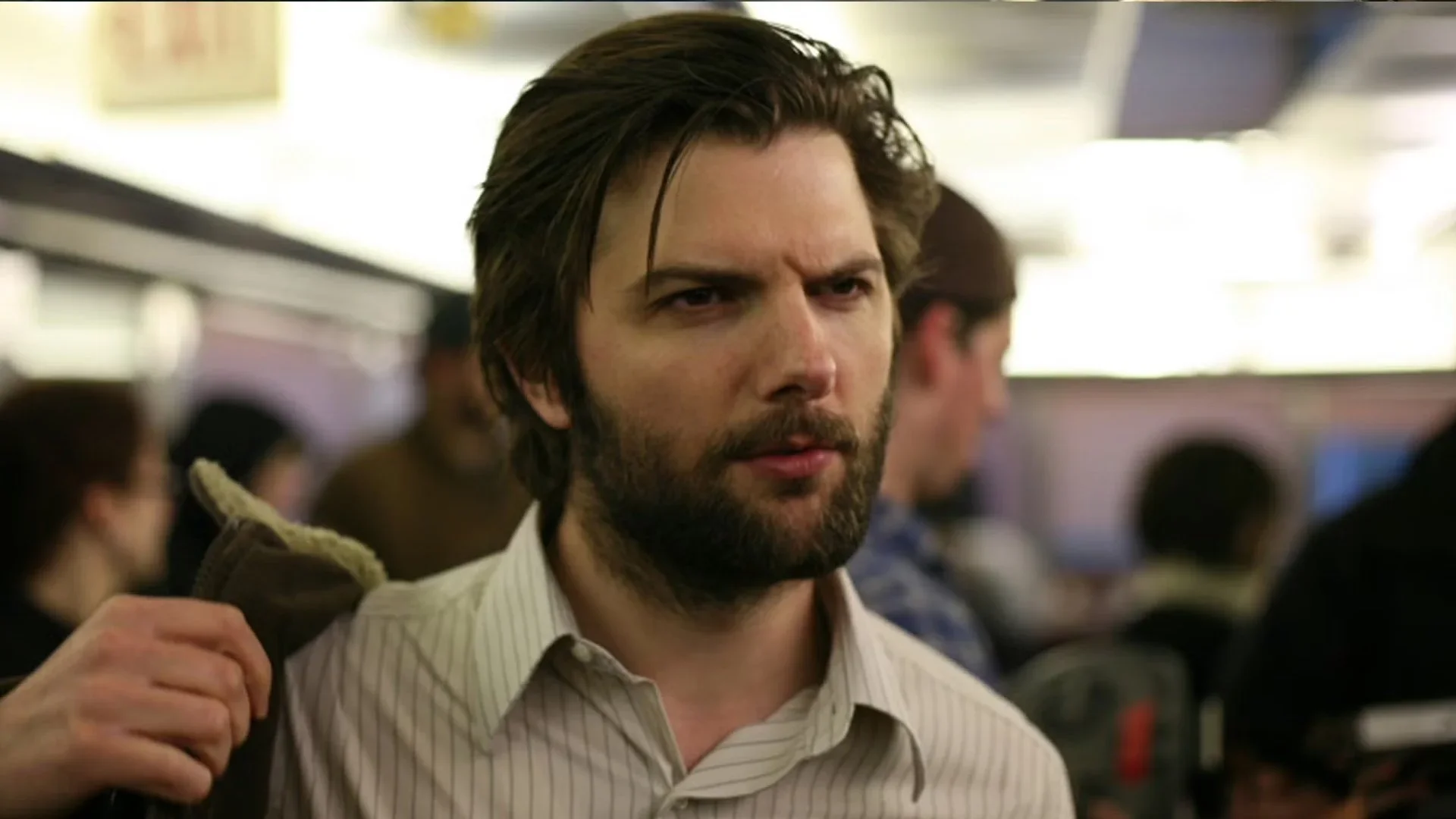
AE: The intricacies of profiling have evolved a lot since 9/11. Back then, it felt more black and white: if someone profiled you, it was rooted in racism, and that was clearly understood as wrong. Now there's a more complicated version of profiling that can come from the so-called woke side too. Sean and Kim are still profiling people, even though they're well-intentioned.
Part of me wants to say we've evolved since 9/11, but in some ways I think we've devolved. I live in San Francisco, which is politically very blue, and on paper we do a lot that I agree with. But when you actually talk to people who live here, many of them still vote and make decisions around their own comfort. Sometimes it feels easier to have a real conversation with someone in the Midwest who's considered racist but is actually willing to listen and think critically. How did that contradiction come into the movie, and how do you think about the dangers of profiling from both the so-called woke and non-woke sides?
KH: It comes down to the lizard brain and what you've been taught to be afraid of.
I grew up as liberal as they come, with very progressive parents, so when I caught myself having that knee-jerk reaction about that Middle Eastern man on that plane,I feel the need to shine a light on it. I’m not proud of having those thoughts but I’m glad I have a bit of self-awareness. The people who don't have that self-awareness are what I find fascinating and ultimately problematic for our culture.
I love Spike Lee. I love BlacKkKlansman, and I'm glad he's making films about white supremacists, the Tiki-torch douchebags. I love Sinners, my favorite film of last year, and the way it deals with the KKK. That's being addressed.
What I'm interested in now is this other racism, the quieter, smaller racism in the suburbs and in blue states —the kind you see in places like Seattle, where I grew up, LA, where I live now, or San Francisco, where you live. That quiet, hidden racism may not be as violent or as obviously dangerous as the Tiki-torch guys, but in some ways it may be more dangerous. I'm not sure. I do think it needs to be discussed, and that's what I'm trying to do with this film.
AE: You wrote this in 2017, and 2017 to 2026 is a long time. The dynamics around all of this have changed significantly. Are there parts of the film that you feel don't translate as accurately anymore, or is it more that the issues you were writing about in 2017 were never resolved and have just evolved into something else?
KH: Around 2021 or 2022, I thought the movie had expired.Then after the 2024 election, the movie suddenly felt even more relevant.
We were actually shooting on election night, and my great producer Nicky Weinstock, who's been part of the project from the very beginning, came up to me on set and said, "Today I'm very proud to be part of this film." His face was kind of white, and I was like, oh no, I know what that means.
It was the first election night of my life that I wasn't sitting in front of CNN watching the results come in,. Suddenly, it felt like the reasons for making the movie were relevant again, unfortunately.
Then when we premiered at SXSW, that was the weekend bombs were dropping on Iran. All I can say is that it feels frighteningly relevant to me.
AE: At SXSW, you were showing this film to a primarily white audience, and there's another layer to all of this because you're Iranian, especially given what's happening with Iran. There are Iranians rooting for the bombing of Iran and others who have a much more complicated relationship with it, and those divisions can get really confusing through the lens of this film.
I appreciated the way you use the headscarf because that's been such a central point of discussion for a lot of diaspora Iranians. I was recently in Vancouver, which has a huge Iranian population, during the World Cup, and there was so much divergence that one of the watch parties basically turned into a civil war over people's sentiments. Where does your own relationship with that Iranian and Muslim identity sit inside the film?
KH: I wasn’t raised religious, but the Muslim religion was present in my household. My grandma was deeply religious. She wore the headscarf and everything,
I was very Americanized. I'd be asking, why is she praying in that direction three times a day? Why is she covering her hair? So in terms of that appearance, I'm coming from Sean's point of view.
But Nazanin Boniadi, the actress, is Iranian, and she's a very outspoken, politically passionate person. She really helped create that role. She’s incredible and brought layers to it that didn’t exist in the script.
In terms of the Iranian response, my dad watched it. He's a very proud Iranian and he love it. We were also very lucky to get the support of the Muslim Public Affairs Council (MPAC) here in Los Angeles who watched the movie very early on.
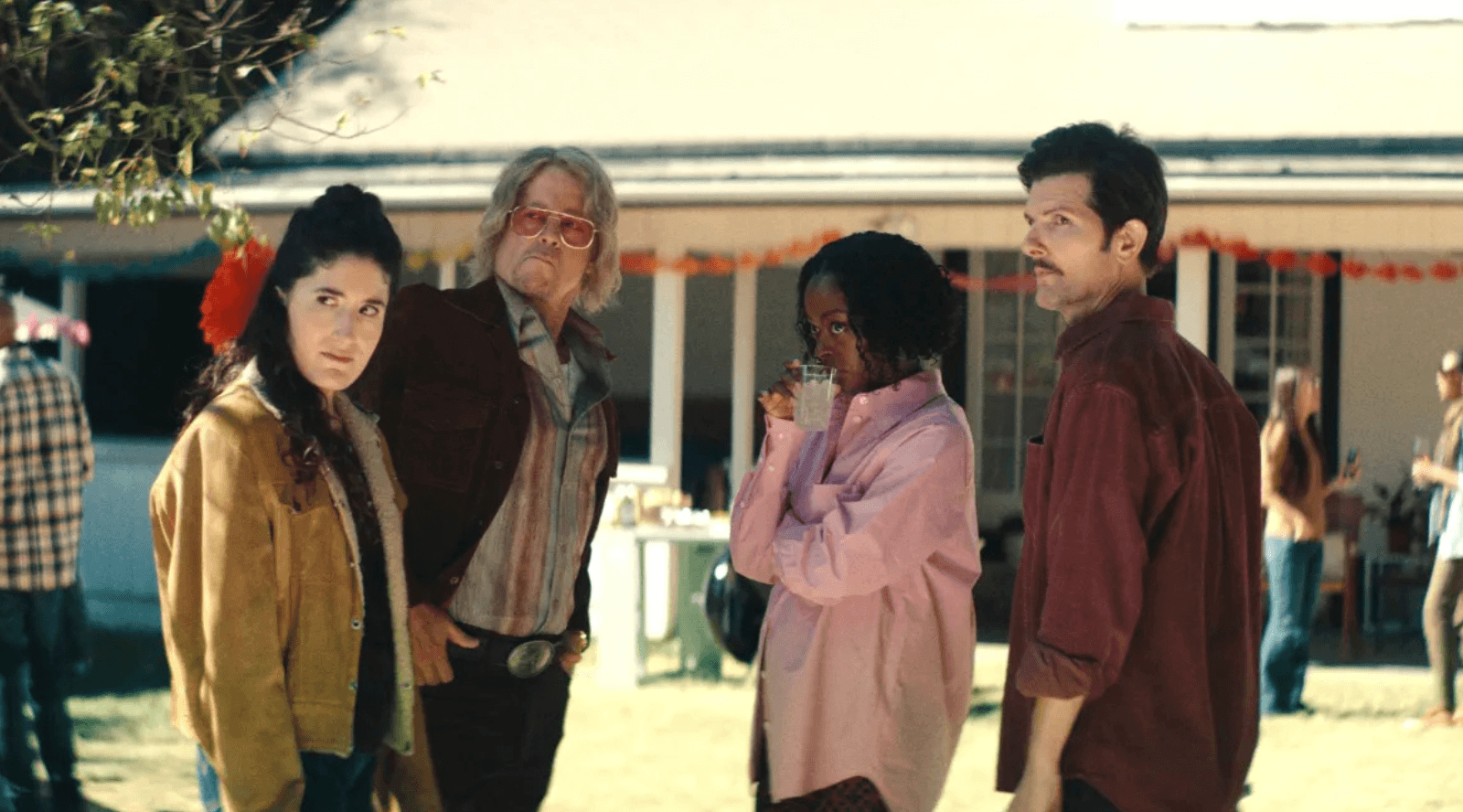
AE: You use comedy in a really interesting way. Humor opens the door to a lot of these internalized ideas differently, and it can be a way of sneaking some ugly things up on people. Where's the line for you between using a laugh to open someone up and allowing them to laugh their way out of confronting what the joke is actually about?
KH: I personally don't like watching films that are politically heavy and have a message. To me, that's unappealing and can feel a little condescending. One of my favorite films is Do the Right Thing. It's not a comedy, but it has comedic elements, and it's very fun despite the heaviness.
If you're not having fun, if there's no comedy at all, the message can push audiences away. So partly I do it for myself. I'm also a genre hound. I love genre, so it's my natural instinct to go there.
It's disarming. The comedy is disarming.
AE: I appreciate how much your family keeps turning up in your films, whether it's through the restaurant or through them actually coming out and participating. I'm curious about the paranoia running through this film. How much of that do you feel like you inherited from your family, and how much came from your own experiences?
KH: That's a really good question.
I definitely grew up with parents who were cautious about how other people viewed us. I wore a "Fuck Trump" shirt, and my dad saw it and said, don't go out wearing that.
But my parents worked so hard to make it here and find their path. My dad opened his first restaurant during the hostage crisis in the '80s, and people threw bricks through the restaurant window. He had to chase a guy out with a baseball bat. They experienced that in this country, and that fear had been there since I was a kid.
For a long time, I thought he was overreacting because everything was great when I was growing up. I felt like just another white kid. Then 9/11 happened and I started to see what he'd been talking about. It wasn't as bad as what he experienced, but I get it now.
AE: With Danielle Deadwyler's character, the fact that she's also a minority gives her a level of understanding that Adam Scott's character can't necessarily have. Where did that come from? Was it already there in the writing, or was it something Deadwyler helped shape? It would've been very easy to make the film more straightforward—people think Muslim equals scary—but there's so much shared subjugation across different minority groups that complicates the concept.
KH: In an early draftshe became African American because I was asking myself, how do I tell a story where even a brown person like me can fall victim to this kind of blind fear?
The solution was to make one of the two leads non-white. It could have been Hispanic, it could have been something else, but she became African American.
And Deadwyler is one of the greatest actresses alive. She's an unbelievable human being and an unbelievable actress, so I feel blessed. But yes, that part of the character was there very early on.
AE: I also appreciate the commitment from you and Adam Scott to being as ugly as possible on screen.
KH: He came on early, one of the first people to sign on, and he had the bravery to play a role like that.
We were very aligned politically. We had a lot of conversations about the world and politics, and we saw the problems in this country in a similar way. He knew what we were doing, he understood what the script was trying to do, and he fucking went for it. He’s an incredible actor but also a very brave actor. I can watch his performance over and over again.
AE: Did any of the actors you were talking to have reservations about the material? And did those conversations give you any more insight into where the industry sits politically and what people are nervous about touching?
KH: If they had nerves, they didn't tell me.
Every time something happened—whether it was a bombing in Iran, October 7th or Trump being re-elected—I was always thinking, are the actors going to run?
But every time, it only reaffirmed their commitment. I kept thinking, okay, I found the right team. Every new development seemed to reaffirm everyone's passion for making the film.
AE: Your film potentially has a lot of different audiences, especially if you're thinking about the people you'd actually like to see change or grow after watching it. Who is the ideal person you'd want to see this movie for it to have the most impact, and what conversation do you want them to have with themselves afterward? Is it someone on the "I didn't know Muslims were interesting" end of the spectrum, or are you really speaking more to that liberal profile we've been talking about?
KH: That's a good question.
I think it’s mainly for people like me, who grew up progressive but also have some blind spots. We all can find ourselves judging others for their race or religion. The point is to be self-aware not to beat yourself up over it. I’m hoping this movie speaks to those who have been quietly holding on to that same kind of guilt I had when I found myself scared of that Middle Eastern man on that plane so many years ago.