
The Question of Life After Loss: Lilian T. Mehrel on Dark Humour in ‘Honeyjoon’
Growing up in America as the daughter of Iranian immigrants, I have personally been all too familiar with the dissonance and inherent discomfort of it. Whether it’s the pull between assimilation and preserving culture, or the everpresent threat of more sanctions and bombs on our families, being part of this diaspora is markedly painful. At the same time, there is something fiercer and lighter that I see emerge in my relatives: the tenacity to live through pursuit of pleasure and resistance in the face of unimaginable cruelty. To quote my aunts responding after 4 months and 18 days without contact during the all-out war this year: “We’ve lived through wars and revolution. We’ll live through this too, azizam.”
My family immigrated from Tehran to the DC area in 1998, shortly after which I was born. Eight years later my father passed away from cancer and my mother was left to navigate a new country with little support. Soon I became a teenager and she and I butted heads constantly — I wanted miniskirts, she wanted modesty — yet we both knew ourselves as feminists. These circumstances set the stage for Honeyjoon being a movie seemingly tailor-cut for literally me.
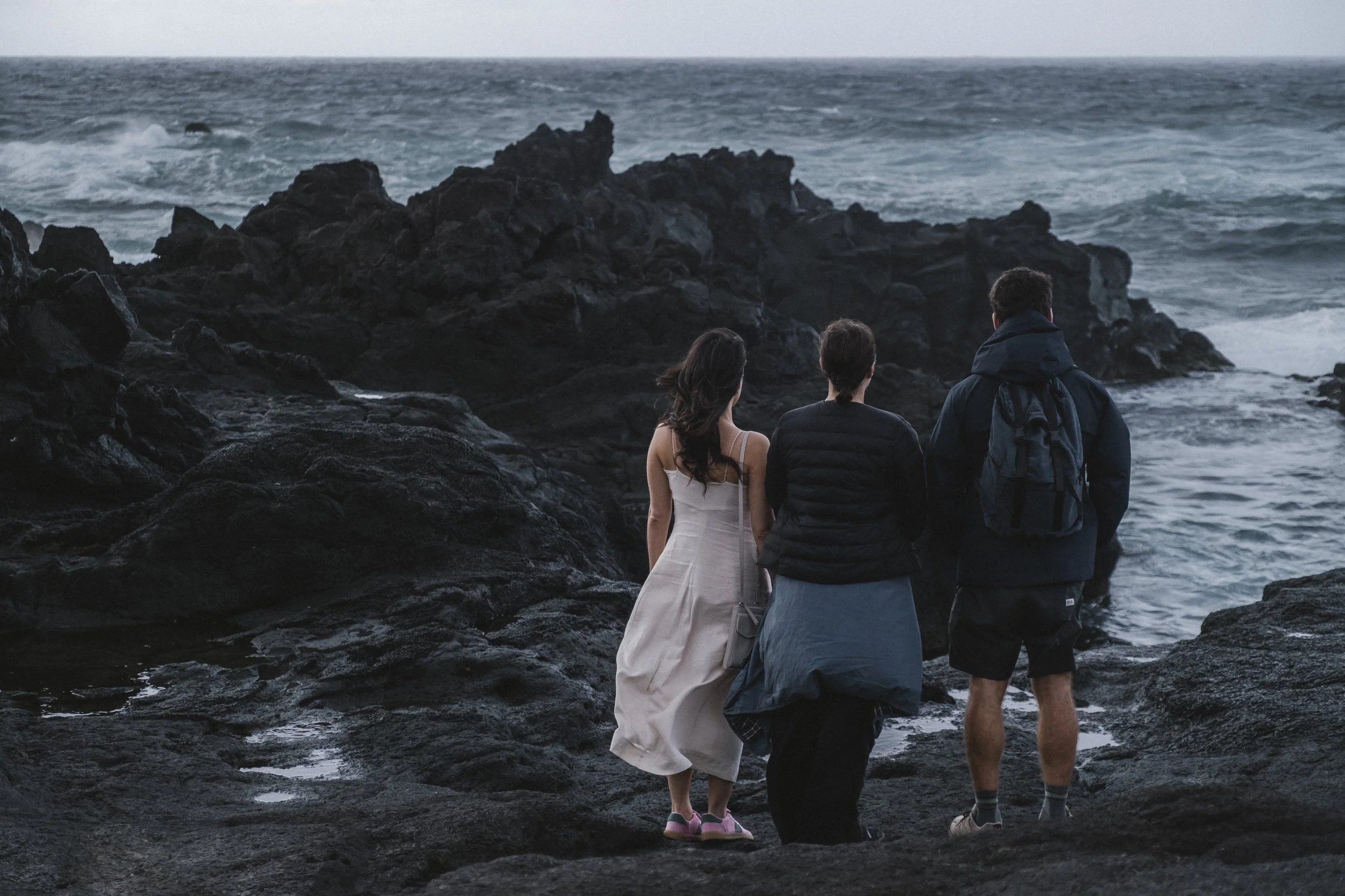
Yet, I think this is a movie with universal truths within it for everyone, encapsulated by unreal natural scenery and actors who are equal parts talented and attractive. There are just as many messages within wide pans of the sea glittering as there are in the instances of clarity and dark humor. Any of us will invariably go through grief; why not consider how terrible its pain and how great its beauty is?
This interview below has been shortened for brevity and clarity.
Darya Kharabi: I just want to say off the bat, I felt so seen on another level, both as someone who lost my father and also being Iranian-American, having had my fair share of disagreements with my mom. So thank you for that!
Lilian T. Mehrel: Wow, I'm very moved. Thank you for sharing that with me. I'm so sorry that you're also in the club.
I've just been amazed at how many people come up to me afterwards and share with me the different portals of connection. Sometimes it's grief, or cultural, or comedy; whatever the portal is, it just makes me so happy to connect with everyone.
DK: That’s so lovely! I think the tour guide was such a wonderful, philosophical underline between these two very, very different people. There's this really beautiful narrative of shared experiences of grief, whether it's that personal loss, family member, or even just the inherent grief of being part of the Iranian diaspora, knowing that you're kind of severed culturally.
But there's these black and white sorts of things too, these opposing perspectives. Was there a moment for you in the film that was your personal favorite little tearing point of the differing perspectives?
LTM: There's so much I wanted to talk about just with the themes you mentioned. But when you asked me about my favorite moment … Lately, I'm realizing my favorite moments are some specific dark humor moments.
I'm like, is the audience going to be along for that ride? Because these dark humor moments — without spoiling too much — on the surface the characters are talking about some really heavy topics related to things going on in Iran, or, you know, death. But what we're laughing at are these really human, baseline things that we can all connect to… I just kind of love that juxtaposition. And maybe it also relates to what you were talking about, where this whole film is duality. The characters, as you mentioned, are very different, because they're representations of the yin-yang in how they live with grief, and how they live. And that duality is present in the themes of the film, as João would say, surfing the light and dark waves of life… and in the visuals of the film, too. It's just everywhere. So the dark humor is like a perfect encapsulation of that.
There are two moments in particular, I'm thinking of one of them, for example, when they're starting the tour. And June has just asked her mom not to talk about some controversial things or some heavy topics. And as soon as they get in the tour guide's jeep, that's exactly what happens. The look on June's face is a look we can all relate to. So people are laughing so hard in that moment, while we're hearing about horrible things happening. And I just thought that's such a perfect example of what dark humor is.
DK: Going on theme with dark humor, there is also another level of humor that comes with being Iranian in a way. Not to say that we are comedically superior, but more that dark humor can be built as a reaction to trauma.
LTM: Totally. Hearing you talk about it for the first time just crystallized for me. Because like you said, part of the experience of Lela is that she has lost not just her husband, she also lost her country a long time ago. And that loss is like always with her and coming up especially now because of her latest loss and because of what's going on there.
You're dealing with grief comedy on multiple levels. It's personal grief, wider grief… and dark comedy which creates a crack in the illusions that we go about our everyday life with. But then these little cracks happen and you see through it and you see to the heart of humans and life and realness and it kind of undoes us in a beautiful way.
DK: Yeah, it’s like an absurdist reaction to nihilism or something where it's like, shit sucks. Let's go laugh about it.
LTM: Like, yes, I think that if we had to explain dark humor, I think that is perfect.
DK: I love to hear it. So, there are a few scenes in this movie that reminded me so much of my own family members. They really made me think of that spirit of rebellion that’s kind of carried generationally through Iranian women. So much of this film is about that dissonance between assimilation and acknowledging that trauma. I'm wondering, what do you think is one of the most important perspectives given to you, whether through your parents, or culturally?
LTM: First I want to speak to what you said about rebelliousness. There is a spirit in this film connected to the dark comedy of it all. The contrast of pleasure and joy in the face of darkness, and the rebellion to live your life, to enjoy your life, to have pleasure, that is a big thread of the film, and something that June’s character embodies. And actually, when the actress, Ayden Mayeri, got the script before she was cast or anything, she wrote to me and described to me how much she loved the film and the script and what she felt from it. And she was like, “This is embarrassing. Did you read my mind? How do you know what life feels like for me?”
But then she said something about how this pleasure-seeking felt like a sparkling act of rebellion. That felt like a code word for me, that she got the heart of the film. And of course, she's a comedic genius too, and I needed an actor who could hold comedy and emotion so beautifully.
I think most of all about myself as mixed, because I'm from so many cultures. I think it's given me both the feeling of never belonging to any one thing, but also the gift of finding what's my authentic expression in this life as an artist, as a storyteller. The fact that I feel bold and brave to weave together my sense of dark humor, layered emotion, stunning cinema, put it all together, that's my directorial vision. Maybe I wouldn't have been able to express what's true to me if I felt that I belonged in a group.
I think it allows me to see — and maybe this is also an experience of being second generation— being mixed, having a foot in multiple worlds, allows me to see the connections between us all. I call it the shared inside joke of being human. Like the part that you said you laughed at, there's body humor in there and there's stuff that we all go through. Everyone who is alive has a body.
And there's so much about pleasure and pain that we all connect to in different forms. But that's our life, the waves between those two things, so I feel very excited when people find their portal of connection to the film, even if it's totally unexpected. At the same time, I feel proud to be authentic and true to the specifics inspired by my life or these characters and their specific details and find a way through those specifics to connect universally to everyone.
You know, that's the thing about being perceived and being an artist. It's like such a joy to have these moments that it's worth all the vulnerability of exposing yourself like that. Which is really hard.
Like, you know telling your stories and showing life the way you see it and trying to make people feel something. And these little moments when someone sees something into your art or the alchemy of their life and your perspectives collide and create a beautiful new chemistry… that's worth all the pain of sharing your heart out in the world.
I've been doing as many Q&As as I can and going to as many screenings as I can. And one of the things that I love happens at all of them: people like to line up to talk afterwards for over half an hour. So it's always the Q&A and then the Q&A after, in the theater lobby or whatever. And it's really beautiful. I think with this movie in particular, I've noticed people want to connect. They want to talk after.
I did not know that when you make a film about a parent-child relationship, people are going to project all their psychology 101 stuff… like everything that everyone goes to therapy for is coming to my film. And everyone experiences it differently because everyone has unique relationships with their families. So that is wild. It's like I touched some minefields in this film. I didn't know that it was going to be like that. But at the very beginning, I didn't even realize that I'm making a grief comedy, a sexy grief comedy. I thought I was just remarking on things in life that feel funny and interesting to me. And then other people reflected back to me. I was like, oh, this is about life. No, it's about death. I was like, oh, but it's both.
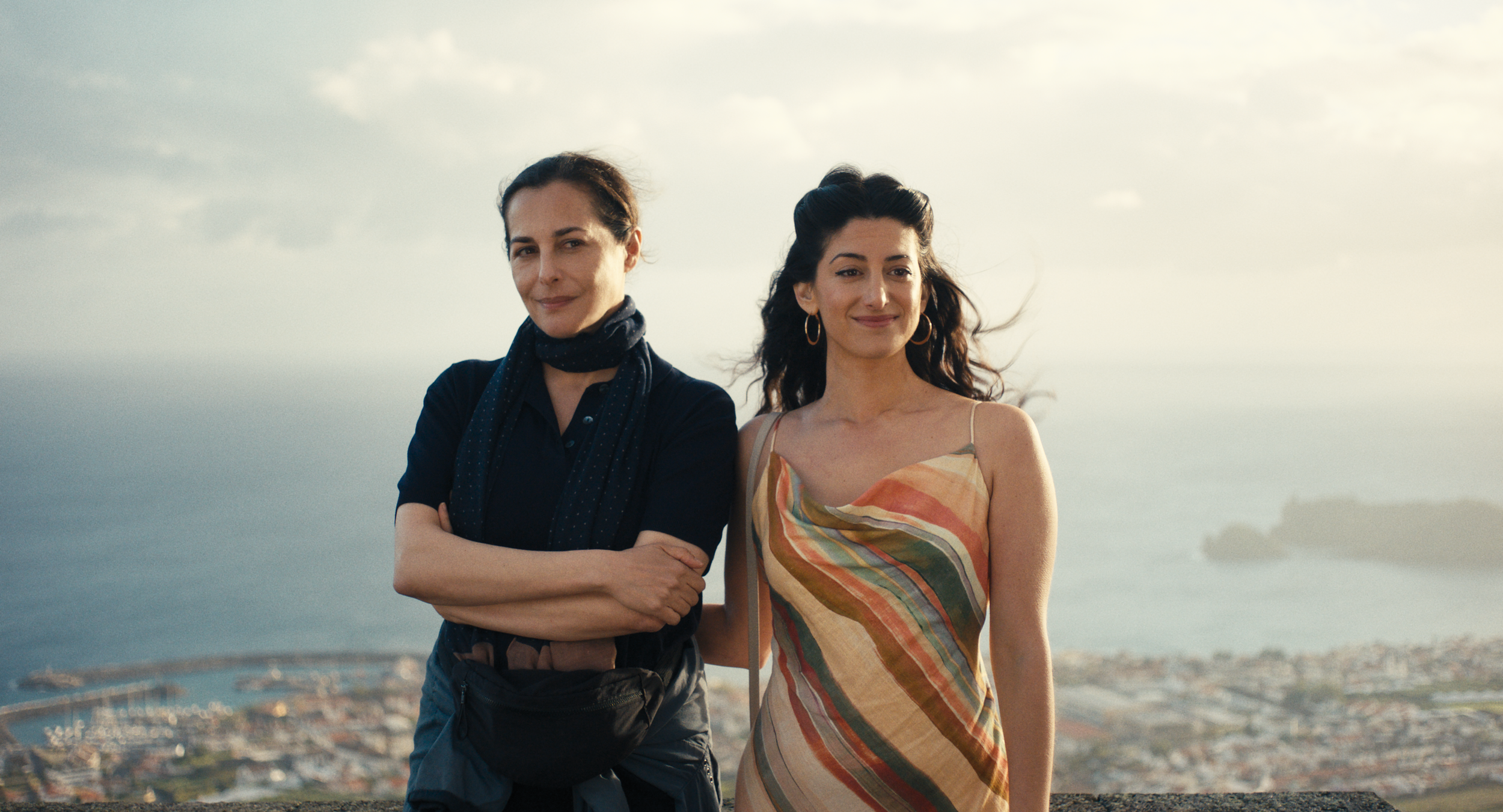
DK: At the beginning of the movie, June and Lela are not even fully seeing each other as like they fully are. Some of that might just be, you know, the aspects of grief and the desire to distance oneself and like light of it and that sort of thing.
LTM: I think so many people can relate to the theme of opening your eyes to see the entirety of a person. I'm even thinking about João’s grandma and how she throws shade at June’s dress. I wanted to show that that kind of thinking can come from anywhere. Iran, Portugal, men, women, you know, everybody. Basically, I felt like what you were just talking about made me think about the scene at grandma's window and how these two characters who represent this like yin-yang, light and dark, switch places.
One thought I kept having when I was writing this film was, this question of life after loss. Can life still be good? Can we still enjoy it? That is a real question for me. In these two characters, one is running towards the light, one is trying to connect through the dark.
I kept thinking feeling alive means feeling all of it and trying to find a celebration in life. Like I said at the premiere of the film at the Tribeca Festival, this is a love letter to life, to my family and to you, the audience. And it really rings true to me.
I'm trying to celebrate life with all that it holds, and it holds it all. That’s related to the shooting in this beautiful natural landscape. Nature is alive and we're part of it and it's a witness to our human absurdities. But it's also like a balm or a reminder that we're part of life. Like seeing our bodies like landscapes. I think bodies are beautiful, just like the island. We're all alive. So I'm trying to enjoy it. And dance.