
Holding Up a Mirror to Paradise: Yana Alliata on Her Debut Feature, ‘Reeling’
In the U.S., we learn about the abuses of colonization when we're young. We are taught that it was bad. We are taught this fact through a carefully curated curriculum of worksheets, dioramas, and, if we're lucky, one (1) field trip to a site of historical importance. We are taught about the bad thing. The bad thing happened, the bad thing is over, so now we must make an art project about it. When we get older, we write an essay about it. Somewhere around nine or ten years old, we learn that we live on stolen land. And somewhere along the way, we learn to be okay with the fact that the people it was stolen from have been swept into corners of the country designed, so we never have to look at what we did.
As we get older, we try to do better. We learn the land acknowledgement, but more often than not, we stop at the land acknowledgement. We treat it like a ritual in which we gather before a play or a conference keynote to state, formally and for the record, whose land this is, before proceeding to keep it. In its current form, acknowledging the land is rarely about repair. It is thoughts and condolences, issued to the past, by the beneficiaries, in perpetuity.
Witnessing the ethnic cleansing of Palestine, has made me think about indigenous rights across a gradient of distance and time. Palestine is the clearest case on that gradient because it is happening now, in the present tense. Palestinians are being murdered and their land is being taken right in front of our eyes. Hawaii lives in the middle of the gradient. It feels recent enough that the land theft still has a shape, but it is also old enough that the culture it displaced has been repackaged and sold back as a vacation. And the mainland U.S., the piece of the gradient I actually live on, is the furthest and therefore the faintest. The theft feels so old and so far away that we stop thinking about it at all.
Yana Alliata lives in the middle of the gradient. Her family immigrated to O’ahu when she was eight years old. She found her home in Hawaii, on land that belonged to others, a century after the theft. On the surface, her debut feature, Reeling, is about grief. It follows a man who comes home to his family's annual birthday luau after an accident that took his memory. Grief colors the surface tension, but underneath it is the guilt of what was done to someone, and the guilt of everyone who kept moving while it happened. And beneath that is Alliata's own conscience and awareness of living on land that isn't hers
We talked about the real events that inspired the film, her friends who surrendered their real grief to her fiction, which stories Alliata feels comfortable telling, and the awareness of colonization across the gradient.
This conversation has been edited and condensed for length and clarity.
Ali El-Sadany: Before Reeling was a script, it was your best friend's birthday luau, a day you've described as one of the best of your life. When did that memory start to evolve into a story about a man losing himself? Talk me through that turn.
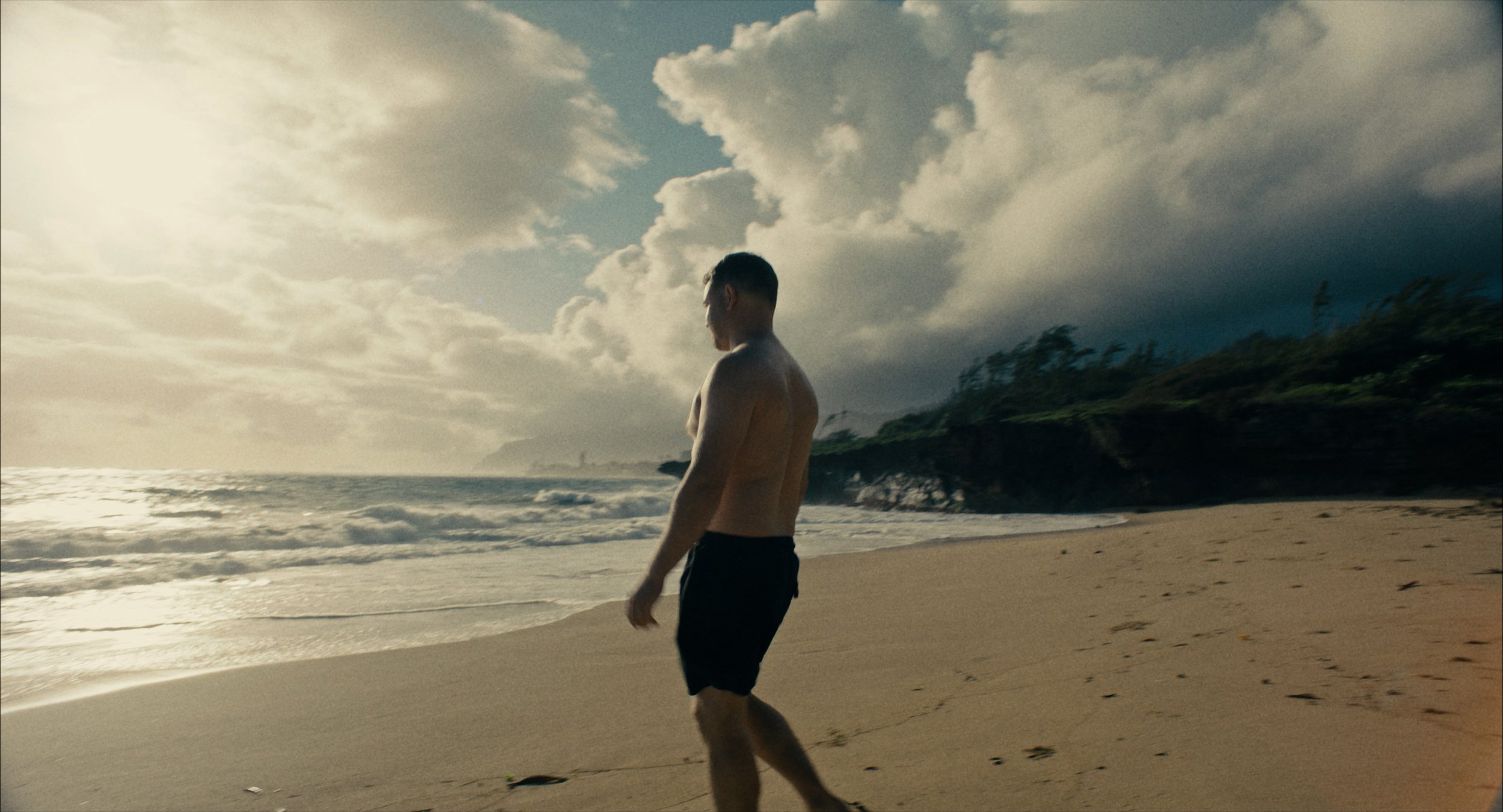
Yana Alliata: It was one of the most wonderful days and memories - In a lot of ways it felt like the last days of youth to me, reminiscent of the joyful, timeless, days where we could step away from responsibility and work. There was something so open and free and playful about that day. Growing up in Hawaii, there are certain lu’aus and events where you’re not constantly checking your phone, there is no service, and you completely lose track of time. Coming home, getting together with family and good friends, having this long meal and all these activities over the day, your skin pruning from being in the water so much. It's so special and unique to being raised there. At the end of the lu’au I had this lightning strike: I want to tell a story here. I want to make my first feature in this very special place. It was rooted in place from the start.
As a filmmaker I'm drawn to psychological dramas, family dramas, honestly darker stories, especially the contrast between the social environment and what a main character is battling. So I had this flush of ideas: what if we contrasted this relaxed birthday luau I love so much with a man who is at complete odds with it, whose head is the exact opposite of his surroundings? The environment, the party, the meaningful friendships, many of the non-actors playing themselves, all of it really exists at the birthday luau that happens every year at my best friend's house. I drew from that environment and leaned into my artistic preference for the darker drama that took shape from it.
AE: You cast your actual friends and family, people you know deeply, and lived together on that property while filming a story about a fractured family. Watching the people you love perform a broken version of closeness, did it bring you nearer to the real thing, or did it surface a distance you hadn't named?
YA: There was a very dear friend of mine who went through a loss in his family a couple of years prior, and the fictional loss in the film was something he related to on a personal level. Because of our trust and friendship, I talked him through the story points. He's one of the non-actors. He was open with it and felt it would bring a beautiful closure to the loss in his own family, and he saw the film as a snapshot of our life in Hawaii, of our upbringing inside this part of local culture.
It was important to have those conversations. You're playing yourself, this is an environment you've been in a hundred times, but the fictional story is going to be darker and far more emotional. They were all game for it. Trust with people you've known for so many years is the most important thing. They entrusted me implicitly and surrendered to it, which was moving. And it certainly brought up personal things for them, the same way this film brings things up for audiences who watch it.
AE: Hawaii is contested ground, in how the land has been exposed and how people perceive it. You chose your own community, your friends, your own island for the first film you would ever show the world. How much of this debut cost you a version of yourself, and why did it need to cost that much?
YA: I grew up in Hawaii and it's such an important, special place to me. The story is centered on memory and a man's identity, how memory shapes who we are, so it was important to draw from my own memories, even though I haven't experienced exactly what the lead character has. His condition was fictionalized.
Growing up, the way Hawaii was perceived in commercial filmmaking is something I don't believe is true or authentic to the experience of being raised there. So often a studio hires mainland actors to portray local people, and I always felt something phony in that. I'm so tired of the tourist shows, the surf-rescue crime shows. They're fine and they have their audiences, but as someone raised there, it's essential to capture a part of local culture with local actors, especially considering the history and how many local sub cultures exist. There's the Indigenous Hawaiian culture, which this film is not portraying. Reeling portrays local (or Kamaina) Hawaiian culture, which includes practices adopted by those who have lived on the islands for generations. Doing that with honesty and authenticity was the number one priority. The film feels like cinema verite, like a documentary in so many ways, and by casting local actors and local non-professional actors who really are part of the place, I could hold up a mirror to a moment in time. The audience can take away from it whatever they'd like. I did everything I could to tell this story as authenticly as possible.
AE: I see a parallel there. Ryan is trying to recover something that was taken from him, and you're recovering an idea of the Hawaii you grew up in, one colonized by other viewerships and other media. Did making this film feel more like taking something already crystallized in your mind and handing it to the world, or was it a reclamation, crystallizing something within yourself?
YA: Being raised in Hawaii, you learn very early whose land it is, and the tumultuous history around it. You're very aware of your place as a non-Indigenous local person. I've been a filmmaker for ten years, and I have never told Indigenous Hawaiian stories. It's about being aware of whose story you're able to tell and whose story someone else should be telling. For me, that's rule number one when telling stories in Hawaii.
And yes, there is a sinister undertone in the film, which is essentially a mirror held up to a real moment in time. Local audiences especially can sit with the question: how do you feel about what's being portrayed on screen, these Hawaiian cultural practices that are natural to the people doing them and have been shared through generations, when the cast is predominantly haole, or of Hawaiian descent without being fully Indigenous? It's a large question for local audiences and international ones. I hold up the mirror and let the audience decide how they feel. There are generations of people who have lived Hawaiian lifestyles and learned/appreciated customs and traditions of the islands (practices like the luau and the imu pit) without being Indigenous Hawaiian themselves.
AE: Ryan's incident is this thing everyone knows happened and no one will talk about, looming in the distance. I grew up Middle Eastern, and my relationship to living in America and profiting off its systems has always been complicated. I only developed real nuance around it as an adult. Growing up, was Hawaiian history looming in the background for you like Ryan's incident, or did you confront it head-on?
YA: Separately from how Ryan's incident looms in the background of the story, my understanding of Hawaiian culture and history was learned head-on. There was nothing unspoken or subconscious about it. It's openly communicated by educators and school systems, at least in my upbringing. Someone else might have had a different experience, but it was a prevalent part of growing up there, and something I was incredibly aware of and respectful of. The most incredible part of what Hawaiian culture teaches you is the spirit of aloha, sharing your customs and your culture with people as long as they respect it, so we can all form a community that way.
Ryan never really comes to terms with his family, never gets the happy ending where he lives in peace with them. I actually am in harmony and at peace with where I stand as a local storyteller and as somebody who was raised there.
AE: Talk to me about that harmony. It's a hard place to get to, and something I struggle with myself.
YA: You have to approach every subject, every film you make in Hawaii, with love and from a place of authenticity. That's the theme of everything I do, and especially this film. My job is holding up a mirror to a real moment in time, an authentic depiction of it. Whatever people see within that is up to them. I'm not trying to manipulate anyone's emotions.
Some people watch it and go, oh, this is a “Punahou” movie versus a Hawaiian school like Kamehameha. People familiar with local culture pick up on that. It's a local culture that is not Indigenous, but it's valid and authentic. I want to tell local stories, and eventually get to a place where I can collaborate with Indigenous storytellers on Indigenous stories. It comes from a place of love, understanding, respect, and open conversation, because Hawaii is a beautiful , multicultural place.
AE: The film relies on authenticity, and part of it is how real Ryan's experience feels. You mentioned your friend's relationship to loss, but you haven't gone through what Ryan has. The final product feels drawn from something real. How did you get there?
YA: Thank you. My co-writer, Amy Miner, is a teacher for disabled adults and teenagers, and two of her students are recovering from traumatic brain injuries, so she has hands-on experience with the condition. It varies enormously from person to person. Some TBIs are minor, some take years of recuperating basic motor skills, so we had to identify exactly what point of recovery Ryan was at. And the actor, Ryan Wuestewald, came to the table with incredible research of his own. When you portray a disability in a film, it's essential to do it with the utmost research and respect.
But we never set out to tell a story about a traumatic brain injury. We set out to tell a story about fragmented memory and how one person's identity can completely change in an instant, and about trying to recover the secret of when his life changed forever. This secret, this long-kept family secret. The TBI became the perfect tool to take the audience on the journey with someone recovering fragments of something until he finally remembers it. The tension of the film lives there.
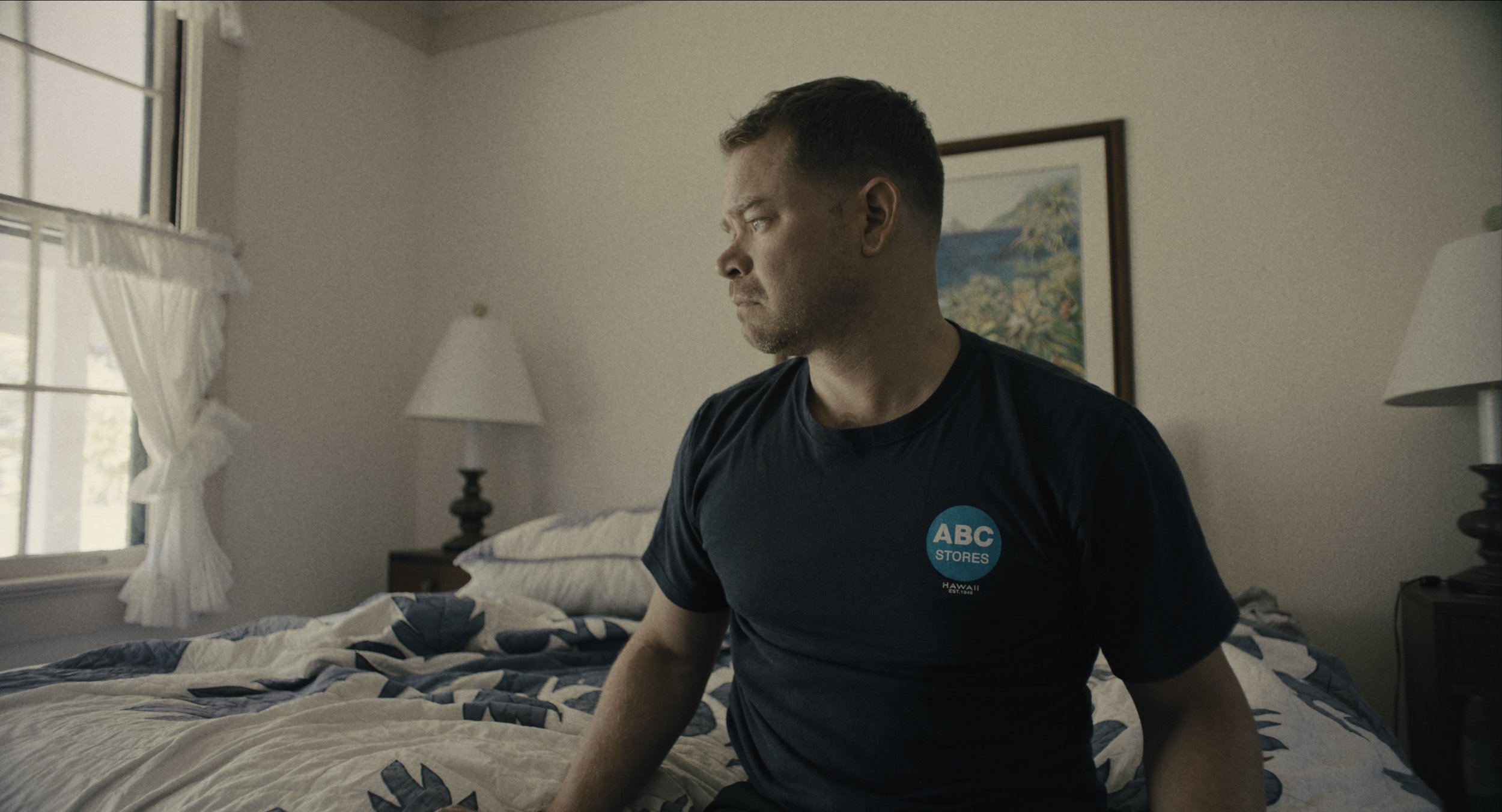
AE: At the end, Ryan gets his one glimpse of the accident. He reclaims it. I go back and forth on whether, in his place, it would feel like mercy or punishment. The knowledge is a gift and the knowledge is a curse. When you gave it to him, where were you sitting on that spectrum?
YA: I was sitting on the freedom of the truth. We say trauma lives in the body, but truth and freedom can live in the body too, especially when your mind is fluttering and unreliable. Ryan's mind will always be unreliable. But something in his heart, something he knows to be true, that stays. For the audience finally discovering it alongside him, it's both punishment and mercy. And the very ending, I think, is beautiful and optimistic, because he's walking away from something that no longer serves him, something harmful, something that won't change. If your family doesn't change, and your environment doesn't change, at least now he can move forward with his knowledge of the truth. It will set him free, and he'll move on to the next phase of his life, whatever the audience decides that is.
Although I do like those dark little dramas, I won't lie. Anytime something leans toward punishment, that's where I live. But it's definitely a mix of both.
AE: To close: there's a tangible aura of guilt in this film that never sits still. No character escapes it. We've been talking about living on colonized land, benefiting from systems designed to exploit others, and it always comes with guilt. You've talked about harmony. Where does the guilt live, and what were you hoping to explore through it?
YA: With the characters in the film specifically, I'm depicting people who are sinister and cruel in a very subtle way. It's not overt bullying, it's not in-your-face violence and bloodshed. All too often, power takes hold through slow usurpation. Turning a blind eye, being unwilling to listen, ignoring another’s pain. The characters around Ryan enact all those things to varying degrees, leaving Ryan a shadow of his former self. Likewise, the kingdom of Hawai’i experienced its own gradual usurpation of power over many decades, and people here continue to wrestle with the fallout and complexities of the overthrow and all that followed.
So maybe on a subconscious level as a storyteller, there's a connection between that creeping feeling of guilt and how they turn a blind eye and pretend it's not there. We have to find a way to be and live in Hawaii from a respectful place. Everyone's relationship to it is different. But the parallel is there: a slow, creeping, unsettling taking away of power, and what that colonization does to people. In my generation it's a conversation that's had openly, respected, and something we're very aware of.
Reeling is available on VOD platforms through Tribeca Films.