
Itab Azzam and Jack MacInnes have different relationships with Syria. Azzam was raised there and built a career as a filmmaker and producer. MacInnes came from the outside, a Londoner who moved to Damascus in 2010 and fell completely in love with the culture. The two met in Syria before the war forced them to leave in 2011, but they found their way back to the country through their latest documentary, One in a Million.
One in a Million follows Israa, a young Syrian refugee, over the course of ten years as she reckons with her displacement in Germany. We watch Israa grow from an eleven-year-old girl into a rebellious teenager and eventually a mother. Although the film is primarily about Israa, it’s also about Azzam and MacInnes as they return Syria and their past lives. After following Israa for a decade, Azzam and MacInnes reflect on their life together as a married couple and how their own family grew alongside hers.
Beyond Israa’s story, Azzam and MacInnes’ journey with her has helped them better understand their own relationship. MacInnes’s background as an outsider gave him some perspective on Syria and his wife’s upbringing, but documenting another family alongside her really allowed him to understand his wife in ways he hadn’t before. Making One in a Million forced him to confront the fragile, paper-thin divide between safety and loss, and to better understand what that loss meant for her.
I’ve always found that the easiest way to learn about the people I care about, and myself, is through stories. For Azzam and MacInnes, making this film gave them a way to look at their own lives through somebody else’s. They made a home together, lost their home together, and then spent a decade making a film about displacement. Even when they weren’t in front of the camera, their lives were unfolding alongside Israa’s. Somewhere in that process, they came to understand their own idea of home a little differently. We spoke about their relationship to Syria and how making art with someone you love can bring new meaning to the things you've always admired about them.
This interview has been edited for length and clarity.
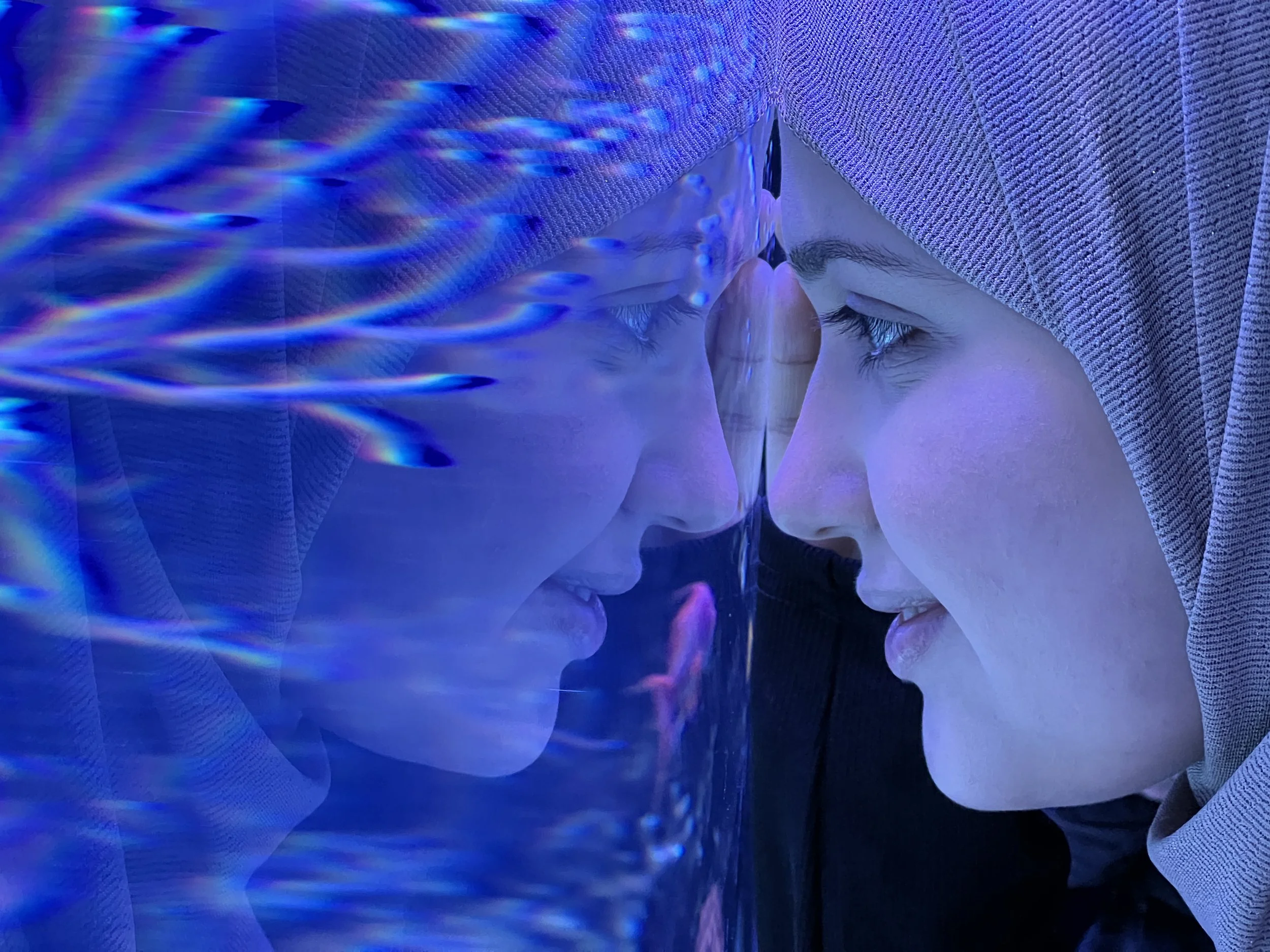
Ali El-Sadany: You’re capturing someone’s life story for more than a decade, but you’re also capturing your own relationship to Syria. I’ve seen this documentary described as “a film by a family, about a family.” You started filming when you were a couple, and now you have children who play with Israa’s children. When you look back at all of this footage, do you feel like you’re also looking at the history of your own family forming alongside hers?
Jack MacInnes: That’s totally right. In the margins of the footage that made it into the film, Itab is creeping into shot, I’m creeping into shot, and then later our own kid is creeping into shot.
There’s a moment when Israa is getting married, just as her husband is arriving in the car to pick her up, and my little boy runs across the screen going, “Daddy! Daddy!” We’re watching ourselves get older and grow up just as we’re watching her. There’s something I found totally profound about that in the edit suite. It can sound quite Hallmark-cardy when you try to say it, but I really fought for these lines that Israa’s father says at the end of the film. He says, “She was a child, and now she has a child.”
Then he says that cultures are different, but fundamentally all there really is is love, yearning, and hope. The film arrives at this point where a lot of the arguments we have in this polarized world, between Arabic culture and Western culture, Islam and the West, all pale into insignificance compared with the profundity of what we do as human beings. We love each other, we fuck each other up, and there’s nothing more profound than the relationship you have with your parents and your children. That’s where it arrived for me. That wasn’t where we started, but that’s where it got to.
Itab Azzam: Going back to the idea that it’s a family affair, the camera almost became part of both our families because it was always sitting there recording.
In the edit, Jack and I would listen to a discussion between us, or an argument that we recorded eight years ago, and we’d suddenly remember, “Oh, we were at that place at that time.” It became part of our family history too.
AE: When you first met Israa, you were adults documenting an 11-year-old. By the end of this, you have a relationship with another adult who has her own family and her own understanding of the decade you captured. What was it like to watch that relationship change as she grew up, while also being able to see your own growth through it?
IA: When we started filming Israa, we were almost like her parents, or I was like her big sister. That was the relationship. Then she became a teenager, and we had a different relationship. She could be naughty with us and tell us all her secrets. Then she changed again and became an adult woman and a mother.
We had to adapt to her changing, to the way we talked to her and dealt with her. It was almost like learning how to be parents through Israa.
JM: It really is like what you go through as a parent. Initially, somebody looks up to you, and that’s basically what Israa did at the beginning. Itab especially was a real role model for Israa, an example of what a liberated Syrian woman in the West could be like. She always used to say, “I want to be a journalist like you.”
Then you hit the point where she rebels, and you realize you have to allow her to be the person she wants to be and accommodate yourself to that, just as you would with your own teenager. Then you develop a new kind of relationship with her. She’s now a mother of two. There’s also a certain amount of distance and respect that comes with her being a Muslim wife and mother that we have to observe now.
In a way, the journey we went through is the journey of the film, and hopefully the journey you experience as a viewer, because you’re experiencing it through our eyes.
AE: How did that inform your understanding of parenthood as you were raising your own child?
IA: I think the most important lesson for me is that you need to learn how to listen and not judge.
At some points with Israa, when she was making decisions I didn’t agree with, I felt the urge to interfere, do something, or say something. But that’s not my position. That’s also something you learn with a child. You have to listen to them and not judge them.
JM: You also have to ask yourself, are the dreams I think are her dreams actually hers, or are they mine? Do I want this for her, or is this what she really wants?
That’s what we had to ask ourselves. When she chose not to go to college or explore her life before getting married, and instead went straight into marriage and motherhood, our first instinct was to advise her to slow down. That’s obviously what most people do where I come from. Making the film forced us to look at her culture and our culture and ask, what is she gaining here? What is the attraction of this? And what are some of the negative sides of the way we live our lives? It forced us to examine our own prejudices a bit.
AE: You were this constant presence for her, but when you’re documenting someone’s life so thoroughly, you can also enter some ethically difficult territory. Especially because the two of you were doing this together as a couple, were there moments when one of you wanted to turn the camera off while the other wanted to keep it rolling? Did having somebody you knew so well give you a check on your instincts as filmmakers when you were this emotionally close to the family?
JM: Totally. As a filmmaker, you always have competing instincts in a moment, especially when you’re making an observational film.
Both of us shared a lot of these roles. You’re a cinematographer, you’re a director, you’re a producer, and you’re also a human being. You’re trying to balance all of those things at the same time.
Sometimes Itab would be more attuned to what the family were feeling and wanting in a particular moment, while I might be more attuned to what we needed to do to capture the scene. Sometimes it would be the other way around. When you’re a couple doing it, that tension that might normally exist inside one person suddenly exists between two people balancing back and forth.
One of the things Itab was always really good at was seeing problems before they happened. I lived in Syria and spent a lot of time with Syrians. I’m a member of a Syrian family now. But that can’t compare to the life experience Itab has from 40 years of being part of that community. She could recognize that maybe we were pushing Tarek too far, or that it was probably time to put the camera down because we were pushing the family too far. It was really important to have that check all the time.
IA: With this film, maintaining trust and a relationship over ten years was probably the biggest job. We always had to be very careful and sensitive to maintain that trust. Part of that meant spending a lot of time just hanging out and not filming. You have to understand what the right moment to film is and what the right moment is to switch the camera off and just be present with them, talking, chatting, gossiping, and doing all of that.
AE: You both also have your own relationship to Syria and to leaving Syria. Israa also has her own relationship to Syria. While you were making the film, did you ever feel that your own grief about Syria was being recontextualized through Israa’s story? And how did you balance being true to her experience while also bringing your own perspective and relationship to the country?
IA: A big part of why we wanted to make this film was our relationship to Syria and our passion for Syria. Jack and I were living in Damascus, and we had to leave everything behind and start over. Our passion for Syria kept us going for ten years.
I feel like I was dealing with my own issues of displacement and identity through making this film. Israa’s family are completely different from how I grew up. There are religious differences and other differences. But the Syrianness made me feel like, okay, this is a place where I belong. Making the film was almost like therapy.
JM: We left in 2011 and started making the film in 2015, so there was a four-year period where we were both working, but we weren’t really producing work on this topic.
Itab’s family were in regime-controlled areas in Syria, so that really restricted what we could do as filmmakers. We had offers and opportunities to make films that would have been very critical of the Assad regime, and we just couldn’t do that. When we found this project, it became a great outlet to finally put all of that hurt into something that might have some positivity and meaning.
Israa’s positivity was such a wonderful thing to latch onto. She was a symbol of hope amid all of this. She looked like somebody who could come out of this experience and have a life she might not otherwise have had.That was really hopeful for us back then.
AE: My family is Egyptian, and my sister does human rights work there, so I connect to a lot of what you’re saying about that relationship to a country and to grief.
JM: There are specifics too. When they go back to Syria, they’re suddenly sitting around on the floor sharing food. Uncles are turning up, cousins are turning up.
Muhammad says, “It’s great in Germany. We’ve got everything we want, but we don’t have this. We don’t have community like this.”
That resonated so strongly because that’s how Itab grew up as well.
IA: I guess that is one of the biggest struggles. You’re Egyptian, so you understand this. I grew up in a village where I knew everybody. All my cousins were around, all my uncles and aunts. You would just play on the street. Then I moved to Damascus. One of the biggest shocks for me moving here was the calendar. We didn’t have calendars like that. If you wanted to see a friend, you would call and then see them that day.
Those kinds of things are quite a shock for people like us who don’t live through calendars and planning in the same way. It took me time to get used to that way of life. I think it’s the same for Israa, Muhammad, and the family. Your brain needs time to get used to these things. It’s difficult.
JM: This whole story throws up a mirror to everything that can be mad and dysfunctional about Western society too. The nuclear family, isolating yourself in a little flat with no support system around you, which is what so many people do, is not necessarily a normal or healthy way to live.
Some of the tension and trauma we see in the film comes from a guy who is stuck sitting, smoking, and watching TV all day. He used to go out onto the streets and know everybody. He was Abu Salah. He was a big deal in Aleppo. He had a few falafel shops and everybody knew him. One of the most emotional moments for me was when we were back in Aleppo. We weren’t filming. We were looking for the site of their house before Israa went there because we wanted to make sure there wouldn’t be any problems.
While we were looking for the house, we met this old guy and got Tarek on the phone. The two of them talked and remembered each other. They were both old men in tears. That was the first time they had connected in years. Most of those people had left, but there was still one guy there. It really brought home to me what Tarek had left behind.
IA: Also, not to be too negative about Western cultures, Western culture gave Nesreen, the mother, her freedom. It gave her the ability to leave an abusive husband, live her life, and try to find love again. She wouldn’t have been able to do that back in Syria.
That’s one of the things our film shows. It was amazing for women because they could do what Nesreen did, but it was terrible for Tarek because suddenly he wasn’t in control anymore. In Syria, he was used to being completely in control of the women in his family.
If you talk to Nesreen, she would say, “I will never, ever go back to Syria.” She doesn’t even want to visit.
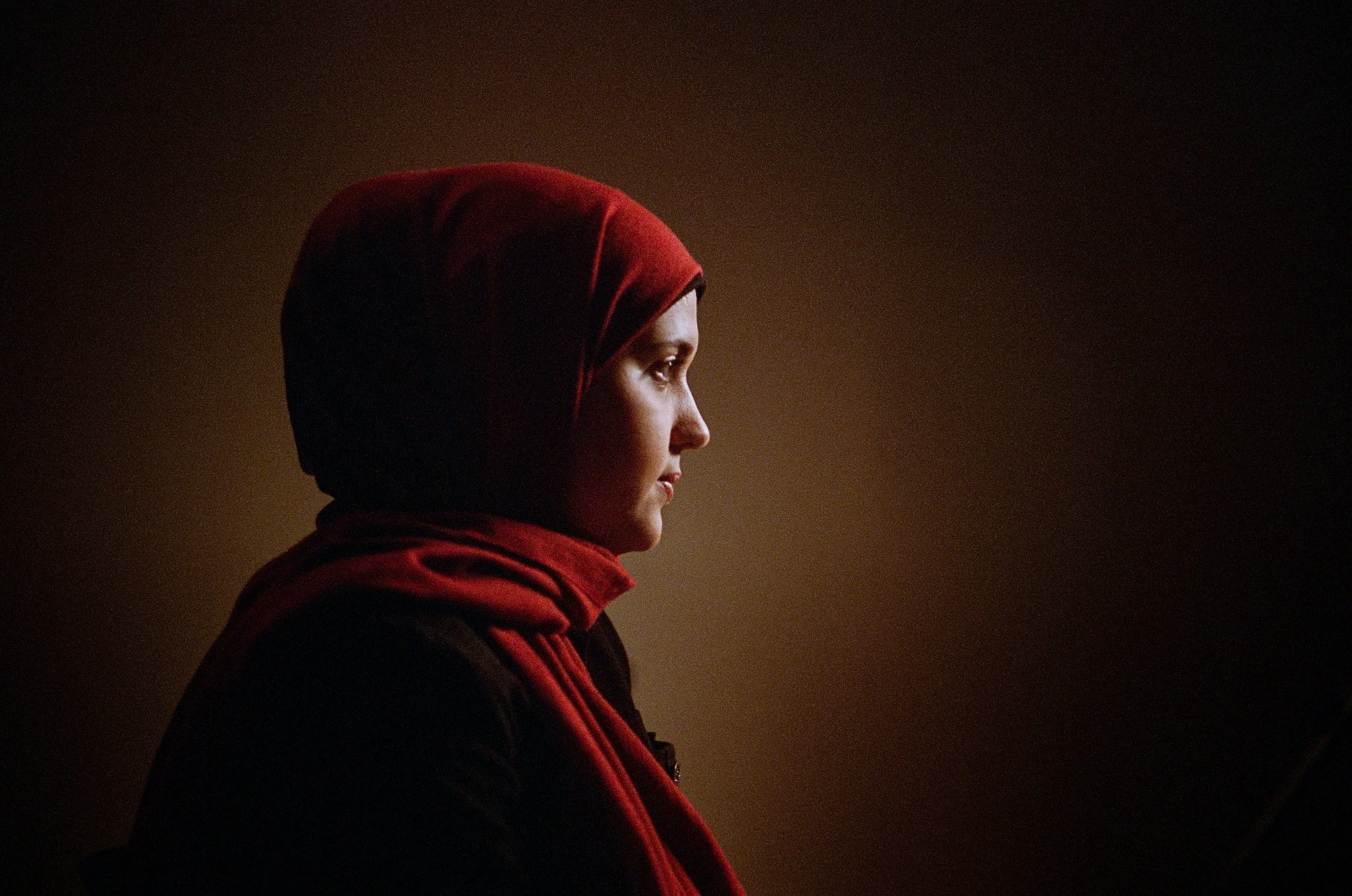
AE: As a couple making this together, bridging two different lived experiences and using another family’s story to understand more about each other, I’d love to hear more about how you got closer to each other through this film.
Jack, it seems like you’ve learned so much about Itab and her upbringing through this. What were the two of you able to learn about each other through making this film? Did living through somebody else’s story help you understand your own relationship differently?
JM: Honestly, it makes me teary just thinking about that. I was brought up in London in a nice, safe home. Wars and migrations were things that happened on TV. Through this experience, I realized how paper-thin that divide is and how easily everything can change.
I went to Syria in 2010 and completely fell in love with a person and with the country at the same time. I fell in love with the culture. We were moving there, and we loved it. I loved Damascus. It had this incredible cultural buzz and this really fascinating, bohemian atmosphere. It was a place where things were happening.
It was also great to live somewhere that wasn’t as totally infected with commercial capitalism as the place where I grew up. People ate the food they learned from their parents. They danced the dances they learned from their families. There was this authentic culture that people weren’t overthinking, and I completely fell in love with that. Then I saw how quickly all of that could be smashed and thrown to the wind. I watched this person I love go through the loss of that, to the extent that her parents now live with us because their home was destroyed.
I’m in awe of the fortitude that gets people through that. If the roles were reversed, I don’t know if I would be as strong and brave as Itab has been. Doing this film has been a way for us to talk about those experiences through someone else in a way that’s a little bit harder to do when it’s about yourself and each other. We were able to talk about Israa and Israa’s family and what they were going through. It gave us a slight distance from our own experience. I think that’s been a good way for us to talk about it.