
Russell Goldman on the Paranoia and Personal Identity of 'Sender'
Russell Goldman and I find common ground quickly once we start talking about our relationship with writing. We bond over the years we spent freelancing before either of us figured out how to access our own voice. We talk about old bylines and pieces that belonged to someone else's idea of what criticism should be. That specific work has a familiar shape that is easy to inhabit but mildly suffocating. We both learned to write for the algorithm and silence our own instincts until the copy was clean, accessible, and felt like it could have been written by anyone. "I wrote reviews growing up that told the reader next to nothing about myself or what inspires me," Goldman tells me.
He grew up on IMDb boards and Box Office Mojo forums, watching film culture align itself with a concept he found antithetical to art. "Things have to be universally beloved, or liked, and also financially successful, as if that means it's good," he says. The critics he now admires most are those whose work is irreducibly theirs, where you know exactly who is on the other side of the page, no matter the review. He brings up David Ehrlich, Angelica Jade Bastién, and Adam Nayman— all writers whose identity and criticism are so deeply connected that reading one review gives you a window into how they see the world. This appreciation for self-insertion in writing is foundational to his understanding of the camera.
One of his early jobs was supporting Jamie Lee Curtis in a project she was writing called Mother Nature. Goldman collaborated with Curtis on an outline she had created while finding ways to make it his own. It was one of the first jobs that really taught him what it means to “collaborate.” Curtis eventually gave him a co-author credit, recognizing that something of himself had come forward in the work. It was a generous thing for her to do, and it clarified something for Goldman: "Your own identity is so important to the art that you put out into the world," he says.
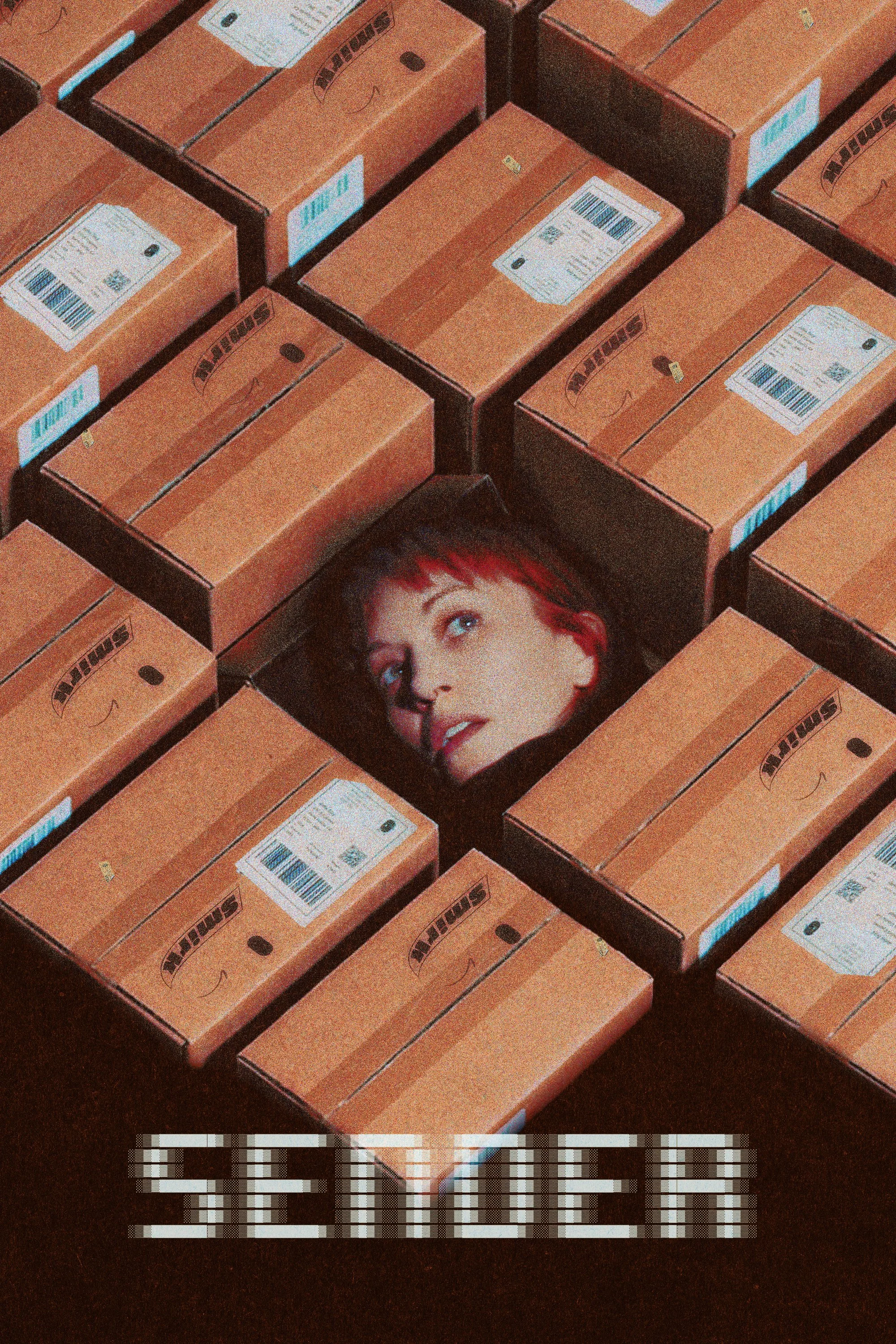
Sender, his debut feature, screened at the 69th SFFILM Festival, and is the fullest expression of that understanding of identity so far. It comes after a series of shorts he’s made (including Return to Sender, the 2022 short film the feature is loosely based on). Britt Lower stars as Julia, a recently sober woman who finds packages she never ordered delivered to her home, each one more uncannily personal than the last, tightening the peculiar paranoid spiral she is already living. She’s surrounded by a collection of ecelectic characters including her sister Tat (Anna Baryshnikov) who moves in with her, a delivery driver named Charlie (David Dastmalchian) who becomes the closest thing she has to a tether to reality, and an ex-sponsor (Rhea Seehorn) whose patience is wearing thin. Jamie Lee Curtis opens the film in a prologue that suggests Julia is not the only person on the receiving end of whatever this is. Curtis came on as a producer through her Comet Pictures banner, starting as the catalyst for the rest of the cast to follow. There’s a lot of pressure to lose your own voice in a debut with a cast of this size and tenure, but Goldman went the other direction.
Goldman didn't fully realize how much of himself was in it until he saw the film’s footage. Julia’s addiction in the film feels real because it was inspired by his experiences growing up. Although not his own addiction, it was close enough to it that he had a familiarity with its texture from inside. The jittery obsessive rhythms coloring Julia’s interactions are entirely his. He tells me about living with OCD, which he maps with intense precision that could only be born from self-awareness. After a string of car accidents just before the pandemic, he experienced PTSD from the concussive symptoms. Any time his head grazes a surface, he finds himself tapping the back of it ten times to register what the impact felt like, the ritual completing itself before his rational brain can intervene. "There is something incredibly attractive to people with OCD about an impulsive thing that can just suck them in," he says. Julia's refusal to stop, the way she stays on the line even when her body is revolting against her, he recognizes all of it without having to look hard. His wife watched the dailies and told him Britt Lower was walking like him. He laughed it off. A friend said the same thing at a test screening and then he started seriously considering it. "Okay," he says, "that might actually be somewhat true."
The only way out of that loop (as cliche as this sounds) is through love, particularly grounded in the people he’s learned to love. His wife Victoria Alejandro reminds him of this in his worst moments. "As soon as you become a supporter of that story," he says, "as soon as you are engaging with your loved ones and seeing what they may need, you're stepping outside of yourself." Alejandro is also his co-producer, present through every draft of Sender, in the sound mix, in the edit room, the person who first noticed Lower walking like him. His friend Thomas Grabinski was brought on as a producer right before prep because “we see every movie together.” Their taste is so aligned and it allowed Goldman to have more confidence to trust his own voice. "We would get excited by the same things," Goldman says. Sender owes its existence to various collaborators that date back to Goldman’s original short, including his producer Jake Katofsky, his editor Marco Rosas and his assistant director Jessica Dho. “Make shit with the people that you trust, as much as possible,” says Goldman. “Respect them, praise them, try to give them opportunity. It’s the only thing I’ve learned that works. I haven’t always followed that mantra the way I should but I try to live by it now more than ever. Because it makes the actual work experience feel like something worth coming back to. And eventually the microcosm of your group is gonna make something that will pop, because you guys are able to start operating on a different level."
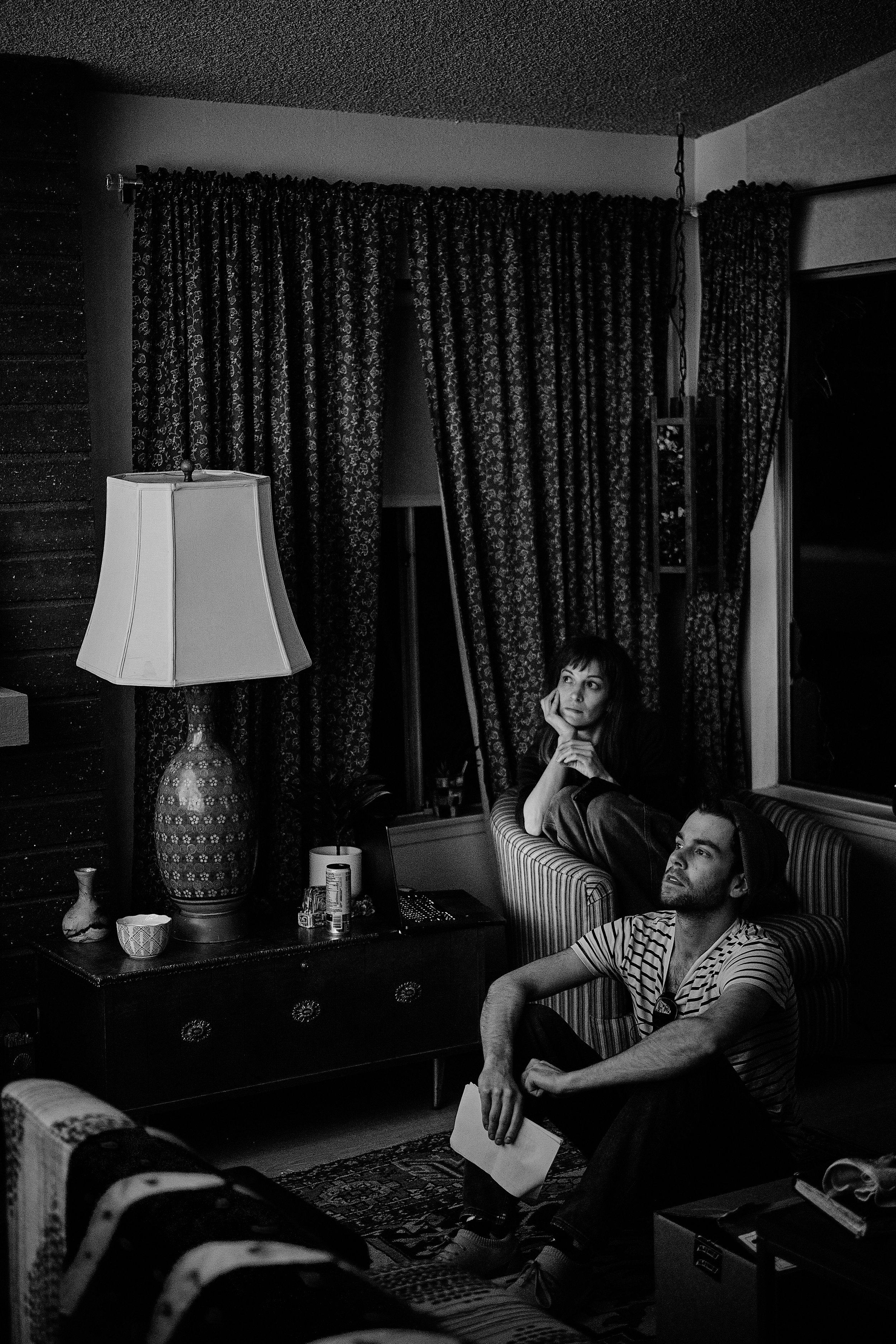
Goldman finds a lot of inspiration in Brian De Palma's 1974 cult musical Phantom of the Paradise. Goldman made everyone who worked on his college thesis film watch it before production. "Almost like an algorithm," Goldman says. He has watched the same logic flatten contemporary film culture into something he finds corrosive. He points to films that advertise a perfect Rotten Tomatoes score only from a specific date, before the consensus shifted. "Which in my opinion is irrelevant to the quality of the movie." What the optimization produces, he says, is films designed to land somewhere in the comfortable middle, critic-proof and inoffensive. "There's a hope to aim for the 6 or 7 out of 10, where the ceiling might not be terribly high, but the floor is just barely high enough to get by." He understands why Phantom of the Paradise got buried on release. "It's a curio even in De Palma's filmography. It doesn't feel anything he’s made before or since." Goldman admires Phantom of the Paradise’s confidence and singularity, and it shows. Critics have struggled to find a clean box to put Sender in as well. Reviewers have referred to it as a fever dream, fantasia of paranoia, quirky psycho-thriller, wildly ambitious and beautifully bizarre debut, and so much more.
Despite his commitment to his own voice, there were still challenges to that commitment. "You almost mitigate your own challenges before you embark on them," he says, alluding to situations where you pre-empt your own risk before you've even taken it. There’s definitely an alternative world where a safer and more sanitized version of Sender exists, but Goldman decided against that. He chose to trust his own instincts trusted the audience to meet him there. By trading the safety of mass appeal for his obsession with the films that taught him to love art, Sender feels more special and harder to dismiss. "There's nothing I want more than to tell the filmmakers I revere what their work means to me," he says. "Phantom of the Paradise meant the world to me. Safe meant the world to me. They influenced the trajectory of my life and the things I want to make. If Sender is that for one person, then it was worth all of it." He wants to keep making things for those people. I am lucky to be one of them.