
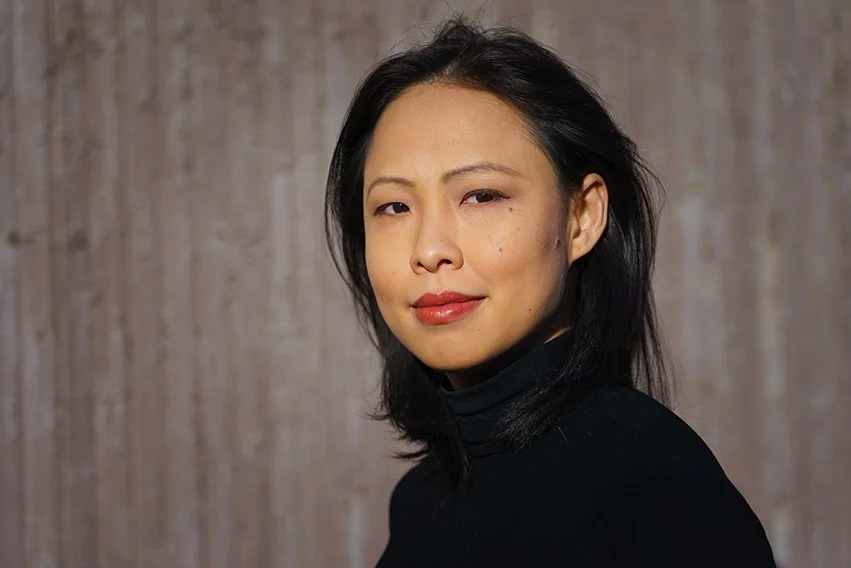
Answering to the Future: Poh Si Teng on ‘American Doctor’ and the Limits of Access
Poh Si Teng, the director of American Doctor, starts our conversation with a story about a day early last year when she took her five-year-old daughter to a protest for Palestine. They were in the crowd, and a woman walked past wearing something resembling an olive tree. Teng's daughter zeroed in on it and asked, "is that an olive tree? Are we here for Oraib?"
Oraib is the main character in These Olive Trees, a children's book by Aya Ghanameh that Teng reads to her about a Palestinian girl forced to flee her home. Her daughter had made the connection herself, between a bedtime story and the asphalt they were standing on. "Children understand a lot more than we think," she says.
Teng has spent most of her life acutely aware of who gets led through the door and who gets left behind, peering through the window. She grew up in Penang, Malaysia, living above her father's motorcycle spare-parts shop on Noordin Street. As a child, she was intimately familiar with the invisible barriers of class, ethnicity, religion, and gender before she had the right words for any of them. That specific feeling of that never left her. She describes this as a fault, something she carried out of Malaysia at nineteen and never put down. "Is it a fault? I guess it's a fault," she says. "I can always see what others have and what I don't have. Why do some people get better treatment? Why do some people get led into the door while some of us have to peer from the outside or look through the window?"
When she grew older, she received a scholarship to Taylor's College in Kuala Lumpur where she lived in an apartment in Sunway that overlooked a housing settlement. One day, as she witnessed people get dragged out of their homes, bulldozers coming in, she thought someone should do a story about it. Nobody did.
She spent the next two decades moving through global media hubs, starting with the New York Times and Al Jazeera English, before eventually landing an executive position at a studio. She continued on that trajectory until the genocide of Gaza began, and some of her colleagues from Al Jazeera got killed in the field. Inside the American journalism industry, an apparatus she knew intimately, she found a terrifying, synchronized silence. "What was unbearable was sort of the silence all around me," she says. "Having lived many different lives in terms of my professional career, and I was a journalist long before I became a filmmaker, it really hurt very deeply. When it came to journalists being harmed, there was always this kind of solidarity. A journalist in the United States would come together and speak out when a journalist is being kidnapped in, say, Russia, or killed in Ukraine. Except when it came to Palestinians. In that case there was pin-drop silence." The silence clarified something. Money, access, an executive title, none of it meant anything if it couldn't be spent on what mattered. And what mattered was her daughter. Teng thought about the conversation they would eventually have, the one where her daughter would be old enough to ask what her mother had done during all of this. "I thought to myself, what am I gonna say to her 10 years from now? 20 years from now?" she says. "That a million children were being starved, that bombs were being dropped on them... and we lived in the comfort of the US, and we did nothing, and I did nothing?"
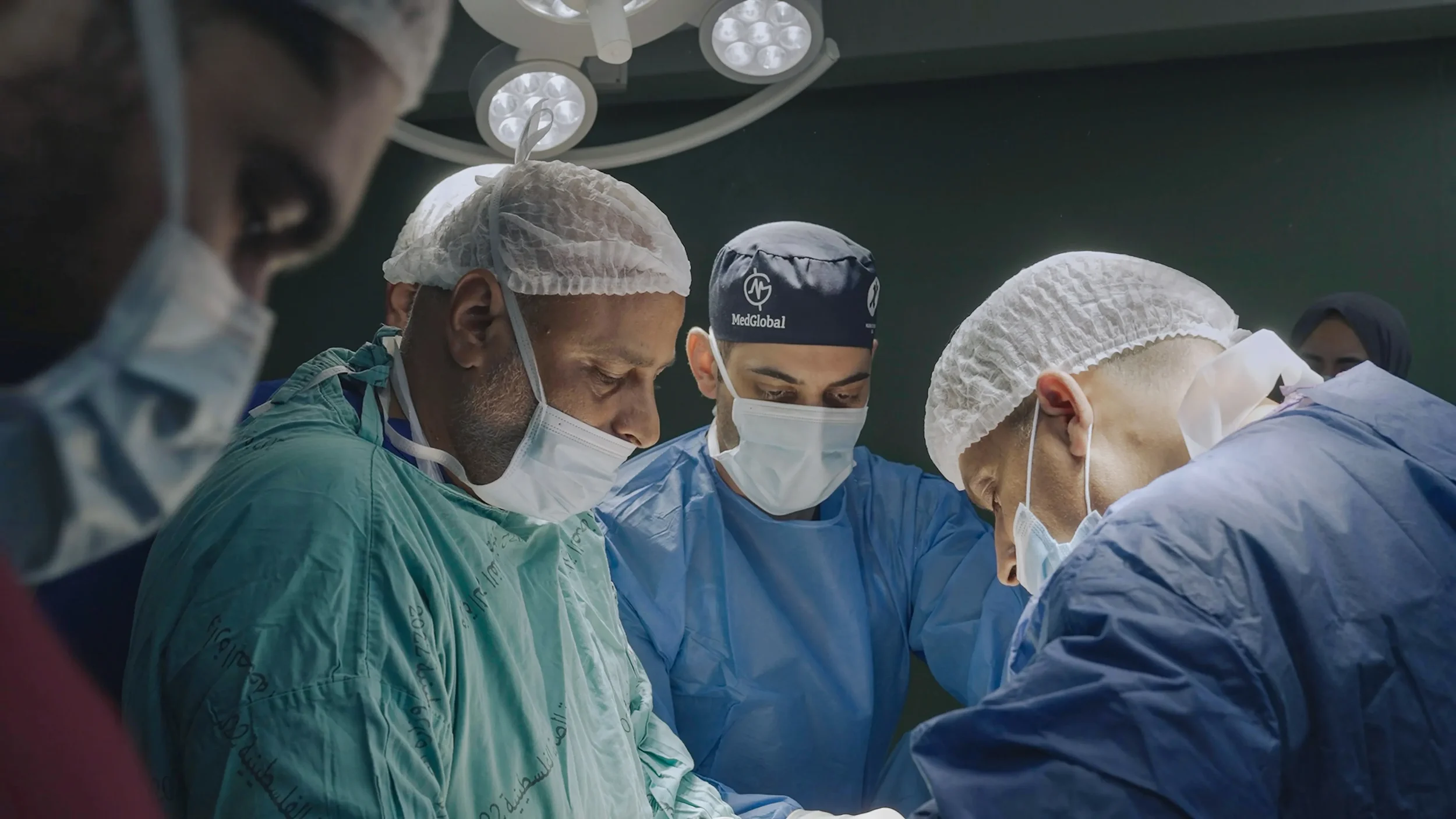
So Teng left the corporate world. She met Dr. Mark Perlmutter, an American surgeon who had just returned from Gaza, and decided to make a documentary. Teng emptied her savings (around $150,000) and didn't look back. "Once I've made my decision, that's what I'm gonna do," she says. "Nobody can tell me anything. Not a child, not a partner. I'm gonna do it. It just feels like the right thing, and you only have one life anyway. You can make money back any time."
It was a gamble, but it paid off. The resulting film, American Doctor (which screened at the 69th SFFILM Festival), follows three physicians into Gaza, Dr. Thaer Ahmad, a Palestinian-American from Chicago, Dr. Mark Perlmutter, a Jewish surgeon from North Carolina, and Dr. Feroze Sidhwa, a Zoroastrian trauma surgeon from California. She went in thinking that Perlmutter, white and Jewish and blunt on television, would have the easiest position of the three. "In my mind, this is my bias," she says. "Oh, Dr. Mark Perlmutter, he's white, he's Jewish, he can say whatever he wants, let's see how far he can go." She quickly realized that the situation was not as straightforward. Dr. Thaer Ahmad was able to move through rooms easily surrounded by people who loved him, anchored by a community that claimed him everywhere he went. "Wherever he goes, he's so loved, he's so revered by the community," she says. "Everybody has their arms wrapped around him." Perlmutter, meanwhile, was alone in those same rooms, having lost friends and the community he thought he had. "I realized very quickly in filming with them both, what they had and what they did not have," she says. "I learned how difficult it is to stand up when members of your own community are against you." Previously Teng described her ability to notice who has access and who is looking in from outside as a fault, but in this case, she was able to use that fault to understand her documentary subjects better.
On the second day of shooting, Perlmutter wanted to show graphic photographs of dead Palestinian children. Teng had spent decades in newsrooms where the instinct was always to pixelate, to protect, and she wanted to look away. Perlmutter told her that looking away was journalistic malpractice. "He is definitely scolding me," she says. "Initially, I have my hand on his shoulder... he's telling me, you cannot censor. I start to edge away. I'm like, oh, whoa, whoa, whoa." She showed the photographs and put the scene at the front of the film, because it was where her own reckoning started and she wanted the audience close to the same place. "It was my emotional arc and my own, I would say, the beginning of transformation," she says.
When her own money ran out, a friend suggested she go back to Malaysia, assuring her the country wasn't divided on Gaza. Teng was skeptical, she had left more than twenty years ago, and she wasn't sure what she would find. She made two trips and raised nearly $200,000 in cash donations from people she had grown up around and left behind. For her entire adult life she had felt like she had to partition herself to survive, like leaving Malaysia required surrendering some claim on it. "For the longest time, I thought I had to choose, an American or a Malaysian. No, I'm both," she says. "For the first time in my entire four-plus decades of life, I don't have to choose. In fact, I choose all these worlds."
Her daughter is five and already understands Oraib's story, already knows why they stand on streets together protesting for justice, and already has some idea of why the money her mother saved for her went somewhere else. Teng knows she will understand the full weight of it in ten years. Until then she keeps reading her the book.