
The Architecture of Distance: Sophy Romvari on ‘Blue Heron’
I have always consumed movies as a vessel for understanding lived experience. I rabidly look for my own life in films, and I look for the lives of others. This philosophy shapes almost everything I do, and it is the main driver for my foray into criticism with FilmSlop, where I keep asking the same questions in my writing. Where is the writer in the room? How does this piece of art explain my own life?
My approach right now is direct, colored by the loud and obvious rhythm of a young critic still figuring out how to name a wound. I am still perfecting my style and learning to grow into my voice with nuance.
Sophy Romvari’s films operate in register I care about most -- the autobiographical mode where memory, family, and the apparatus of filmmaking are the same material. Romvari operates at the level of the form's best practitioners, doing things with the personal film that I have never seen anyone attempt before. We sat down for a conversation over Zoom to talk about her career, her process, and her debut feature Blue Heron. The hour was enough to shift how I think about my own practice and to show me how early I still am.
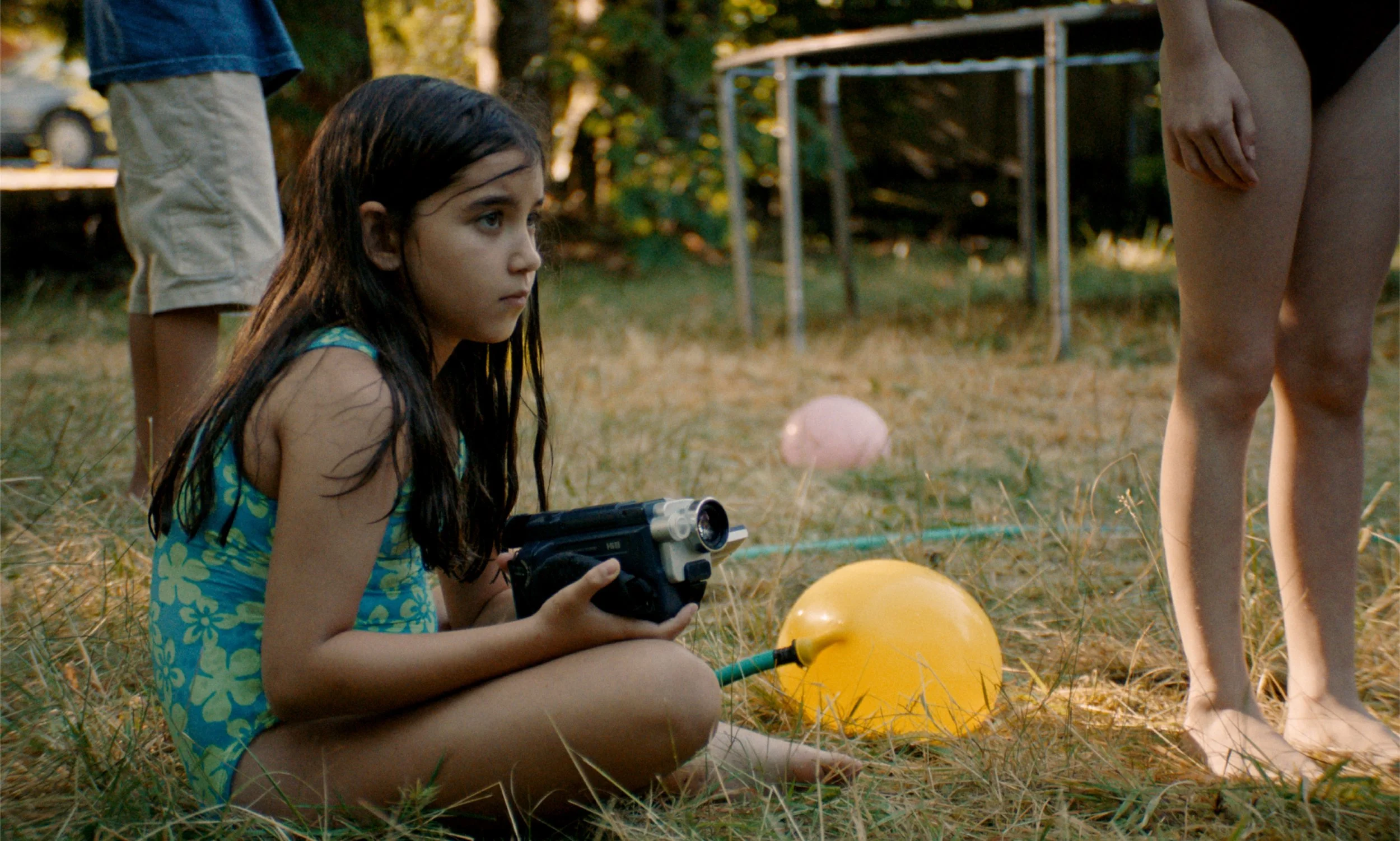
Blue Heron is widely considered a triumph of personal filmmaking. The film follows a Hungarian-Canadian family of six settling into a new home on Vancouver Island in the late 1990s, told mostly through the eyes of eight-year-old Sasha as she observes her oldest brother Jeremy.Since premiering at Locarno and winning the Swatch First Feature award, it has been treated by almost every single critic who has seen it as one of the year's best films, and Romvari has been called one of the most exciting young filmmakers working in this register today. The reason her project resonates so well is that it knows how to handle distance. The film feels close to the bone, like looking through a window into a life, but the closeness is also a carefully guarded construct.
The way into the architecture is through the shorts she made in her twenties. Norman Norman and her York University thesis, Still Processing, are explicitly autobiographic works. "With my short films, I was pretty explicitly using my work to process, obviously, in real time," she tells me. "I was in every case going through exactly what you see in the work. And it was very vulnerable in a way that I think is indicative of the fact that I was in my twenties, and I was learning the craft, and I was coming to understand myself as an artist, but also as a person."
The vulnerability in those films is total, and she openly admits she did not even comprehend the extent of it at the time. "I didn't understand how vulnerable they were," she says. She hesitated before renewing them on the Criterion Channel and considered moving forward with only Blue Heron representing her work. She kept them up because young filmmakers constantly reach out to her, telling her that her visible imperfection is what gave them permission to start.
"I do think that the short films kind of exemplify an artist in the process of discovery," she says. "If that's valuable to people, then who am I to just shield that just because I feel like I only want this, like, more curated version of my work out in the world. I just think people get so caught up in the perfectionism of how to make a film, and I would be happy to play a role in people breaking down those barriers."
At Q&As, people ask her about her memories of specific events on screen and assume Amy Zimmer, the actress playing adult Sasha, is literally her. The two of them even joke that Zimmer should start doing the press tours in character. "I wonder sometimes if people do genuinely think that Amy Zimmer, the actor, is me," she says. "Like, genuinely, that I am self-inserting into the film. I thought, joke before, that she should start doing the Q and A's as though she made the film. I think that would be really funny."
The audience reads her corpus of work as an open diary, and she has accepted it. She understands the form well enough to know artificial distance will not work. "There was no way that I could protect myself enough that people would not know that this film was personal," she explains. "Even though this film is quite fictionalized, in my mind, there's so many things that feel to me like it barely scratches the surface of what the reality is of my life, and my parents, and my brothers, and my experience. So it doesn't really matter, because ultimately, people are gonna assume this is one to one. I have to accept the reality that this is how the film will be perceived."
Once she accepted the perception, she could focus on protecting the movie. The piece I admire most is the deftness she developed in the gap between herself and the camera. She knows how to render a personal story without giving away her entire self. "I've come to learn how to protect myself a little more and to shield myself a little bit more," she tells me. "And I think Blue Heron, although it is incredibly rooted in my own experiences and my own life, there is a creative distance and emotional distance there that I have just because I've had the time to develop as an artist and as a person, so I know where I want to put those shields up."
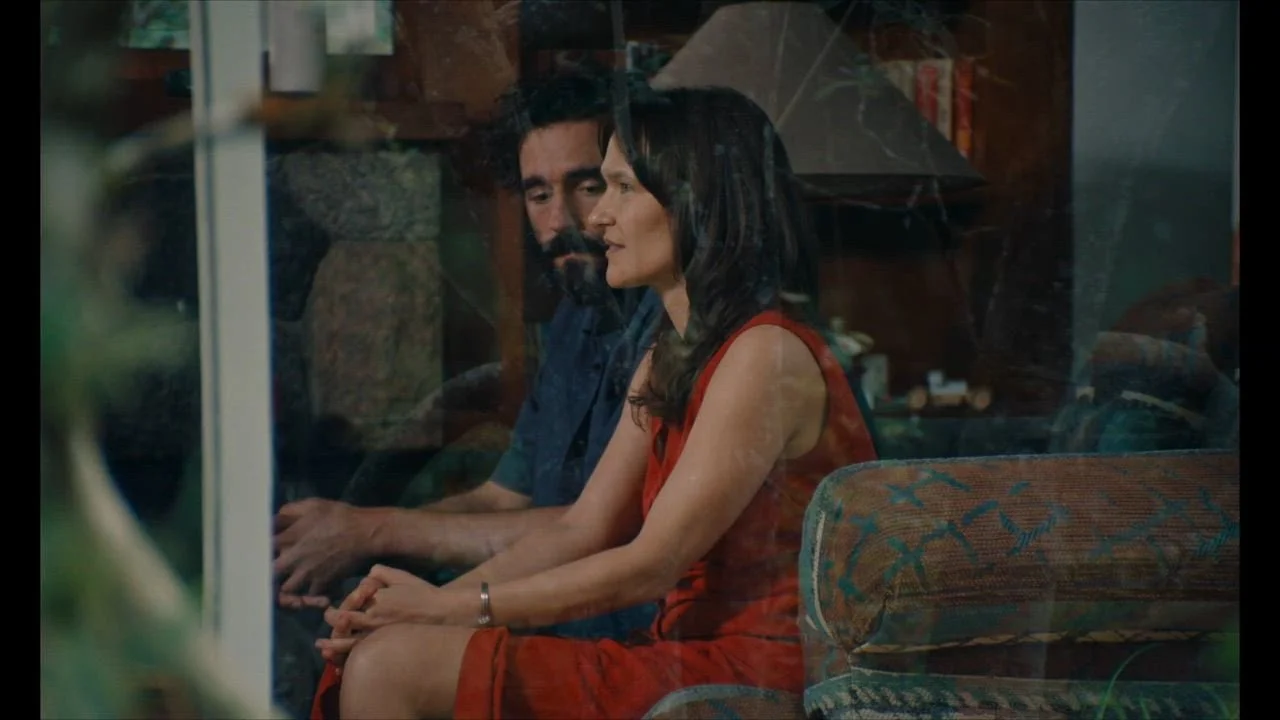
She is careful to emphasize that the distance does not erase the emotion. "It doesn't mean that it's not vulnerable. It just means that I have gotten better at the craft, and so I know how to do that more eloquently now."
Shielding takes editorial discipline that most personal writers, this one included, struggle with. When I wrote about my cat Tiger dying through Kedi, my piece was honest but guarded. My instinct was to hoard every detail because the grief was recent. Romvari spent years cutting her own life out of her own film and compressed what was left into an 88-page script. "I leaned into those things only in the ways that I felt would be helpful to the film itself," she says. "There was never putting things in the film that I thought were just important to me and weren't gonna serve the film and the purpose of the narrative and of the structure. It always had to be both."
That script became the barrier that allowed her to work. "I felt the script was really the backbone of the film in a big way where I was able to rely on those decisions I had made early on. And so when I was directing, I could focus more on working with my cinematographer and where I wanted the camera to be."
By the time she started filming her work, she did not need to be a grieving sister on set. She could be a director building a complex visual world. The first half of the film, the long stretch from eight-year-old Sasha's point of view, was the hardest section to make. "I was diving into a world of period fictional recreations," she says. "It takes a lot more attention to the details about the production design, the craft. Whereas really you can make the 2nd half of the film with a lot less resources."
The closeness audiences feel in Blue Heron is a result of immense skill but also a result of a decade of compression. Norman Norman in 2018, then Still Processing in 2020, then Blue Heron in 2025, with the films getting less visible about their own process at each step. I have not seen another filmmaker do this at her scale.
Blue Heron is universally beloved. It is a critical darling now, championed by Janus and Criterion, written about across every major publication. It is also a miracle the film exists at all. A small, fictionalized, autobiographical Canadian film about a Hungarian immigrant family processing a death is exactly the kind of project the American film industry kills before it starts. "I tried to get this film financed out of the U.S. for a year," she says. "And every single person I spoke to passed on it. I was told the opposite by everyone I spoke to for years, trying to make this movie. You know, it's just like, 'good luck.'"
She made it anyway. "It is extremely rare to have your art be aligned with platforms and distributors and companies that you actually admire," she says. "Janus and Criterion are two access points in my own life and cinematic understanding of the world in such big, big ways. The fact that my film is now part of that, and they're upholding that, is beyond anything I could have even imagined."
Blue Heron is small, muted, and in Hungarian for half its runtime, and it is the kind of film the algorithm and the major studios have spent a decade training audiences not to ask for. The form of the film was supposed to be a barrier to it being seen, and the barrier broke because the work is too good to let it hold. Craft and personal honesty did not have to be sacrificed for the film to land. The film succeeded because Romvari refused to sacrifice them. I came in carrying the assumption that making a personal film must heal the filmmaker. Romvari is careful to dismantle that. Still Processing, she says, was an attempt to use the form to process trauma. Blue Heron is the acceptance of the limit. "I think Still Processing was actually about trying to use filmmaking as a means of processing grief and trauma, and then Blue Heron is kind of the acceptance that there's a limitation to that. Our art is just an expression of, you know, being alive, being a person. And I think that, you know, it's not going to resolve these things in us."
The healing, when it comes, happens in the friction of the practice. "It's not the filmmaking that does it," she explains. "It's the fact that I spent years and years thinking and talking about something that is difficult. And now I'm able to talk about it more openly, and other people are able to talk about their experiences through work. And I think that maybe it is even more valuable than what it gives me emotionally."
The success of Blue Heron rests on how completely she understands the form. It’s a truly singular film that demonstrates a one-of-a-kind mastery in the art of the personal.