
With ‘Bruton,’ Vincent Grashaw Sees Humor, Habit, and Heart as an Escape from Prison-Trope Jail
This place is a prison. I feel like a prisoner.
These expressions capture life’s heaviness in simple terms. Feeling powerless and trapped, struggling with mental health, and making the same mistakes over and over again — it all can feel like an inescapable, enforced sentence.
There’s no shortage of impactful cinema and TV that use prison as an allegory for human experience. The best of them leverage the extremes of prison as a catylyst for self-discovery, growth, and the search for meaning.
Vincent Grashaw’s new film Bruton, based on the real experience of Florida man Bryan Bruton’s 11 years in the state’s prison system, endeavors to leverage those extremes in a fresh and even humorous way, all while staying grounded to the human experience. The film — which recently debuted at Locarno Film Fest — follows Bryan (Theo Rossi, Sons of Anarchy; Emily the Criminal) as he adjusts to (and capitalizes on) life in prison, reconciles with selfish choices, and grows closer to his meaning in life: the relationship with his daughter.
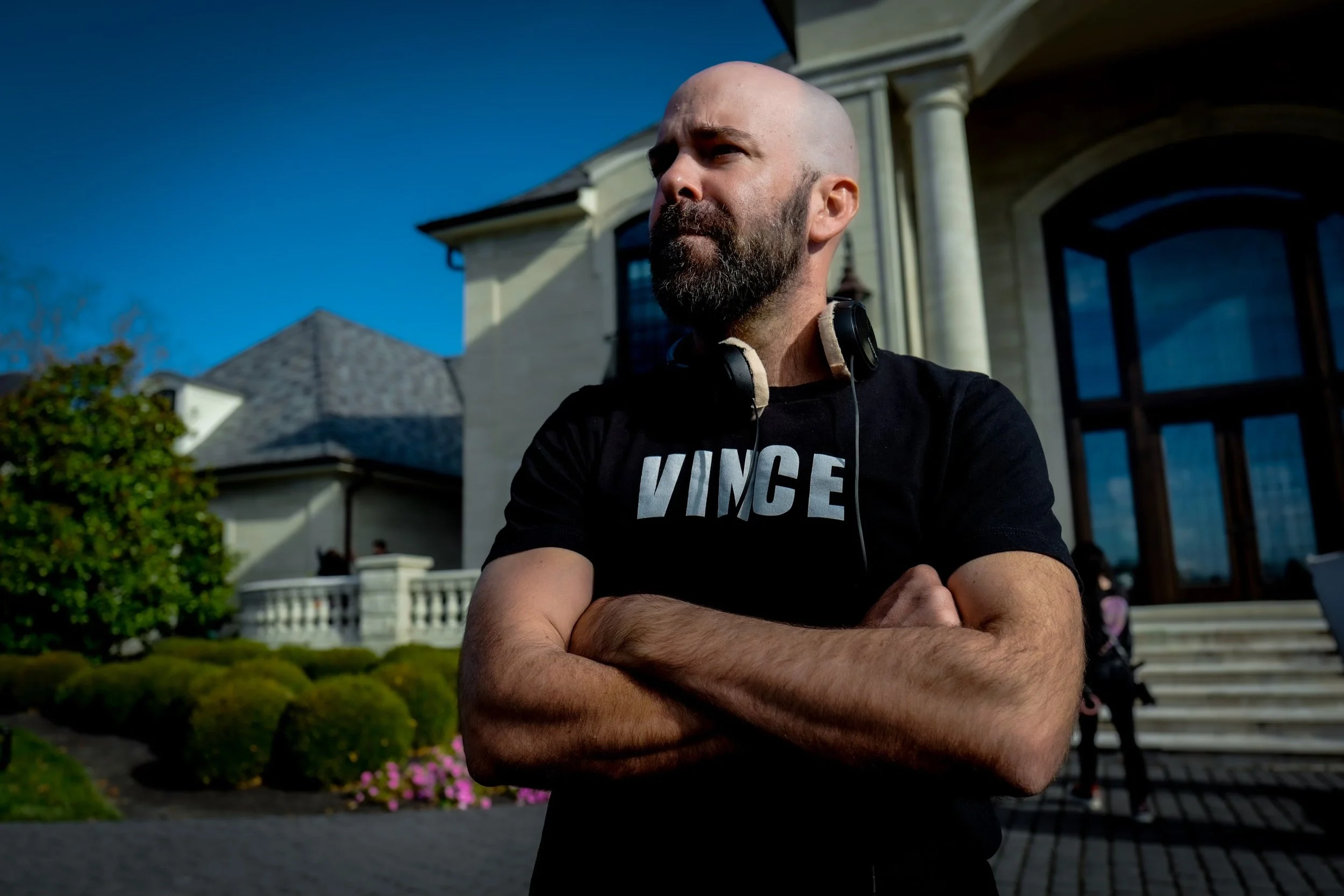
As much as there is to say about America’s prison system, this particular story is about the individual and his journey. In a conversation with Vincent, we discover what attracted the filmmaker to the project (in a genre that can be derivative) and the choices he made as writer and director to avoid Prison-Trope Penitentiary.
This conversation has been edited and condensed for length and clarity.
Noah Staum: I thought it was interesting in the press kit, you mention how at first you were sort of unsure about the broad idea of doing a prison film. And then as you dove into the story, you built more of a connection with it.
Vincent Grashaw: Obviously, there's been many prison movies made and I want to say 95-percent of them are very heavy or dark, depressing, and moody. When [the producers] brought me the project…[I was] expecting that sort of similar trope. But man, what I found was the everyday life, the things that these people got to do to find any semblance of joy or to occupy their time. It was kind of fascinating and pretty damn funny to me.
I thought it was a fresh angle in. And yeah, it is messed up. Prison is a dark place. You do not want to be there. For me, I thought a cool angle was how ridiculous and crazy the shit gets in there. Most of the time, experiences in there isn't [assault], isn't getting stabbed. The everyday life is a bit more like how it is in this movie.
NS: That adds another element to the fact that the transition out of prison is hard for people. And that's why a lot of people tend to go back — they don't have the tools to reintegrate into society. But, from your perspective and what you've learned from the story you told, is it also that people have a purpose and kind of developed life, economy, and system in prison?
VC: I think it comes to a couple of things. Like one, if you're in there such a long period of time, there is the institutionalized aspect of it where it's just too jarring to be out in a world that much bigger. Cause you are very contained in that prison world, you know? But I also think the opportunity for somebody when they get out of prison with a record — what are you going to do with you? It's really hard for these people to get regular jobs. If you're an employer, you got a guy with a felony [applying], you're just going to take the guy without a felony.
Just the contrast [that] you can make so much money in prison compared to outside. And then when you get outside, a lot of these guys go back to crime because it just pays more.
NS: When you first got pitched this project, what was one of the most compelling things about the story?
VC: For me, it was this guy's journey, and I was really also moved by the relationship with his daughter and that whole reality. If you see the movie, almost all of that actually happened, including the moments with his daughter. I was just really moved by that dynamic with his daughter who he hadn't seen in many years. It had a lot of heart, and so when somebody gets out of that life, it was also interesting to see how that temptation, that hustle is still in someone's heart. So, he's a complicated guy and he's fascinating; a very charming and interesting individual.
FS: How did you want the character to evolve throughout the movie? And did that change as you talked to the actual person and learned about his story?
NS: It's clear from the beginning and even at the end, he's a flawed individual. He's charming, he's funny, he's smart, but I think growing up, depending on your childhood, you're gonna live with certain traits and sort of ticks. I would say the arc to me was obviously him taking that hustle from dealing and being a player before he did time, taking that sort of hustle and charm to prison. And how he would survive. Not only survive in there, but part of me thinks that it isn't even about the money. It's about the hustle and being able to outsmart the guards and being able to [see]: how much money can I make? It's like, ‘I got nothing better to do. How can I have fun with this?’ And so it turned into that. And then by getting so sucked into that, when something bad happens, realizing his behavior is actually affecting people in ways that he never really paid attention to, including with his wife and kid.
It’s somebody realizing everything they've done in life — almost every single thing, even if it is doing something for somebody else — was selfish. That was his redemption: confronting that, admitting it, and actually adjusting how he does things. I think that's a very relatable thing, owning up and apologizing, whether that's to the female guard or his own family. That to me is, that's the movie.
NS: It's really cool that you're able to explore that. Can you talk a little bit about working with Theo Rossi? I imagine making a film like this where he's in most every scene, what qualities were you looking for in an actor?
VC: In casting, one of the most important things to me is vetting the individual. Is he nice? Is he not an asshole? What is he like as a person? Because there's a lot of talented actors out there. And the last thing I want to do is when you finally get a movie going, as hard as that is, to have it be a nightmare experience; to have it be something where [the actor] just sours the whole thing.
Theo, if you haven't met him, what I can say is the man is super dedicated. That guy's jogging six miles a day. Very fit, very in shape, and cares about that regimen in a way that I just really respect it. And with that came his dedication to how he got into the material and he was very malleable directing-wise, too. If he had a perspective on something he did, adjusting that was very open. It's a very collaborative experience with him, especially because he carries the whole movie. And if it doesn't work, the movie is going to fail, um, cause you're right, he's, he's in every scene almost.
It was important you do like him and you do kind of still root for him, even though you may roll your eyes at his behavior or look down upon some of his choices. I wanted [audiences] to still root for him and have that same reaction like you would [meeting] Bryan Bruton, because you do see those flaws, but you find him charming. He's really charismatic and you just can't help but like the guy. And so I wanted Theo to have that. And I think early on, the movie really solidifies that when he has that first scene with his daughter and you can see how, no matter what he's doing, he really, really loves his kid. They have a really close dynamic and connection.
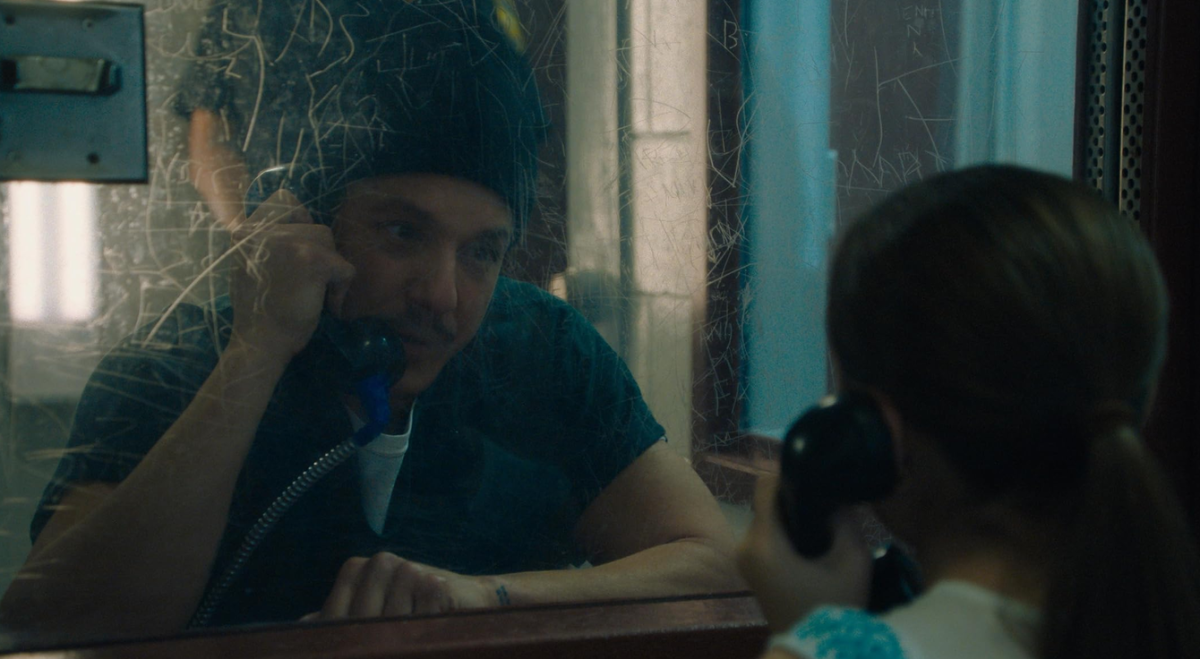
NS: Did you get a sense that Brian is representative of the kind of guilt that people develop going through the incarceration process? Was that one of your intentions to sort of connect their reflection on life outside of prison and the feelings that come with that in this movie?
VC: If you were to tackle it in a real way, you would make a very dark and moody prison movie. I mean, that's the reality. It's the worst place in the world. It's the last place you ever want to go or be. And you have a bunch of people there that are perpetually pissed off, and they have reasons to be. I wanted to strip out how negative it is and just find those things that make it more anecdotal, like everyday life for these people and what that is actually like. What would an individual do if they went [to prison]? How are you going to put this together? How are you going to listen to music? That, to me, was what made it funny. It brought it down from that mass overall negativity — cause in prison, it's just all negative.
The negative stuff that happens in this movie, I wanted to be strictly related to Bryan, and about accountability and choices. It's his choices that created his path in this journey. I don't know how universal it is, cause I don't think a lot of people did the shit he does. Whether that was running businesses, hooking up with a guard, escaping…I mean, it's insane. I don't think that most people do what these guys do in this prison movie. Uh, most inmates don't do this.
I wanted this story to strictly be about his choices and how it affected people.
NS: So, I’d like to end with this — What do you hope people leaving the theater after seeing this will be talking about, or their impressions, or the emotions they may be having?
VC: Obviously, it's a journey, and I want them to feel like they went on this journey with this guy. And I think in turn, nothing really in terms of a big lesson other than accountability and choices. For me, it was just an overall experience. I want people to go in and enjoy it. It is entertaining just to see this guy's story. Really, it was about that to me. It's got the elements of everything. It's got the violence. It does have those dark prison moments, but I didn't want them to weigh on the movie. So I just want somebody to come out of there when the movie ends with the energy of ‘that was fun, that was crazy,’ and come out with an energy that isn't negative. I hope people leave with an understanding that it’s a unique point of view on on what it's like in prison.