
‘Namaslay’ Is The Killer Cleanse White-Girl Yoga Needs
Deep in the savasanas of American yoga lies an uncomfortable truth:
“Yoga [...] seemed very much like a cult, especially here in Los Angeles,” admits Kanish Arhant-Sudhir.
That truth inspired him and brother Rish Arhant-Sudhir (known together as Rish and Kanish) to make Namaslay — a new satiric horror film centered around a problematic yoga studio that makes you want to downward-facing dog and laugh. Namaslay poses a sharp satirical reckoning of commcerialized yoga and, fittingly, manifests the aura of a fun cult classic itself.
“The idea of the horror of cultural appropriation,” Rish explains, is a core basis of the film. “There's something about when [a] culture is appropriated, there is a consequence to the person who is native to that culture to present it. Which is why they often don't.
“And then whatever the majority group is that is appropriating the culture or that is riffing on that culture, they can just [...] wear a bindi to Coachella and not be worried about being targeted or attacked.”
Let’s get this out of the way: if you’ve ever worn a bindi to Coachella, you owe it to them to buy a ticket to see Namaslay (in theaters now in L.A. and N.Y.C., with a wider national release August 13th).
And, if you see the humor in a yoga studio hiring an Indian-American instructor for diversity optics then making them buy $120 pants from their wellness shop to match their aesthetic, you will laugh out loud throughout this movie. In unpacking these cringe moments (often based on real-life experiences), Rish and Kanish balance humor and horror with skill enough to impress even the most practiced CorePower Yoga yogi.
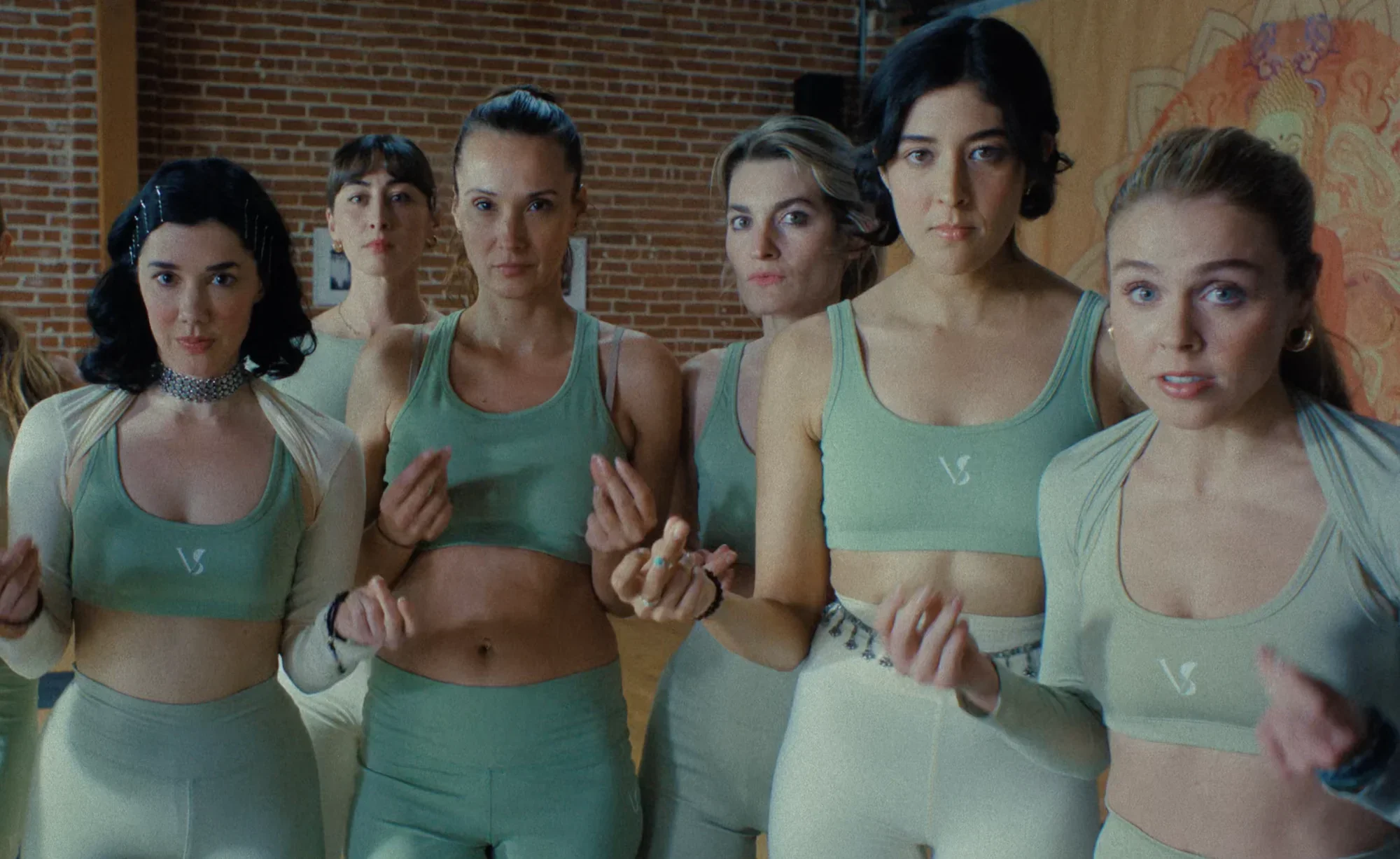
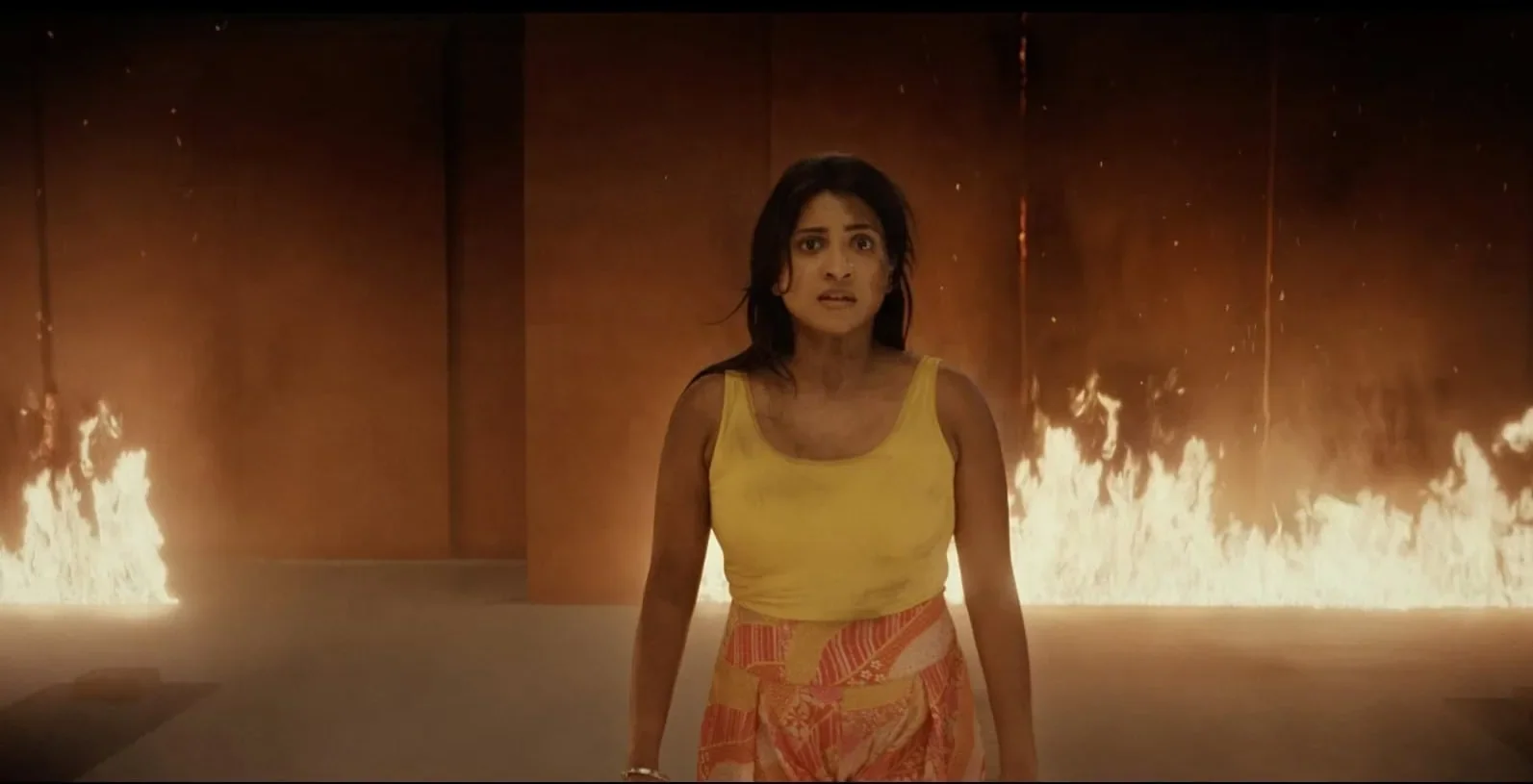
Namaslay tells the story of Gayatri (played by Kiru Srikanth), an Indian-American L.A. transplant from Jersey, who experiences the frightening consequences of yoga appropriation firsthand at a bougie studio that her friend Judy (played by Angela Sant'Albano) desperately wants to be a member of. As much as Judy shows us the capacity to be a caring and sensitive friend, she has her share of misguided moments and inexplicable priorities. Why is she hell-bent on acceptance by this heavily curated yet substantively vapid studio?
The answer, of course, is for us to explore and find through the film, which is how it allows viewers to negotiate with the intentions of various characters involved, good or otherwise. And ultimately, negotiate with how these things play out in real life.
“I think the conversation about the movie is that people will question what we call the yoga industrial complex,” Kanish notes. “They'll see it. Sometimes we say jokingly that this movie will do to yoga studios what Jaws did to sharks and beaches. They'll walk past the yoga studio and be like, I need to protect myself a little more.”
Gayatri’s journey is at the core of the story, and it’s one of identity, family, growth, and acceptance. Unsurprisingly, the filmmakers put a lot of themselves into the character.
Samosas Over Popcorn and Dollar DVDs
As Indian Americans raised in San Jose, Rish and Kanish had “real access to Indian cinema because there's such a large South Asian population in the Bay Area,” Rish recalls. That includes Indian grocery stores with cheap DVD rentals and cinemas that served samosas and chai.
Their natural instincts for genre-blending come from the influence of masala film, a category of Indian cinema emerging in the ‘70s known for its fluid use of a broad range of genres.
Kanish explains the concept eloquently:
Even outside of the movies, one idea which is very central to Indian philosophy, even across religious backgrounds in India, is this idea of [...] the infinitude of things around us. The universe is made up of an infinite number of things. And it's the combination and interaction of all of those things all at once which [makes] our life experience. In life, it's very rare that your emotions or feelings are neatly compartmentalized into one scene or one moment, right?
And in Indian culture, I think we really enjoy expressing the combination of all those things in everything that we do. That's something we want to bring to our movies also.
Namaslay captures the color, fun, multiplicity, and “spice” of masala film (masala also refers to a complex blend of spices in South Asian cooking, a fact noted at the beginning of this film), all while impressively maintaining a consistent, grounded tone.
“We can interact with the senses and the emotions of the audience in a multi-faceted manner,” Kanish observes. “That helps [them] not only hear what we are saying or what we are writing, but they can really feel the emotions in the music, or they can perceive the costumes and the colors.”
The most comical moments in Namaslay are the ridiculous ones that viewers have likely encountered themselves in one form or another. It’s like the reaction you have when a stand-up comedian exposes a hilarious, sometimes scary, truth that’s been there the whole time.
The movie is somewhat of a culmination of personal and family experiences, like when Rish and Kanish’s mom was told to “just focus on the poses” while teaching at a yoga retreat. And when their dad was turned away from a studio for wearing basketball shorts.
“Forget about understanding the cultural or philosophical aspect of yoga,” Kanish says of whitewashed yoga practice, which he was inundated with while trying to find holistic yoga videos on YouTube during rehab of an injury. “They don't give a fuck about that stuff.”
This led them to write the script for Namaslay, but the process of shopping, producing, marketing, and distributing the movie from there is just as unique of a growth story.
“Who the hell are you guys?”
“There had never been a movie about yoga before that we had ever seen,” Rish recalls about deciding to write Namaslay. “And there is so much to say about yoga. And it's so ubiquitous [...] We felt like we had an inroad to that. And the idea of yoga horror was sort really enticing to us.”
The development process in Hollywood, though, is a gauntlet with more pressure to change than from a Beverly Hills yoga studio’s dress code.
“There have been many, many checkpoints at which we have been asked to bend, and at every one of those checkpoints, we have had to resist,” Kanish reflects. That’s especially true when you’re younger, less-established filmmakers.
Many seasoned pros discouraged their approach as too inflexible. “Something that we became kind of allergic to in pre-production was [what] we have dubbed ‘usually talk,’” Kanish notes. “They all say, ‘well, usually, this is how things are done.’ If we had a meeting with a prospective collaborator and they say [that], we say, ‘Alright, thanks, I think we're done here.’”
Maintaining their vision outweighed compromising it in the interest of garnering more established support; an approach they committed to early on, according to Kanish:
“For many, many years, even before we had any conception of doing marketing and distribution by ourselves, when we were just focused on writing and directing our own movies, we always had a singular vision that we would be the sole arbiters of any and all decisions that were made around our movies.”
It’s here where you can see the attraction of commodifying yoga, because whatever intention-setting practice Rish and Kanish employed worked wonders: Namaslay has opened in AMC and other major theaters across the nation’s two largest cities, with more to come.
Those of us thrilled by the success of indie darlings Obsession and Backrooms should be scooping up tickets to Namaslay. As much as box-office earnings incentivize larger studios to keep up with originals, they are a lifeblood and foundational element for truly self-realized projects like this one.
“We have a story that we want to tell,” Kanish continues. “All of the efforts, all of the endeavors which are put forth [...] are in service of that story.”
With pending mergers threatening to commercialize movies like yoga even more, actively supporting distinct original stories is the only thing that can center us.
“It felt like something we could only express as a movie,” Rish says. “All of our favorite movies, they make you feel the point as well as see it.”
Get tickets to see Namaslay at a theater near you. Watch the trailer here.