
Imperfection, Sainthood, and Matt Johnson's 'Tony'
The version of Anthony Bourdain that I grew up watching never pretended to be perfect. He spoke openly about his mistakes, from the wasted years to the people he let down, and he extended that same honesty to everyone he met. That honesty is what allowed people to be comfortable around him. So naturally, when Tony (2026) was first announced, I struggled to understand what would make a filmmaker take on the colossal baggage of adapting the story of a man whose loss feels heavy enough that collective grief around his loss has calcified him into a saint.
I do not use the word "saint" lightly here. Doing so would be blasphemy, and I am not one to be flippant about blasphemy. I have seen Conclave. I know the power the Church holds. I know what they did to Joan of Arc. I don't necessarily endorse the Church because of the whole being Muslim thing, but I know what they are capable of and know better than to anger them. I use the word "saint" because Bourdain is a victim of sainthood. You can buy devotional prints of Saint Anthony Bourdain holding a utensil in one hand and a passport in the other. The internet has crowned him the patron saint of travelers, communion, and third culture kids. There are murals everywhere featuring him alongside inspirational captions like "in a city full of villains, we need heroes."
Sainthood is arguably the cruelest thing you can do to a guy whose philosophy relied on finding grace in the dirt. Making his legacy flawless erases the messy, chaotic humanity that made him worth listening to in the first place and replaces it with glossy plasticity. My skepticism was mostly rooted in jadedness. Our current media ecosystem operates in absolutes, demands sanitized heroes, and can only accept someone who is wholly good, and I could not fathom dragging the legacy of a man whose most famous tattoo read "I am certain of nothing" through a culture like ours. Ironically, we respond to Bourdain's profound lack of certainty with absolute certainty. A Bourdain biopic seemed misguided, as it could take someone who passed too soon and keep mutilating his legacy in the blender of a cultural landscape that factory packages everything into consumable Cocomelon. Bourdain's legacy has been through enough, and despite my faith in Matt Johnson and my appreciation for his previous work, I had reservations.
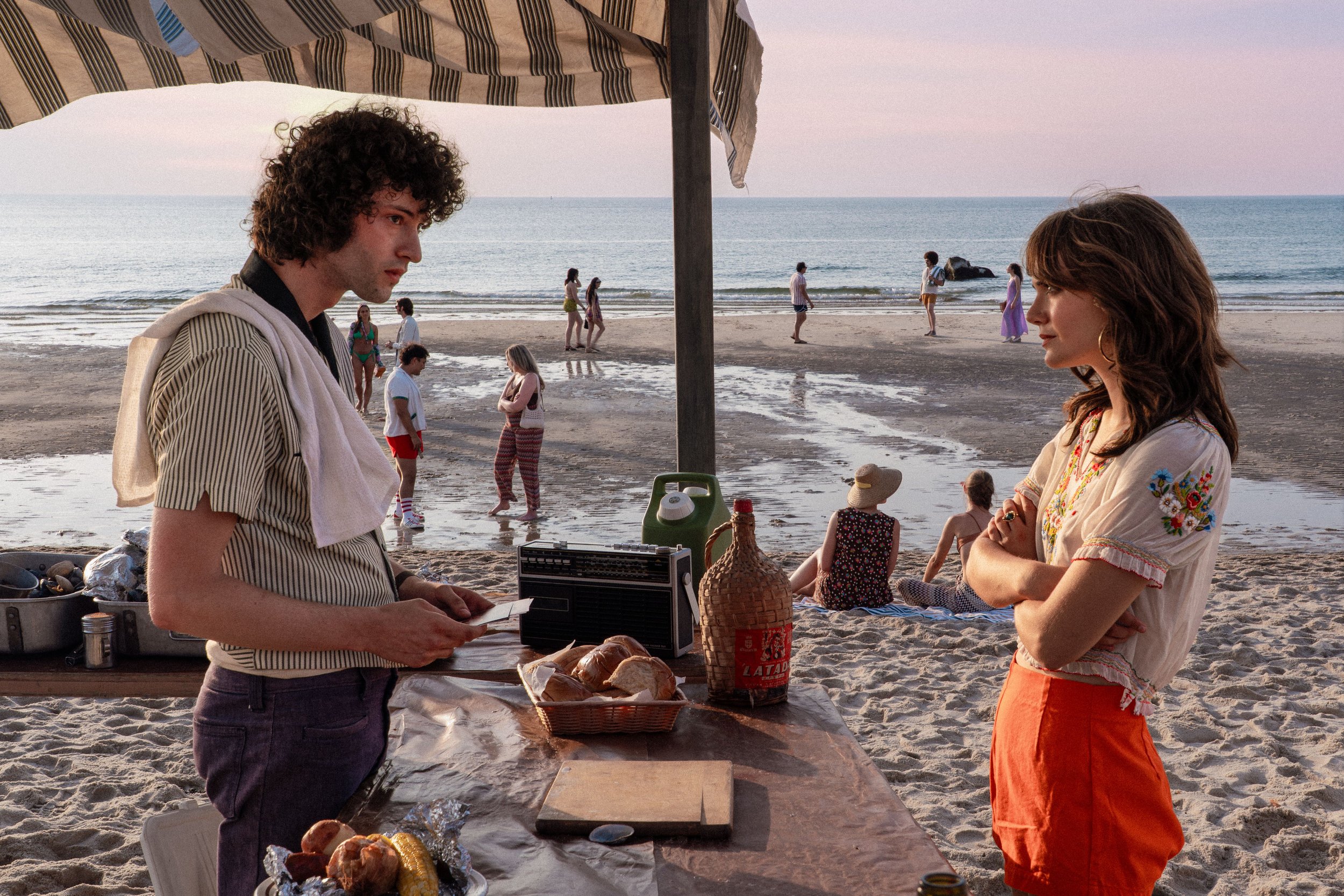
Despite the aforementioned reservations, Tony succeeds because of its guiding principle: imperfection. Imperfection was also what I had come to associate Anthony Bourdain with. My version of Bourdain might stray from the authentic version, though it feels a lot like Matt Johnson's version. If I were forced to distill his legacy into one idea, it would be the belief that perfection is largely arrived at through profound imperfection.
Tony rejects the taxidermy of the modern conventional biopic by anchoring on Bourdain's own confessions and taking him at his word. The film opens with a line from Kitchen Confidential about seventeen-year-old Bourdain being a spoiled, miserable, narcissistic, self-destructive, and thoughtless young lout badly in need of a good ass-kicking. The film proceeds to spend the rest of its runtime lovingly delivering the aforementioned ass-kicking. Johnson's love for Bourdain is clear across the screen. If you truly love someone, the purest way of showing that love is to see him at his clearest. If you want to truly adapt someone with love, then you have no choice but to throw him in the Colossal Shithead machine for 106 consecutive minutes. Any other approach is cowardice.
Paradoxically, in its quest to abandon hagiography, Tony (2026) makes Bourdain shine in a way that any other biopic would not. The movie feels like a spiritual successor to BlackBerry in its balance of cynicism and sincerity pointed at a figure whose life resists adaptation. Dominic Sessa's performance brings Bourdain to life as a remarkable shitbag. Tony lies about winning a writing fellowship, steals the cash out of his father's wallet, and rides a bus to Provincetown chasing Nancy, a girl who mentioned once that she would be there. He ends his first day in town drunk, swinging, and asleep on the sidewalk, and Tony refrains from asking you to forgive him for it. Matt Johnson has spent his career playing in this exact field. All the way from The Dirties to Nirvanna the Band, he's demonstrated a fixation on the deluded dreamer who gets so caught up in wanting to be an artist that he forgets to live his life. Tony is the first of his films where Johnson doesn't appear as a character on screen. Instead, he trusts Sessa to shoulder that responsibility, and Sessa rewards that trust by playing Tony as an everyman, a version of Bourdain that works as an entry point for anyone, universal in his imperfection.
Sessa's everyman finds himself caught in an increasingly absorbing lie. Tony tells everyone in town that he is a writer, and that everything else he's involved with is temporary. His novel is an alibi for his existence, and he is consumed by this idea of himself as a young man of letters, immersed in his art for furlough from real life. Tony will talk endlessly about all the living the book has kept him from, listing the experiences he supposedly hasn't gotten to have because the writing takes priority. The movie lets him talk without correcting him, because we can see what he can't: he is describing his life while standing directly inside it. He isn't writing anything; instead he is sweating through dinner rushes and learning what his hands are for. For the first time in his life, he has broken out of his shell and found himself somewhere real, and he will need twenty-five more years to actually write it down. His book will only be worth reading because of the nights he spent allegedly skipping the writing process.
I have been living a version of this "lie" in my own way; for the last four years I have been relentlessly obsessed with drowning myself in the world of film. I have averaged at least five movies a week (sometimes more), ravenously seeking some way to vicariously live through the screen and immerse myself in a different world. Since I started FilmSlop in 2023, this hunger has multiplied. Consumption became my art form the same way the unwritten novel was Tony's. I would watch movies hoping the screen would hand me a revelation. Movies started as my teachers, but somewhere along the line, they became my alibi.
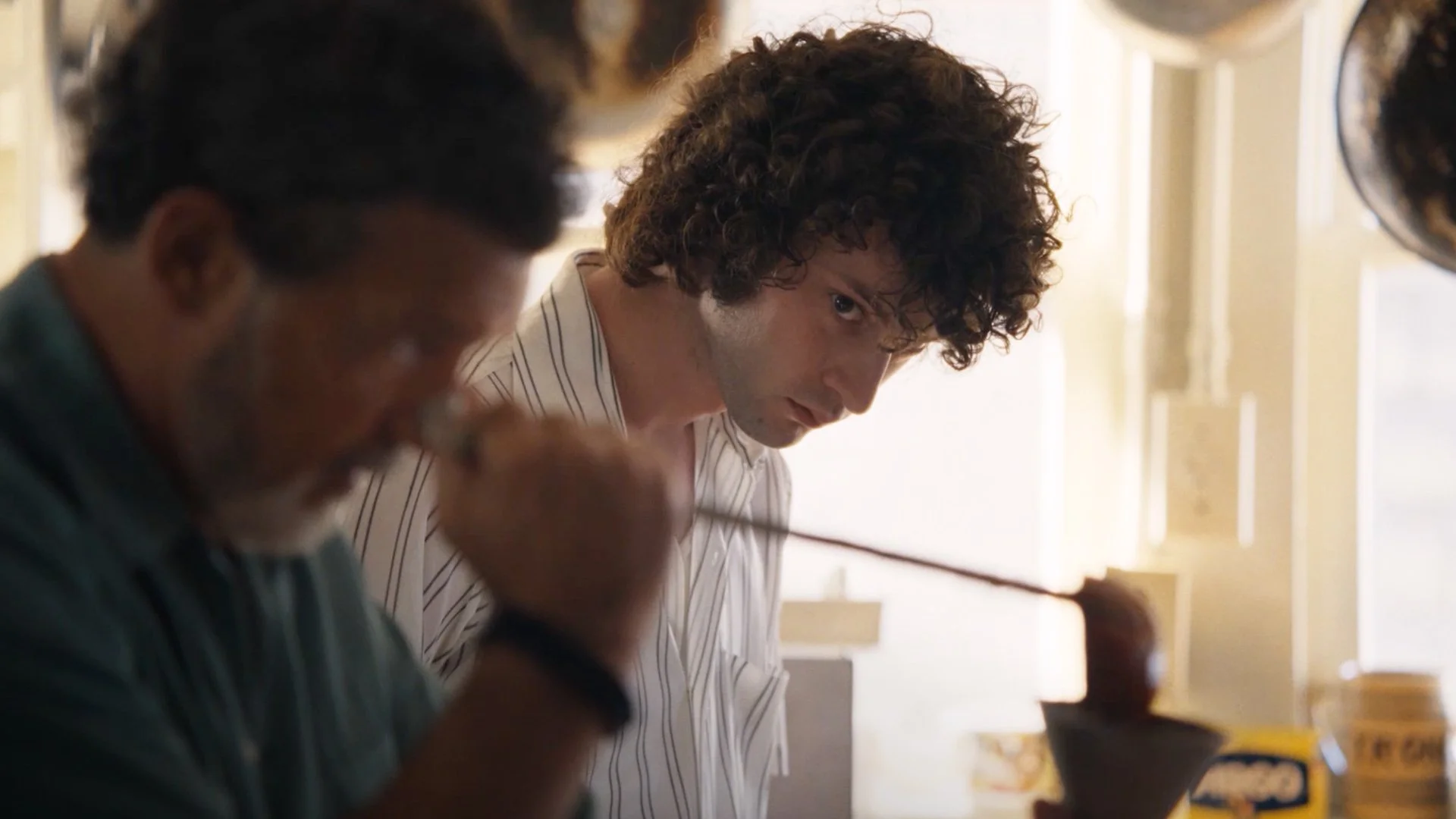
Tony finds two teachers in Provincetown, one for each way of mistaking motion for living. Sal, the prep cook played by Leo Woodall, pulls him into a whirlwind of charisma through after-hours Provincetown. Their nights together feel magical until Sal's swagger starts coming apart in daylight. Tony's other teacher, Ciro, the chef played by Antonio Banderas with almost no backstory and total authority, fishes Tony out of the gutter and offers him a hammock and a sink full of dishes. Ciro has one condition: that Tony show up on time. It is the first demand of Tony's life that he cannot lie his way around; the dishes are either washed or they aren't. There is a mysterious monasticism about Ciro's lifestyle. He came up through serious kitchens and chose to run an unfancy seafood joint. He attends Mass in Portuguese on Sundays. He treats punctuality like scripture. His devotion to the same small rituals every day amounts to a religion of its own. His modest dream of looking at the same harbor from the same porch every evening is genuinely incomprehensible to a nineteen-year-old whose religion is restlessness.
In the last month, I have made it a habit to catch the sunset every day. I know how cliché, overdone, and eye-roll-inducing this sounds, but I will be brave and say it. It has given me a sense of joy and connection I had stopped expecting from my evenings. I love the sunset. At times I have even sacrificed a weekday movie for it, and you have to understand the magnitude of that sentence because I am a strong believer in staying seated during a movie. I try very hard to not pee in a movie. I sat through the four hours of The Brutalist largely to let them know I could do it, even sitting through the intermission just so I could flex on those with weaker bladders. I mean this in a very sincere way. If you went to the bathroom during that movie and missed a single second, then I struggle to respect you, and I view you as a weak, fraudulent coward and a baby. A real cinephile sits through it and pees their pants. Yet, recently, I caught myself stepping out of a movie to catch the sunset.
The sunset has become my own form of connection to faith, and I've been trying to understand why two minutes of sunset time every day has felt so grounding. The obvious truth is that the sun doesn't pause and doesn't care whether you finished the movie and has little interest in your potential, much like Ciro's dishes. The deeper truth is that you struggle to love film as a way to understand the world if you refuse to actually live in the physical world. I was getting too deep in the zone. Just as Johnson and Sessa's Tony was intoxicated by the world and allure of being a writer, I was getting intoxicated by finding my life in film. I was spending my time inside the theater staring at a reflection of my life, ignoring the fact that the real thing was happening outside the doors. I have always known film as a dialogue with reality, and I have been dangerously close to cutting off the reality part.
Unpacking the beauty of the world becomes incredibly difficult when you are chained to a screen. The sunsets have been pulling me somewhere older and more grounded. The more beauty I let the world show me, the less deniable God became. My relationship with Islam has always been connected to nature, to how I see the world, and to my morality. It has been a nonlinear relationship. There have been stretches where I felt deeply connected. But there were also stretches of disconnect, and in those stretches I felt more isolated from my communities and my heart felt less open. The sunset is grounding in that specific way. The sunset re-connects me with nature, in turn bringing me back to the communities I care about, and I am beyond grateful for the people who help me get there. The sunset is a stand-in for more things than I can list, and my daily ritual of catching the sunset has been immensely grounding. Bourdain wrote in A Cook's Tour that perfect, like happy, tends to sneak up on you. He was writing about a bowl of soup, but he was right about the sky too; the best sunsets are rarely the evenings I planned around and frequently the ones that catch me on the way to somewhere else.
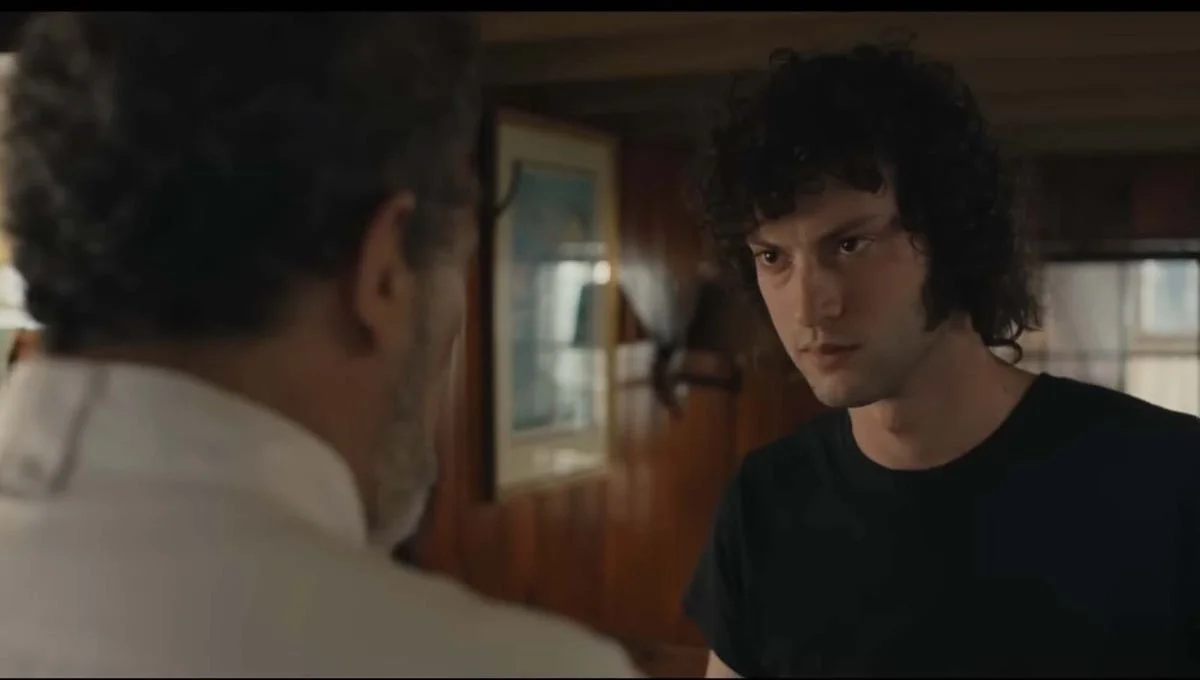
Slowly stepping away has been giving me my spark for film back. Watching the nineteen-year-old version of Bourdain that Sessa brings to the screen, I recognized how much I have grown, and yet how incredibly easy it is to slip back into a different kind of hiding. Before FilmSlop, I learned to love movies because every movie I watched was a genuine discovery. But lately, I was insulating myself in public film ecosystems by consuming more and more until I felt relatively numb. I had stagnated in my own growth and mistaken my personal plateau for the medium's limitations. Bourdain wasn't able to write his book until he had truly lived outside the fantasy of being a writer. In a similar way, I struggle to understand movies if I am using them to hide from the rest of my life. I am excited to continue catching those sunsets, to continue growing, and to keep engaging with movies the way they originally taught me to, from inside a life that I am actually participating in.
I remain unsure of what my relationship with movies will look like in the future. I know they will be around forever and I know I will continue loving and growing with them. I do know that at a 7 PM Monday Movie (a sacred endeavor for me of detoxing from work), I did something I would have previously deemed unforgivable. I stepped out for two minutes to look at the sunset, and I didn't regret it for a second. I might have missed a critical piece of the film. Two years ago I would have frowned upon this fool. The version of Bourdain that was in this movie probably would have approved.