
How Park Chan-wook’s ‘No Other Choice’ Brought Me Unexpected Comfort in My Job Search
“You have a good resume. Why do you think that you haven’t been hired yet?”
This was a question I got during one of my job interviews. And honestly, I was stumped.
If you haven’t heard it in the news or from someone looking for work right now, let me tell you: job searching in the current market has been an absolute disaster.
It’s been over a year since I received my master’s degree in journalism, and I was hoping to work full-time in journalism right after graduation. However, life had other plans. I ended up graduating in one of the worst job markets in years. Layoffs are increasing across different industries, including the journalism field. This is snowballing into other problems, such as a more competitive job search and AI being used in everything. And don’t get me started on ghost job listings and internal job hires
I sent out up to 1000 applications throughout this year, went through multiple rounds of job interviews, and did many skills tests. Only to be ghosted or rejected. I’ve heard of every sort of thing during this job search. From the automated responses like, “We decided to go with another candidate,” to advice on networking, to people suggesting I quit journalism altogether to even hiring managers turning me away after the final rounds of interviews and saying, “I wouldn’t want to be in your shoes”.
During my year-long search for a full-time job in the journalism/communications field, I have found comfort in things such as community, creative writing, and watching films. One film that surprisingly brought me comfort during this period of unemployment in my life is No Other Choice, a darkly comedic slow-burn thriller by Park Chan-wook (Oldboy, The Handmaiden). The film follows Man-su (played by Lee Byung-hun), a veteran in the papermaking industry, who uses any means possible to make sure he gets a job after getting laid off - including eliminating his competition.
Man-su attends a support group of other unemployed and laid-off workers and works up the courage to tell his wife Mi-ri (played by Son Ye-jin) and his children, their reserved teenage son Si-one (played by Kim Woo-seung), and their autistic musical genius daughter Ri-one (played by Choi So-yul). Man-su’s original promise to his family — to find a job in a few months — turned into a year of failed interviews and working in retail.
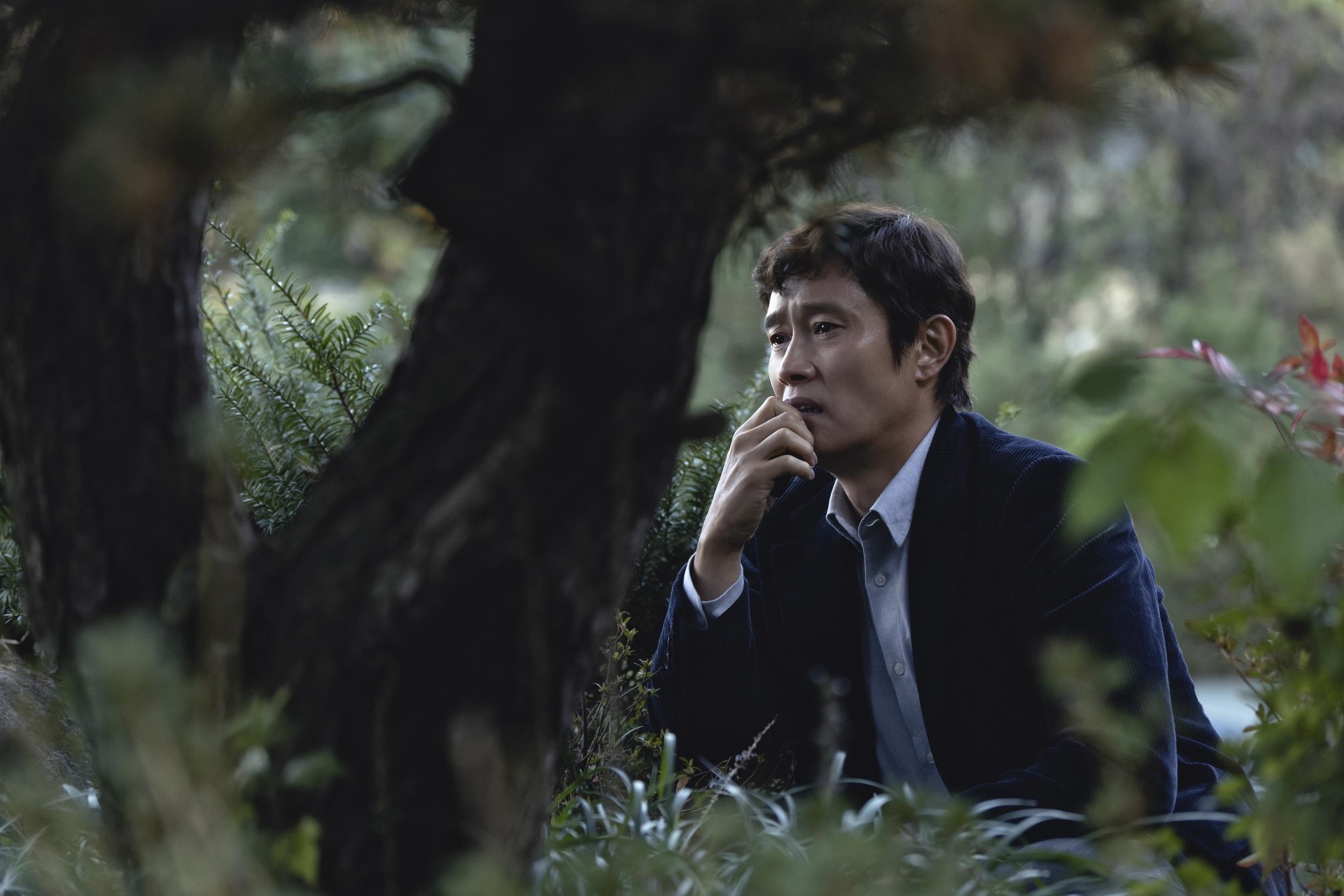
I will admit: Just like Man-su, I had a mental timeline for when I got a full-time job. After moving back to my home state, I told myself constantly that this is only a temporary setback and I’ll be in a new city within 2-3 months. To sum up how my plan went, There’s a certain phrase that goes, “man plans, God laughs”. Oh, did God laugh at my plans. Flash forward to a year later, I’m still struggling to get a full-time position (with health benefits) in my field.
This unemployment period not only affects Man-su’s morale but also his family’s lifestyle. The family reduces certain expenses, such as stopping music lessons and giving up the family dogs, a decision that upsets Ri-one greatly.
Just like the film’s title, the words “no other choice” are hammered constantly throughout various dialogue to truly illustrate the desperate nature that characters such as Man-su have in order to secure a job. What really moved me was how many of the film’s characters were able to convey how soul-crushing the job search, unemployment process, and financial insecurity can be in different ways.
Man-su does everything from networking to groveling on the bathroom floor, begging for a job. Job searching right now practically feels like begging. You can literally say yes to everything that an organization asks for, from being willing to relocate to even doing a skills test for free, and still be rejected for the role. I have done everything from coffee chat networking to attending career fairs where hardly any organizations were hiring, and it still has been a struggle to get a full-time job.
Throughout the film, you see Man-su during a few interviews, and most of them go nowhere. I have done so many interviews this past year that I’m now feeling more confident in myself and the answers that I give during the interview.
Man-su wasn’t the only one who was suffering from the grief of losing a job. Goo Beom-mo, the first target of Man-su’s job search attacks, played by Lee Sung-min, is seen as a shadow of his former self. Drinking away his sorrows while dealing with unemployment. For Ko Si-jo, the second target played by Cha Seung-won, he decides to work in a shoe store to still support his family during this difficult period.
Man-su, Beom-mo & Si-jo all felt stuck in their lives one way or another. While the ways that they coped with being in this “stuck” period varied, you can see that each of them was experiencing a certain kind of anguish dealing with this job loss. Being unemployed and searching for full-time work made me feel stuck. While my peers were either moving ahead in their careers or getting a job right after graduation, I was stuck applying for countless jobs day in and day out, just hoping that someone would give me a chance at full-time employment.
While I have been actively applying for jobs in my field, I’ve been taking up more hobbies that fill up my cup, like volunteering or doing arts and crafts.
Even the families of the unemployed are hurting with their unemployed loved one, too.
Mi-ri, despite the hardship, is trying to stay strong and support her family. A-ra, on the other hand, played by Yeom Hye-ran, is frustrated by her husband’s inability to seek out another job, and thus finds attention through an affair. Si-one even goes as far as stealing and selling smartphones just to help his family in this financial hardship.
In terms of external support, I am grateful for the encouragement from my family and friends to motivate me during this difficult hardship. Whether I felt discouraged, my loved ones would send me encouraging messages, tell me that they’re thinking/praying for me, and even send me some job listings that I could be a good fit for.
The film’s ending is almost bittersweet to me and was timely to today’s job market.
After all the crimes that Man-su commits during his job search, he finally finds a job — at a paper mill, where he is the only human worker among machine co-workers. In a time when companies are actively incorporating AI into the workplace, Man-su’s victory in finding a job only to land in a place run by machines feels hollow.
I know I’m not alone in this job-searching period of my life, and this movie has helped me realize that. Other recent grads have been struggling to find work, too, and like Man-su, the job search for a full-time job in my desired field has taken me longer than I anticipated. However, that doesn’t mean this unemployment period will last forever. Unemployment is difficult enough, but you don’t have to go through it alone.
Lastly, my message for anyone going through unemployment right now is this: Whether you are a recent grad or someone who just got laid off, just know that this unemployment doesn’t define you. You are a human being who has a lot to give to the world, and it only takes one yes to get that job. You’re not alone, and it’s going to be okay in the end.