
Spider-Man, Superheroes, and the Loneliness of Invisible Labour
Three years ago I lived in a flat I couldn’t afford, depressed and lonely, working as a street fundraiser for what was barely minimum wage. In many ways, I was Spider-Man.
That’s part of the reason why I was skeptical of this new movie. From the trailer to the marketing, we’ve known for a while that Spider-Man is poor and depressed again. His problems feel suspiciously familiar. And while this shift in image is very much needed, I couldn’t help but question its sincerity. It felt like the MCU, which has long lost its hold on the public’s imagination, was trying to lure back a culture that has moved on from superheroes. Superman (2025) hinted at a different future for the genre, landing at a time where audiences weren’t buying the narrative of a singular heroic figure solving systemic defects—exactly the kind of message I’m looking for in these kinds of movies.
All this to say: while I have been regaining some love for the superhero genre again, I didn’t have much hope that this new Spider-Man movie would be any different from its more recent MCU counterparts. Now having watched Spider-Man: Brand New Day, I’d say that I was wrong about the movie, but right about the MCU.
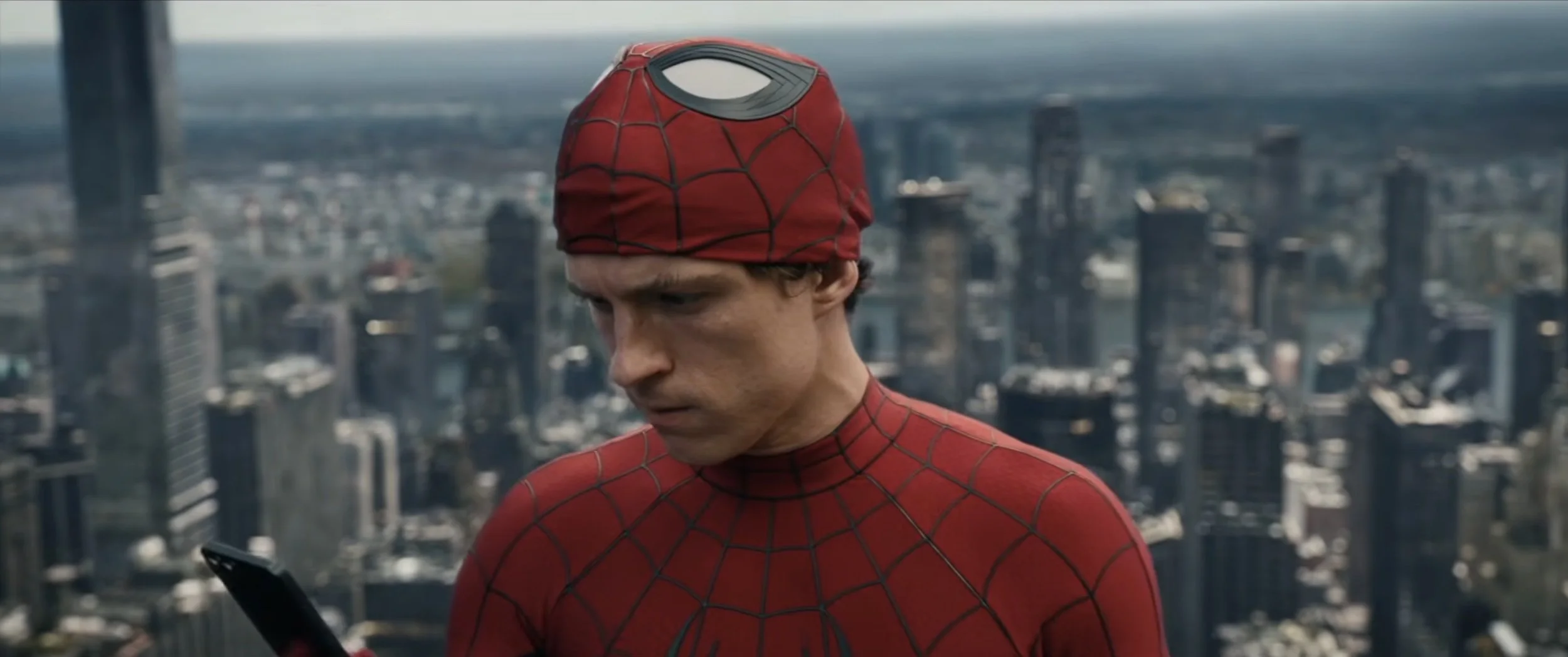
I’ve never been a harsh critic of Tom Holland’s Spider-Man, and I even enjoyed Homecoming when it first came out, but the newer movies have never felt like proper Spider-Man stories to me. This is not the case in Brand New Day. The aliens and the robotic suits are gone, and so are the flat, colourless visuals. Spider-Man is cool again. This movie has texture. His suit ripples and creases. He has a flip phone. He’s yearning for someone who doesn’t know he exists. He’s swinging around to Bad Bunny. He’s bruised like a peach and suffering from migraines and is losing at least a little bit of blood at any given moment. He is the most celebrated hero and the most invisible citizen. For the first half of the movie, all I could think was: we are so back. Spider-Man no longer feels like a fantasy; he feels like Spider-Man again. I was watching Peter get his arse kicked in a sleeveless puffer and a wool hat and remembered being soaked to the bone in Russell Square, trying to get people to stop for a chat. I couldn’t stop relating my own experiences to the hero. Spider-Man is a superhero for the gig economy.
Here’s a little context about being a street fundraiser: wearing a fundraising bib is a bit like wearing a mask. The uniform flattened me into a function, and I would immediately lose all sense of individuality. Strangers would shout, “You’re a hero!” to me without ever stuttering in their stride. I had friends who I’ve known for years completely miss me in their rush to avoid a conversation. To some extent, I get it—why waste time or money when no amount of meagre donations is going to cure cancer or end world hunger? And while I loved the work, I went home every day more exhausted, hopeless, and alone than I ever thought possible. Being Spider-Man (or a street fundraiser) is performing an endless civic repair. Peter Parker is constantly needed, permanently underpaid, and socially invisible: the perfect worker for late-stage capitalism.
This alienation is where the movie really shines. It makes a compelling argument for the dangers of solitude—Peter’s isolation, while a personal tragedy from the aftermath of No Way Home, is also a defining structure of modern urban life. I remember taking the Jubilee line back to my flat during some of my worst days thinking: what I would give, to have a nice conversation right about now. But I was too tired to make any friends. Peter is more of the same. He’s shit at talking to his neighbors. His grief is reduced to bodega flowers for a grave no one else visits. Every one of Peter’s attempts at connection with Ned and MJ is intentionally pitiful and human. It’s relatable; who hasn’t lost friends because you or they were too busy or too tired to put in the effort, and now you watch them live their lives from the comfortable distance of an Instagram feed? I’d give anything to reconnect with some former friends—except, like Peter, actually reach out.
That is not to say that the movie is perfect. Its biggest weakness is the one I was most expecting—halfway through, Brand New Day is swallowed by the cinematic universe Marvel is attempting to preserve. Characters like Bruce Banner, the Punisher, and Yelena Belova carry the obligations of the franchise, interrupting the movie’s attempt to tell a story about loneliness. Even Jean Grey, despite being a well-written and beautifully performed character, is more of an introduction into the MCU’s version of the X-Men than a character in her own right. Every crossover pulled me away from what compelled me most about the movie—Peter’s loneliness, and in turn, my own.
I was having a conversation with my brother about Peter’s journey; we’re both equally Spider-Man fans, with vastly different views on the character’s cinematic progression. I liked the movie overall—I thought that, while flawed, it read as evidence that individual moral agency is never as effective as community in combating structural exhaustion. My brother had an entirely different take: Spider-Man spends the film exhausted by labour, only for the narrative itself to burden him with the responsibility of maintaining the corporate universe. He argued that the MCU’s best movies rarely serve a purpose other than their own narrative. Iron Man, Captain America: The First Avenger, and Black Panther are all examples of movies that had little consideration for building the franchise. This is what Spider-Man needs, and what he rarely receives.
His criticism exposed the contradiction at the heart of the movie. Time and time again, the MCU doesn’t trust its version of the hero to truly stand on his own. In an era where audiences are increasingly seeking emotional intimacy over visual excess, Brand New Day almost serves as a philosophical correction to the franchise’s obsession with scale, but it fails where it matters most: actually centering Spider-Man.
Do I still think the movie is worthwhile? Yes, I do. Even if the intention of the movie wasn’t to critique capitalism-related isolation, I think there’s a lot to relate to with Peter’s journey. Despite this, the recent direction of superhero movies has had me turning over the same questions in my head for a week now, trying to come up with a good answer. Why does Peter Parker wear the mask? Why choose to be a street fundraiser, instead of working in an office? Why do superheroes inspire hope in a culture increasingly convinced that systems overwhelm individuals?
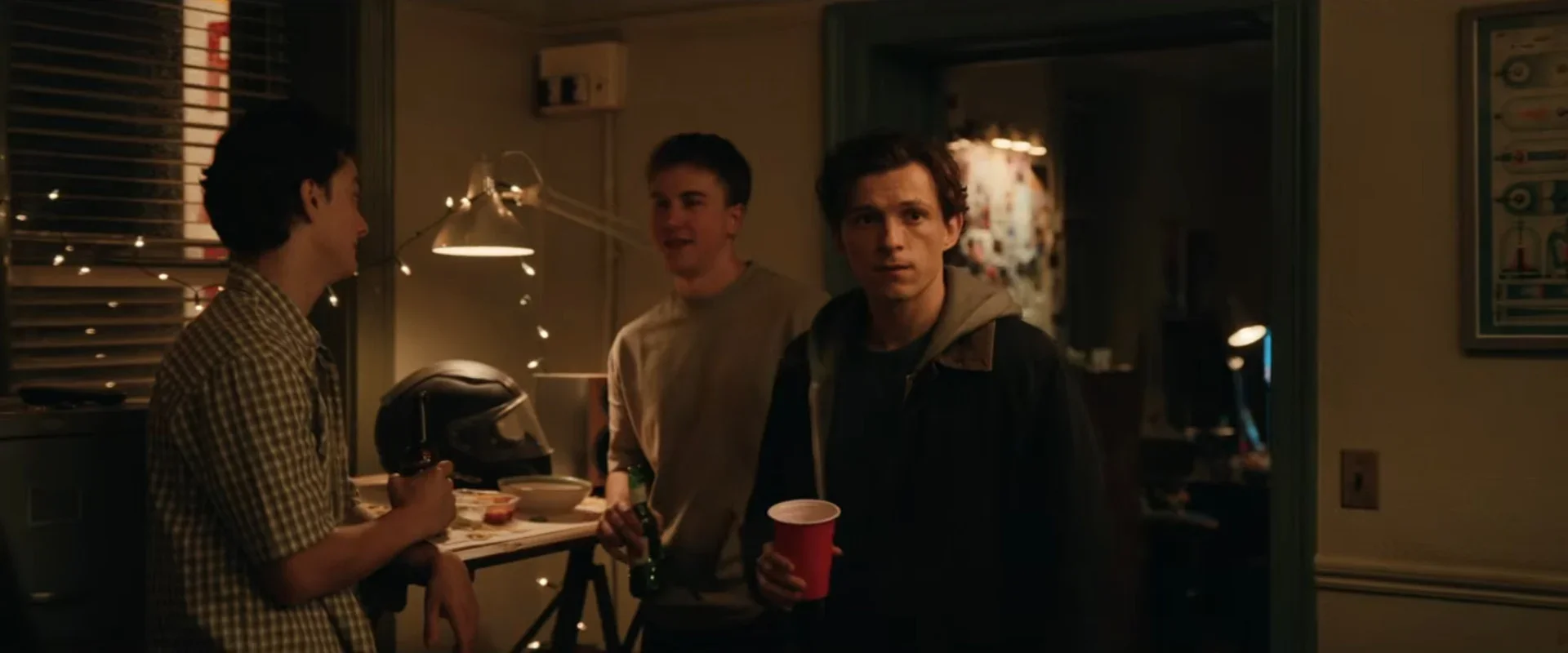
My answer is that hope has an economy of its own. Hope isn’t merely an emotion, but a tool; it determines who continues to do their job after institutions have failed. There are material conditions that prevent community, and isolation is becoming more and more facilitated; from the disappearance of third spaces to the increasing demand of labour for little compensation, it’s almost easier to just say fuck it, I’d rather do this alone. Thus, it’s refreshing to see these larger-than-life blockbusters (some of the most popular films amongst today’s audiences) attempt to tackle smaller, community-oriented stories that encourage people to be kind and to love their friends. There’s social utility in asking: what’s the point of struggling alone?
I’m no longer a street fundraiser. I was let go a year into being one—though, in all honesty, it was more of a mutual decision. My manager could tell that I was burnt out and exhausted, and it was affecting my ability to be good to the public. But on my last day at work, I couldn’t stop crying. I loved that job. I loved that job more than anything even if I couldn’t keep doing it in good conscience, and a part of me couldn’t comprehend why something that I loved so much was draining me to the brink of crisis. It was only months later that I started to get it: as a street fundraiser, you are alone. You are tasked to serve an issue the public had no part in creating, alone. And you are asking them to help solve it, alone. No part of the job truly serves the collective. It felt as though every problem was mine to patch but never mine to solve. It is a band-aid. That’s not to say that it’s not a worthwhile band-aid, or that charities don’t do good work, but a band-aid is always meant to be temporary. The wound is meant to heal.
Spider-Man: Brand New Day has the ability to connect with audiences in a really interesting way. Everyone loves Spider-Man. Everybody would listen to Spider-Man, if we could actually hear him amongst the noise. He’s a reminder of all the spider-people roaming amongst us, performing endless civic repair: the janitors, the teachers, the delivery drivers, the nurses, the carers, the fundraisers. My hope is that one day he’ll be able to speak up without the MCU (with its ideological confines and liberal-leaning militarism) talking over him.