
When I tried talking to my friends about You Can See Everything, they told me that the conversation around a film should not matter; all that should matter is the film itself.
I couldn’t help but disagree, especially when the documentary in question is specifically interested in the way our beliefs shape our reality. If we’re willing to spend three hours questioning how someone constructs a story, shouldn’t we be willing to question the narratives we're also constructing?
Since the film’s release, the conversations around You Can See Everything have focused on either deciphering Elizabeth Holmes and her motives, or praising the documentary for revolutionizing the genre and changing film history forever. These conversations may not seem worthy of discussion, and yet, as they have grown louder and louder, I’ve found myself bothered by something absent from discussion and yet incredibly important in shaping our perspectives: gender. In one conversation, a woman’s interiority is turned into entertainment. In the other conversation, we overlook the contributions of female filmmakers to celebrate the male ones. Somewhere in these conversations, we lose sight of women as people with lives we cannot fully know and as artists whose contributions we should.
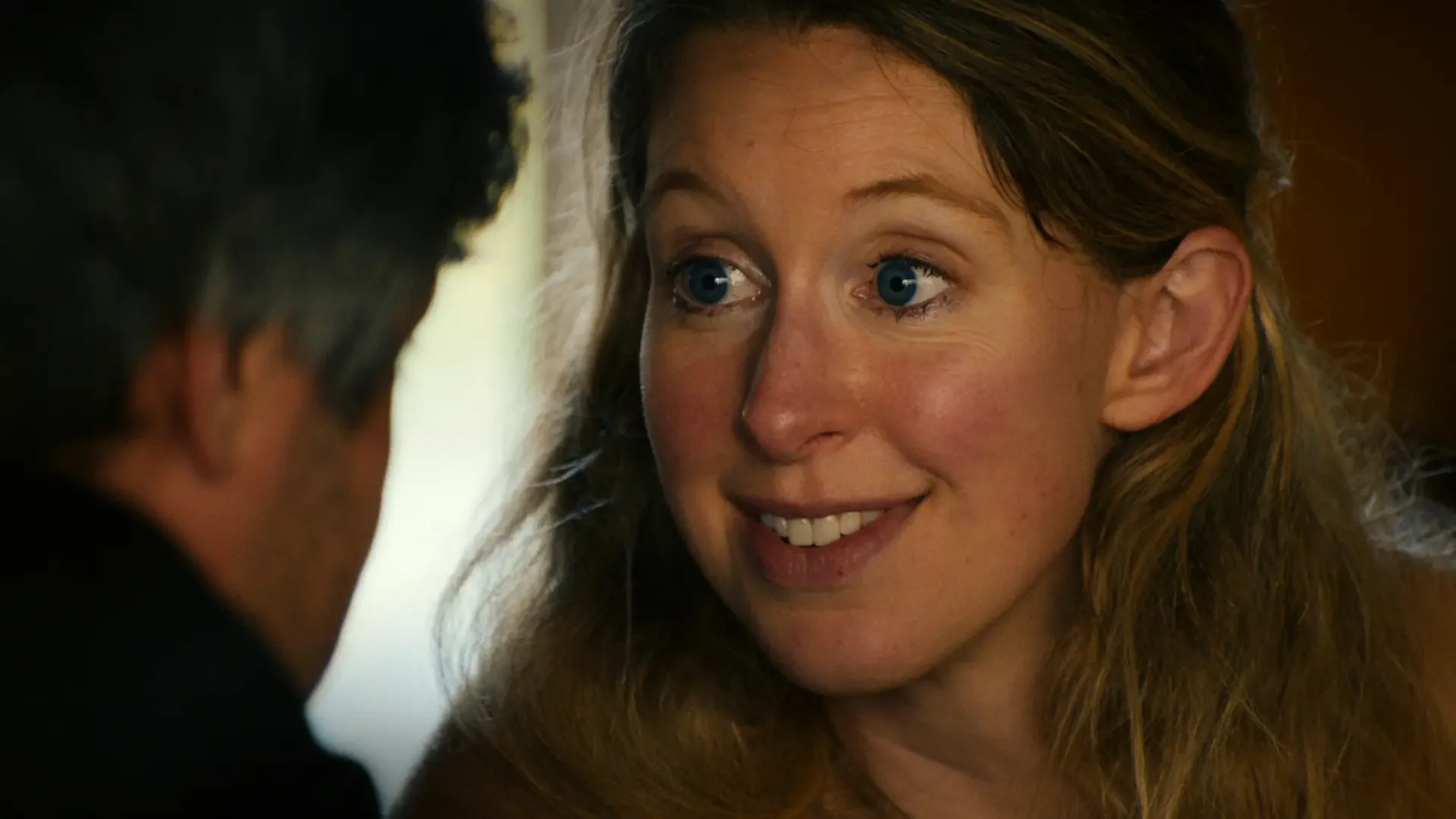
You Can See Everything follows Holmes in the weeks leading up to her prison sentence in 2023. Co-directors Nathan Fielder and Lance Oppenheim are granted unprecedented access to document this time with Holmes and her family. What starts as an attempt to understand Holmes becomes an examination into Fielder’s own perspective. He struggles to reconcile what he believes about Holmes with the woman he encounters.
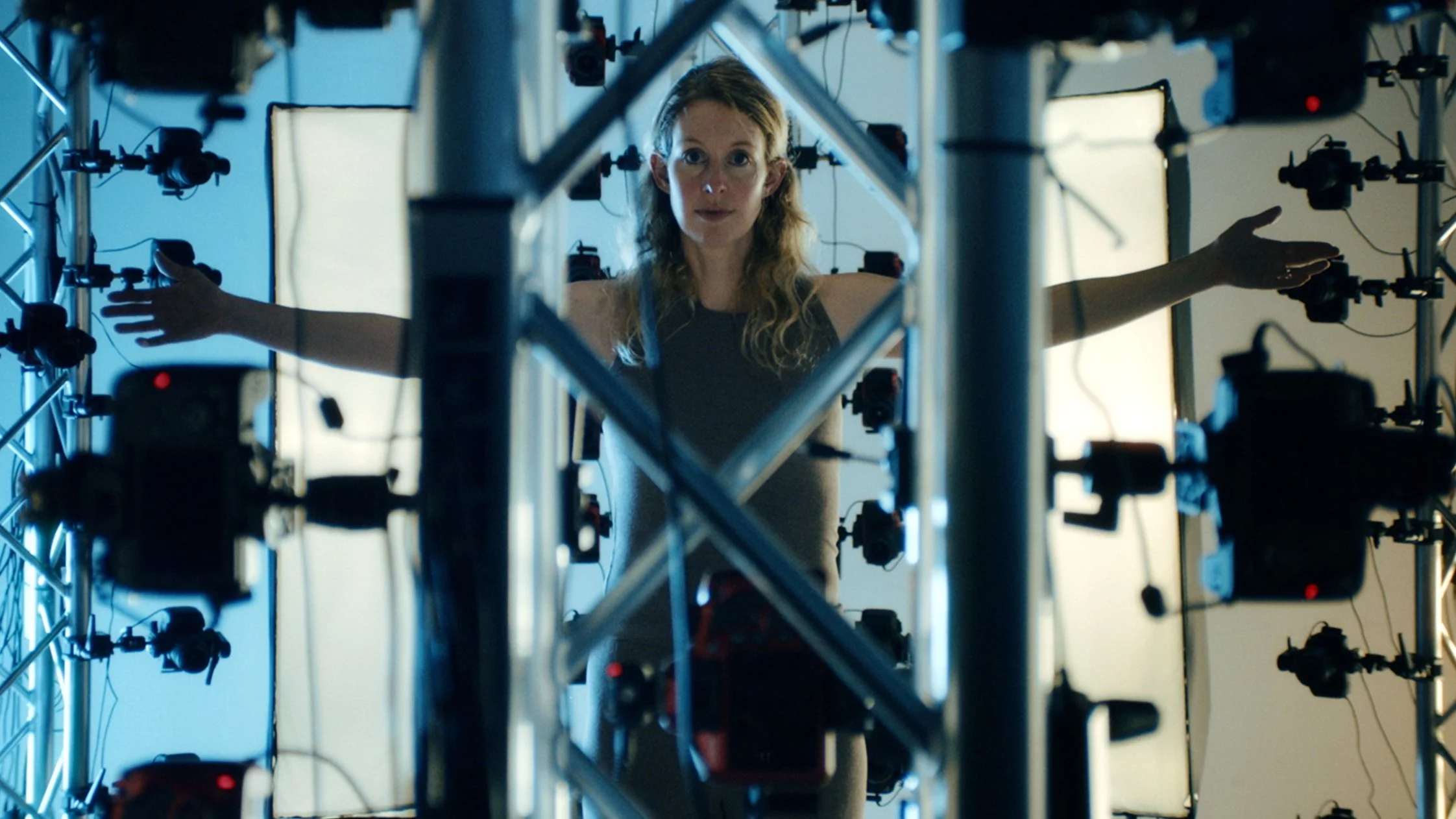
It’s interesting that the documentary seems to settle on the uncomfortable truth that you can never fully know someone, and yet, this lesson seems to be something audiences have failed to recognize. There’s nothing inherently wrong with wanting to understand Holmes. The harm she has caused is certainly worthy of scrutiny, and I can understand why audiences are desperate to make sense of how Theranos could have happened. But establishing what someone did is different from believing we can decipher everything they think and feel.
Since watching the film, I’ve become increasingly unsettled by the confidence with which people discuss Holmes, as if she is a puzzle they have solved. A recent piece from Psychology Today highlighted this obsession, even pointing out the various psychiatric assessments audiences have diagnosed Holmes with. Ironically, the article then also offers its own interpretations of her possible psychological traits and motivations.
Social media is filled with similar takes. Audiences debate the genuineness of Holmes’ response to the “Who’s on First?” sketch. A quick search of the words “Elizabeth Holmes master manipulator” will produce a number of opposing viewpoints on her.
I am less concerned with trying to understand Holmes– as the documentary shows, it seems to be futile. And yet, so many others are still trying. Perhaps watching Fielder assume the authority to interpret Holmes constructs a reality where it seems common to do so, and we feel entitled to her as well. Curiosity around Holmes quickly develops into certainty over who she is, which then becomes a claim to authority over someone else' s identity. We perceive Holmes in a specific way that fits with our interpretations of her, just as Fielder does within the prison reenactment scenes. We notice the words she says and how she says them. She becomes less of a person and more an object in our minds that we can use to support our own beliefs.
When we purchase a ticket to watch You Can See Everything, are we also purchasing the right to a woman?
As the Los Angeles Times points out, the public fascination with Holmes seems particularly unique in comparison to male figures involved in major scandals, who have not gotten the same attention. I think it’s then worth questioning whether the patriarchal desire to claim authority over a woman is contributing to our pursuit of truth regarding Holmes.
I’m not suggesting we stop questioning Holmes or trying to understand her. I’m suggesting we recognize the limits of our own understanding and reflect on what it means for us to treat a woman's interiority as something we are entitled to. And we can do that while still holding Holmes accountable.
Audiences can recognize that Fielder’s understanding is shaped by his assumptions and feelings. But when we fail to recognize how our perceptions are also shaped by systems of power, we risk reinforcing the very hierarchies of power that determine who gets to tell stories, whose stories get told, and whose contributions are remembered. And that extends to the way audiences talk about the documentary itself too.
Alongside our determination to solve Holmes is another kind of certainty– the insistence that we have never seen anything like You Can See Everything before. The documentary has been declared a singular achievement within the genre. It’s been called revolutionary, unprecedented, and marked as potentially changing documentaries forever.
Just as our perceptions of Holmes are shaped by assumptions we may not recognize, I think it’s worth considering what influences our perceptions of the filmmakers themselves, and how those perceptions contribute to the stories we tell about film history.
Agnès Varda was exploring the relationship between filmmaker and subject decades ago. In Jane B. par Agnès V., Varda documented one of the world's most recognizable women of her time– Jane Birkin. The portrait becomes a collaboration between the two women, with Varda acknowledging that she is helping Birkin construct a self-portrait, and, inevitably, will reveal something about herself in doing so.
Trinh T. Minh-Ha has also questioned the idea that documentary can offer a neutral representation of reality. More recently, Kaouther Ben Hania’s Four Daughters (2023) brought actors and real family members together to process their trauma, with the process of recreating these experiences becoming part of what the film examines as well.
Other individuals and outlets have also highlighted documentaries that explore concepts similar to those in You Can See Everything. The Washington Post shared an article dissecting the hyperbolic notion that “there’s never been any other film like it before” with a list of other documentaries to watch that are, in fact, like it.
Yet even that article neglects to mention any female filmmakers. While Orson Welles’ F For Fake (1973) and Haskell Wexler’s Medium Cool (1969) are consistently found across various lists, female documentarians’ works are much less commonly suggested.
I’m not blaming this on any individuals. Nobody needs to have actually seen everything in order to praise a movie or recommend something. But it’s important for us to be aware of how we construct narratives around films, and whose films, so we can be intentional about highlighting marginalized voices and actively work to deconstruct the patriarchy that has shaped our own perspectives around film.
Film history does not exist in a void. The stories we remember, the stories that receive funding and distribution, that we celebrate, that are preserved, that are written about and awarded, are all influenced by gender, race, and power. Those with greater access to resources are able to make their work more visible. In this case, Fielder and Oppenheim were granted extraordinary access to one of society's most controversial figures, with un-precedent creative freedom and artistic autonomy that many filmmakers, specifically women and people of color, are rarely afforded.
This isn’t to undermine the documentary; I thoroughly enjoyed it. I don’t doubt that Fielder and Oppenheim’s use of these techniques is accomplished and draws upon both of their distinct artistic backgrounds. However, when we readily describe a man’s work as singular and revolutionary and unprecedented, we are actively rewriting film history and overlooking the memory of the female filmmakers who came before.
Praise leads to more people watching the movie, to more awards organizations recognizing it, to more future filmmakers using it as reference in their work, until eventually, You Can See Everything becomes the documentary that changed everything, and what was once just opinions become cemented fact.
If women are missing from the conversation now, how will the audience know to look for them?
This is why I can’t separate the film from the way we talk about it. We watch You Can See Everything wield power over a woman’s story, and we risk believing it is okay to do the same. We turn her interiority into our own entertainment. We praise the male directors for the work in telling this woman’s story. We cement those men in the film history textbooks and risk turning the female directors who came before into footnotes.
This isn’t to say we need to stop talking about You Can See Everything. I’m asking we speak with more intentionality and awareness. The film invites us to question our perceptions, and, in the case of the conversation around it, I challenge audiences to question their perceptions as well. Perhaps the more revealing story isn’t what makes this film so singular, but why we’re so eager to believe it is.