
‘American Agitators:’ Raymond Telles on the Legacy of Fred Ross Sr.
Under the hood of every successful social movement is a thrumming engine of collective action. Community organizers are the spark plugs for these engines; they hold the responsibility of transforming private individuals into members of a coherent group in pursuit of a shared goal. While a traditional leader might be found marching at the head of a parade, organizers get behind the people and push. American Agitators, the latest film from veteran labor documentarian Raymond Telles, chronicles the life of Fred Ross Sr., a legendary organizing practitioner who wrote the playbook on modern grassroots movement-building. Through its exposition of Ross's steady, behind-the-scenes approach to cultivating trust and the conviction that change is possible within marginalized communities, Agitators lays bare the anatomy of how collective political power can be forged over time.
Ross was a veritable Forrest Gump of the frontlines of twentieth-century social upheaval, turning up in the background of one major historical event after another. During the Great Depression, he got involved with the New Deal-created Farm Security Administration, overseeing relief programs for displaced Dust Bowl migrant laborers in California. Ross was placed in charge of Camp Arvin, the same federal camp later immortalized as the subject and setting of Steinbeck's The Grapes of Wrath. Witnessing the hardscrabble conditions and rampant poverty in these settlements, Ross met with workers one by one and convinced them to band together to advocate for their shared material interests. In 1941, Imperial Japan attacked Pearl Harbor, and the United States entered WWII. A wave of anti-Japanese hysteria swept across the country, culminating in FDR's issuance of Executive Order 9066, which forcibly incarcerated over a hundred thousand Japanese Americans without trial or due process. Ross was hired by the War Relocation Authority and assigned to help Japanese Americans resettle outside the camps, with Cleveland as one of his placement hubs. He came to view the internment regime as fundamentally unjust and threw himself into finding detainees outside employment. He developed close relationships with local unions, church groups, and factory owners, entreating them to hire Japanese Americans despite the prevailing climate of paranoia.
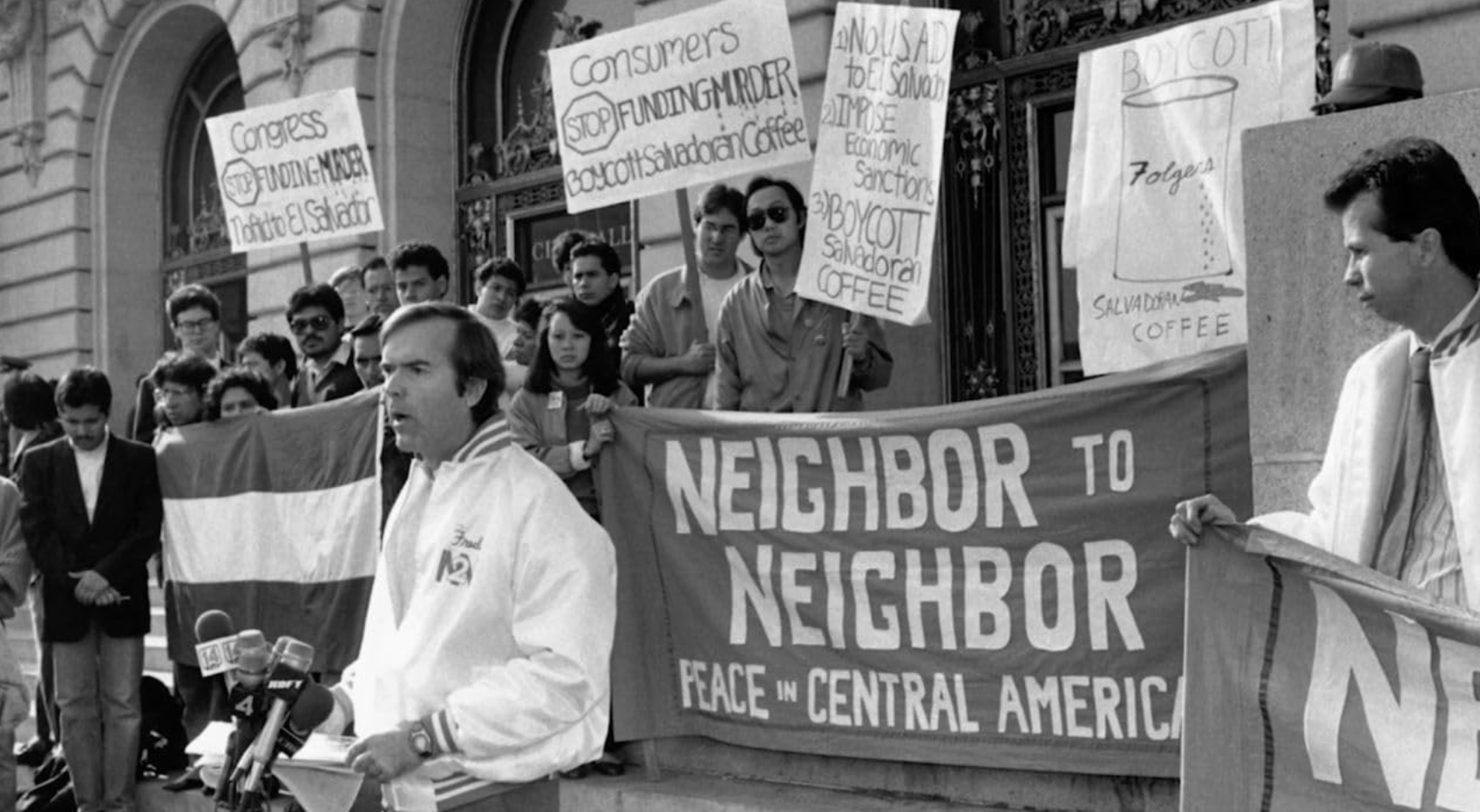
As the post-war period began and civil rights organizing started to gain steam, splinters of the Ku Klux Klan re-emerged as a violent force across the country. When Klansmen in California's Citrus Belt firebombed the home of an NAACP leader in the late 1940s, the Council of Race Relations called on Fred Ross Sr. to visit the area and investigate the conditions behind this resurgence of racial terror. Ross conducted his study by speaking with local families. He quickly identified school segregation as a shared grievance binding Black and Mexican American communities, and he persuaded a group of Mexican American parents to file a lawsuit against the school system. Their resulting victory in Mendez vs. Westminster School District became a keystone precedent for the landmark 1954 Brown vs. Board of Education ruling that ended racial segregation in public schools nationwide. Ross would then become deeply embroiled in the working-class Mexican American struggle in California. He formed the Community Services Organization (CSO), a grassroots Latino civil rights group that registered tens of thousands of voters and successfully backed Edward Roybal, the first Latino American ever elected to Los Angeles City Council. It was through the CSO that Ross met and mentored Cesar Chavez in 1952 and Dolores Huerta in 1955. Ross spent the next decades of his life, from the late 1940s to the 1970s, in the thick of a historic political awakening of Mexican American labor. He carried out much of this work through the CSO but later joined Chavez's United Farm Workers of America, where he trained thousands of Chicano organizers in the Coachella Valley and helped orchestrate the Delano grape strike and boycott.
Ross committed himself to a lifetime of activism on behalf of disenfranchised communities. On most days, that commitment meant he would stick out like a sore thumb. Picture a wiry, long-limbed white guy in cowboy boots prattling on about politics in rooms filled with sun-weathered campesinos, and you can imagine how he earned himself the sobriquet of "the tall Anglo." Despite his outsider status, Ross was able to gain people's trust using his signature house meeting approach. Night and day, he would sit down with families in their kitchens or living rooms, ask them about the challenges they were facing, and listen earnestly with an open mind. It was imperative to engage people in their homes where they felt safe, as farm workers would otherwise fear being fired or blacklisted for speaking out against growers in public. Ross's goal at the end of each house meeting was to leave people believing that the problems weighing on their lives were not beyond their control and could be addressed through collective action. He would send them off to recruit friends and neighbors, to canvass or register to vote, to organize their workplaces. As Jerry Cohen, former General Counsel for the UFW, put it, "[Fred] was always on the lookout for men and women who had to do something about injustice. That fire may be dormant, so his job as an organizer was [to be] a social arsonist who goes around setting people on fire. He wanted to turn on that switch and provide that spark."
Ross showed up in battle after battle against established powers as a force multiplier for the have-nots. If the tall Anglo was on your side, you would have a fighting chance. Each house meeting meant a chance to secure a new beachhead to build outward from, progressing from a few faces around a coffee table to crowded rallies of mass multi-ethnic coalitions. Ross likely trained more organizers than any other practitioner in twentieth-century American politics. It should be no surprise that his strategies remain relevant today. The house meeting method and countless other lessons outlined in Ross Sr.'s 1989 handbook Axioms for Organizing have proven to be evergreen, even in the digital age: the film's final leg showcases Ross's enduring influence on modern environmental justice groups, the Fight for $15 movement, the Oakland public school teacher's strike, and Las Vegas Culinary Workers Union Local 226's campaign for fairer contracts.
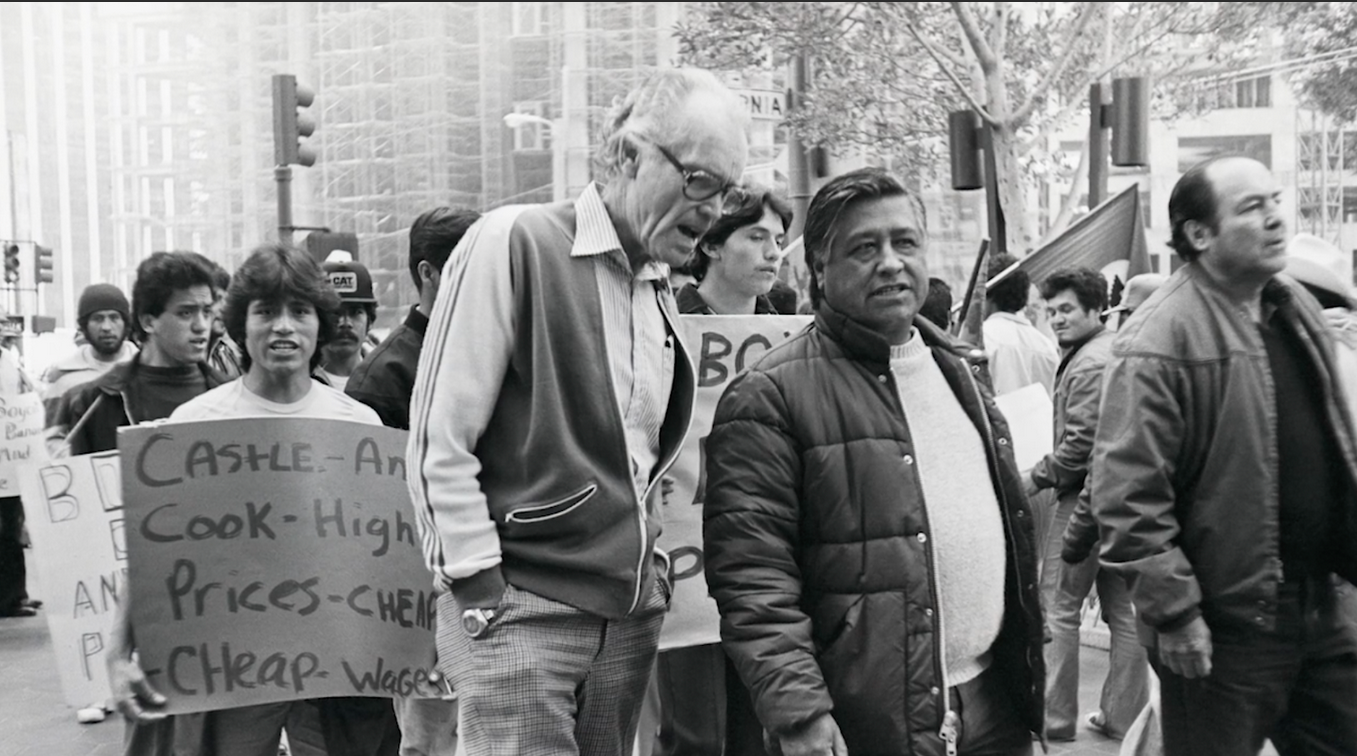
With all of Ross's indelible contributions to American organized labor and civil rights, it is worth asking: where should he sit in the wider historical canon? This question doubles as an invitation into a more conceptual debate about how history itself is shaped. Can social change be explained through accounts of exceptional individuals who impose their wills upon the arc of history, or does progress arise from the accumulated pressure of masses of ordinary people acting collectively over time? Director Ray Telles is not one for fence-sitting on this matter. At the outset of the film, a statement from the Fred Ross Project reads: "The farmworker movement has never been about any one individual. It is, and always has been, a movement shaped by courage, sacrifice and the leadership of thousands who have come together to demand a more just and equitable future." American Agitators delivers an unequivocal verdict against the so-called Great Man Theory of history, yet it is difficult to come away from the film without feeling a sense of admiration for Ross's lifelong body of work. If history belongs to the masses, how are we to make sense of a film that centers one man's transcendent legacy?
Asked about this apparent tension, Telles answered simply, "You need a good story. Fred's life provides the structure. Fred Ross was not someone who sought out attention; he was the guy in the back of the room. But his journey doubles as an American history lesson of Dust Bowl refugees, Japanese internment, segregation and civil rights, and Mexican American farmworker struggles. The goal was never to mythologize him. It was to show that he was able to build social change in all of these contexts through organizing. Fred Ross's life provides the scaffolding for communicating a more important truth: the universal power of organizing, community work, voter engagement, and coalition building." With this framing, Ross becomes less a messianic protagonist and more of a handy narrative device to tell a bigger story of how to win the struggle for collective power.
Telles cautions against letting any one individual stand in for the movement as a whole. Speaking about César Chávez, whose place in history was unsettled by later allegations of authoritarian leadership and mistreatment within the UFW, he said, "We have to be very careful about elevating our heroes to a point where we forget that they have flaws. We couldn't remove César from the story; he's part of history, but he was a flawed individual. We can't erase him, but we shouldn't ignore those flaws." Agitators navigates this tract deftly; while Chávez does appear around half an hour into the film, his appearance is pared back and focused on his working relationship with Ross. Though never explicitly stated, the film acts as a reminder that the story of the UFW, the Delano grape strike, and the fight for better agricultural working conditions is not Chávez's story alone. Reducing the history of the farmworker's movement to the single imperfect figure at its center obscures a mighty infrastructure of collective action, built not just by Chávez, but by Ross and Huerta and thousands of other dedicated Mexican and Filipino American organizers over the years.
Telles' American Agitators resists the temptation to turn Ross's organizing into an object of hero worship. It concentrates steadfastly on his tactics, experience, and commitment to the cause. Ross stands for a return to the basic fundamentals of organizing: meeting people where they are, listening attentively, and instilling in individuals the confidence that they are capable of changing their own political realities. Agitators leaves its viewers with a field guide for shaping the future, an optimistic blueprint grounded in the central belief that history moves when enough ordinary people, perhaps ignited by the spark of a social arsonist, organize behind a common purpose.