
Charlie Tyrell on Fatherhood, AI, and Agency
Charlie Tyrell and Daniel Roher became fathers while they were making a documentary about whether it’s actually responsible to bring children into an uncertain, hyper-accelerated future. Tyrell describes the three-year production of The AI Doc: Or How I Became an Apocaloptimist (which premiered at Sundance and hits theaters March 27) as a grueling exercise in existential anxiety. Backed by the Oscar-winning producing teams behind Navalny and Everything Everywhere All at Once, the film attempts to confront that dread by cornering the "Optimistic Bloc" of AI CEOs (like OpenAI’s Sam Altman and DeepMind's Demis Hassabis) alongside the "Pessimistic Bloc" of ethicists (like Tristan Harris).
The AI Doc: Or How I Became an Apocaloptimist follows Roher as he attempts to process these massive, abstract tech debates from inside a painstakingly handcrafted, stop-motion replica of his Toronto art studio. Roher is in front of the camera, conducting his anxieties publicly, while Tyrell is behind it, stitching together a film colored by his own existential dread. Production was originally supposed to take eight months, but because the technology was moving faster than they could document it, making the film turned into a three-year scramble. "This was a project that we dove into feet first, where there wasn't really a plan on what we were even making when we first started," Tyrell says. "We were looking at doing it with narrative elements, as well. I think the first conversation was like a 45-minute piece, and then it quickly expanded." Once they started untangling the subjects and trying to figure out what the film actually needed to be, the timeline went out the window. By the time they finished, Tyrell’s son had grown from a newborn to a boy who could walk and talk, forming his own relationship with the very screens and systems his father was documenting.
Holding onto the documentary’s original thesis turned into a moving target. Whatever message they set out to make had to mutate just to survive. “The answer to that is a bit complicated, because in some ways, it did survive, in some ways, it evolved. Short answer, yes, with more layers added on top.” Tyrell talks about his son and whether he’ll grow up to be one of those kids who can’t focus, whose brains have been rewired by systems designed to fracture thought. “Is my kid going to be one with zero attention span when he gets to his teenage years? I don’t know. Is there anything I can do to make sure that he is not like that? I can try a lot of things, but he is a person, and he’s going to determine that probably somewhat on his own.”
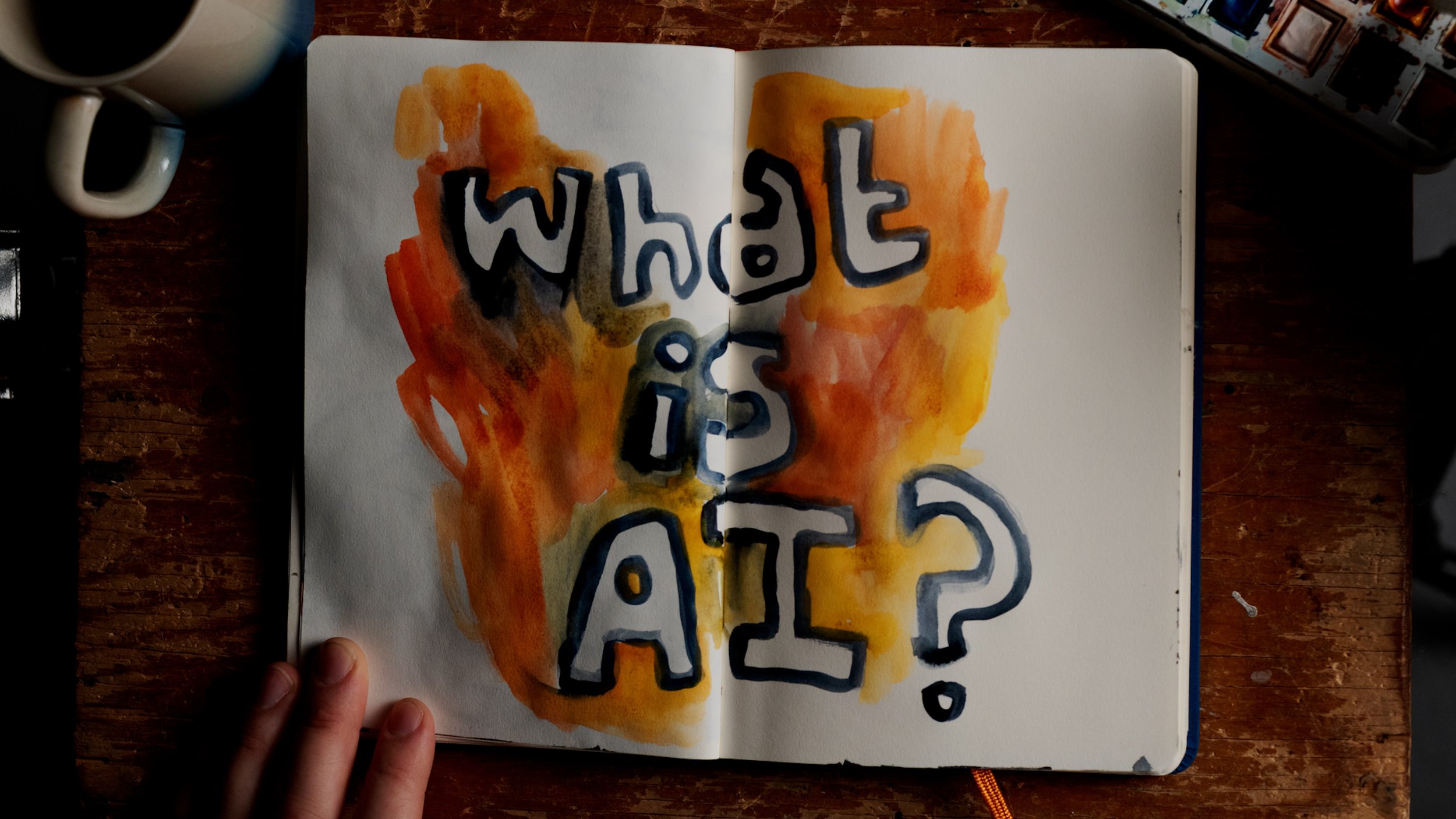
The screen time panic, the rise of generative tech, and the loss of our cognitive agency all point to something more systemic. Tyrell’s anxieties expose AI as a symptom of a much larger rot. The rapid rise of AI is daunting, but there’s a case to be made that the technology is just an accelerant for a predatory framework that has been festering for years, one weaponized by distribution systems designed to take advantage of the masses.
A lot of Tyrell's perspective is informed by his own childhood. “That’s part of the journey of life, right? And my parents helped me shape a lot of that. If they were overly prescriptive, I probably would have resisted as well. All teenage boys kind of become a contrarian at a certain point, and whatever you tell them to, nope, I’m going to do the opposite.” He’s ready for that when his kid reaches that age, or at least he’s trying to be ready while knowing he can’t control any of it. In terms of what kind of world his son is coming into with AI, he feels definitely a bit more informed after spending three years making the film, “just as kind of concerned and anxious about it as I was in the beginning.”
He has the vocabulary for it now, and more language for naming what he’s feeling without being able to resolve it, but the anxiety about losing control still bleeds into his daily life. Tyrell points to an everyday example, opening Gmail and seeing a 50-percent-opacity suggested reply hovering over an email from a close friend. Disguised as a Trojan horse of convenience, the algorithm nudges him to surrender his agency, offering to choose his words and dictate what he should say. “I didn’t ask for that, and nor do I want it. Do I feel like I can phone up Gmail and be like, Hey, you know what, I really don’t want that. Can you turn that feature off? No, that feels like shouting into a void.” It makes him really uncomfortable and disappoints him. “We have to search for agency more now with more effort than we probably did. It is still there. And that can be done through boycotting, that can be done through finding other services, that could be done by, yeah, maybe I write a note and just have to do that.” There’s going to be a level of balancing the issues he does need to assert his agency for and the ones that maybe he doesn’t because they’re less important. “There’s a balance of life that you have to pursue with anything, especially as a parent, especially as a human being. And it’s a lot of work, it’s worthwhile to do, because what are we doing here other than leaving a pathway for other people?” He describes navigating modern technology like walking down a street with a bunch of buildings. “We need to decide which ones we want to go into, rather than just go into all these buildings every day, because you told me to. We need to be more selective.”
“If you don’t say what you want, then other people will tell you what you want, and they’ll make that choice for you. And I think we need to interact with our technology now more than ever, because we need to say what we want to do rather than just letting it be something that options and media are presented to us. We need to start curating it a bit more.”
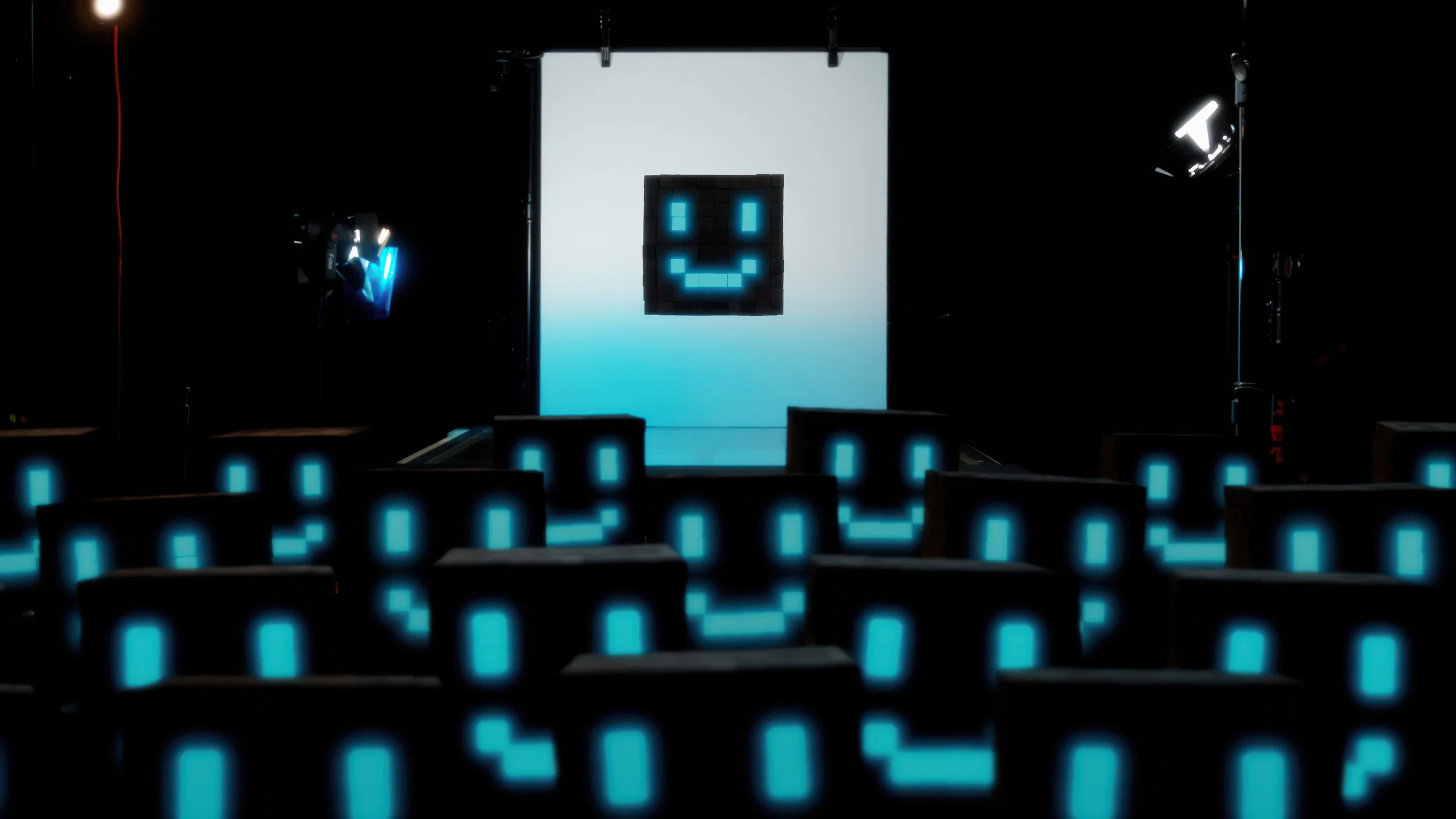
Tyrell and Roher made deliberate choices about how the film would look to reflect this exact philosophy. They resisted the pull of a sterilized, frictionless digital landscape and committed to stop-motion animation and handmade sets. They built a one-to-one scale replica of Roher’s art studio in Toronto and made it exact, every detail recreated by human hands. “Part of it was to be antithetical to the digital landscape and what you might expect an AI film to have. Really, a lot of it was just a shout-out to the people that make films, and our own shared humanity, and getting the best parts of this film were getting people in a room together to solve a problem together, to shape something together.” It stands as a physical rejection of the idea that art needs to be optimized or automated in order to be valuable.
The film’s title teases apocaloptimism as a framework, believing in the potential for technology while staying discerning about how we use it. They tried to make the film as evergreen as possible while acknowledging it remains a presentation of a certain point in time, a specific moment when humanity is shifting into this technology and doubling down on it. Tyrell acknowledges there are massive ripple effects they had to leave out of the narrative. "There are certain things in the film that I do acknowledge maybe need their own film, like, you know, the energy usage, the displacement of people for some of these data centers," he says. But he hopes The AI Doc: Or How I Became an Apocaloptimist will inspire other filmmakers to pursue those specific stories, because they only had room to show the big layout of what the world is going to be and what we can do right now.
As he prepares to welcome a daughter in June, he acknowledges having a child forces your hand. You cannot survive in raising something that you love if your default setting is pure cynicism; the child will absorb that baggage. It becomes a necessary survival tactic. "You have to believe and acknowledge that things will work out," Tyrell says. "You do need to guide them and guide them with a belief that these things can be accomplished. Because otherwise, what’s the fucking point?"
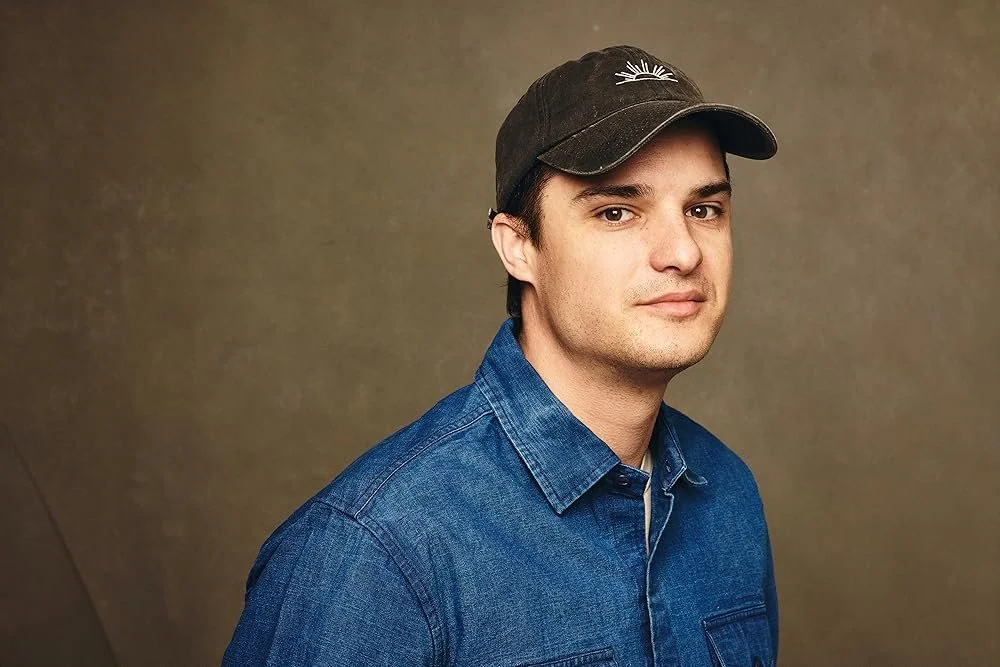
Tyrell’s previous work includes My Dead Dad’s Porno Tapes, a short about discovering his father’s hidden life that was shortlisted for the 2019 Oscars. Both films are about inheritance, about the unasked-for things passed between fathers and children, and the new one extends that question forward in time. Now he lives in that inheritance as a father. His son is two years old. People leave footprints in many ways and work is one of them. “That’s a beautiful thing about making things, especially making films... you don’t know what answers you’re providing for some people in what you leave in them, and that really excites me, and it’s a little bit scary, too.”
The AI Doc: Or How I Became an Apocaloptimist is one of the biggest artistic footprints Tyrell is leaving behind. He thinks about what his children will understand about him when they’re older and what they’ll see when they watch this film. “I hope that most of how they know me is through my interactions with them and my relationship with them, rather than what I left in my work. I think that that might help them see some things. The goal of being a parent, for me, is to have that mutual understanding of each other through our time spent together.” The technology will keep mutating, splitting into new heads every time someone tries to cut one off, but that doesn’t matter to Tyrell because he is no longer trying to outrun it. He'd rather be where he is today just spending time with the people he cares about and being himself.