
Suzannah Herbert, Director of ‘Natchez,’ on Cinematic and Historical Disillusion
Natchez, the new documentary film from Memphis filmmaker Suzannah Herbert, opens with a massive boat slowly making its way down the Mississippi River. “Ol’ Man River” plays — a song from the 1928 musical Show Boat, which was progressive for its recognition of racial discrimination in the South. But it’s only the instrumental; the audience is enabled to ignore the lyrics and get swept up instead in the romantic and nostalgic melody and gorgeous view. The film cuts to a garden club meeting, which we later discover is a powerful social and political club of Natchez, where all of the attendees are white. The mayor gives a speech where he acknowledges Natchez’s complicated history, “even the bad,” but firmly believes Natchez is a community “that believes in coming together in love.” The Natchez water tower appears through gorgeous tree branches in a hazy and distorted lens - it’s gorgeous and romantic, but a little off-putting.
In the mid-nineteenth century, Natchez was home to the greatest concentration of millionaires in America due to human trafficking and the cotton industry. At the start of Reconstruction, Natchez saw a burst of Black political and economic power which was then halted by state and national government. After a boll weevil infestation which devastated the cotton industry,, Natchez turned to tourism, romanticizing the antebellum South as a time of manners and aristocratic brilliance, conveniently ignoring the devastating legacy of slavery upholding this lifestyle. Teenagers pose in Confederate garb, tour guides speak of friendly relations between “servants,” and tourists marvel at how they can ignore “unsightly current events and [go] back and [enjoy] the beauty of their time.”
Although surrounded by the current and historical tensions of Natchez, Herbert had never been. She described her first experience seeing Natchez: “I was just really struck by the beauty there, but also the pain and the disconnect between the pain and the beauty.”
Suzannah Herbert grew up with a more accurate version of history, thanks to the efforts of the Memphis public school system and Facing History and Ourselves, an organization dedicated to using the lessons of history to challenge teachers and students to stand up to bigotry. Despite this robust education, the exposure to antebellum romanticization still presented itself in her childhood: “My dad's family is from North Carolina, and we would go visit my grandmother a couple times a year. And she was definitely part of a more waspy, southern, genteel kind of circle. She was a member of two different country clubs in North Carolina, and so we would go to the country club and have that kind of insight into those worlds. I feel like the ideas of the lost cause [seeped] into my consciousness without it being taught directly to me.”
The “Lost Cause” refers to a false narrative surrounding the Civil War that paints the Confederate cause as just and heroic and downplays slavery’s role in Southern social, economic, and political identity. I related to this description of omnipresence: “Although I grew up in Memphis under liberal parents who were not from the South, I would hear white classmates’ parents refer to the Civil War as “The War of Northern Aggression.” A powerful shot lingers on a textbook featuring this title prominently displayed on a coffee table in one of the Antebellum mansion museums.
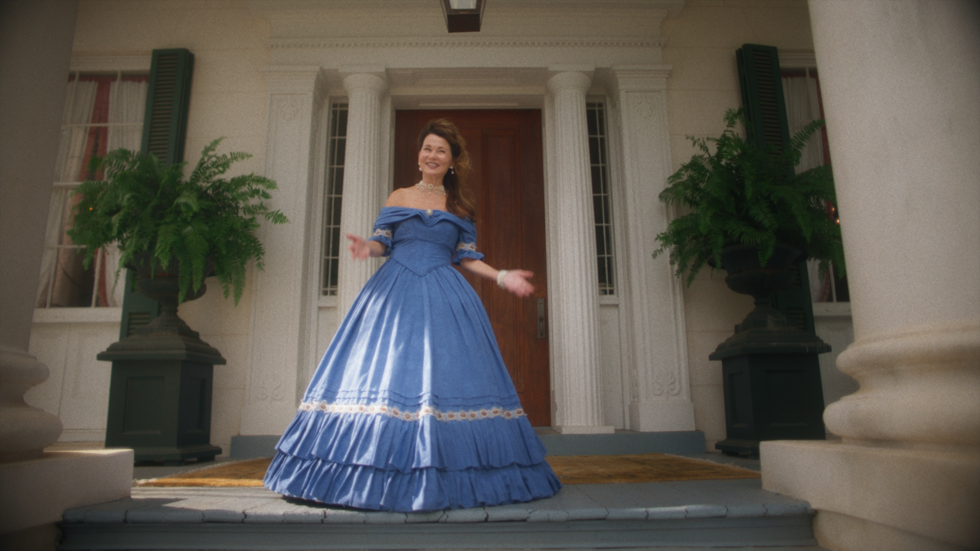
A brilliant aspect of the film is the cinematography, which entangles and entraps you into the beauty of Natchez: “We talked a lot about how to capture the grandeur of the homes, but do it in a way that is to point that. . .there's something missing and something is not right. So, Noah [Collier, Natchez cinematographer,] wanted to shoot the film at a low angle, that since it's not how people visually see the world, it points that something is a little unstable, that there's something off here. And it also makes an audience member pay a little bit more attention.”
I was particularly struck by the effect of high aperture; light floods in through the windows and open doors. It serves a dual, oxymoronic effect; you feel a sense of obfuscation as well as history forcing its way inside the mansions. In Herbert’s words, “It was really important for me to draw people into the fantasy just like Natchez does in a way. And then with the film and with the visual language to slowly peel back the layers behind that romanticization of place and of history.”
Herbert is open and excited about the film’s visual influences: “I kind of wanted to make Gone with the Wind, meets White Lotus, meets Night of the Living Dead. And with a touch of Get Out.” Gone with the Wind served as the strongest visual influence, creating a romantic narrative of antebellum South that has been Natchez’s bread-and-butter for nearly a century. Creating the sense of a narrative film was a key focus of production, as well as capturing nostalgia. “Noah wanted to shoot on vintage prime lenses from the 1960s to give the film an ephemeral glow to reflect the oppressive humidity of the south and of Mississippi and also the oppression in history.”
Robert Altman’s Nashville served as inspiration for the framing device; as the campaign van is used to introduce new characters, “Rev” Tracy Collins’ tour bus takes us to the various houses and characters of the documentary, as the audience attends multiple tours of his. He grounds the film’s exploration of Southern romanticization through his research. As he puts it, “I’m about to violate some Southern pride narratives with truths and facts.”
David Paul Garner Jr., who single-handedly maintains and operates the mansion Choctaw Hall as a passion project, provides an enthralling and confusing figure. David spearheads LGBTQ acceptance efforts and casually throws out racial epithets and displays a callous disregard to Black oppression. “We wanted to show David's involvement because of the complexities there and the lack of intersectionality that he possesses, and show that, for David specifically, just because he is a member of an oppressed community doesn't mean that you can't be an oppressor. I think that it speaks to the power of whiteness in a lot of ways, and how that can be so powerful to hold on to in terms of exerting your believed superiority over others.”
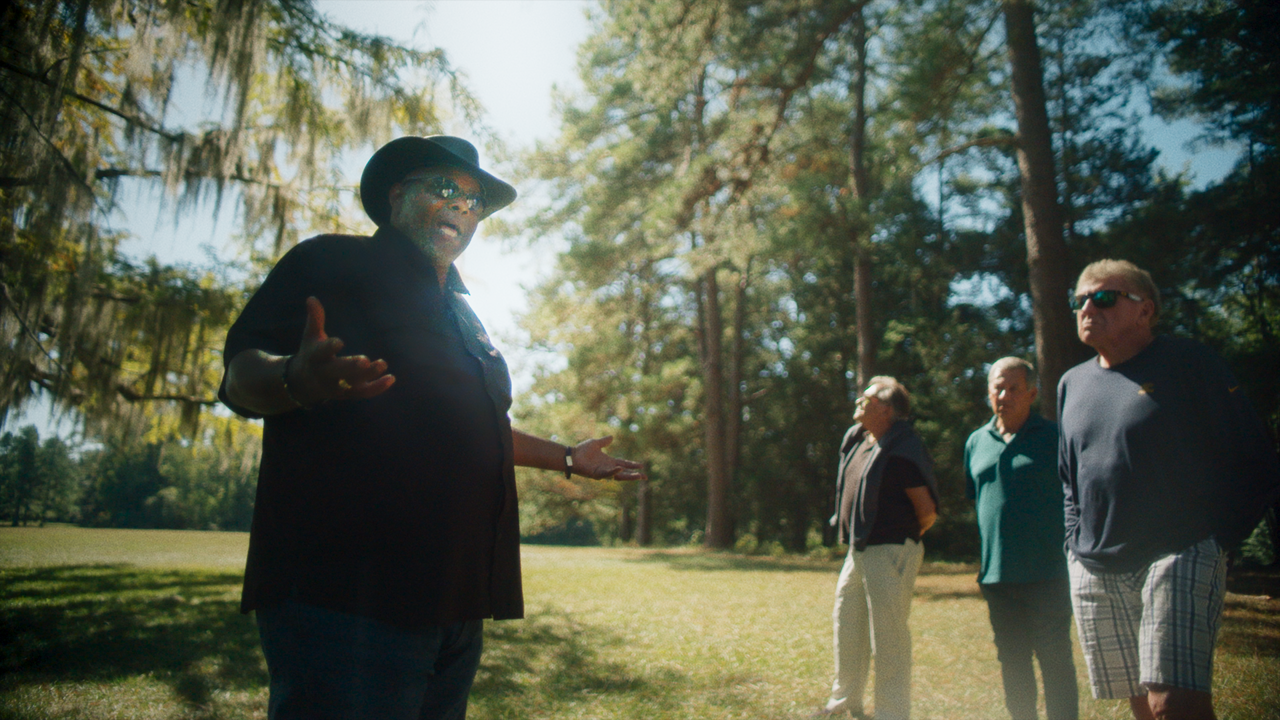
Natchez highlights locals that work to preserve historical accuracy. The film pays close attention to Ser Boxley, a local activist, and the National Parks Service’s efforts to make Forks of the Road “the premiere slave market museum in the country.” The film holds out hope for historical teaching to change minds. In a great scene towards the end of the film, a Garden Club member, Tracy, learns about the brutality of the slave trade through Rev’s tour. Earlier in the film, a scene where owners of a preserved antebellum mansion gloss over the brutality of slavery in the household cuts to the mansion shutting down tourism operations. The message is clear – historical obfuscation is no longer profitable.
These tensions between facing history and upholding white supremacist narratives, of Southern “gentility” and racist remarks, of visual beauty and ugly policy are all brilliantly explored. Like any great documentarian, Herbert chases this difficult exploration to create a brilliant film: “The tension was all just like a lot, and it was very uncomfortable for me. I felt like there was something very wrong. I actually ran away from that discomfort for a couple years, and the film was on a different path. It wasn't until a couple years later. . .where I realized with my producer, Darcy McKinnon, that we actually needed to face that discomfort and lean into it. And the discomfort is where the story and the tension actually was.”
See if Natchez is playing near you here.