
Lauren Noll on ‘Same Same But Different’ and the Power of Shared Interiority
Lauren Noll directed Same Same But Different, a romantic comedy about three Iranian-American best friends who show up to Cape Cod for a green card wedding and spend the weekend together. The film is a uniquely Iranian-American story about three Iranian-American sisters. But its director is a white woman from northeast Tennessee who grew up Mormon. A non-Iranian director handling this material should raise every alarm that Hollywood's long history of cultural flattening has taught audiences to feel. But the film works. Noll made it with her best friend Dalia Rooni, an Iranian American screenwriter whose cultural voice Noll never tried to overwrite. Instead, Noll brought to the directing a love practiced over years of reading the lives of people whose histories look nothing like hers — a love that made someone else's interior world feel as urgent as her own.
Based on a real weekend, Rooni tells the story of three Iranian American women who get to be petty, generous, scared and wrong. If Iranian characters in American cinema have mostly been reduced to grief and geopolitics for forty years, that interiority alone is an achievement. Noll shaped the emotional life of the film while Rooni kept the cultural details honest. "The heart of the film is the friendship of the three girls," Noll says, "and my friendship with Dalia is the foundation for this all to work. She and I have always supported each other's identities and POVs in the things that we've made together."
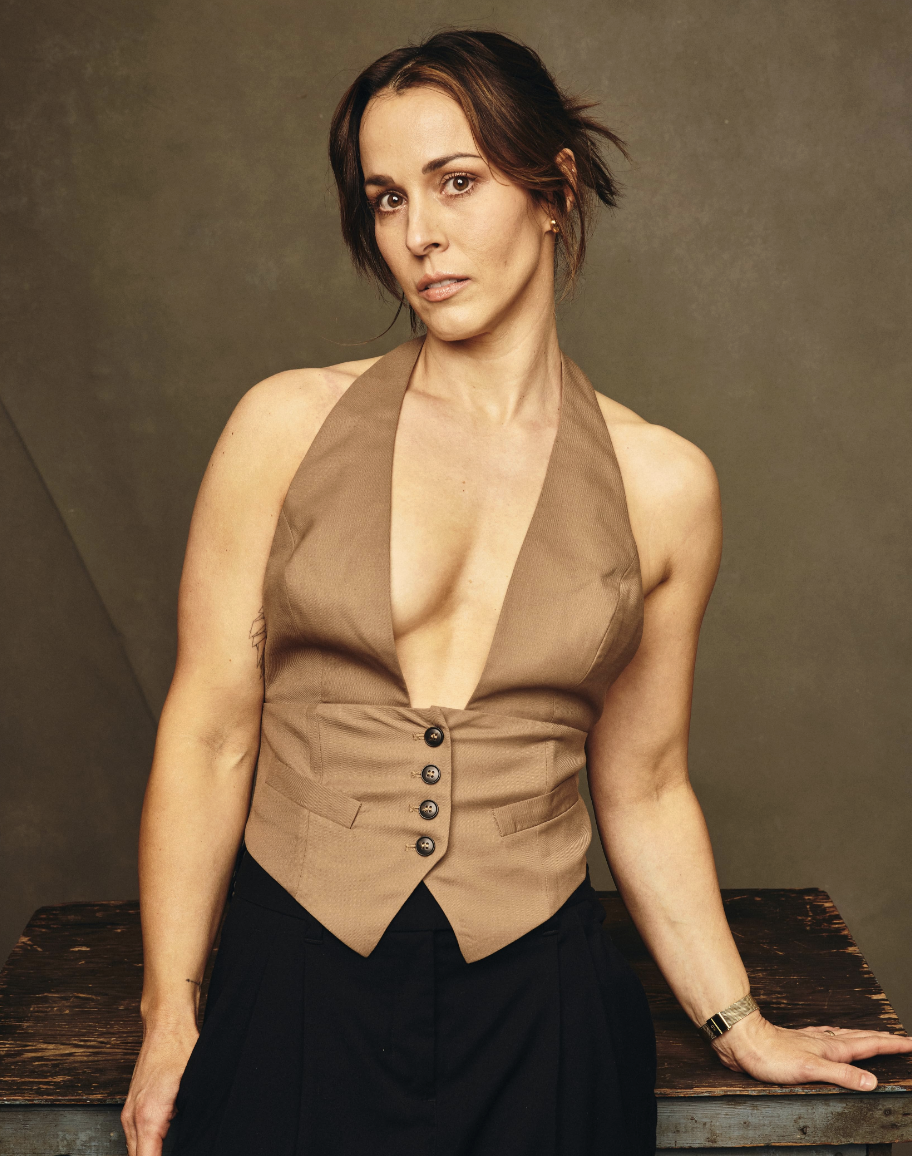
Noll compares identity to a puzzle. She was putting the pieces of hers together inside the Mormon church and they all fit perfectly. "I was not only raised Mormon by my parents, but personally, I bought in. I was the believing kind." She applied to only one college, BYU, to be surrounded by people who shared her faith. "And that's where I had the discovery process around my sexuality and had my first girlfriend during my senior year, like, I could have been kicked out."
For years, the choice looked binary to her."I had this new identity piece that didn't fit inside my puzzle. And I was like, well, where does it go? Because I am that, but I'm also this." She picked her sexuality and left the church, but her time with the church left something inside her. "Sometimes you have to separate the community from the spirituality. There are pieces from anything to take with you." She wrote, directed, and starred in a delicate short film about those years called Honor. "I have an allergy to sentimentality. I did it once, it was personal to me and it helped me find my way into filmmaking, but I really have no interest in telling that story ever again."
Queer cinema spent decades in a punishment loop where the cost of being seen was always suffering. Over time that started to break open. Middle Eastern representation hasn't gotten there yet, still weighted toward devastation, still flattening whole civilizations to a single register of loss. Noll lived through the queer version of that shift and watched Rooni fight the Middle Eastern version for years. Rooni wrote the queer storyline in the film as a gift to Noll, building the character of Malena specifically for her, a role whose queerness is met with curiosity rather than punishment. "She supports my efforts and mission to have queer representation on screen, and both of us care that those stories are not stories of suffering, and that we're just presenting, you know, existence and circumstance."
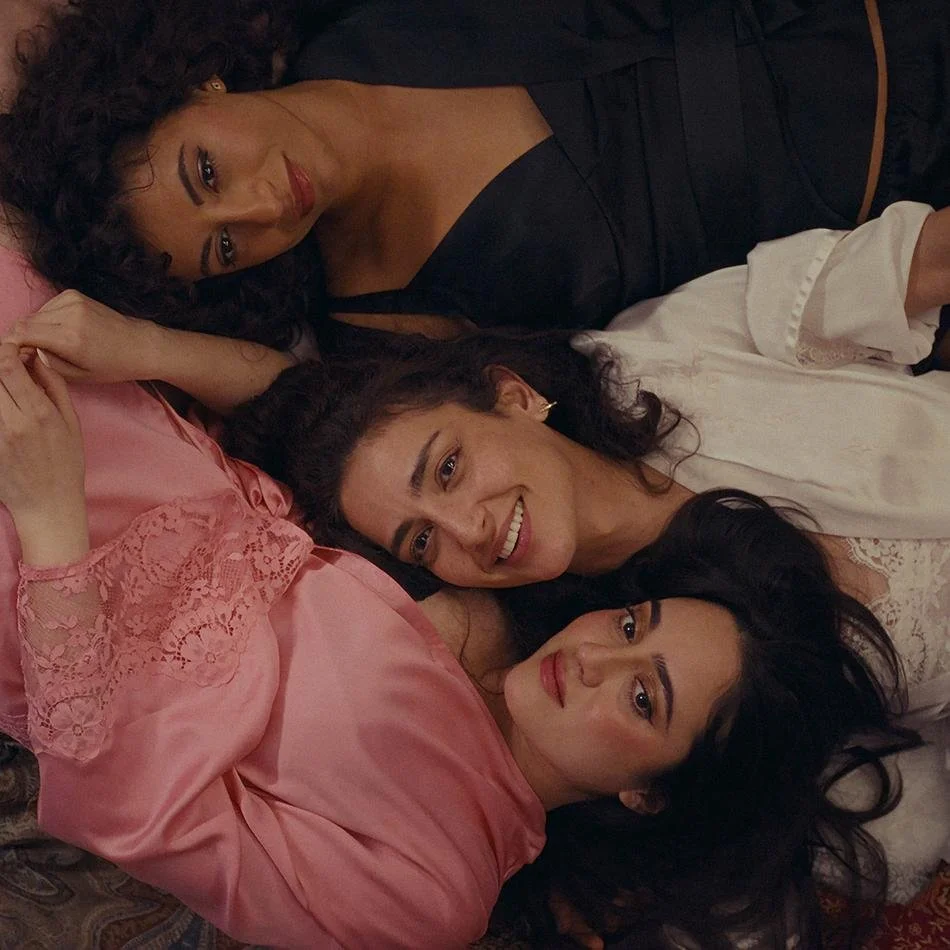
Noll found her way into each character by locating the frequency she recognized from her own life. Set, played by Layla Mohammadi, clicked fastest. "I don't know why. Set's story just clicked for me pretty quickly." Set spends the film trying to hold everything together without letting herself breathe. "A lot of Mormon women in Utah are abusing prescription meds, trying to keep that image of perfection up." Rana, played by Medalion Rahimi, burns through every available source of reassurance — calling her mom and getting voicemail, trying a shaman, setting rules that don't hold. "She's seeking that gut check, trying so many things that will make her feel like this is okay, like she could do this without hurting anyone or herself.." Nadia is the character Noll recognizes from outside the frame. "Nadia is Dalia when I met her. No filter, so chaotic. But a really great, great friend.”
Rooni sent a first draft in early 2023, then got sidetracked by commercials and a TV role and put her own script in a drawer until the strikes brought her back. "Then she realized, oh, I should not have put my own thing down. You can't rely on anyone else. We didn’t stop pushing once she picked it back up." They shot in April 2025 over seventeen days and premiered at SXSW less than a year later.
Noll's fiancée, Jess Bowen, left her tour to fly out for the premiere.
When Noll talks about Bowen, there’s a shift in the way she talks, softer and less guarded, excitedly sharing about Bowen's family in Manila, about watching her perform, about and being proud of her all the time. "It's an honor to be her partner." She says she is excited to finally have something Bowen can be as proud of as Noll has always been of Bowen. Bowen built a career as a drummer in a pop punk scene that mostly forgot to include her. "At that time, if there were other women in her scene, they were maybe the singer or the merch girl. There weren’t other female drummers." A sound guy once offered to sound check her drums for her, offering to hit like a girl. "She broke five sticks in a row that night while he was watching from the side stage. She hits hard already."
Bowen is queer, raised Catholic, someone who spent years making herself smaller in rooms that were not built for her and then stopped. Noll grew up Mormon in Appalachia and had to take herself apart and put herself back together. They have been loving each other across those distances long enough that now Noll reads the interior lives of people whose histories differ from hers the same way other people read a room. When someone matters to her, Noll pays the kind of attention that makes another person's experience feel as urgent as her own, and that attention, practiced daily with Bowen and over years with Rooni, is why this film works. Rooni's screenplay makes it real. Noll’s love makes the emotional translation possible.
"This film is about women who command the room, who are the leaders in their relationships and in their lives, and who are ambitious and funny and flawed." She could be talking about the characters, or about Bowen, or about Rooni. Noll built one version of herself piece by piece inside the Mormon church, until she found a fundamental part of herself that did not fit the picture. She spent years believing the choice was binary. The characters in Same Same But Different reach their own version of that understanding over a weekend on Cape Cod, each of them holding something new and looking for someone to say it's okay. Noll clearly knows about what it costs to rebuild yourself, and that knowledge is what makes her able to direct someone else's story with this much care.
"Over time, she understands that you can keep all the pieces of yourself," Noll says, talking about Rana but also, unmistakably, about herself. "The pieces that mean the most to you."