
Interview with Alireza Khatami, Director of ‘The Things We Kill’
Alireza Khatami is talking about the West’s idea of civilization. He’s talking about excessive AI usage that cannibalizes nature in the name of progress. He’s talking about a part of the world that accepts poverty as a given. He’s talking about nuclear bombs and 200 years of war. He’s talking about how maybe he comes from the center, and maybe the West is actually the margin. He’s not explicitly talking about any of these things, but he is talking about his latest film, The Things We Kill, which tackles these questions through the story of one man’s divided self.
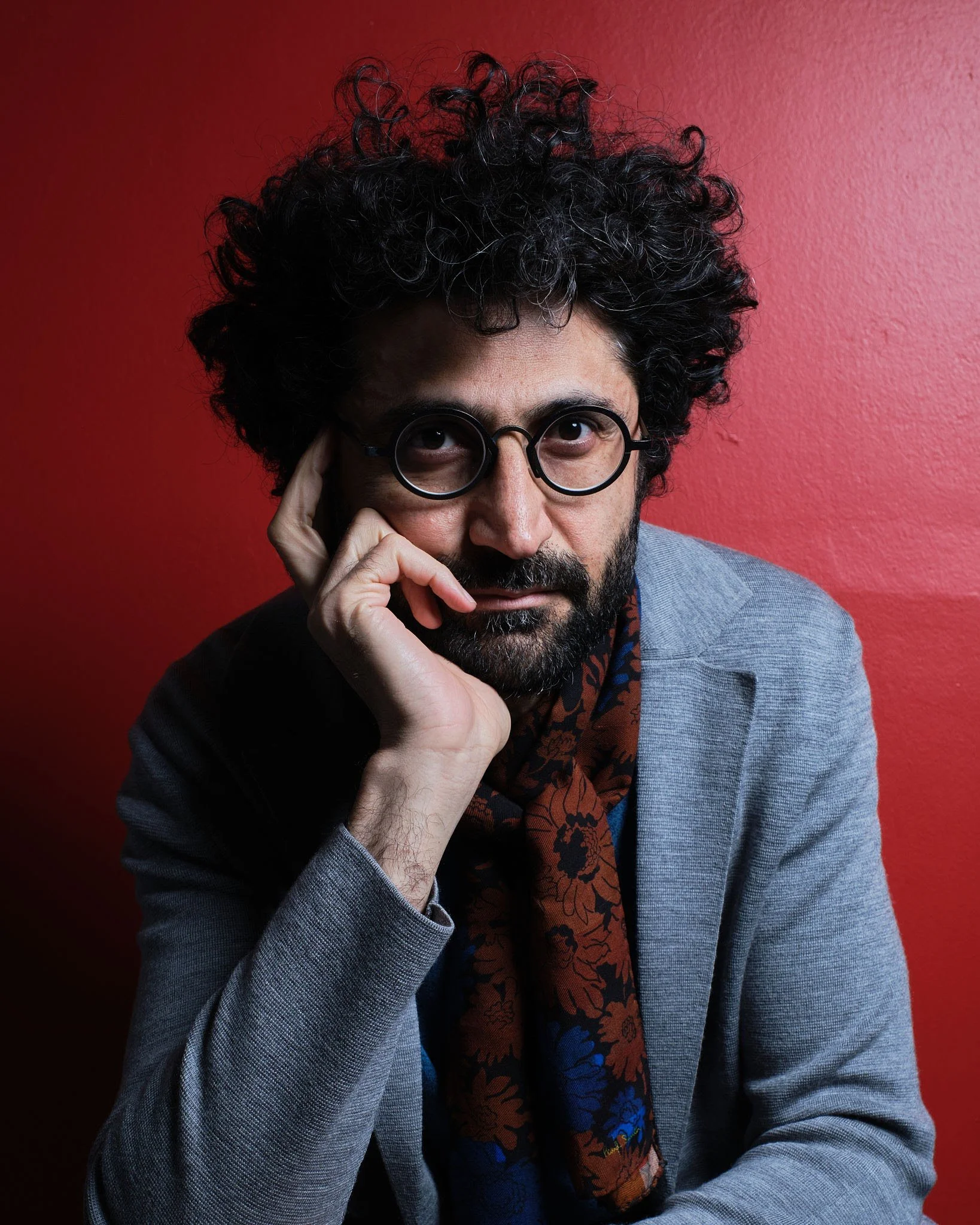
“In Iran, I will never go homeless,” he says over our video call, the kind of statement that carries more weight after knowing the context of the making of his film. The Things You Kill spent seven years being shaped, reshaped, and ultimately transplanted from Iran to Turkey because of censorship. The same government that censored him, still lives inside a country where no one lets their neighbor sleep hungry. “So I’m learning to find that. Maybe I am from the center. Maybe this is the margin.”
Khatami’s film follows Ali, a Turkish literature professor haunted by his mother’s suspicious death, who enlists his gardener, Reza, in an act of revenge that spirals into something far stranger and more personal. The twist, that Ali and Reza are the same person trapped in an internal negotiation, comes from Khatami’s own first name (Alireza), split into two.
“Originally, it started as a man with a garden, and he meets a stranger who is very charming. And they connect,” Khatami explains. “As I developed, I realized this is a self negotiation between the two people. They are, in fact, the same person.”
The film began as one thing and became another, the way immigrants do. Khatami is Iranian originally. He left Iran, and when he couldn’t make the film there, he took it to Turkey. He speaks a dialect of Turkish, not Turkish from Turkey, “just for the record,” he clarifies. These distinctions matter. Language renders your world.
“There are words in Arabic that explain a feeling that you don’t necessarily have in English. You don’t have that feeling in English,” he says. “I certainly cannot be in Farsi the way I am in English, or be in English the way I’m in Farsi. Emotionally, for me, I always go back to Farsi.”
This is why translation becomes violence in the film. Ali teaches that the Arabic root for “translate” also means “to kill. You have to interpret it. You have to kill it first and then resurrect it in the new context. The truth of it for me is this - narratives are dangerous, especially the stories we tell of ourselves,” Khatami says. He’s describing Ali’s crisis in the film, but ultimately he has his pulse on something larger about immigration and the lies we tell to survive.
When you immigrate, you’re taught to look down at the version of yourself that you were. “When you immigrate, especially when you come from a non Western to a Western world, you are taught, you are forced to believe that you have come to the center. So automatically, you imagine that you’re coming from the margin, and anything from the margin is not good.” When immigrants move to the west, they are expected to resettle and leave behind critical pieces of themselves so that they can fit some idealized outdated mold of “civilization.”
But what if the measurements are wrong? What if access to technology isn’t civilization? Maybe true, civilization is just knowing that your neighbor will share their bread if you are hungry. “Where we come from, if you need a piece of bread, your neighbor will share it with you. That’s the definition of civilization, not driving a fancy car.. Look at the genocide,” he says, speaking of Gaza. “They are doing it and are proud of it. For us, this is not a point of pride.”
The film is about a man who has to kill his own narrative and rebuild it. Ali has constructed a simplistic view of the world, one that can be reduced to a story about himself as a man. His personal narrative is masculinity in crisis. “He has a simple version of history, and when this narrative he has built for himself cracks, Reza emerges. Self negotiation begins. He tries to protect that narrative, but the narrative starts falling apart.”
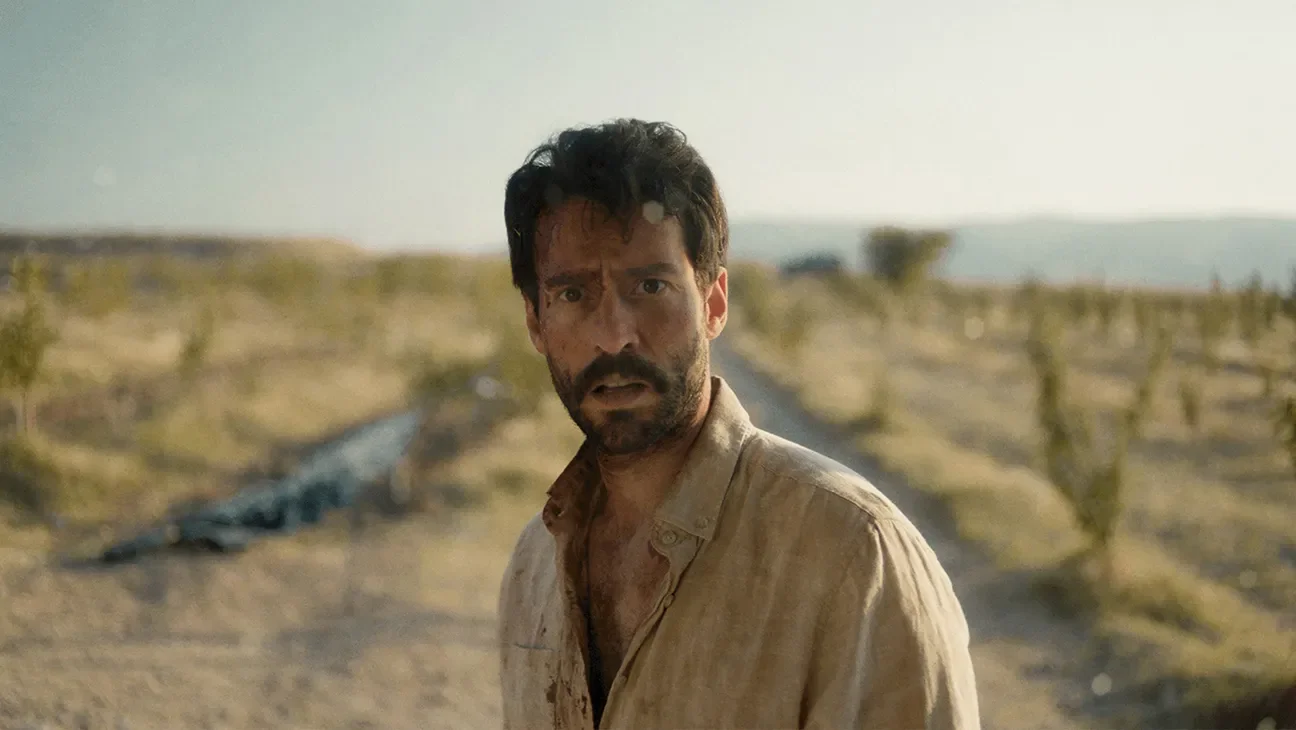
The film is autofiction, in that Khatami takes his autobiography and plays with it, fictionalizing elements to create something coherent. “My personal stories, personal tragedies that happened to my family, I start bringing them into the film and experimenting with them.”
“Cinema is my way of thinking through the world,” Khatami says. “Some people can paint, some people can write, I can make movies. So I really don’t know how else this would have been explored for me. Before this, I was always writing while looking forward. I had to go through this world and discover what I found at the end of the writing process. Now I write looking backward. I’ve gone through the experience. I look at it and then I write what I’ve learned.”
“I’m more confident that this person in the mirror has a story to tell. And the only way to tell it is an honest way. Cinema is not a place to hide things. Even if you want to hide them, you can’t. It reveals you in ways you didn’t know. After this film, I’ve become much more comfortable being myself as this hybrid that has a bit of both, or multiple worlds. And I’m not afraid of scaring people a little bit anymore.”
When I ask what he means by scaring people, he returns to the pressure to resettle, assimilate, and melt into Western culture. The Things You Kill asks what happens when you stop running from the versions of yourself that you and the world have tried to bury. “If I am brave enough to open up my heart moving forward,” Khatami says, “I have a new way of telling stories.” The magic of cinema, he tells me, is that it helps you discover yourself in ways you never knew, even when you try to hide.