
Siobhan McCarthy, Writer and Director of ‘She’s the He!,’ on Creating a Trans Teen Comedy
Siobhan McCarthy’s She’s the He! is a welcome and exciting addition to the canon of high school comedy. Two high school seniors, Alex (played with sharp wit and high energy by transgender comic Nico Carney) and Ethan (played with charm and nuance by non-binary actor Misha Osherovich), face a dilemma: everyone in school thinks they’re gay lovers. Even their teacher suggests they decorate their graduation hats with “Bert and Ernie doing poppers, whatever feels natural to you.” However, to the disbelief of their peers, both Alex and Ethan like women.
To solve this problem, Alex suggests that Ethan pretend to be a trans woman so that everyone understands Alex is definitely straight (especially his crush, Sasha). Miscommunication ensues, and Alex ends up pretending to be a trans woman as well. These schemes set off a realization for Ethan — that she is a trans woman. Shifting social orders, bathroom shenanigans, and self-discovery follow.
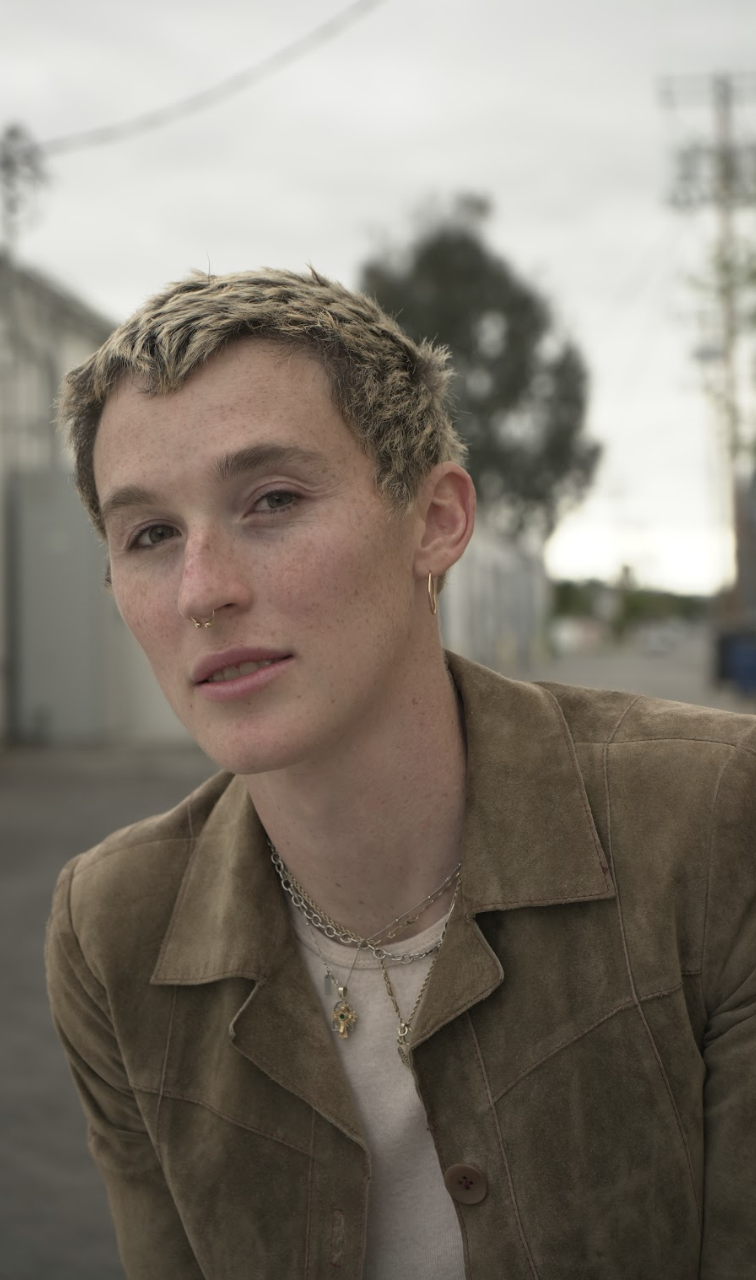
This week, I had the delight of talking to Siobhan McCarthy, the director and writer of She’s the He!, about their artistic and personal inspirations behind the film.
The initial creative impulse for McCarthy is a common frustration for transgender people: “The movie is kind of truly a melding of my experience as a trans person in America, which obviously is colored so deeply by bathroom politics and by bathroom access, because I live in that perpetual state of dehydration that many of us do, where it's like the idea of having to go pee in a public bathroom is like a nightmare perennially.” Not only is there a continued rise in bathroom legislation, immediate social ramifications related to which bathroom a trans individual uses are still present. The film takes conservative fear-monging regarding bathrooms (particularly the idea that boys would fake transness in order to sneak into women’s locker rooms) and cleverly subverts them in its sense of satire, genderfuckery, and self-discovery.
McCarthy thought of the coming-of-age movies they watched growing up, and these experiences melded naturally. “When these two things collided, like the politics of me being a trans person, America as the discourse around transness was escalating every single day, and me thinking about what it was like to be a teenager and what it was like to be a kid,” they told me, “it felt natural that those two things would collide and crest basically into this attempt to take that aesthetic and that feeling of those movies that I loved when I was a teenager and redefine them basically through the lens of transness and especially through a modern politic.”
An extraordinary artistic element is the presence of bathroom-style graffiti, which both reinforces the bathroom theme and imbues the film with a frantic, fun energy. This element comes directly from McCarthy’s high school experience: One of the really notable things that carried me through high school, when I was dealing with my own experience of queerness, was that I would draw all over myself, all over my desk, I got sent to detention constantly for it. I'm now covered in tattoos because I just was so obsessed with that aesthetic, and I think the tattoos, even on my body, are kind of that like school desk graffiti aesthetic.”
In fact, the explicit title cards were scanned directly from a folder they found in their parent’s attic of high school drawings. Having something so personal directly reflected really helped the film’s approach come together. In their words, “I felt like it all gelled when I was in the editorial process into realizing there was this queer part of my childhood that had already reared its head in the production of the physical movie, and it felt like it would be so fitting to then layer on top of this movie, because that's just something that I aesthetically love, and it also felt like it harkened back so much to how I coped as a kid.”
When Alex and Ethan initially “come out,” they are both immediately thrust into the complicated social politics of womanhood. I have previously written about the film She’s the Man from a transgender perspective, and a great joy of that film is the boys at the school immediately accept Bynes’ Viola as another boy, just one whose performance is pretty awkward. A similar path is followed for Ethan, but the character of Alex presents a delightful foil in how Alex’s masculine identity is apparently inescapable. The obviousness of Alex’s masculinity has an added delightful layer of genderplay by the role being played by a transgender man.
Talking about the defined feminine spaces and articulations that Ethan and Alex are expected to adhere to and their individual journeys in the film, much of McCarthy’s experience is colored by their identity. “I identify as non-binary, and so much of my personal relationship to gender is quite complicated. When I was young, the thing that made a lot of transness hard for me to. . .comprehend for myself was that there were things about femininity that I didn't dislike, but there were also these like staunch rules of femininity that felt like everyone knew them and everyone had to obey them, and there was this well-defined set of expectations of that gender. Similarly, within masculinity, there were pieces of masculinity that I enjoyed, but there were those similar rule sets and those similar blinders and intensities on that.”
Continuing, McCarthy tells me that in the film, they “thought it was interesting to talk about both of those strictly defined spaces, then the way that those strictly defined spaces can both be catalysts for euphoria in a binary gendered identity, but also reflect that when people exist within transness, there is this inherent skew and this inherent motion and this inherent blending of [that binary]. Which I think is so wonderfully summed up by the image of girls wearing the football outfits and the idea of the gender twist of putting trans guys in dresses. It feels like the whole purpose of talking about that euphoria was both to show trans people experiencing joy, which I find to be a rare image, and also to genderfuck the actual expectations of what an audience would be perceiving by doing this layered presentation of transness within transness within transness.”
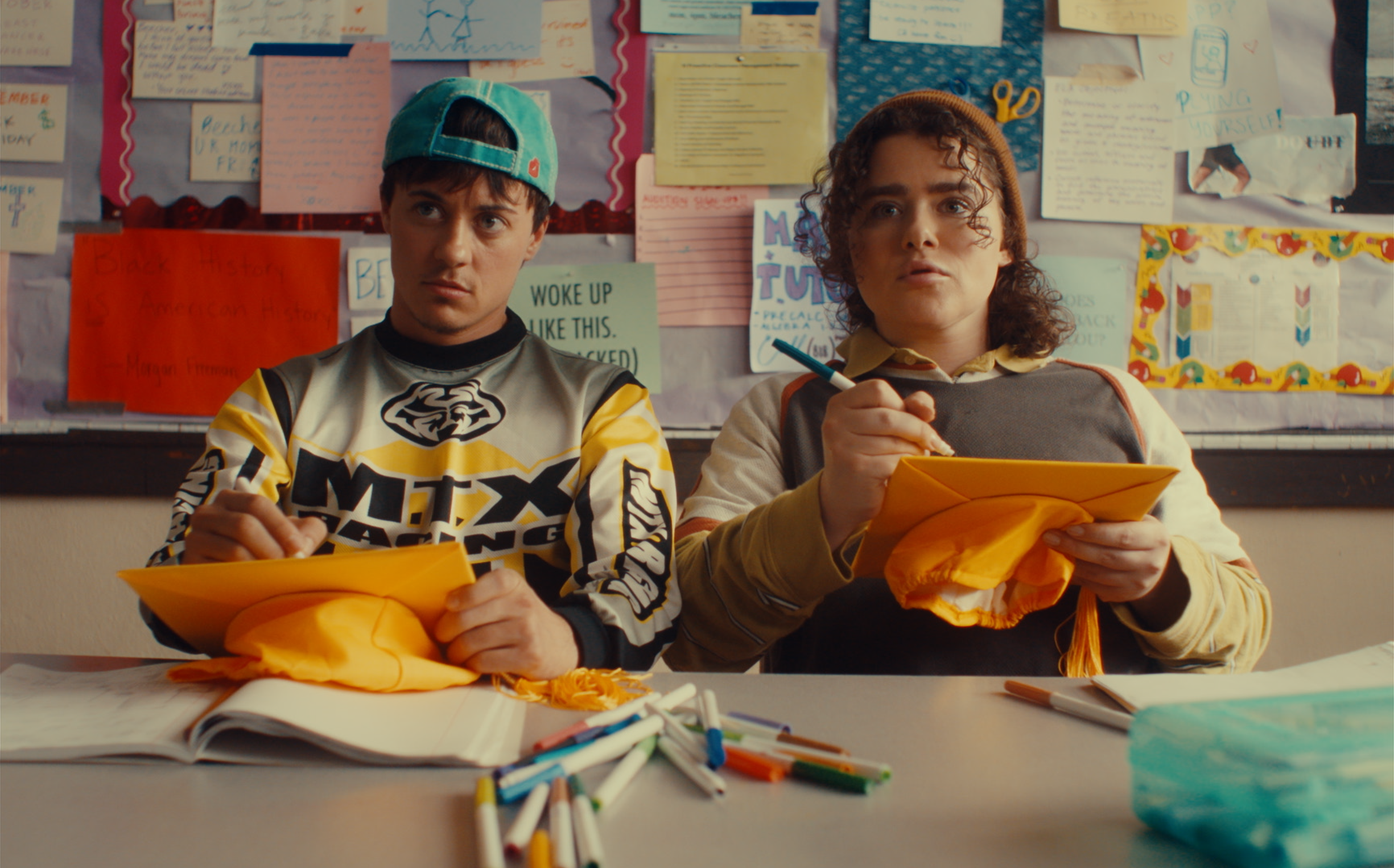
A dramaturgically delicious moment of complexity and nuance is the complicated and conditional nature of the progressive high school world in She’s the He! The high schoolers accept trans identities, welcoming Ethan and Alex into womanhood with open arms, but this welcoming is conditional on their performance of gender at the all-girls sleepover. Sasha explains to Ethan the rigid rules of womanhood. A standout character for me is Davis, a femme social reject that everyone believes lied about being gay. Even though the students use the right pronouns and shun transphobia and homophobia, there is still a clear need for work to undo binary social and psychological conditioning.
To McCarthy, these contradictions are direct from their experience with others coming out. “Inherently, as a trans person, your presentation has this direct reflection back on every person that holds close to you. One of the things that felt very notable about me being trans when I was young was realizing that people in my life could love me, they could love me deeply, but the way they were expressing that love for me didn't feel like love, because they were expressing that love in a way that was not aligned with who I am as a person, and so it didn't even really matter if they were, it didn't matter how hard they tried to communicate that to me, or how hard they tried to convince me of that, it just wasn't, they were speaking a different language than I was receiving, and I think that dichotomy feels like it is both this like very intense emotional experience as a trans person.”
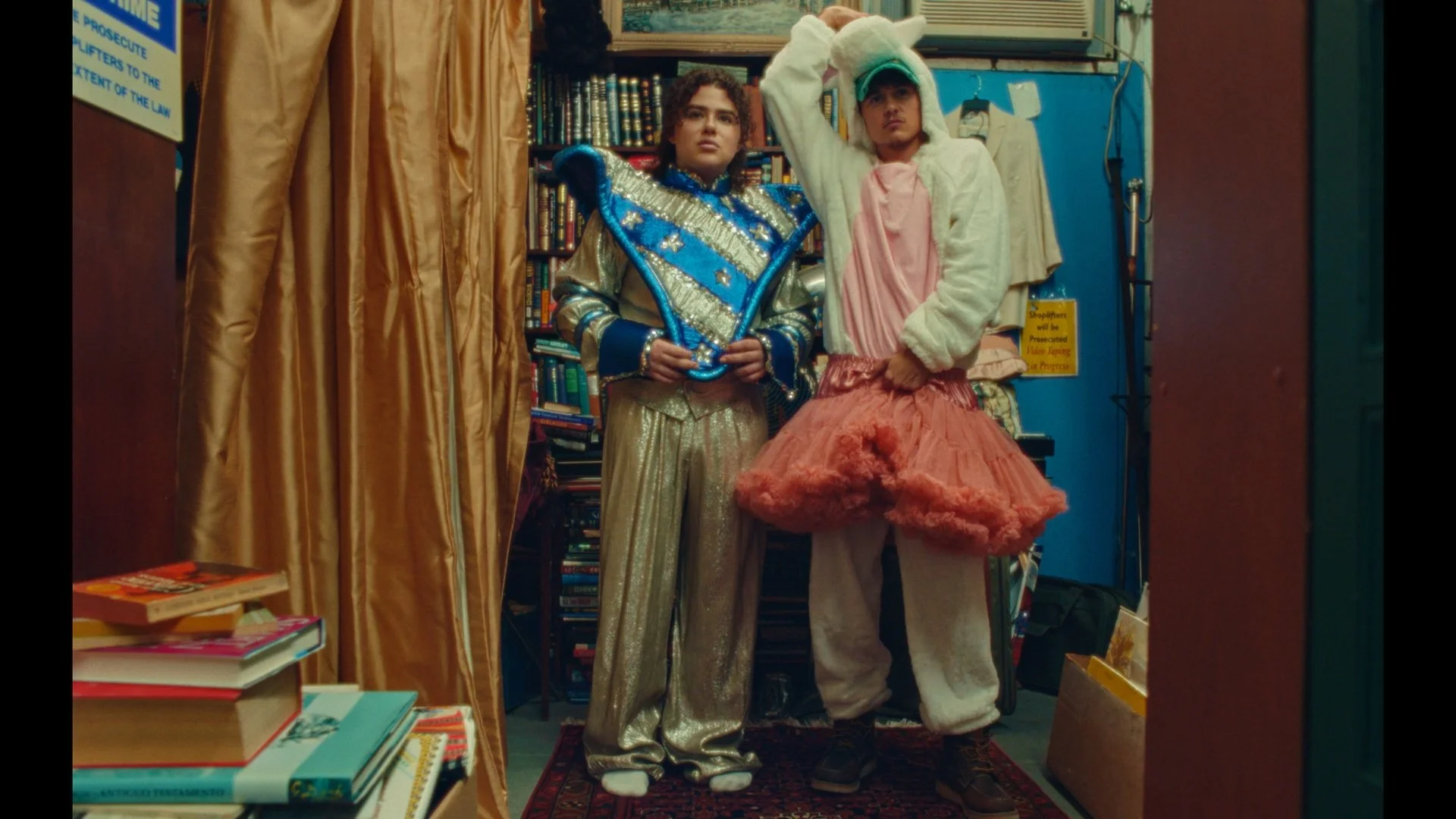
These contradictions were also crucial in forming their comedic understanding of the film. “It is inherently kind of ridiculous, because sometimes it's built around largely other people's very narrow expectations, and the thing that felt like the core of the comedy to me of this movie was looking at all of these cisgendered characters and they are tightly narrowly defined expectations of gender, and then letting other characters, specifically characters that are either trans or have transness in their presentation, nest with those perceptions of those blinders on ideas of gender, and that could catalyze quality, and I feel like that is not only with this movie, but just universally seeing people be wrong about things is funny, and seeing people not be able to see the whole of a thing is funny, and I feel like that is the center of the comedy here, and I feel like that's the center of just like the comedy of being a trans person in this world.”
Siobhan and I bemoaned the sharp drop in the teen comedy film in the last decade, of the communal experience of laughing at the theater at heightened and exaggerations of teenage joy and pettiness. The previous generation “had this concrete idea of what it was to not only be a teenager, but what being a teenager looked like in this ridiculous, heightened, joyous level that was then mirrored in TV and was then mirrored in media across the board.”
They hope that She’s the He! not only provides a refreshing reinvigoration of the form, but that it allows trans teenagers to see themselves in a similarly silly fashion: “I hope this film…is this redefinition of what it is to be a teenager and recentering of the joy of what it is to be a teenager and the joy of self-discovery, but while including the obvious social progressivism that has happened, that we now just have more trans teenagers than we did when I was a kid, which is a magical thing, and we should be meeting them with media that meets that expectation.”
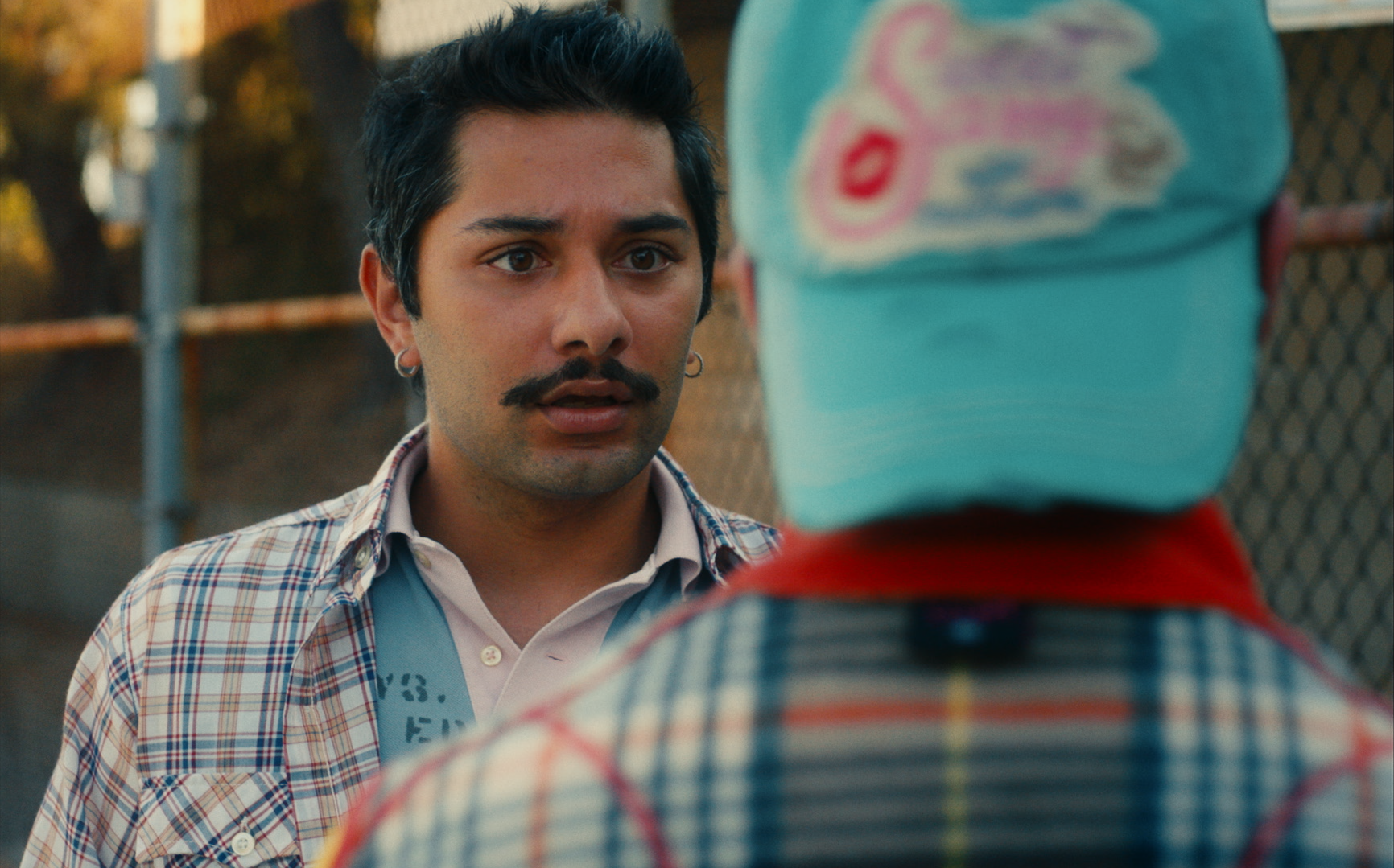
Reflecting on the audience reception and conversation, McCarthy hopes “that it both gives parents and children language to have a discourse about transness, they may not have. I know that part of so much of my experience with my parents was that they just didn't — they just never [saw] a representation of that conversation between a kid and a parent. There was just no language to use to speak about that stuff. And I hope that this can give voice to the dynamic of a parent and a child, or at least give them a job. Jumping off point to have their own more nuanced conversation, just by giving them a model of what that conversation, or what those verbs, or those words could potentially look like.”
For the teens watching the film, McCarthy believes “the thing to take away, and the thing I wish I had more of, [is] this nuanced discussion about the way that our own personal identities are defined almost by the identities of others. In so much of friendship and so much of relationships, the way you see yourself is often in contrast to how you see the people close to yourself. Their differences from you define who you are, and vice versa. And I hope that for kids who are in that mire of trying to find themselves both define themselves by their similarities to their friends, but also by moving away from their friends, or moving away from their enemies, and all of those things.
McCarthy returns to the theme of nuance that bled through our conversation: “I hope it can give them a more nuanced space to not only talk about how that reflects upon them within their own experience and gender, cis or trans, but I hope it can give a language or question to all of these ways that we choose to define ourselves, and all of these baskets that, especially a cis heteronormative culture, forces us into, because I do think that there's something to a cisgendered heterosexual kid facing up against transness that even gives more depth to cisness and heterosexuality. I think it is inherently going to be made more nuanced, even by reflecting off of a trans person, or even just a trans piece of media.”
I remarked on how natural the self-discovery arc fit into the teen comedy structure, and McCarthy responds with a profound understanding of the universality of trans experience: “It's one of the core things of coming of age writ large, is that I feel like being young is this battle between these two poles of who you are and who the world expects you or wants you to be. . .it is the place where transness is just an extension of this universal experience of coming of age, and by tackling those specific relationships and by tackling the shifts in those relationships, there is this mirroring of the way that transness reflects all coming of age experience.”
She’s the He! begins screening in select theatres June 5th, 2026.