
The Bechdel Cast at 10: An Interview with Caitlin Durante and Jamie Loftus
One of my earliest reviews on Letterboxd is of March of the Penguins. The full review reads, in its entirety, "doesn't pass the bechdel test." Extremely insightful and thoughtful criticism. I use Letterboxd almost exclusively for shitposting. It's a lovely place for me to do bits without driving my friends insane, and a reliable way to participate in the public ecosystem of film without ever having to confess how much the art actually affects me. Long before I helped start FilmSlop, I didn't know how to engage with film criticism; I certainly didn't know how to be earnest about art on the internet. I did know how to make quips about penguin documentaries. The only reason that specific metric was rattling around my brain to begin with was because I had been spending my commutes listening to Jamie Loftus and Caitlin Durante.
My relationship to movies is inextricably linked to The Bechdel Cast. The podcast found its way into my life right as I began to really love movies, and as I continue to clumsily dabble in criticism, their approach remains my North Star. Loftus and Durante use the Bechdel test (whether two named characters of marginalized genders have a conversation about something other than a man) as a way to engage with film beyond the screen. The Bechdel test framework is rigid, but largely irrelevant. Ultimately, it’s an entry point for their own lived experiences.
When it comes to online media, a decade can sometimes feel like a lifetime, and on the afternoon I log onto Zoom to interview them for their show’s ten-year anniversary, I am not feeling super optimistic about the type of content that dominates the internet. Loftus relates to that sentiment. "I miss the version of the internet that radicalized me," she tells me. "I used to view the internet as this potentially liberating thing, and I think over time, it has felt less so. I want more to myself than I used to. You can't really find people or information organically anymore. I miss the era where you could find someone and a new idea, or a joke, truly by coincidence and not by design."
Durante agrees. "I try to ignore 99 percent of comment sections," they say. "They're an exhausting place. Life's too short."
As we talk about how the internet has transformed from a place of innovation and excitement, we naturally start to discuss the rise of generative AI. For Loftus and Durante, generative AI is no longer an abstraction and has begun showing up to haunt their careers. Loftus tells me about reported stories that, five years ago, would have come with a reasonable runway (actual time and budget to research, write, and edit). "Then it sort of changes over time. You need to be able to do it every single week, to keep up with shows that are happy to engage with AI editing, that are happy to engage with AI note-taking. You're expected to keep pace with someone who is doing something far less ethical, and I think often less interesting. It is just encouraging you to make more, less thoughtfully. It makes it harder to make a living as a creative than it already was. It is a moral imperative to reject it."
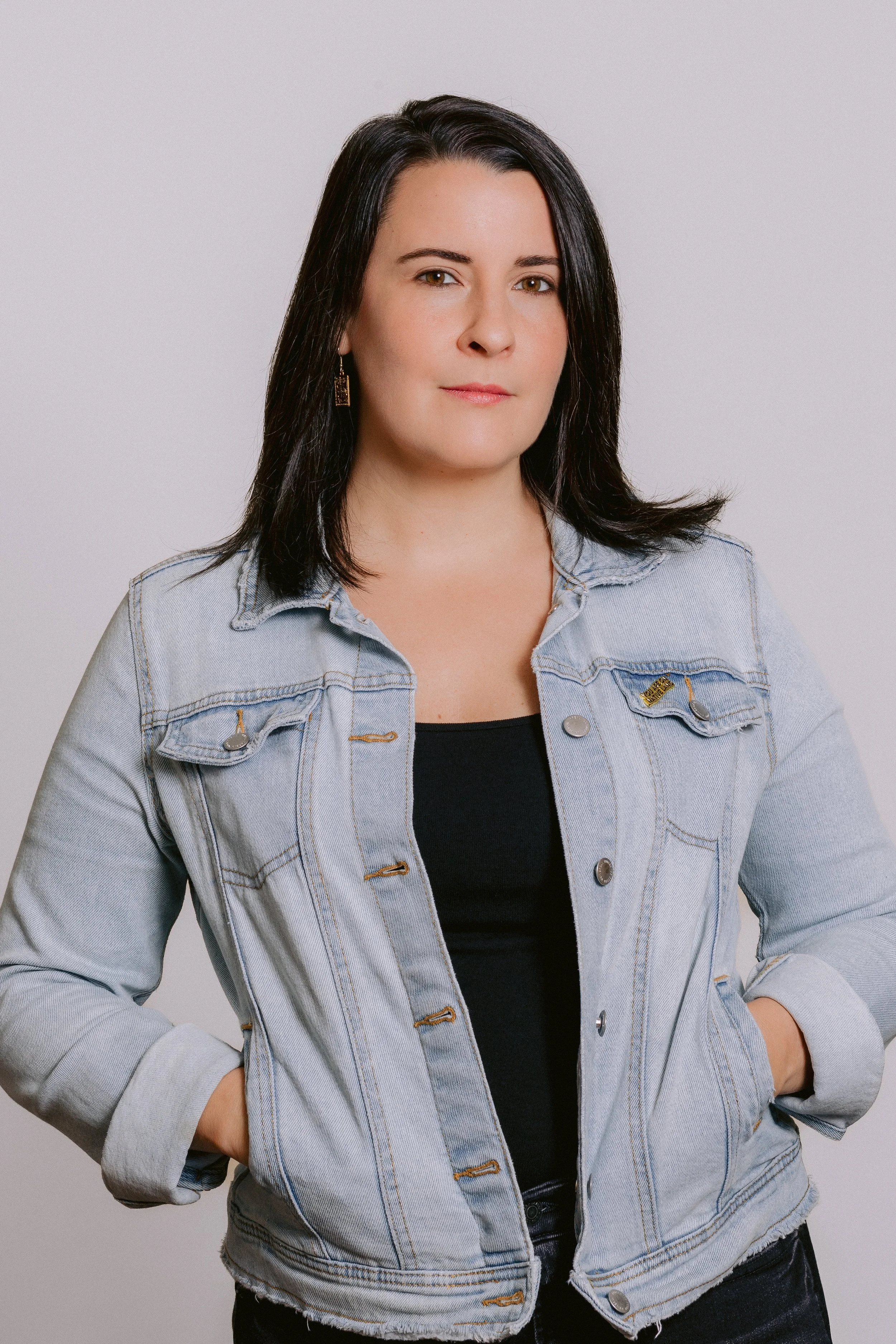
Durante keeps a longer distance from the whole machine and is better for it. "I'm so far removed from AI and how people use it that I don't even know the scope of what's going on, because I refuse to engage with it," they tell me. They describe a recent encounter with a stranger who was enthusing about a friend who, instead of reading a book, had asked ChatGPT to generate a half-hour fake podcast in which two AI bots discussed it. Loftus's reaction lands before Durante can finish the story. "Disgusting." Durante presses on: "I think people are wanting to consume stuff like that, and not realizing that you need the human touch of something like that to actually interpret a book and have nuanced thoughts on it." Loftus cuts back in: "And also that whatever convoluted bullshit that was, was based on stuff that was stolen from people who read the book." They complete each other's sentences in a way that gives me the feeling that they’ve had this conversation in private multiple times before.
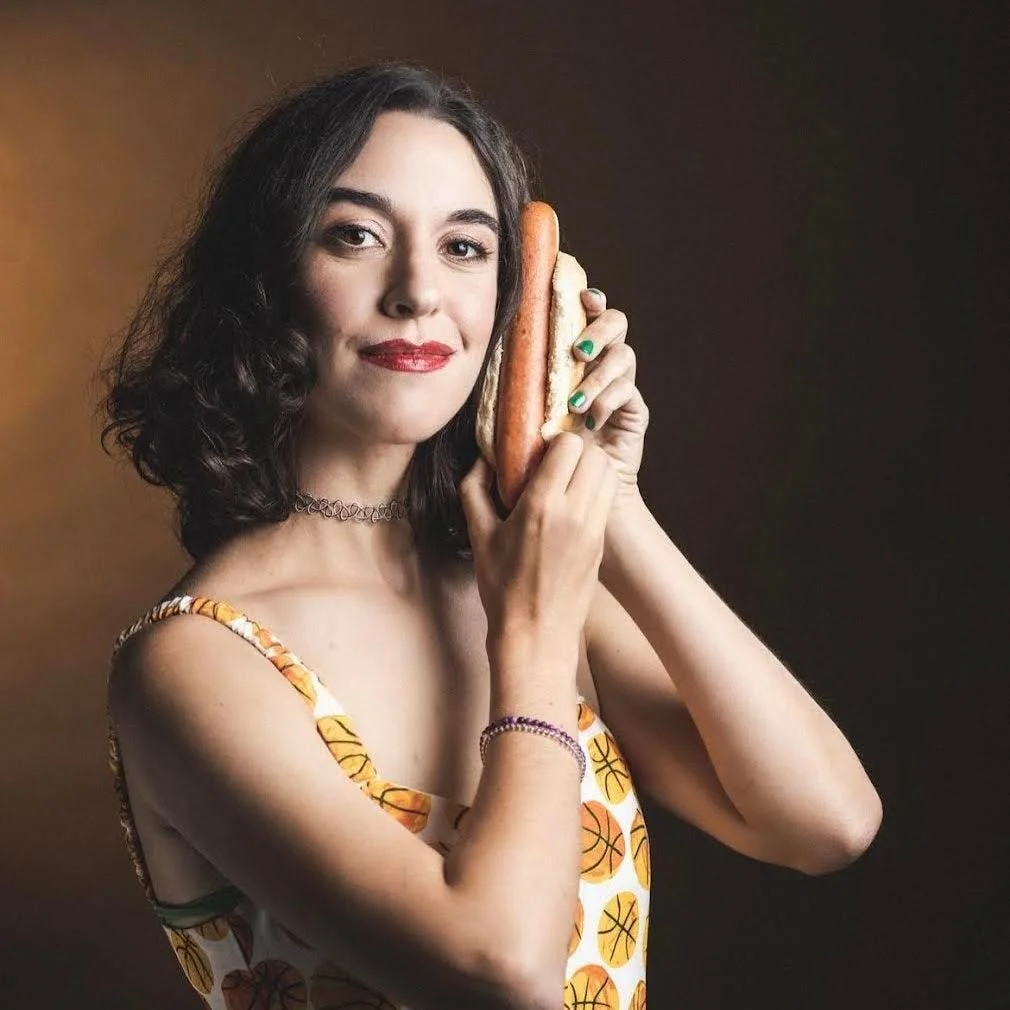
Loftus engages with art as a way to better understand herself and her world. "Fifteen years ago or so, it would be more rare to see someone acknowledge that anyone's criticism of something is through their lens, and there is no objective way to see a piece of media," she says. "It is impossible to have the right opinion about anything. Everything is going to be informed through, not just who you are, but where you're at, and where the world is at." Loftus has done this in book-length form too. Raw Dog, her 2023 bestseller, is ostensibly about hot dogs. In reality, it is actually about her father, the Greyhound system, and grief.
Durante describes the same impulse from a different angle. "From a young age, movies helped me to better understand the world and the people in it." Midway through our conversation they drop a piece of information with the casual, practiced timing of a working comedian. They had received an autism diagnosis just 72 hours before we spoke. "The dozens of movies I've watched hundreds of times each? The thousands of movies I've seen in total? Turns out movies are my special interest. Imagine that!"
"They've just done a lot to help me, as far as understanding human behavior, emotions, and relationships," Durante continues. "And I've learned so much about other communities, other cultures that I was previously unfamiliar with. It's just given me all of these opportunities to learn and grow and become more emotionally intelligent." Durante turned their special interest into a podcast. And if I had to guess why the podcast is so successful, I’d be willing to bet that so much of that success comes from Durante and Loftus’ emotional openness and honesty.
Of course, that kind of attention has its own kind of cost. When you promote your art and insist on being unapologetically true to yourself in public, you invite a presumption of access. The audience begins to feel a sense of parasocial ownership over your boundaries. Durante experienced it in their career as a stand-up: "I was talking about sex a lot," they say, "and that would give people, and almost always men, a sense of quote-unquote permission to then come up to me after the show and say the grossest shit you've ever heard." Writing for the screen offers an architectural buffer. "Like many writers, I write characters that resemble me, or are some version of me. I can remove myself a little bit. And not have creepy men talk to me immediately after." For Loftus, the cost is structural in a different way. Leaving a permanent, searchable record of your developing brain online means handing strangers a weapon. Loftus at twenty-three thought differently from Loftus now. "There are times where we will go back and re-edit an episode, or even remove entire episodes," she says. "There's things that felt right at the time that don't on a longer timeline. Negotiating your boundaries over time can get really tricky."
Because their show is so firmly grounded in humanity, it’s also deeply poltiical. "It's felt like a necessity, because to be human is to be political. It's considered a political act to care about other people, and particularly oppressed people.” Loftus tells me.
"From the very onset of the show," Durante adds, "it was always our intention to talk about movies through a feminist lens, and then a few years in, we realized the importance of being more intersectional about that. We do our best to highlight movies by marginalized filmmakers and stories that are typically underrepresented. Either way you look at it, all of that's inherently political."
When they cover Salt of this Sea with Yasmina Tawil, the conversation does not pretend to be neutral about Palestine. When Loftus executive-produced Theo Henderson's We the Unhoused, she decided to platform a man who lived on the streets of Los Angeles to talk about how the city treats its citizens.
Because they protect their personal boundaries so fiercely, and because they have been bringing their full humanity to the work, when they do choose to put themselves into the room, it means something. The framework, the bits, and the banter are all the delivery system. "If I get to talk about a breakup, it has to be actually hidden inside a book about hot dogs," Loftus says. "I like having the very specific lens to talk about something maybe more universal inside of. Just 'cause it's fun, you know?"
On a personal level, I am still learning how to navigate all of this and I’m still learning to be comfortable with my own public vulnerability. I’m still going to hide behind irony. But my conversation with Loftus and Durante has nudged me in the right direction.
From my point of view, Durante and Loftus have no reason to be worried about AI. What they have built is too singular and grounded in their humanity to be replicated. Their way of engaging with art is so uniquely theirs that no matter how good AI gets at pattern recognition, it will never come close to replacing them. And as Durante reminds me, "AI will never make as many hilarious Titanic and Shrek references as we do."