
‘DEI’ and the Cost of Looking Away
In 2014, at the precipice of finishing my first year in high school, I witnessed one of my peers picking on a friend of mine at the time. I knew in my gut and in my heart that there was something much worse about the bullying I was witnessing. They were bloody from eyes to mouth, coughing up words anyone looking could barely understand, and the perpetrator continued for the audience he had. I was paralyzed with the fear of retaliation and the fear of social descent. I still look back on that moment with immense regret and guilt. It is easy to believe that the things happening to other people are separate from our own lives: separated by a border, a language, a political party, a news headline, 10 feet of school hallway.
Jill V. Rae's newest short film, DEI, which premiered in Los Angeles at the TCL Chinese Theatre on August 15 as part of HollyShorts Film Festival, begins with that distance and then does something deeply uncomfortable with it: it takes it away.
The film follows Carla (played by Maeve Garay), whose father is taken away by immigration control on Día de los Muertos. As she watches the life she knows unravel, she turns toward her ancestors and the family members she has already lost at their Ofrenda, begging them to "force those who celebrate our grief" to "feel our losses and bleed as we bleed." Her wish is answered in the most literal way possible. We get a brief introduction to one of the aggressive onlookers (played by Lochlyn Munro): his daughter is heard snorting cocaine with friends in another room, and he works through a fast food hamburger in a gluttonous array of mouth noises and slimy visuals. Then he finds himself waking up in Carla's body, on the same day he watched her father be taken.
DEI is effective because it understands something we often forget when discussing immigration or discrimination: these are not abstract issues. They happen to people. They happen in kitchens, in cars, in classrooms, at dinner tables, and on front lawns on ordinary mornings. Carla does not wake up expecting her life to be destroyed. Her father does not become less of a father because someone else has decided that his presence is a problem. Yet the robotic and lifeless decisions of immigration control reduce him to a case, a status, a problem to be handled.
I have always found the phrase "walk a mile in someone else's shoes" a little too easy. We say it as though empathy is simply a matter of imagination: What if that were me? But most of us rarely have to truly imagine it. We can turn off the television, scroll past the Instagram post, decide that we do not know enough about the person involved. We can tell ourselves that there must be more to the situation or that it doesn't affect us. DEI asks what happens when you no longer have the luxury of looking away.
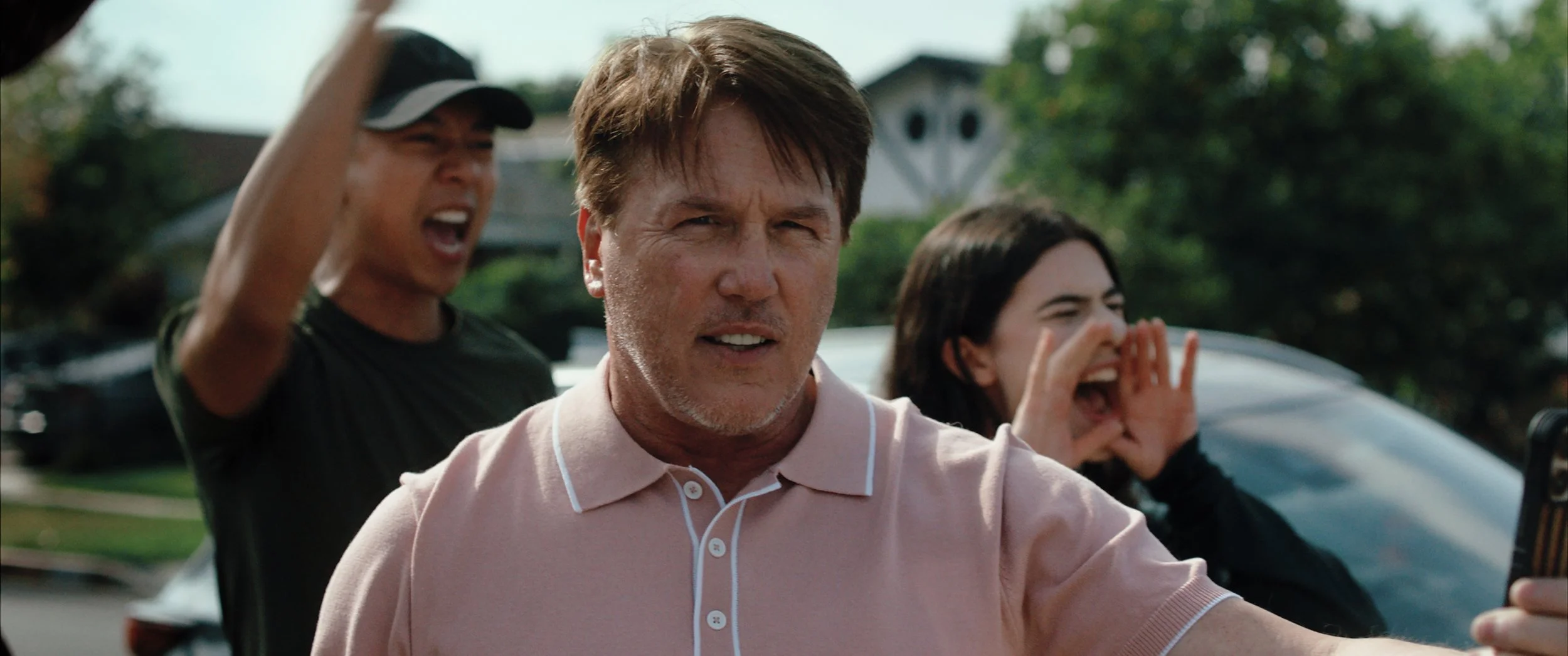
DEI is an indictment of selective empathy. The aggressive onlooker who becomes Carla initially represents the kind of person who can observe suffering without recognizing himself in it. He expresses discontent at the outfit his daughter has chosen for a Halloween party, then lets it go as she runs off, and returns to his hamburger and copious amounts of conservative news. He is an onlooker, someone positioned outside the pain and therefore comfortable judging it. During this exhibit of stereotypically American behavior, he feels his heart give way and grabs his left arm. When his heart gives out completely, he wakes to the sound of yelling in Spanish and pots clanking in the kitchen. He has woken up as Carla, in her house. He will not simply learn that Carla is suffering. He will have to experience the humiliation, fear, helplessness, and grief attached to being Carla when her father is taken. He has to inhabit the consequences of decisions that previously existed outside of himself.
Once he inhabits her, Carla is confused in front of her family, and the man inside her soon becomes accustomed to the tasks she is expected to handle each day, including doing her sister's hair and helping her mother in the kitchen. Garay has a unique ability to portray the older man's journey of humanizing the people he once thought of as dirt. She does not let him give in too fast, still delivering the same bigoted comments in Carla's voice, which we see when he yells racist comments at her brother after catching him getting high with a friend. Slowly, Garay expresses two things the man might have never known if he had never lived her life: the fear of loss and the love of family.
It's the year 2026 and yet we're still fighting to teach so many people the following elementary school lesson: Do unto others as you would have them do unto you. Known as the Golden Rule, but originally Matthew 7:12, you would like to think so many of these good American Christians could follow it. But DEI shows us that sometimes the teachings of the Bible still are not enough.
We are surrounded by suffering constantly. Through our phones, we can witness wars, deportations, shootings, disasters, poverty, discrimination, and personal tragedies before we have even gotten out of bed. We have become extraordinarily good at witnessing things without participating emotionally in them. We can consume another person's worst day in the same way we consume entertainment, swipe upward, and continue with our own.
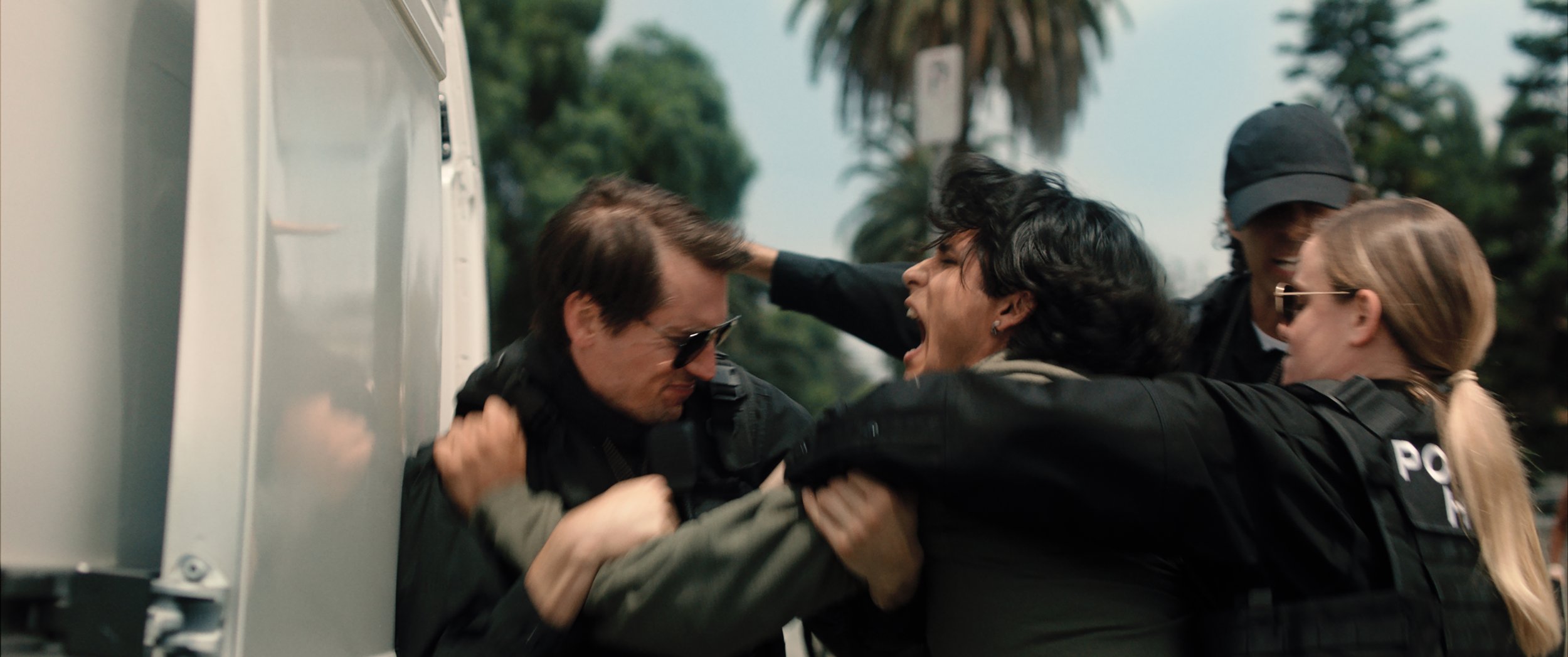
DEI challenges conditional empathy by refusing to let Carla's humanity depend on whether the audience believes she has earned it. That is especially powerful in the context of Día de los Muertos. The holiday is fundamentally about remembrance, about keeping the dead connected to the living and honoring the people whose lives shaped those who remain. The loss of Carla's father therefore carries an especially painful contradiction. She is surrounded by traditions designed to remember the people she loves while simultaneously facing the possibility of losing someone who is still alive. In 2017, I lost my grandmother, Momo, whose death made me realize that grief isn't something we simply leave behind. It is something we carry. In that sense, Día de los Muertos is a reminder that love can outlive someone's physical presence. DEI captures that beautifully while placing it against the much more immediate and preventable pain of a family being separated. Even without death, Carla still feels the same grief any sort of loss would cause.
By the end, DEI's "walk a mile in their shoes" theme feels like a challenge to our personal ability to empathize. How much would it take for us to care? Do we make justice conditional on whether we can picture ourselves in it?
Because ultimately, the most unsettling thing about DEI is that the film makes us question why transformation is necessary at all. We should not have to become Carla for us to care about her. We should not have to live our lives based solely on empathy, based on experiences we've already had. We should just care.